

Phase 1: Empathy & Storytelling Opening
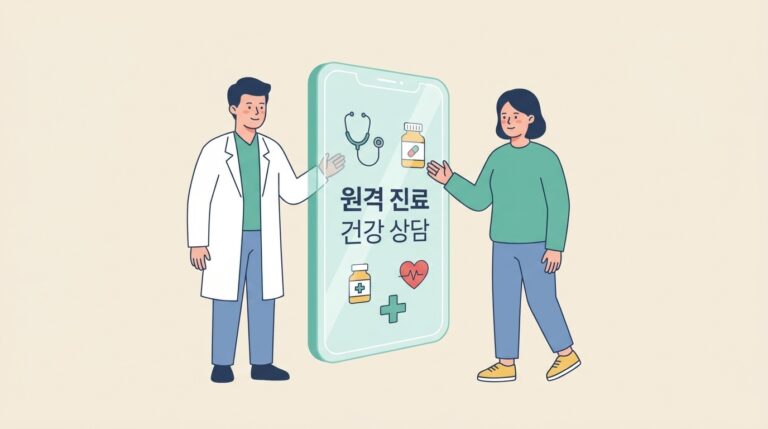
안녕하세요! 매일한글 에디터입니다. (Hello! This is your senior editor from Daily Hangul.) Imagine tuning into a late-night Korean current affairs debate on KBS or watching a high-stakes medical K-Drama like Hospital Playlist or Dr. Romantic. Instead of just emergency surgery room drama, you hear doctors and government officials fiercely debating terms like ‘원격 의료’ (telemedicine) and ‘의료 접근성’ (healthcare accessibility). As an advanced C2 learner, simple survival phrases won’t cut it anymore when discussing complex socio-political discussions in Korea.
Telemedicine has become one of the most hotly contested policy topics in South Korea. While tech-savvy citizens and tech startups advocate for remote consultations for ultimate convenience, local clinic physicians and medical associations raise severe concerns about misdiagnosis risks and the collapse of primary healthcare infrastructure. Navigating this nuance will elevate your Korean fluency from conversational to elite editorial level. In this lesson, we break down the sophisticated vocabulary, subtle diplomatic discourse, and socio-economic context behind South Korea’s healthcare debates, backed by real-world feedback from top advanced Korean scholars.
Phase 2: Core Expressions Deep Dive
1. 원격 진료를 둘러싼 갈등이 첨예하게 대립하고 있다
- Pronunciation: [Wongeok jinryoreul dulleossan galdeung-i cheom-yehage daeriphago itda] (Friction sound like “cheom” pronounced sharply with crisp focus)
- Meaning: “The conflict surrounding telemedicine is sharply confronting / intensifying.”
- K-Culture Moment: Heard on nightly news programs like SBS 8 News when coverage shifts from healthcare policy announcements to medical union strikes.
- Editor’s Insight: ‘첨예하게’ (sharply/acutely) comes from the hanja 尖銳, describing a point so sharp it cuts through subtle policy nuances. Use this when describing high-stakes debate topics.
- Situation Spectrum:
- Casual: 🚫
- Semi-formal: ⚠️
- Formal: ✅
- 🤔 Think About It: How does your native culture balance technological efficiency with traditional professional opposition during public policy debates?
2. 의료 접근성 향상과 오진 위험성 사이의 딜레마
- Pronunciation: [Euryo jeokgeunseong hyangsan-gwa ojin wiheomseong sai-ui dillema] (Flowing rhythmic pitch: eur-yo jeok-geun-seong)
- Meaning: “The dilemma between improving healthcare accessibility and the risk of misdiagnosis.”
- K-Culture Moment: Used frequently in panel discussions on PD Notebook when analyzing rural medical care deficiencies versus urban clinic safety.
- Editor’s Insight: ‘오진’ (misdiagnosis) is the medical community’s strongest argument against non-face-to-face care. Pairing it with ‘의료 접근성’ shows C2-level conceptual mastery of policy balance.
- Situation Spectrum:
- Casual: 🚫
- Semi-formal: ⚠️
- Formal: ✅
- 🤔 Think About It: In Korea, you can walk to a neighborhood clinic in 5 minutes. Does quick physical access reduce the necessity for telemedicine compared to your home country?
3. 대형 병원 쏠림 현상에 대한 우려
- Pronunciation: [Daehyeong byeong-won ssol-lim hyeonsang-e daehan ureo] (Emphasize the double consonant sound ‘쏠’ (ssol) with tension)
- Meaning: “Concerns regarding the concentration of patients in major tertiary hospitals.”
- K-Culture Moment: Frequently mentioned in editorials discussing why neighborhood primary care clinics (의원) fear losing patients to elite university hospitals via digital apps.
- Editor’s Insight: ‘쏠림 현상’ (imbalance/monopolizing trend) comes from ‘쏠리다’ (to lean heavily toward one side). It perfectly encapsulates Korean social phenomena where resources or people crowd into top-tier brand institutions.
- Situation Spectrum:
- Casual: 🚫
- Semi-formal: ⚠️
- Formal: ✅
- 🤔 Think About It: Why might patients prefer top university hospitals even for mild symptoms when given digital access?
Phase 3: Textbook Korean vs. Real Native Korean
Situation 1: Expressing strong resistance from the medical field
- 📖 교과서 (Textbook): 의료계가 원격 의료 정책에 반대합니다. (The medical community opposes the telemedicine policy.)
- 🗣️ 진짜 (Real Native C2): 의료계가 원격 의료 도입에 거세게 반발하고 있어요. (The medical community is pushing back fiercely against the introduction of telemedicine.)
- 💡 왜 다를까? (Why the difference?): ‘거세게 반발하다’ conveys an active, passionate wave of pushback rather than a passive opinion of disagreement.
Situation 2: Emphasizing patient safety over technological convenience
- 📖 교과서 (Textbook): 환자의 안전이 편리함보다 더 중요합니다. (Patient safety is more important than convenience.)
- 🗣️ 진짜 (Real Native C2): 무엇보다 환자 안전이 최우선이라는 입장이죠. (Their position is that patient safety must take precedence above all else.)
- 💡 왜 다를까? (Why the difference?): Frame the statement using ending nuances like ‘-라는 입장이죠’ to sound like an analytical commentator presenting an authoritative perspective.
Phase 4: K-Culture Deep Dive & Non-Verbal Manners
4-1. Nunchi & Gesture Etiquette in Formal Debates
When discussing sensitive topics like medical policy in Korea, maintain a respectful, composed posture. Avoid pointing fingers directly; instead, use an open palm when referencing the opponent’s arguments. Nod slightly while saying “말씀하신 취지는 이해하지만…” (I understand the intent behind your statement, but…) to soften your counter-argument.
4-2. Cultural Code: The Unique Korean Medical Ecosystem
South Korea boasts one of the most efficient National Health Insurance systems globally. You can see a specialist at a neighborhood clinic (의원) within 10 minutes for under $10 USD. Because physical access is already extraordinarily high, the medical community argues that telemedicine offers marginal convenience while risking primary clinic bankruptcies and system collapse. Understanding this background is crucial to grasping why Korean doctors protest telemedicine far more intensely than doctors in vast geographic countries.
Phase 5: Real-World Roleplay Scenario
Setting: A broadcast studio interview between Policy Journalist Sarah and Dr. Kim, representative of the Korean Medical Association.
- Turn 1 (Sarah): 🎭 Looking intently at notes with a serious tone
박사님, 최근 정부의 원격 의료 확대 방안에 대해 의료계의 반발이 거센데요. 주요 원인은 무엇인가요?
(Dr. Kim, the medical community’s pushback against the government’s plan to expand telemedicine is fierce. What is the primary cause?) -
Turn 2 (Dr. Kim): 🎭 Adjusting glasses, speaking calmly and firmly
가장 큰 이유는 비대면 진료 시 발생할 수 있는 오진 위험성과 책임 소재의 불분명함입니다.
(The biggest reason is the risk of misdiagnosis inherent in non-face-to-face consultations and the unclear liability.) -
Turn 3 (Sarah): 🎭 Nodding slowly, taking notes
하지만 격오지 주민이나 이동 약자의 의료 접근성 개선이라는 긍정적 측면도 있지 않습니까?
(However, isn’t there a positive aspect regarding improving medical accessibility for residents in remote areas or vulnerable populations?) -
Turn 4 (Dr. Kim): 🎭 Gesture with an open palm to show respect
취지에는 공감하지만, 이는 대형 병원 쏠림 현상을 가속화해 1차 의료기관의 폐업으로 이어질 수 있습니다.
(While I sympathize with the intention, this could accelerate patient concentration in major hospitals, leading to the closure of primary clinics.) -
Turn 5 (Sarah): 🎭 Asking with a inquisitive tone
그렇다면 의료계가 생각하는 합리적인 대안이나 타협점은 무엇인가요?
(Then what is a reasonable alternative or compromise from the medical community’s perspective?) -
Turn 6 (Dr. Kim): 🎭 Leaning slightly forward to emphasize priority
만성 질환자에 한정된 재진 중심의 보수적 접근과 법적 책임 소재 Clarification이 선행되어야 합니다.
(A conservative approach focused on follow-up visits limited to chronic disease patients and clarification of legal liability must come first.) -
Turn 7 (Sarah): 🎭 Concluding the summary with a clear voice
결국 국민 안전과 효율성 사이의 세밀한 제도적 보완이 시급하다는 말씀이시군요.
(In the end, you are saying that detailed institutional improvements between public safety and efficiency are urgent.) -
Turn 8 (Dr. Kim): 🎭 Nodding politely with a warm smile
네, 맞습니다. 기술 도입보다 중요한 것은 국민의 생명과 건강권이니까요.
(Yes, that’s correct. What matters more than tech adoption is the citizens’ life and right to health.)
🔀 Interactive Choice Point
How would you respond if asked about your stance on telemedicine in Korean?
- Option A: 원격 의료가 무조건 좋아요. 편하잖아요. (Telemedicine is unconditionally good. It’s convenient.)
- Option B: 편리함도 좋지만, 의료 오진 문제와 1차 의료기관 보호 대책이 함께 논의되어야 합니다. (Convenience is good, but misdiagnosis risks and measures to protect primary care clinics must be discussed together.)
- Option C: 의사 선생님들이 반대하니까 절대 하면 안 됩니다. (Since doctors oppose it, we should never do it.)
Feedback:
* Option A (Bad): Too simplistic for C2 level; ignores complex institutional arguments.
* Option B (BEST): Outstanding! Demonstrates high-level vocabulary (‘1차 의료기관’, ‘보호 대책’) and balanced critical thinking.
* Option C (Risk): Too one-sided; lacks analytical reasoning expected in C2 discussions.
Phase 6: 10-Second Emotion Shadowing Drill
[🤔 신중하고 전문적으로 - Thoughtful & Professional]
원격 의료 도입은 / 단순한 기술 문제가 아니라 / 국민 건강권과 직결된 사안입니다.
(Won-gyeok ui-ryo do-ip-eun / dansun-han gi-sul mun-jae-ga a-ni-ra / gung-min geon-gang-gwon-gwa jik-gyeol-doen sa-an-im-ni-da.)-
[⚖️ 객관적이고 논리적으로 - Objective & Logical]
의료 접근성 향상이라는 혜택과 / 오진 위험성이라는 리스크를 / 면밀히 비교해보아야 합니다.
(Ui-ryo jeok-geun-seong hyang-sang-i-ra-neun hae-taek-gwa / o-jin wi-heom-seong-i-ra-neun ri-seu-keu-reul / myeon-myeol-hi bi-gyeo-hae-boa-ya ham-ni-da.)
Phase 7: K-Culture Mini Dictionary
- 비대면 진료 (Bidaemyeon Jinryo) | Non-face-to-face consultation | Official public term used in government policy documents for medical appointments conducted via smartphone or phone.
- 수가 개편 (Suga Gaepyeon) | Medical fee system reform | Remuneration rates paid by health insurance to doctors; central to negotiations between the government and physician unions.
- 1차 의료기관 (Il-cha Uiryo-gigwan) | Primary healthcare institution | Local neighborhood clinics run by general practitioners or specialists providing accessible community care.
- 격오지 (Gyeog-oji) | Remote and isolated regions | Geographic areas like small islands or deep mountain villages lacking immediate hospital infrastructure.
Phase 8: Resident & Traveler Survival Kit
Top 3 Practical Expressions
- 비대면 진료가 가능한가요? (Bi-dae-myeon jin-ryo-ga ga-neung-han-ga-yo?) – Is non-face-to-face treatment available?
- 처방전을 근처 약국으로 팩스 보내주실 수 있나요? (Cheo-bang-jeon-eul geun-cheo yak-guk-eu-ro paek-seu bo-nae-ju-sil su in-na-yo?) – Can you fax the prescription to a nearby pharmacy?
- 실손보험 청구 서류도 함께 발행해 주세요. (Sil-son-bo-heom cheong-gu seo-ryu-do ham-kke bal-haeng-hae ju-se-yo.) – Please also issue documents for private health insurance claims.
Editor’s Travel Note
Need medical help in Korea? Use the 똑닥 앱 공식 다운로드 to search for nearby clinic waiting times or check local mobile appointments before visiting in person.
Phase 9: One Step Deeper (Reflective Thought)
South Korea’s rapid digitalization often clashes with deeply rooted institutional professional frameworks. While tech platforms push for seamless hyper-convenience, Korean society also deeply values procedural safety and collective stability for medical workers. Navigating this debate requires seeing beyond binary pros and cons—it reveals how Korean society continuously balances rapid innovation against collective welfare.
💬 Your Turn: What is the status of telemedicine in your country? Share your thoughts in Korean in the comments section below!
Phase 10: FAQ & Common Mistakes
Q: Is telemedicine legal in South Korea right now?
A: It is operating under pilot program regulations with restrictions—primarily centered on return visits (재진) and specific vulnerable groups, while full adoption remains under parliamentary debate.
Q: Why do local clinic doctors fear major hospitals so much in this debate?
A: Korean patients strongly favor prestigious big-name tertiary hospitals (the “Big 5”). If distance barriers vanish via digital apps, patients might bypass local neighborhood clinics altogether.
Q: What is the difference between ‘원격 의료’ and ‘비대면 진료’?
A: ‘원격 의료’ is an umbrella academic/policy term for remote healthcare, while ‘비대면 진료’ is the specific regulatory and legal term used for remote patient consultation.
🚨 Common Mistakes TOP 3
- Mistake: Using ‘멀리서 치료하다’ instead of ‘비대면 진료’.
- Correct Action: Use formal vocabulary like ‘비대면 진료’ or ‘원격 의료’.
- Mistake: Confusing ‘의원’ (small local clinic) with ‘병원’ (general hospital).
- Correct Action: Distinguish between 1차 의료기관 (의원) and 3차 의료기관 (대형 병원).
- Mistake: Misusing ‘오진’ as ‘잘못된 약’.
- Correct Action: ‘오진’ specifically means misdiagnosis, while misprescribing medication is ‘처방 오류’.
Phase 11: Action Mission
- 🥉 Bronze: Practice reading Phase 6 shadowing sentences aloud 3 times focusing on correct pause markers
/. - 🥈 Silver: Summarize the telemedicine debate in 2 sentences on your social media using ‘원격 의료’ and ‘오진 위험성’.
- 🥇 Gold: Watch a news interview segment on Korean telemedicine and write an opinion paragraph using 3 phrases learned today.
- 🎮 K-Culture Mission: Watch an episode of a Korean medical drama like Hospital Playlist and spot terms related to medical policy or patient load!
Phase 12: Interactive Quiz Challenge
Quiz 1: Vocabulary Match
Which word refers to “concerns about patient traffic concentrating in major university hospitals”?
1) 수가 개편
2) 대형 병원 쏠림 현상
3) 격오지 접근성
Click to reveal answer
Answer: 2) 대형 병원 쏠림 현상
Explanation: ‘쏠림 현상’ describes the imbalance/overcrowding toward elite major hospitals.
Quiz 2: True / False
In Korea, ‘비대면 진료’ (non-face-to-face treatment) is fully deregulated without any restrictions for all initial consultations.
Click to reveal answer
Answer: False
Explanation: South Korea maintains strict pilot guidelines, prioritizing return-visit patients (재진) to ensure medical safety.







