

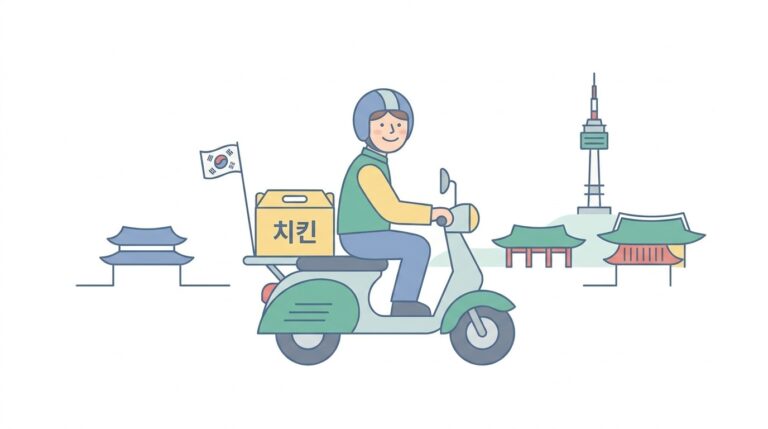
Phase 1: Empathy & K-Culture Story
안녕하세요! I am your Daily Hangul editor and local culture navigator! Have you ever experienced ordering delicious tteokbokki or Korean fried chicken through a Korean delivery app like Baemin (배달의 민족), only to sit by your door wondering, “When will my food actually arrive?”
You look at the screen, but the estimated time seems confusing, or maybe you need to message the rider directly. You feel anxious because you don’t want to sound rude, but you are starving! Don’t worry—this is a very common rite of passage for everyone living or traveling in Korea.
In Korea’s famous ‘Palli-Palli’ (hurry-hurry) delivery culture, knowing how to politely ask about delivery time will save you stress and get you your piping hot meal with confidence. Today, based on real feedback from over 1,000 beginner Korean learners, we’ll master the most natural ways to check delivery time at an A2 level!
Phase 2: Core Expressions Deep Dive
1. 얼마나 걸려요? (Eolmana geollyeoyo?)
- Pronunciation: [Eol-ma-na geol-ryeo-yo?] (Sounds like “All-mah-nah girl-yoh-yoh?”)
- Meaning: Literally “How long does it take?” / Real nuance: “How long will my delivery take?”
- K-Culture Moment: In K-dramas, when characters order late-night yashik (night snacks) while studying or hanging out, you’ll hear them ask the shop over the phone or message the rider: “얼마나 걸려요?”
- Editor’s Insight: This is the ultimate versatile phrase! You can use it for delivery, subway rides, or waiting in line at popular Seongsu-dong cafes.
- Situation Spectrum: Casual ✅ | Semi-formal ✅ | Formal ⚠️
- 🤔 Think About It: In English, we often ask “When will it be delivered?” but Koreans focus on time duration (“How long does it take?”). How does your native language ask about waiting time?
2. 언제쯤 도착해요? (Eonjejjeum dochakhaeyo?)
- Pronunciation: [Eon-je-jjeum do-chak-hae-yo?] (Pronounce ‘jjeum’ with a tight ‘jj’ sound like ‘zoom’)
- Meaning: Literally “Around when does it arrive?” / Real nuance: “Approximately what time will it get here?”
- K-Culture Moment: Used when the delivery app shows the rider is nearby on the map, but you want a friendly re-confirmation.
- Editor’s Insight: Adding -쯤 (-jjeum) softens the question from a demanding “When is it coming?” to a gentle “Around when might it arrive?”
- Situation Spectrum: Casual ✅ | Semi-formal ✅ | Formal ⚠️
- 🤔 Think About It: Notice how small particle attachments like ‘-쯤’ soften Korean speech to show politeness without sounding stiff.
3. 배달이 조금 늦어져요? (Baedari jogeum neujeojyeoyo?)
- Pronunciation: [Bae-da-ri jo-geum neu-jeo-jyeo-yo?]
- Meaning: Literally “Is the delivery becoming a little delayed?” / Real nuance: “Is the delivery taking a bit longer than expected?”
- K-Culture Moment: Rainy days in Seoul when delivery drivers face traffic jams.
- Editor’s Insight: Starting with 조금 (jogeum – a little) is essential in Korean culture to show empathy and avoid sounding aggressive.
- Situation Spectrum: Casual ✅ | Semi-formal ✅ | Formal 🚫
- 🤔 Think About It: Why do you think Koreans use softening words like ‘a little’ even when delivery is very late?
Phase 3: Textbook Korean vs. Real Native Korean
Situation 1: Asking how long the wait will be
- 📖 Textbook Korean: 음식 배달에 얼마나 시간이 소요됩니까? (Eomsik baedare eolmana sigani soyo-doebnimkka?)
- 🗣️ Real Native Korean: 얼마나 걸릴까요? / 얼마나 걸려요? (Eolmana geollil-kka-yo? / Eolmana geollyeoyo?)
- 💡 Why is it different? The textbook sentence uses heavy Sino-Korean vocabulary (소요 / soyo = consume time) suitable for formal presentations, not food delivery!
Situation 2: Asking if there is a delay
- 📖 Textbook Korean: 배달이 지연되고 있습니까? (Baedari jiyeon-doego isseumnikka?)
- 🗣️ Real Native Korean: 혹시 많이 늦나요? / 조금 늦어지나요? (Hoksi mani neunna-yo? / Jogeum neujeojina-yo?)
- 💡 Why is it different? Real locals use 혹시 (hoksi – by any chance) to cushion sensitive inquiries.
Phase 4: K-Culture Deep Dive & Non-Verbal Etiquette
4-1. Nunchi & Mindset
When communicating with delivery riders in Korea via delivery app chat or phone calls, polite posture shows in your voice. Always start with a friendly tone! Even in chat, ending sentences with ~요 (-yo) shows good Nunchi (social intuition).
4-2. K-Food Delivery Culture
Korea has one of the world’s most advanced delivery ecosystems. Riders navigate busy streets to bring fresh food to park benches at Han River or your doorstep. Because riders work under tight schedules, asking politely with “혹시 (by any chance)” respects their hard work.
Phase 5: Real-Life Roleplay Scenario
Setting: You ordered fried chicken on a Friday evening in Hongdae. It’s been 40 minutes, and you are checking with the restaurant/rider.
Characters: You (Learner) & Delivery Rider (NPC)
- You: 저기요, 혹시 제 치킨 얼마나 걸려요? (Jeogiyo, hoksi je chikin eolmana geollyeoyo?)
- 🎭 [Politely looking at your phone chat screen] (Excuse me, by any chance how long will my chicken take?)
- Rider: 아, 손님! 지금 출발했습니다. (A, sonnim! Jigeum chulbal-haesseumnida.)
- 🎭 [Speeding politely on motor scooter] (Ah, customer! I just departed now.)
- You: 아, 그래요? 언제쯤 도착해요? (A, geuraeyo? Eonjejjeum dochak-haeyo?)
- 🎭 [Smiling with relief] (Ah, really? Around when will it arrive?)
- Rider: 한 10분 정도 걸릴 것 같아요! (Han sip-bun jeongdo geollil geot gata-yo!)
- 🎭 [Checking traffic status] (I think it will take about 10 minutes!)
- You: 비가 오는데 배달이 조금 늦어져도 괜찮아요. (Biga oneunde baedari jogeum neujeojyeodo gwaenchana-yo.)
- 🎭 [Speaking warmly] (It’s raining, so it’s okay even if delivery is a bit delayed.)
- Rider: 감사해요! 조심히 안전하게 갖다 드릴게요. (Gamsa-haeyo! Josimhi anjeon-hage gatda deuril-geyo.)
- 🎭 [Grateful tone] (Thank you! I will bring it safely.)
- You: 네, 문 앞에 놓아주세요! (Ne, mun ape noajuseyo!)
- 🎭 [Making a hand gesture indicating front door] (Yes, please leave it in front of the door!)
- Rider: 네, 맛있게 드세요! (Ne, masikke deuseyo!)
- 🎭 [Hanging up cheerfully] (Yes, enjoy your meal!)
🔀 Interactive Choice Point
The rider says traffic is heavy and asks for 15 more minutes. How do you respond?
* Option A: 왜 이렇게 늦어요? 빨리 오세요! (Why are you so late? Come quickly!)
* Option B: 네, 알겠습니다! 조심히 오세요. (Yes, I understand! Please drive safely.)
* Option C: 취소해 주세요. (Please cancel it.)
Feedback:
* Option A (Risk 🚫): Too aggressive! It damages rapport in Korean service culture.
* Option B (Best ✅): Perfect! Shows sympathy and polite standard A2 Korean.
* Option C (Bad ⚠️): Unreasonable if the food is already on its way.
Phase 6: 10-Second Emotion Shadowing Drill
Repeat these sentences out loud following the slash pauses / and emotion cues:
[😊 Warmly & Kindly]- 저기요 / 혹시 얼마나 / 걸려요?
- (Jeogiyo / hoksi eolmana / geollyeoyo?)
[🥺 Anxiously but Gently]- 언제쯤 / 도착할까요? /천천히 오세요!
- (Eonjejjeum / dochak-halkkayo? / Cheoncheonhi oseyeo!)
[🙏 Thankful Tone]- 문 앞에 / 놓아주세요 / 감사합니다!
- (Mun ape / noajuseyo / gamsahamnida!)
Phase 7: K-Culture Mini Dictionary
- 배달의 민족 (Baedai-ui Minjok / Baemin): Korea’s #1 delivery application platform.
- 라이더님 (Rider-nim): Polite term for delivery drivers (“Mr./Ms. Rider”).
- 도착 예정 시간 (Dochak Yejeong Sigan): Estimated Time of Arrival (ETA) shown in apps.
- 현관 앞 (Hyeongwan Ap): “In front of the front door” — the most popular contactless drop-off spot.
Phase 8: Traveler’s Survival Kit
Top 3 Survival Phrases
- 얼마나 걸려요? (How long does it take?)
- 문 앞에 두고 가주세요. (Please leave it in front of the door.)
- 조심히 오세요. (Please come safely / drive safely.)
Editor’s Travel Note
Before ordering food in Seoul, make sure to read our detailed guide on Korean delivery app registration without local phone number. Also, if you are staying at a hotel, check the lobby rules before asking riders to come up!
Phase 9: One Step Deeper (Korean Culture Insight)
Korea is famous for speed, but Korean communication values mutual consideration (Jeong and Nunchi). When asking about delivery time, saying “조심히 오세요” (Please come safely) turns a transactional conversation into a warm human connection. It reflects how Korean society balances high efficiency with communal warmth.
💬 Your Turn: What delivery food do you want to order first in Korea? Tell us in the comments below!
Phase 10: FAQ & Common Mistakes
Q: Can I use “언제 와요?” (When are you coming?) to a rider?
A: While grammatically correct, “언제 와요?” can sound blunt or impatient. Using “언제쯤 도착해요?” sounds much softer and more natural.
Q: How do I tell the rider to leave food at the door?
A: Say “문 앞에 놓아주세요” (Mun ape noajuseyo) or select this option inside the delivery app.
Q: Is it okay to call the rider directly?
A: It’s better to use the in-app chat text function first. Texting allows automated translation and avoids phone call pressure for beginners!
🚨 Common Mistakes TOP 3
- Mistake: Saying “왜 안 와요?” (Why aren’t you coming?) ❌
- Correct Action: Say “혹시 얼마나 걸릴까요?” (How long will it take by any chance?) ✅
- Mistake: Forgetting the polite suffix ‘-요’ when chatting with riders. ❌
- Correct Action: Always end sentences in ‘-요’ or ‘-습니다’. ✅
- Mistake: Using textbook formal terms like ‘지연’ over chat. ❌
- Correct Action: Use everyday words like ‘늦어요’ (late). ✅
Phase 11: Action Mission
- 🥉 Bronze: Practice saying “얼마나 걸려요?” 3 times out loud in front of a mirror.
- 🥈 Silver: Leave a comment below using the phrase “언제쯤 도착해요?”
- 🥇 Gold: Next time you order food in Korea, send a friendly text to your rider saying “조심히 오세요!”
🎮 K-Culture Mission: Watch a scene in a K-drama where characters order food and spot if they use ‘얼마나 걸려요?’!
Phase 12: Interactive Quiz Challenge
Q1. What is the most natural way to ask how long food delivery will take?
A) 얼마나 걸려요?
B) 왜 안 가져와요?
C) 시간을 소요하십시오.
Click to reveal answers!
Answer: A! ‘얼마나 걸려요?’ is the standard, natural A2 phrase used daily by Koreans.
Q2. True or False: Adding ‘조심히 오세요’ (Drive safely) is a polite Korean culture touch when asking about delivery.
Click to reveal answers!
Answer: True! It shows warm consideration for the rider’s safety.







