

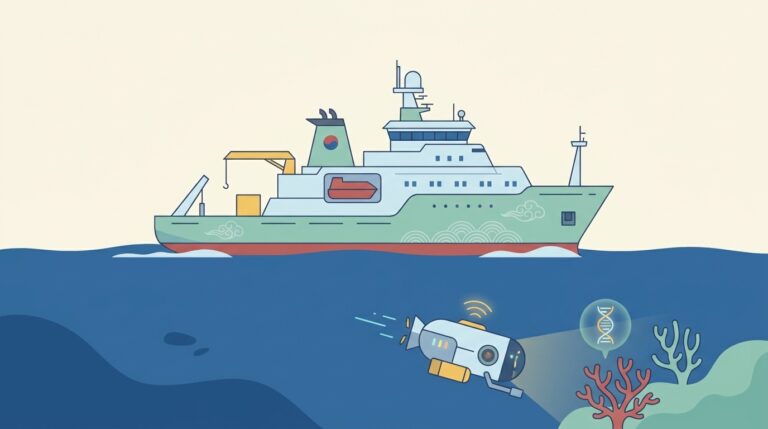
Phase 1: Empathy (스토리 몰입형 오프닝)
안녕하세요! 매일한글 에디터입니다. 🌊
Imagine sitting in a high-tech conference hall in Songdo or Busan, surrounded by leading South Korean oceanographers and biomedical researchers. Slides flash metrics on deep-sea sponges, hydrothermal vent micro-organisms, and revolutionary oncology treatments derived from ocean natural products. You want to contribute a groundbreaking insight on marine bioprospecting, but your mind stumbles: Should you use high-level academic Korean, or is there a specific nuance that signals true insider expertise?
Navigating C2-level professional Korean in specialized fields like marine biotechnology (해양 바이오 산업) and pharmaceutical development (신약 개발) is about far more than memorizing dense terminology. It requires mastering stylistic precision, elegant persuasive frameworks, and understanding how South Korea positions its blue economy on the global stage. Based on feedback from international research fellows working at institutions like KIOST (Korea Institute of Ocean Science & Technology), this guide will elevate your Korean from merely fluent to academically commanding and culturally persuasive.
Phase 2: 핵심 표현 3선 심층 분석
1. 무궁무진한 잠재력 (Mugungmujinhan jamjaeryeok)
- Pronunciation: [Moo-goong-moo-jin-han jam-jae-ryeok] (Sounds like “Moo-goong” as in endless, combined with “jam-jae-ryeok” for potential)
- Meaning: Infinite/endless potential (Literally: Boundless and exhaustless hidden power).
- K-Culture Moment: Frequently featured in Korean science documentaries (e.g., KBS Panorama) and C-suite bio-tech summits when discussing untapped ocean reserves.
- Editor’s Insight: Combining the Sino-Korean idiom 무궁무진(無窮無盡) with 잠재력 adds a sophisticated, poetic weight to formal proposals.
- Situation Spectrum: Casual 🚫 | Semi-formal ⚠️ | Formal ✅
- 🤔 Think About It: How does utilizing Sino-Korean four-character concepts elevate your authority in high-stakes professional evaluations?
2. 보고(寶庫)로 주목받다 (Bogoro jumokbatda)
- Pronunciation: [Bo-go-ro joo-mok-bat-da] (Pronounced naturally with a smooth transition between “Bo-go” treasure trove and “Jumok-batda” drawing attention)
- Meaning: To be highlighted as a treasure trove.
- K-Culture Moment: Commonly used in news reports regarding deep-sea exploration in the Pacific or Antarctica by South Korean research vessels like the Araon.
- Editor’s Insight: The word ‘보고’ (寶庫 – treasure house) metaphorically shifts the ocean from a mere body of water to an invaluable economic and biological repository.
- Situation Spectrum: Casual 🚫 | Semi-formal ⚠️ | Formal ✅
- 🤔 Think About It: Why is spatial imagery (“treasure house”) preferred over abstract statistics in Korean executive summaries?
3. 임상적 유용성을 입증하다 (Imsangjeok yuyongseong-eul ipjeonghada)
- Pronunciation: [Im-sang-jeok yoo-yong-seong-eul ip-jeong-ha-da]
- Meaning: To demonstrate clinical efficacy/utility.
- K-Culture Moment: Essential phrase in Korean pharmaceutical investor relations (IR) pitches and academic paper conclusions.
- Editor’s Insight: ‘입증하다’ carries a stronger legal/scientific burden of proof than simply ‘증명하다’ (to prove) or ‘보여주다’ (to show).
- Situation Spectrum: Casual 🚫 | Semi-formal ⚠️ | Formal ✅
- 🤔 Think About It: How does choosing precise scientific verbs alter stakeholder trust in Korean corporate research culture?
Phase 3: 교과서 한국어 vs 진짜 한국어
Situation 1: Pitching the commercial value of marine organisms
- 📖 교과서 한국어: 해양 생물 자원은 미래 신약 개발에 큰 도움이 됩니다. (Marine biological resources are very helpful for future drug development.)
- 🗣️ 진짜 한국어: 해양 바이오 자원은 차세대 신약 개발의 게임 체인저로서 무궁무진한 가치를 지니고 있습니다. (Marine biological resources hold boundless value as a game-changer for next-generation drug development.)
- 💡 왜 다를까? C2-level real-world discourse incorporates international industry terms like “게임 체인저” alongside formal Sino-Korean expressions (“지니고 있습니다”) to convey modern, cutting-edge authority.
Situation 2: Discussing the risks of deep-sea exploration
- 📖 교과서 한국어: 심해 연구는 비용이 많이 들고 어렵습니다. (Deep-sea research costs a lot and is difficult.)
- 🗣️ 진짜 한국어: 심해 탐사는 고위험·고부가가치 분야인 만큼, 선제적인 투자가 시급한 실정입니다. (As deep-sea exploration is a high-risk, high-value field, proactive investment is a pressing reality.)
- 💡 왜 다를까? Advanced professional contexts replace simple adjectives like “difficult” with compound economic terms (“고위험·고부가가치”) and precise situational assessments (“시급한 실정입니다”).
Phase 4: K-Culture 딥다이브 & 비언어적 매너
4-1. 눈치(Nunchi) & Gestures in Academic Seminars
When presenting marine biotech research in South Korea, body language reflects respect for hierarchical expertise. Maintain two-handed gestures when pointing to slide data, and practice a slight bow of the head when receiving questions from senior professors (선배 연구원). Direct eye contact should be balanced with attentive downward nods while taking notes on feedback.
4-2. Culture Code: The National R&D Drive
South Korea’s rapid rise in biotechnology is closely tied to state-backed initiatives (국책 과제). Highlighting alignment with national blue-economy strategies or green-tech goals is a crucial rhetoric in Korean research proposals. The ocean isn’t viewed merely as a natural feature, but as a strategic frontier for national health and economic sovereignty.
Phase 5: 실전 롤플레이 시나리오
Setting: Executive Boardroom at a Marine Biotechnology Institute in Songdo.
Characters: Dr. Min (Senior Research Director) & Alex (Visiting Chief Scientist).
- Dr. Min: 🎭 (서류를 넘기며) 이번 심해 유전자원 추출 프로젝트의 사업성 검토 결과는 어떻습니까?
(How is the feasibility study coming along for our deep-sea genetic resource extraction project?) - Alex: 🎭 (자신감 있는 표정으로 패널을 가리키며) 심해 미생물 추출물이 항암제 후보 물질로서 무궁무진한 잠재력을 보이고 있습니다.
(The deep-sea microbial extracts are showing infinite potential as candidates for anticancer agents.) - Dr. Min: 🎭 (흥미로운 듯 몸을 기울이며) 흥미롭군요. 하지만 기존합성 의약품 대비 경쟁력이 있을까요?
(Interesting. But would it have a competitive edge over existing synthetic drugs?) - Alex: 🎭 (데이터 슬라이드를 넘기며) 독성은 낮고 효능은 탁월하여, 해양 천연물 신약의 임상적 유용성을 입증할 가능성이 매우 높습니다.
(Due to low toxicity and superior efficacy, the possibility of proving its clinical utility as a marine natural drug is extremely high.) - Dr. Min: 🎭 (안경을 고쳐 쓰며) 기술 이전과 상용화까지의 리스크 관리는 어떻게 계획하고 계신가요?
(How do you plan to handle risk management through technology transfer and commercialization?) - Alex: 🎭 (차분하게 고개를 끄덕이며) 산학협력 네트워크를 활용해 초기 투자 부담을 줄이고 고부가가치 파이프라인을 구축하고자 합니다.
(We plan to reduce initial investment burdens through industry-academia networks and establish a high-value pipeline.) - Dr. Min: 🎭 (미소를 지으며) 아주 설득력 있는 구상이네요. 사업화 검토 보고서를 조속히 올려주세요.
(That’s a very persuasive plan. Please submit the commercialization review report as soon as possible.) - Alex: 🎭 (정중하게 목례하며) 네, 정밀 분석 데이터를 보완하여 차주까지 제출하겠습니다.
(Yes, I will supplement the precise analysis data and submit it by next week.)
🔀 인터랙티브 분기점 (Interactive Decision)
How should Alex conclude the proposal meeting when Dr. Min asks for a timeline commitment?
* Option A: “금방 만들어 드릴게요.” (I’ll make it quickly for you.)
* Option B: “차주까지 정밀 데이터를 보완하여 보고서 형태로 제출하겠습니다.” (I will supplement precise data and submit it as a report by next week.)
* Option C: “선생님이 원하시는 대로 다 하겠습니다.” (I will do whatever you want, sir.)
Feedback:
* Best Choice (Option B): Demonstrates precision, professional ownership, and formal register.
* Bad Choice (Option A): Too casual (“금방”) for high-level research boardrooms.
* Risk Choice (Option C): Sounds passive and overly subservient, lacking scientific initiative.
Phase 6: 10초 감정 섀도잉 드릴
[🧐 신중하고 확신에 찬 어조]심해 생물 자원은 / 미지의 영역이자 / 무궁무진한 잠재력을 지닌 / 보물창고입니다.[💡 전문성을 강조하며]본 연구 물질은 / 임상적 유용성을 입증하여 / 차세대 바이오 시장을 / 선도할 것입니다.[🤝 정중하고 단호하게]산학연 협력을 통해 / 기술적 한계를 극복하고 / 상용화를 앞당기겠습니다.
Phase 7: K-Culture 미니 사전 (핵심 키워드 4개)
- 해양천연물 (Haeyang Cheon-yeon-mul) | Marine Natural Products
- Chemical compounds derived from marine organisms used for pharmaceutical development.
- 신약후보물질 (Sin-yak Hu-bo Mul-jil) | Drug Candidates
- Pharmacological compounds showing promise in pre-clinical screening.
- 바이오시밀러 (Ba-i-o-si-mil-ler) | Biosimilars
- Biopharmaceutical products officially approved as highly similar to original biologics (a major pillar of Korean exports).
- 심해 열수구 (Sim-hae Yeol-su-gu) | Hydrothermal Vents
- Deep-sea geysers hosting extreme-environment micro-organisms utilized in bio-engineering.
Phase 8: 여행자를 위한 생존 키트 (연구원/비즈니스 버전)
TOP 3 Professional Survival Expressions
- 학술대회 등록 확인 부탁드립니다. (Haksul-daehoe deongnok hwag-in 부탁드립니다.) — Please verify my symposium registration.
- 발표자료를 인쇄할 수 있는 곳이 있나요? (Balpyo-jaryo-reul insae-hal su inneun gosi innayo?) — Is there a place where I can print my presentation slides?
- 명함을 한 장 건네드려도 될까요? (Myeonghameul han jang geonnederyeodo doelkkayo?) — May I offer you my business card?
Editor’s Travel Note
When attending marine biotech forums at centers like BEXCO in Busan, download the 네이버 지도 앱 다운로드 for precise subway and shuttle transport. Navigating research facilities requires showing identification; ensure your business cards (명함) are stored in a dedicated cardholder to present with both hands.
Phase 9: “한 발 더 깊이” (생각 질문)
In Korean history, the sea was both a defense barrier and a lifeline for coastal communities. Today, Korean high-tech bio-industries view the ocean through the lens of “생명 자원의 보고” (a treasure trove of life resources). This reflects a cultural shift from surviving nature to harvesting high-tech innovation from its deepest depths, balancing environmental stewardship with competitive industrial drive.
💬 Your Turn: How does your home country conceptualize deep-sea exploration—is it viewed primarily as environmental conservation or economic opportunity? Share your thoughts in Korean in the comments below!
Phase 10: FAQ & 오해 방지
Q: Can I use basic verb forms like ‘입증해요’ instead of ‘입증합니다’ in research presentations?
A: While ‘입증해요’ is grammatically correct, using standard formal endings (-습니다/ㅂ니다) or deferential academic structures (-음/ㅁ으로 확인됨) is mandatory during official academic oral presentations to maintain credibility.
Q: What is the difference between ‘해양’ (Haeyang) and ‘바다’ (Bada)?
A: ‘바다’ is native Korean, used in general, poetic, or everyday conversation. ‘해양’ (海洋) is Sino-Korean, preferred in scientific, legal, economic, and industrial contexts.
Q: How do I address senior researchers in Korean biotechnology labs?
A: Combine their surname + title + 님 (e.g., 김 박사님 / 박 연구원님). Never use direct second-person pronouns like “당신” or first names alone.
🚨 Common Mistakes TOP 3
- Mistake: Using casual slang during Q&A sessions.
- Correct Action: Use formal phrases like “질의해 주셔서 감사합니다” (Thank you for your question).
- Mistake: Overusing direct English acronyms without clarifying Korean equivalents in written reports.
- Correct Action: Write the Korean Sino-term first, followed by the acronym in parentheses (e.g., 해양수산부(MOF)).
- Mistake: Handing business cards over with one hand or placing them in back pockets.
- Correct Action: Hand over cards using both hands with text facing the receiver, and keep received cards on the table during meetings.
Phase 11: 액션 미션 & 참여 유도
- 🥉 Bronze: Record yourself reading the three core phrases from Phase 2 out loud with proper C2 intonation.
- 🥈 Silver: Write a 3-sentence summary of your favorite ocean science topic using the phrase “무궁무진한 잠재력”.
- 🥇 Gold: Draft a short research intro pitch in Korean and share it in our learner community for editor feedback!
🎮 K-Culture Mission: Watch a documentary on Korean polar/ocean research (search “KIOST 극지연구소” on YouTube) and spot at least two Sino-Korean academic vocabulary words!
Phase 12: 인터랙티브 퀴즈 챌린지
Question 1: Fill in the blank
해양 미생물은 신약 개발에 있어 ______ 잠재력을 지니고 있다.
(A) 무궁무진한
(B) 어설픈
(C) 조용한
🔍 정답 및 해설 보기
정답: (A) 무궁무진한
해설: ‘무궁무진한’ (boundless/infinite) is the appropriate high-level vocabulary to describe endless biological potential.
Question 2: Culture & Etiquette True/False
In formal Korean academic conferences, it is acceptable to address a senior lab director by their first name if you are speaking English mixed with Korean. (T/F)
🔍 정답 및 해설 보기
정답: False
해설: Always use official titles with ‘-님’ (e.g., 박사님, 센터장님) regardless of language mixing in formal Korean professional settings.







