

Phase 1: Empathy (Storytelling Opening)
안녕하세요! (Annyeonghaseyo!) I’m your Daily Hangul editor, your friendly 10-year local culture navigator in Korea!
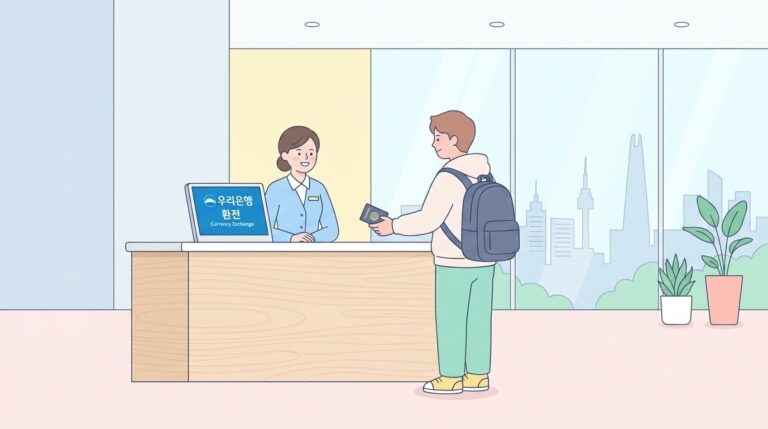
Imagine this: You are standing inside a sleek, modern bank branch in Hongdae, Seoul. The air smells like fresh coffee, ATM screens are flashing, and you need to pay your monthly rent or send money to a Korean friend who covered dinner last night. You walk up to the teller counter, and suddenly panic sets in—what if they ask for details you don’t understand? How do you say “I want to send money” without relying on frantic hand gestures?
Don’t worry at all! Sending money (송금 – song-geum) in Korea is actually super smooth once you know just a few beginner-friendly expressions. Based on real feedback from thousands of international students and travelers in Korea, mastering these 3 core phrases will boost your confidence instantly. Let’s make your next bank visit 100% stress-free!
Phase 2: Core Expressions Deep Dive
1. 돈 보내고 싶어요 (Don bonaego sipeoyo)
- Pronunciation: [Don bo-nae-go sheep-oh-yo] (Sounds like “don” + “bo-neh-go” + “ship-oh-yo”)
- Meaning: Literal: “Money / to send / I want to.” Nuance: “I’d like to send/transfer money, please.”
- K-Culture Moment: You’ll hear this in K-Dramas whenever characters go to the local bank to transfer tuition fees or pay back loans.
- Editor’s Insight: This uses the ultra-handy structure
[Noun] + [보내고 싶어요](I want to send [Noun]). You can use it anywhere! - Situation Spectrum: Casual: 🚫 | Semi-formal: ✅ | Formal: ✅
- 🤔 Think About It: In Korean, ending sentences with
-요 (-yo)instantly adds polite respect to bank clerks and strangers.
2. 계좌 번호 알려주세요 (Gyejwa beonho allyeojuseyo)
- Pronunciation: [Gyeh-jwa bun-ho al-lyuh-ju-seh-yo] (Think of “Gyeh-jwa” like “gay-jwa”, and “beonho” like “bun-ho”)
- Meaning: Literal: “Account number / please let me know.” Nuance: “Please give me the bank account number.”
- K-Culture Moment: Splitting the bill after eating delicious Samgyeopsal with Korean friends! Someone always asks for the group leader’s 계좌 번호.
- Editor’s Insight:
계좌means bank account, and번호means number. Combine them and you sound like a local! - Situation Spectrum: Casual: ⚠️ (Use 계좌 번호 줘) | Semi-formal: ✅ | Formal: ✅
- 🤔 Think About It: Did you know sharing account numbers via chat apps (like KakaoTalk) is standard etiquette in Korea for bill splitting?
3. 수수료 있어요? (Susuryo isseoyo?)
- Pronunciation: [Soo-soo-ryo ees-suh-yo?]
- Meaning: Literal: “Fee / is there?” Nuance: “Is there a transfer fee?”
- K-Culture Moment: Transferring money late at night at an ATM near a convenience store.
- Editor’s Insight:
수수료(su-su-ryo) is the magic word for service/transfer fees. - Situation Spectrum: Casual: ⚠️ | Semi-formal: ✅ | Formal: ✅
- 🤔 Think About It: Bank fees are often waived during normal business hours in Korea, but late-night ATM transfers might charge a tiny fee!
Phase 3: Textbook Korean vs. Real Korean
Situation 1: At the Bank Counter
- 📖 Textbook Korean: 계좌 이체를 하고 싶습니다. (Gyejwa iche-reul hago sipseumnida.)
- 🗣️ Real Korean: 돈 보내려고요. / 돈 보내고 싶어요. (Don bonaeryeogoyo. / Don bonaego sipeoyo.)
- 💡 Why is it different? Textbooks teach stiff formal endings (
-습니다), but real Koreans use comfortable polite speech (-요) when chatting with bank tellers!
Situation 2: Asking About Transfer Fees
- 📖 Textbook Korean: 송금 수수료는 얼마입니까? (Songgeum susuryo-neun eolma-imnika?)
- 🗣️ Real Korean: 수수료 얼마 나와요? (Susuryo eolma nawayo?)
- 💡 Why is it different? Expressing cost as “얼마 나와요?” (How much comes out?) is the natural everyday way locals talk about fees and bills.
Phase 4: K-Culture Deep Dive & Non-Verbal Manners
4-1. Nunchi & Gestures: The Two-Hand Rule (두 손)
When handing your ID card, passport, or cash to the bank teller, ALWAYS use both hands! In Korean etiquette (Nunchi culture), passing items with one hand can look dismissive. Placing your right hand on the item while supporting your right forearm with your left hand shows deep respect.
4-2. Culture Code: Quick Transfer Culture (더치페이 & 모바일 송금)
Korea is practically a cashless society. Mobile banking apps like Toss and KakaoBank allow instant transfers in under 3 seconds. When dining out, friends usually have one person pay the bill and everyone else sends their share via account transfer (더치페이 – Dutch Pay).
Phase 5: Real-Life Roleplay Scenario
Setting: A bright Shinhan Bank branch in Seoul.
NPC: Bank Teller (친절한 은행원)
- Turn 1 (Teller): 안녕하세요! 어떤 업무 도와드릴까요? (Annyeonghaseyo! Eotteon eommu dowadeureilkkal-yo?)
[🎭 Smiling warmly behind the desk] - Turn 2 (You): 안녕하세요! 돈 보내고 싶어요. (Annyeonghaseyo! Don bonaego sipeoyo.)
[🎭 Pointing gently to your account details on your phone] - Turn 3 (Teller): 네, 계좌 번호하고 받는 분 성함 알려주세요. (Ne, gyejwa beonho-hago bakneun bun seongham allyeojuseyo.)
[🎭 Ready to type on the keyboard] - Turn 4 (You): 여기 계좌 번호 있어요. (Yeogi gyejwa beonho isseoyo.)
[🎭 Showing phone screen holding it with both hands] - Turn 5 (Teller): 얼마 보내시겠어요? (Eolma bonaesigesseoyo?)
[🎭 Looking up at you politely] - Turn 6 (You): 5만 원 보내주세요. (O-man won bonaejuseyo.)
[🎭 Saying the amount clearly] - Turn 7 (Teller): 수수료는 500원입니다. 신분증 주세요. (Susuryoneun o-baek-won-imnida. Sinbunjeung juseyo.)
[🎭 Reaching out hand gently] - Turn 8 (You): 여기 있습니다. 감사합니다! (Yeogi isseumnida. Kamsahamnida!)
[🎭 Handing your passport/ID card with both hands]
🔀 Interactive Choice:
What will you do when handed the bank receipt?
* Choice A: Take the receipt with both hands, bow slightly, and say “감사합니다!” (Kamsahamnida!)
👉 [BEST!] Perfect etiquette! The teller will smile and appreciate your courtesy.
* Choice B: Grab the receipt with one hand quickly and walk away without saying anything.
👉 [BAD!] Comes across as cold and slightly rude in Korean culture.
* Choice C: Start speaking super fast English explaining your entire trip itinerary.
👉 [RISK!] Not all bank clerks are confident in English, which might cause unnecessary delays!
Phase 6: 10-Second Emotion Shadowing Drill
Repeat after me with deep emotion!
[😊 Friendly & Clear]돈 / 보내고 / 싶어요! (Don / bonaego / sipeoyo!)[🥺 Slightly Worried]수수료 / 있어요? (Susuryo / isseoyo?)[✨ Confident & Polite]여기 / 계좌 번호 / 있어요! (Yeogi / gyejwa beonho / isseoyo!)
Phase 7: K-Culture Mini Dictionary
- 송금 (Songgeum) | Wire Transfer | Formal term used in banking apps and receipts.
- 계좌 번호 (Gyejwa beonho) | Account Number | Essential digits needed for any wire transfer.
- 수수료 (Susuryo) | Transaction Fee | Extra small fee charged during transfers.
- 더치페이 (Deochipei) | Splitting the Bill | Culture of transferring exact individual shares after meals.
Phase 8: Traveler’s Survival Kit
Survival Expressions TOP 3:
- 돈 보내고 싶어요. (Don bonaego sipeoyo.) – I want to send money.
- Pro Tip: Use this right when approaching the bank counter.
- 계좌 번호 맞아요? (Gyejwa beonho majayo?) – Is this account number correct?
- Pro Tip: Great for double-checking details with the teller.
- 영수증 주세요. (Yeongsujeung juseyo.) – Please give me a receipt.
- Pro Tip: Always save your paper receipt for wire transfers!
Editor’s Travel Note:
To navigate nearby ATM locations in Seoul, open your app store and search for [Naver Map App Download]. Search for local banks like “신한은행” (Shinhan Bank) or “우리은행” (Woori Bank) for instant money transfers!
Phase 9: One Step Deeper (Reflective Essay)
In Korea, money transfer is insanely fast and embedded into everyday life. Whether paying rent to a landlord or splitting street food expenses, bank transfers happen in seconds. Understanding polite banking Korean shows respect for local etiquette and makes your stay in Korea empowering and smooth.
💬 Your Turn: Have you ever tried transferring money at a bank or ATM in Korea? Share your story in the comments below!
Phase 10: FAQ & Common Mistakes
Q: Can I send money at an ATM in Korea without a Korean bank account?
A: Usually, you need a domestic Korean bank card to send money via ATM. If you only have foreign cash or passport, visit the bank teller counter directly!
Q: What is the word for bank account in Korean?
A: It is 계좌 (Gyejwa). You will frequently see “계좌 번호” written on invoices, online shop checkouts, and bills.
Q: Do bank tellers speak English in Korea?
A: Major branches in foreign-dense areas like Itaewon, Hongdae, or Gangnam often have English service, but learning basic Korean banking phrases guarantees a smooth experience anywhere!
🚨 Common Mistakes TOP 3:
- Mistake: Using informal speech like “돈 보내” to a bank clerk.
- Correct Action: Always end sentences with
-요(“돈 보내고 싶어요”).
- Correct Action: Always end sentences with
- Mistake: Handing over cards or passports with one hand.
- Correct Action: Use both hands (두 손) to show respect.
- Mistake: Forgetting to double-check the recipient’s name (받는 사람).
- Correct Action: Always verify the recipient’s name on the screen before confirming!
Phase 11: Action Mission & Engagement
- 🥉 Bronze Mission: Practice saying “돈 보내고 싶어요” 3 times out loud right now!
- 🥈 Silver Mission: Share this post with a friend traveling to Korea soon!
- 🥇 Gold Mission: Visit a local Korean bank branch or ATM and select the Korean menu option to make a transfer!
🎮 K-Culture Mission: Next time you watch a K-Drama, listen closely during restaurant scenes to spot characters asking for “계좌 번호”!
Phase 12: Interactive Quiz Challenge
Quiz 1: Situation Judgment
How do you politely tell the bank clerk you want to send money?
* A) 돈 보내!
* B) 돈 보내고 싶어요.
* C) 돈 줘.
Quiz 2: Fill-in-the-blank
Fill in the blank: “계좌 ____ 알려주세요.” (Please give me the account number.)
* A) 이름 (Name)
* B) 번호 (Number)
* C) 지갑 (Wallet)
Quiz 3: True or False
In Korea, it is polite to give your ID card to a bank clerk using only one hand. (True / False)
Click here for Answers & Explanations!
- B) 돈 보내고 싶어요. (Polite standard expression for asking to send money!)
- B) 번호 (계좌 번호 means account number.)
- False! (Always use both hands when passing items to elders or customer service staff in Korea!)







