

Phase 1: Empathy & Storytelling
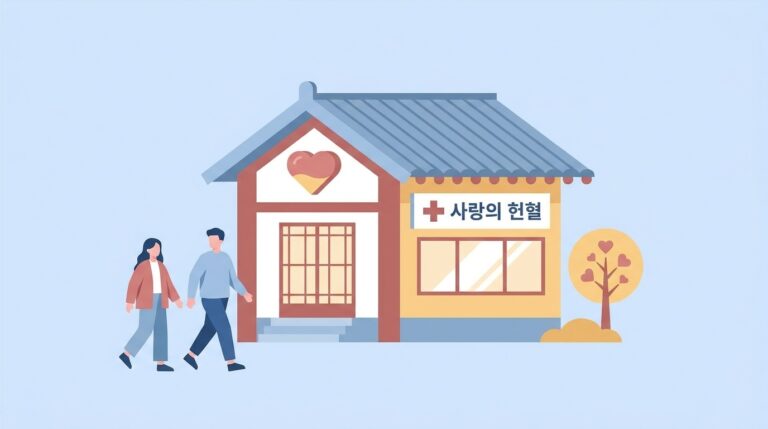
안녕하세요! This is your Daily Hangul lead editor and local culture navigator. Have you ever watched a K-Drama where a character urgently needs a blood transfusion, and their family or friends pull out a small piece of paper called a 헌혈증 (blood donation certificate) to help cover the medical costs? Or perhaps you’ve passed by a bright, clean clinic in Hongdae or Gangnam with a sign reading ‘헌혈의 집’ (House of Blood Donation) and wondered if foreigners can participate?
Donating blood in Korea is not only a noble act of saving lives, but it is also deeply rooted in the Korean spirit of 정 (Jeong) and community support. Many foreign residents in Korea want to give back through blood donation, yet feel intimidated by medical terminology, eligibility checks, or official procedures.
Don’t worry! Today, we are exploring practical, intermediate-level (B2) Korean expressions for visiting a blood donation center, filling out health forms, and donating or redeeming blood donor certificates. Based on real experiences from our learners at Daily Hangul, this guide will equip you with natural phrasing and social nuances so you can walk into any 헌혈의 집 with complete confidence!
Phase 2: Core Expressions Deep Dive
1. 헌혈하러 왔어요. (Heon-hyeol-ha-reo wa-sso-yo)
- Pronunciation: [Heon-hyeol-ha-reo wa-sso-yo] (Sounds like “Hunn-hyeol-hah-ruh wah-sso-yo”)
- Meaning: Literal: “I came to do blood donation.” | Real Nuance: “I’m here to donate blood.”
- K-Culture Moment: You walk into a cozy 헌혈의 집 near a university station. The receptionist greets you, and you comfortably state your purpose.
- Editor’s Insight: Using the grammar pattern ‘-(으)러 오다’ (to come in order to do something) shows clear intention. At the B2 level, this sounds natural, direct, and polite.
- Situation Spectrum: Casual ⚠️ | Semi-formal ✅ | Formal ✅
- 🤔 Think About It: In Korea, blood donation is highly organized through dedicated centers. How does stating your purpose clearly help medical staff streamline your check-in?
2. 헌혈증을 기부하고 싶어요. (Heon-hyeol-jeung-eul gi-bu-ha-go sip-eo-yo)
- Pronunciation: [Heon-hyeol-jeung-eul gi-bu-ha-go sip-eo-yo] (Sounds like “Hunn-hyeol-jeung-eul gee-boo-hah-goh ship-uh-yoh”)
- Meaning: Literal: “I want to donate my blood donation certificate.” | Real Nuance: “I’d like to donate my blood donor paper/certificate for patients in need.”
- K-Culture Moment: Many blood donation centers have donation boxes where donors can drop their certificates to help pediatric cancer patients or low-income hospital patients.
- Editor’s Insight: Note the double usage of ‘donate’: 헌혈 is blood donation, while 기부 is donating items or money. Distinguishing between these two shows high intermediate precision.
- Situation Spectrum: Casual ⚠️ | Semi-formal ✅ | Formal ✅
- 🤔 Think About It: Why do you think Koreans collect paper certificates (헌혈증) to transfer financial/medical rights to blood transfusions to others?
3. 사전 문진표를 작성했는데요. (Sa-jeon mun-jin-pyo-reul jak-seong-hae-nneun-de-yo)
- Pronunciation: [Sa-jeon mun-jin-pyo-reul jak-seong-hae-nneun-de-yo] (Sounds like “Sah-jeon moon-jeen-pyoh-reul jak-seong-haen-neun-deh-yoh”)
- Meaning: Literal: “I filled out the preliminary health questionnaire, so…” | Real Nuance: “I’ve already completed the online/preliminary questionnaire.”
- K-Culture Moment: You completed the Red Cross self-screening app on your smartphone before arriving to skip the waiting line.
- Editor’s Insight: The ending ‘-는데요’ is a classic B2 background-setting phrase. It gently invites the listener to respond or guide you to the next step without sounding bossy.
- Situation Spectrum: Casual 🚫 | Semi-formal ✅ | Formal ✅
- 🤔 Think About It: Ending sentences with ‘-는데요’ is a core Korean polite strategy. How does soft-landing your statements make interactions smoother?
Phase 3: Textbook Korean vs. Real Korean
Situation 1: Arriving at the Reception Desk
- 📖 Textbook Korean: “저는 오늘 헌혈을 하고 싶습니다.” (I wish to perform blood donation today.)
- 🗣️ Real Korean: “안녕하세요, 오늘 예약하고 헌혈하러 왔는데요.” (Hi, I made a reservation and came to donate blood.)
- 💡 Why the Difference? Native speakers rarely use overly formal textbook declarations like “하고 싶습니다” in casual public service interactions. Using ‘-인데요’ creates a natural, polite conversation bridge.
Situation 2: Asking About Using/Donating the Certificate
- 📖 Textbook Korean: “헌혈증서를 타인에게 전달하겠습니다.” (I will hand over the blood donation certificate to another person.)
- 🗣️ Real Korean: “이 헌혈증 기부함에 넣으면 되나요?” (Can I just drop this blood certificate into the donation box?)
- 💡 Why the Difference? In real centers, donors simply ask where to drop off certificates or how to apply them. Passive/action-oriented natural phrasing like ‘-면 되나요?’ is preferred over formal promises.
Phase 4: K-Culture Deep Dive & Mannerisms
4-1. Nunchi & Gestures at ‘헌혈의 집’
When you enter a Korean blood donation center, receptionist staff and nurses work with high efficiency. Observing proper 눈치 (Nunchi) ensures a seamless visit:
1. Two-handed handoff: When presenting your ARC (Alien Registration Card or 외국인등록증) or passport, hand it over with both hands.
2. Resting Etiquette: After donating blood, you will be given snacks (like Choco Pie or juice) and asked to sit in the lounge for 10–15 minutes until a timer rings. Do not stand up or rush out immediately; nurses monitor the room closely for your safety.
3. Pressing the Bandage: Keep firm pressure on your arm puncture site with two fingers when guided. Moving around while holding your phone with that arm is considered reckless behavior!
4-2. Cultural Context: The Value of 헌혈증 (Blood Donation Certificate)
In Korea, whenever you donate blood, you receive an official paper certificate (헌혈증서). This card serves as a guarantee: if the donor or anyone they gift the certificate to ever needs a blood transfusion in a Korean hospital, presenting this card waives the out-of-pocket medical cost for that blood unit. Consequently, university clubs, celebrity fan clubs (like BTS ARMY or Trot fan clubs), and companies frequently organize 헌혈증 기부 캠페인 (Certificate Donation Campaigns) to collect hundreds of cards for children with leukemia.
Phase 5: Practical Roleplay Scenario
Setting: A modern 헌혈의 집 in Sinchon.
Characters: Staff Nurse (간호사) & You (학습자).
- 간호사: 안녕하세요! 예약하고 오셨나요, 아니면 현장 접수이신가요?
(An-nyeong-ha-se-yo! Ye-yak-ha-go o-syeot-na-yo, a-ni-myeon hyeon-jang jeop-su-i-sin-ga-yo?)
🎭 (Welcoming with a warm smile at the digital kiosk)
“Hello! Did you make a reservation, or are you registering on-site?” -
학습자: 안녕하세요. 앱으로 미리 예약하고 왔어요.
(An-nyeong-ha-se-yo. Aep-eu-ro mi-ri ye-yak-ha-go wa-sso-yo.)
🎭 (Showing smartphone screen with confirmation)
“Hello. I made a reservation in advance through the app.” -
간호사: 네, 확인되었습니다. 혹시 오늘 문진표도 작성하셨어요?
(Ne, hwak-in-doe-ot-seub-ni-da. Hok-si o-neul mun-jin-pyo-do jak-seong-ha-syeot-eo-yo?)
🎭 (Checking system database)
“Yes, confirmed. By any chance, did you fill out the health questionnaire today?” -
학습자: 네, 오기 전에 모바일 사전 문진표 작성했어요.
(Ne, o-gi jeon-e mo-ba-il sa-jeon mun-jin-pyo jak-seong-hae-sso-yo.)
🎭 (Nodding politely)
“Yes, I filled out the mobile questionnaire before coming.” -
간호사: 잘하셨습니다! 신분증 확인 후 혈압 측정 도와드릴게요.
(Jal-ha-syeot-seub-ni-da! Sin-bun-jeung hwak-in hu hyeol-ap cheok-jeong do-wa-deu-ril-ge-yo.)
🎭 (Pointing toward the automated blood pressure monitor)
“Great job! After checking your ID, I’ll help you measure your blood pressure.” -
학습자: 여기 외국인등록증 있어요. 전혈 헌혈로 신청했는데요.
(Yeo-gi oe-guk-in-deung-rok-jeung iss-eo-yo. Jeon-hyeol heon-hyeol-ro sin-cheong-hae-nneun-de-yo.)
🎭 (Handing over ID card with both hands)
“Here is my Alien Registration Card. I applied for whole blood donation.” -
간호사: 네, 오늘 컨디션은 괜찮으시죠? 헌혈 끝나면 헌혈증도 발급해 드립니다.
(Ne, o-neul keon-di-syeon-eun gwaen-chanh-eu-si-jyo? Heon-hyeol kkeun-na-myeon heon-hyeol-jeung-do bal-geup-hae deu-rim-ni-da.)
🎭 (Guiding to the interview booth)
“Yes, you feel in good condition today, right? We’ll issue your certificate when finished.” -
학습자: 감사해요. 혹시 받은 헌혈증을 바로 기부할 수도 있나요?
(Gam-sa-hae-yo. Hok-si ba-deun heon-hyeol-jeung-eul ba-ro gi-bu-hal su-do it-na-yo?)
🎭 (Pointing to the charity collection box nearby)
“Thank you. Is it possible to donate the certificate right after receiving it?”
🔀 Interactive Choice Point
The nurse asks: “헌혈증을 지정 기부하시겠어요, 아니면 일반 기부함에 넣으시겠어요?” (Would you like to donate the certificate to a designated cause, or put it in the general donation box?)
- Choice A: “잘 모르겠으니까 아무 데나 넣어 주세요.” (I don’t know, so just put it anywhere.)
- ❌ Feedback (Risk): Slightly rude and dismissive. It makes it sound like you don’t care about the donation.
- Choice B: “일반 기부함에 넣을게요! 필요한 환자분들께 전달해 주세요.” (I’ll put it in the general box! Please pass it to patients in need.)
- ✅ Feedback (Best): Excellent B2 fluency! Expresses your warm intention politely and clearly.
- Choice C: “기부 안 하고 그냥 가지고 갈게요.” (I won’t donate and will just take it.)
- ⚠️ Feedback (Bad / Blunt): It’s completely okay to keep your certificate, but phrasing it so bluntly can sound cold. Better to say: “아, 오늘은 제가 가지고 갈게요. 감사합니다!”
Phase 6: 10-Second Emotion Shadowing Drill
[😊 Welcoming & Bright]
안녕하세요! / 오늘 헌혈하러 왔는데요 / 예약 확인 부탁드려요.
(An-nyeong-ha-se-yo! / O-neul heon-hyeol-ha-reo wa-sso-yo / Ye-yak hwak-in bu-tak-deu-ryeo-yo.)-
[🥺 Thoughtful & Kind]
제가 받은 헌혈증을 / 백혈병 어린이들에게 / 기부하고 싶어요.
(Je-ga ba-deun heon-hyeol-jeung-eul / Baek-hyeol-byeong eo-rin-i-deul-e-ge / Gi-bu-ha-go sip-eo-yo.) -
[😌 Calm & Confident]
모바일 문진표는 / 오기 전에 / 이미 작성해 뒀습니다.
(Mo-ba-il mun-jin-pyo-neun / O-gi jeon-e / I-mi jak-seong-hae dwoet-seub-ni-da.)
Phase 7: K-Culture Mini Dictionary
-
헌혈의 집 (Heon-hyeol-ui Jip)
- Translation: House of Blood Donation / Red Cross Blood Center.
- Usage: Dedicated blood donation clinics operating nationwide across Korea.
- 헌혈증서 (Heon-hyeol-jeung-seo)
- Translation: Blood Donor Certificate.
- Usage: Paper certificate issued upon donating blood. Offsets medical costs for transfusions.
- 문진표 (Mun-jin-pyo)
- Translation: Health History Questionnaire / Medical Screening Form.
- Usage: Form asking about recent travel, medication, and medical history prior to donation.
- 전혈 / 성분헌혈 (Jeon-hyeol / Seong-bun-heon-hyeol)
- Translation: Whole Blood Donation / Apheresis (Plasma or Platelets).
- Usage: Whole blood takes ~10 mins; apheresis takes 45–90 mins. Nurses will ask which type you applied for.
Phase 8: Traveler & Resident Survival Kit
Top 3 Survival Phrases
- 신분증 여기 있습니다. (Sin-bun-jeung yeo-gi iss-seub-ni-da.) — Here is my ID card.
- Pro Tip: Foreigners must present an ARC (Alien Registration Card) or Passport with valid stay status.
- 외국인도 헌혈할 수 있나요? (Oe-guk-in-do heon-hyeol-hal su it-na-yo?) — Can foreigners donate blood too?
- Pro Tip: Yes! If you have resided in Korea for over 1 year (or 6 months depending on country history) and speak basic Korean/English for the screening interview.
- 음료수 더 마셔도 되나요? (Eum-ryeo-su deo ma-syeo-do doe-na-yo?) — May I drink more juice/water?
- Pro Tip: Hydration is essential before and after donation. Centers provide free snacks and soft drinks!
Editor’s Travel Note
Before heading out, download the official Korean Red Cross app by searching for [레드커넥트 (Red Connect) App Download] on Google Play or Apple App Store. You can easily find nearby locations by searching “헌혈의 집” on [네이버 지도 앱 (Naver Map App)], make reservations, and check your blood test results (liver function, cholesterol) 2 days after donating!
Phase 9: A Step Deeper (Culture Thought)
In many Western countries, donating blood is strictly a quick medical procedure with minor compensation or purely voluntary goodwill. In Korea, however, blood donation creates a tangible currency of care through 헌혈증서. Collecting certificates for a sick colleague, a family member undergoing surgery, or donating them through a charity drive is an extension of 품앗이 (Pum-asi)—the traditional Korean ethos of mutual communal aid. When you hand over a blood certificate in Korea, you are participating in centuries-old social solidarity.
💬 Your Turn: Have you ever donated blood or volunteered in your home country or in Korea? Share your story in the comments below!
Phase 10: FAQ & Common Mistakes
Q: Can foreigners donate blood in Korea if they don’t speak fluent Korean?
A: You need at least intermediate (B2) Korean or an English-speaking nurse at selected major centers (e.g., Gangnam or Sinchon branches). Because safety screening involves medical history questions, accurate communication is mandatory.
Q: What documents do I need to bring to ‘헌혈의 집’?
A: You must bring a physical official ID containing your resident registration number or ARC number (e.g., Alien Registration Card, Domestic Residence Card, or Passport).
Q: What happens if I lose my paper 헌혈증서?
A: Historically certificates could not be reissued if lost, but under revised Korean blood management regulations, digital reissuance through the Korean Red Cross website is now available for modern donors!
🚨 Common Mistakes Warning Board
- ❌ Mistake 1: Drinking alcohol the night before donating blood.
- Correct Action: Alcohol consumption within 24 hours disqualifies you. Get a good night’s sleep and eat a light meal before visiting.
- ❌ Mistake 2: Saying “헌혈을 사겠습니다” (I will buy blood donation).
- Correct Action: Blood buying/selling is illegal in Korea. Always use 헌혈하다 (donate blood) or 헌혈증을 기부하다 (donate blood certificates).
- ❌ Mistake 3: Leaving immediately after blood collection.
- Correct Action: Rest in the waiting lounge for at least 15 minutes. Nurses monitor you for sudden dizziness.
Phase 11: Action Missions
- 🥉 Bronze Mission (Solo Practice): Practice saying “안녕하세요, 헌혈하러 왔는데요” out loud 3 times with natural intonation.
- 🥈 Silver Mission (Social Sharing): Open Naver Maps, search “헌혈의 집” near your residence in Korea, and bookmark the closest branch.
- 🥇 Gold Mission (Real Life Action): Complete the online health questionnaire on the Red Connect app and schedule a visit to donate blood or contribute a certificate!
🎮 K-Culture Mission: Watch a medical Korean drama (e.g., Hospital Playlist) and spot any scene mentioning “헌혈” or “헌혈증”!
Phase 12: Interactive Quiz Challenge
Quiz 1. Fill in the Blank
When arriving at the center, how do you politely tell the nurse you completed the online health questionnaire?
“오기 전에 미리 문진표를 __________.”
* A) 버렸어요 (Threw away)
* B) 작성했어요 (Filled out)
* C) 샀어요 (Bought)
🔍 Click to view Answer & Explanation
Correct Answer: B) 작성했어요
Explanation: 문진표를 작성하다 means “to fill out a medical questionnaire.” Option A means threw away, and Option C means bought.
Quiz 2. Situational Nunchi Judgment
After completing your blood donation, what should you do in the resting lounge?
* A) Run to catch the subway immediately.
* B) Rest for 10–15 minutes, enjoy juice/snacks, and wait for the nurse’s guidance.
* C) Do heavy arm push-ups to test your strength.
🔍 Click to view Answer & Explanation
Correct Answer: B
Explanation: For safety, resting in the center lounge with proper hydration is mandatory etiquette at Korean blood centers.
Quiz 3. True or False
In Korea, blood donor certificates (헌혈증서) can be gifted to family or donated to pediatric cancer patients to reduce medical transfusion costs.
* (True / False)
🔍 Click to view Answer & Explanation
Correct Answer: True
Explanation: Korean blood donation certificates grant financial exemption for blood transfusion fees and can be legally transferred or donated to help others in need.







