

Phase 1: 공감 (Empathy & Connection)
안녕하세요! 매일한글 에디터입니다! 👋
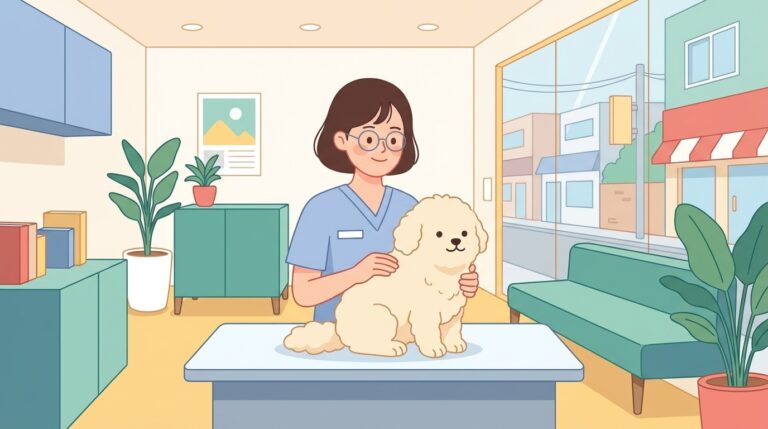
Have you ever brought your furry best friend to a vet clinic in Korea? Imagine this: You walk into a cozy, bright veterinary hospital in Mapo-gu with your cat or dog. The receptionist smiles and asks, “어떻게 오셨어요?” (What brings you in today?). You freeze for a second. You know you’re here for a routine vaccination, but how do you express “shot,” “side effects,” or “check-up” clearly without getting flustered?
Many of our B1-level learners tell us that handling medical situations for their pets is one of the most nerve-wracking experiences in Korea. You want to make sure your pet gets the exact treatment they need without any miscommunication. Don’t worry! Today, based on real feedback from international pet owners living in Korea, we’ve crafted the ultimate guide to taking your pet to the vet for vaccinations. By the end of this post, you’ll speak with confidence at the clinic!
Phase 2: 핵심 표현 3선 심층 분석 (Top 3 Essential Expressions)
1. 예방 접종 하러 왔어요. (Yebang jeopjong ha-reo wasseoyo.)
- Pronunciation: Ye-bang jeop-jong ha-reo wa-sseo-yo. (Think of ‘Ye-bang’ like ‘Yeah-Bang!’, shielding your pet from illnesses!)
- Meaning: “I’m here for a vaccination.” (Lit. I came to get a preventive vaccination.)
- K-Culture Moment: You’ll hear this exact line in pet reality shows like Dogs Are Incredible or My Little Old Boy whenever celebrity pet owners visit the vet for annual check-ups.
- Editor’s Insight: ‘예방’ means prevention, and ‘접종’ means vaccination. Combining them shows you have a clear, specific medical purpose.
- Situation Spectrum: Casual 🚫 / Semi-formal ✅ / Formal ✅
- 🤔 Think About It: In Korean, stating the purpose before the action (“to get vaccinated + came”) is standard. How does your native language structure health visit reasons?
2. 주사 맞은 후에 주의할 점이 있나요? (Jusa majeun hue ju-ui-hal jeomi innayo?)
- Pronunciation: Joo-sa ma-jeun hoo-e joo-ui-hal jeom-i in-na-yo?
- Meaning: “Are there any precautions after the shot?”
- K-Culture Moment: Korean vets love providing detailed aftercare advice. Asking this question shows you’re a responsible pet owner (‘반려인’).
- Editor’s Insight: ‘주사를 맞다’ literally means “to hit/receive a shot.” We use ‘맞다’ (receive/be struck) for injections!
- Situation Spectrum: Casual 🚫 / Semi-formal ✅ / Formal ✅
- 🤔 Think About It: Notice how Koreans say “receive a shot” (주사를 맞다) instead of “get a shot.” Language reflects how we perceive medical procedures!
3. 혹시 부작용이 생기면 어떻게 해요? (Hoksi bujakyong-i saenggimyeon eotteokhae-yo?)
- Pronunciation: Hok-si boo-jak-yong-i saeng-gi-myeon eo-tteok-hae-yo?
- Meaning: “What should I do if there are side effects?”
- K-Culture Moment: In Korean pet vlogs on YouTube, owners often ask this right before leaving the clinic to ensure emergency contact procedures.
- Editor’s Insight: Adding ‘혹시’ (by any chance) softens the sentence, making it sound polite rather than overly anxious.
- Situation Spectrum: Casual ⚠️ / Semi-formal ✅ / Formal ✅
- 🤔 Think About It: ‘혹시’ is a magic word in Korean that softens requests and hypothetical questions. Do you have a similar hedge word in your language?
Phase 3: 교과서 한국어 vs 진짜 한국어 (Textbook vs. Real-Life Korean)
Situation 1: Asking if your pet is okay after the vaccine
- 📖 교과서 한국어: “주사를 맞고 나서 동물이 괜찮습니까?”
- 🗣️ 진짜 한국어: “주사 맞고 오늘 많이 피곤해할까요?”
- 💡 왜 다를까? Real pet owners ask about specific post-shot behaviors like lethargy (‘피곤해하다’) rather than generic wellness.
Situation 2: Asking when to visit next
- 📖 교과서 한국어: “다음 방문 날짜는 언제입니까?”
- 🗣️ 진짜 한국어: “다음 접종은 언제쯤 오면 돼요?”
- 💡 왜 다를까? Using ‘~쯤 오면 돼요?’ (Around when should I come?) sounds far more natural and conversational at clinic reception desks.
Phase 4: K-Culture 딥다이브 & 비언어적 매너 (Culture Deep Dive)
4-1. 눈치(Nunchi) & Clinic Etiquette
- Hold your pet securely: When approaching the reception counter, keep dogs on a short leash or in a carrier. Holding your carrier with both hands while handing over pet registration cards shows respect.
- Gentle Nod: A slight head tilt and nod when the vet explains post-vaccine symptoms demonstrates attentive listening.
4-2. Korean Pet Culture Code: ‘반려동물’ over ‘애완동물’
In Korea, the term for pets has shifted from ‘애완동물’ (pet/toy animal) to ‘반려동물’ (companion animal). Vets will refer to you as ‘어머니’ (Mother) or ‘아버니/아빠’ (Father) of your pet (e.g., “초코 아빠, 들어오세요!”). Embrace it—it’s a warm Korean cultural sign of deep affection for your furry family member!
Phase 5: 실전 롤플레이 시나리오 (Interactive Roleplay)
Setting: A modern, clean vet clinic in Seoul. You are visiting with your puppy, ‘Mochi’.
NPC: Vet Nurse (간호사 선생님)
- Nurse: 안녕하세요! 모치 어떻게 오셨어요? (Hello! What brings Mochi in today?)
🎭 Action: Smiling warmly while looking at Mochi in your arms. - You: 안녕하세요! 오늘 예방 접종 하러 왔어요. (Hello! I’m here for vaccinations today.)
🎭 Action: Setting your pet carrier gently on the counter. - Nurse: 아, 모치 1년 차 광견병이랑 종합백신 맞을 때 됐네요! (Ah, it’s time for Mochi’s 1-year rabies and combination vaccine!)
🎭 Action: Checking records on the computer screen. - You: 네, 오늘 두 개 다 맞을 수 있나요? (Yes, can he get both today?)
🎭 Action: Looking slightly concerned but attentive. - Nurse: 네, 체온 측정하고 진료실로 안내해 드릴게요. (Yes, we’ll check his temperature and guide you to the room.)
🎭 Action: Gesturing towards the consultation room. - You: 주사 맞은 후에 주의할 점이 있나요? (Are there any precautions after the shot?)
🎭 Action: Nodding understandingly. - Nurse: 오늘 목욕은 피해주시고, 무리한 산책은 하지 말아주세요. (Please avoid bathing him today and skip strenuous walks.)
🎭 Action: Handing over an aftercare instruction sheet. - You: 알겠습니다. 혹시 부작용이 생기면 연락드릴게요! (Got it. If there are side effects, I’ll call you!)
🎭 Action: Bowing lightly with a grateful expression.
🔀 인터랙티브 분기점 (Interactive Choice)
The vet asks: “오늘 모치 컨디션은 어때요?” (How is Mochi’s condition today?)
* Choice A: “좋아요! 밥도 잘 먹고 잘 놀아요.” (Great! He eats well and plays well.)
* Choice B: “몰라요. 그냥 주사 주세요.” (I don’t know. Just give him the shot.)
* Choice C: “조금 피곤해 보이는데 괜찮나요?” (He looks a bit tired, is that okay?)
Feedback:
* Choice A (BEST! ⭐): Perfect! Informs the vet that your pet is healthy enough for a vaccine.
* Choice B (BAD 🚫): Too cold! Vets need health information before giving shots.
* Choice C (RISK ⚠️): Good instinct! The vet may perform a quick check before deciding to vaccinate.
Phase 6: 10초 감정 섀도잉 드릴 (Emotional Shadowing Drill)
[😊 Confident & Polite]오늘 / 예방 접종 / 하러 왔어요.
(O-neul / ye-bang jeop-jong / ha-reo wa-sseo-yo.)[🥺 Caring & Concerned]주사 맞은 후에 / 주의할 점이 / 있나요?
(Joo-sa ma-jeun hoo-e / joo-ui-hal jeom-i / in-na-yo?)[🙏 Reassured & Thankful]네, / 감사합니 다! / 잘 챙길게요.
(Ne, / gam-sa-hap-ni-da! / jal chaeng-gil-ge-yo.)
Phase 7: K-Culture 미니 사전 (Mini Dictionary)
- 접종 수첩 (Jeopjong Sucheop) | Vaccination Passport/Notebook | A physical mini-book track of your pet’s vaccination history given by Korean vets.
- 광견병 (Gwanggyeonbyeong) | Rabies | Mandatory annual vaccine in Korea, often subsidized by local government in spring/autumn.
- 부작용 (Bujakyong) | Side effect / Adverse reaction | Crucial medical term used for swelling, fever, or lethargy after shots.
- 반려인 (Ballyeoin) | Pet owner / Pet companion | Modern, respectful Korean word for pet guardians.
Phase 8: 여행자를 위한 생존 키트 (Traveler’s Survival Kit)
Survival TOP 3
- 열은 없어요. (Yeol-eun eops-eo-yo.) = He doesn’t have a fever.
- 약도 같이 주시나요? (Yag-do gat-i ju-si-na-yo?) = Do you provide medication as well?
- 다음 예방접종은 언제예요? (Daeum yebangjeopjong-eun eonjeyeo?) = When is the next vaccination?
Editor’s Travel Note 🗺️
Need to find an English-speaking vet near you or translate medical forms instantly? Download the Naver Map App and search “외국인 친화 동물병원” (Foreigner-friendly vet) or use Papago translation. Keep your pet’s registration number handy on your phone!
Phase 9: “한 발 더 깊이” (Cultural Insight)
In Korea, pet healthcare is deeply tied to community welfare. Local municipal offices (구청) offer discounted rabies vaccinations twice a year for registered pets. This system reflects Korea’s collective responsibility toward public safety and animal welfare. Caring for a pet in Korea means participating in this warm, community-minded network!
💬 Your Turn: Has your pet ever visited a vet in another country? What was the hardest word to translate? Tell us in the comments below!
Phase 10: FAQ & 흔한 실수 (FAQ & Common Mistakes)
Q: Can I walk into a Korean vet clinic without an appointment for vaccinations?
A: Yes! Most Korean vet clinics accept walk-ins for routine vaccinations, though booking via phone or app is recommended during weekend peak hours.
Q: Do I need to bring my pet’s registration card?
A: Bringing the 접종 수첩 (vaccination booklet) or registration microchip number helps the vet update official government databases smoothly.
Q: Is pet insurance common in Korea?
A: It’s growing! While many pay out-of-pocket, asking for an itemized receipt (영수증) is standard practice.
🚨 Common Mistakes TOP 3
- Mistake: Saying “주사 주세요” (Give a shot) aggressively.
- Correct Action: Say “예방 접종 받으러 왔어요” for a polite request.
- Mistake: Calling your pet ‘애완동물’ in conversation.
- Correct Action: Use ‘반려동물’ or simply your pet’s name!
- Mistake: Bathing your pet right after vaccination.
- Correct Action: Wait at least 24–48 hours as advised by Korean vets.
Phase 11: 액션 미션 (Action Missions)
- 🥉 Bronze: Practice saying “예방 접종 하러 왔어요” aloud 3 times with proper emotion.
- 🥈 Silver: Share a photo of your pet on Instagram with the hashtag
#매일한글_반려동물and write their name in Korean! - 🥇 Gold: Next time you visit a vet in Korea, ask “주사 맞고 주의할 점이 있나요?” without reading notes!
🎮 K-Culture Mission: Watch a clip of Korean pet YouTube channels (like 개형 or 크림히어로즈) and spot the word ‘접종’! =)
Phase 12: 인터랙티브 퀴즈 챌린지 (Interactive Quiz)
Q1. What is the most natural way to say “I came for vaccination” at a Korean vet clinic?
1) 주사 많이 주세요.
2) 예방 접종 하러 왔어요.
3) 동물 병원 어디예요?
🔍 정답 및 해설 보기 (Click to reveal answer)
Answer: 2) 예방 접종 하러 왔어요.
Explanation: This clearly and politely states your intention to get preventive shots for your pet.
Q2. Fill in the blank: “주사 맞은 후에 _____ 점이 있나요?” (Are there any precautions after the shot?)
- Hint: Meaning ‘precautions/care points’
🔍 정답 및 해설 보기 (Click to reveal answer)
Answer: 주의할 (ju-ui-hal)
Explanation: ‘주의할 점’ means ‘things to take care of’ or ‘precautions’.
Q3. True or False: In Korea, vets often call pet owners “Mom/Dad of [Pet’s Name]”.
🔍 정답 및 해설 보기 (Click to reveal answer)
Answer: TRUE! (참)
Explanation: Vets warmly refer to owners as ‘모치 어머니’ (Mochi’s mom) or ‘초코 아빠’ (Choco’s dad) to build trust and show care!







