

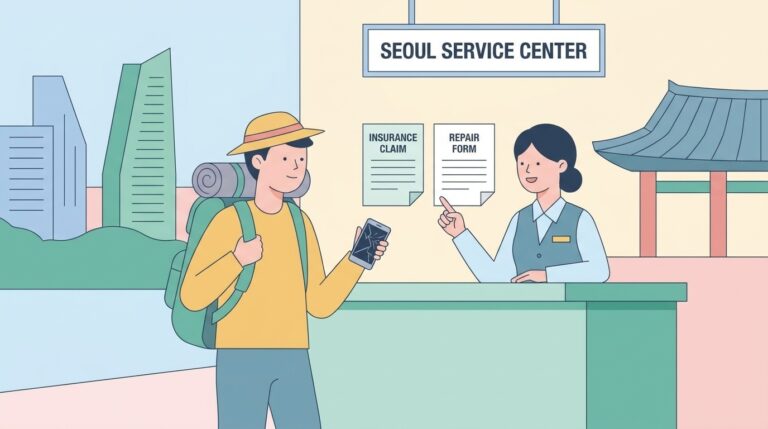
Phase 1: 공감 (Empathetic Opening)
안녕하세요! Welcome back, my dear language friends! It’s your favorite Daily Hangul editor and cultural navigator. Have you ever been in that stomach-churning moment while traveling where your smartphone accidentally slips out of your hand, hitting the pavement with a agonizing crack? Or perhaps your high-end camera lens shattered inside your checked baggage during transit in Seoul? We’ve all been there—or at least lived through that terrifying instant in a high-stakes Korean drama where a protagonist drops their phone in slow motion!
When preparing for a deep-dive trip into Korea’s bustling tech hubs or scenic spots like Jeju Island, navigating travel insurance (여행자 보험) is an indispensable safety net. Specifically, dealing with 휴대품 파손 (Personal Belongings Damage) requires more than just Google Translate—it demands a nuanced understanding of C2-level contractual vocabulary, formal administrative tone, and precise terminology to ensure your claim process runs smoothly with Korean insurers or local repair centers. Based on feedback from our advanced learners, handling insurance paperwork and phone repair claims in Korean often feels like a masterclass in bureaucratic jargon. But don’t worry! Today, we’ll turn this daunting task into an empowering linguistic triumph.
Phase 2: 핵심 표현 3선 심층 분석 (Deep-Dive into 3 Key Expressions)
1. 휴대품 파손 담보 (Personal Belongings Damage Coverage)
- Pronunciation: [Hyu-dae-pum pa-son dam-bo] (Think of hyu-dae like ‘huge-day’ without the ‘g’, pa-son like ‘pass-on’, and dam-bo like ‘dam-boat’)
- Meaning: Literally “portable items damage security/collateral,” referring to the insurance clause covering damaged personal property.
- K-Culture Moment: In corporate legal K-dramas like Extraordinary Attorney Woo, characters meticulously review fine print clauses using terms like ‘담보’ (coverage/collateral) and ‘보상 한도’ (compensation limit).
- Editor’s Insight: While basic learners know ‘물건’ (thing) and ‘고장’ (breakdown), C2 speakers must master ‘휴대품’ (belongings carried on person) and ‘파손’ (physical external damage). Note that ‘파손’ is distinct from ‘고장’ (internal mechanical malfunction).
- Situation Spectrum: Casual 🚫 | Semi-formal ⚠️ | Formal ✅
- 🤔 Think About It: How does your native language distinguish between internal device failure and external physical damage in legal documents?
2. 자기부담금 (Deductible / Out-of-pocket Expense)
- Pronunciation: [Ja-gi-bu-dam-geum] (Ja-gi as in ‘self’, bu-dam like ‘boo-dam’, geum like ‘gold/money’)
- Meaning: Literally “self-burden money.” The out-of-pocket amount you must pay before insurance covers the remainder.
- K-Culture Moment: Seen frequently on Korean consumer finance shows or reality TV where cast members calculate out-of-pocket costs when claiming repairs for rented gear.
- Editor’s Insight: ‘부담’ means burden or responsibility. Combining it with ‘자기’ (self) creates a clear conceptual term used across banking, medical insurance, and property claims.
- Situation Spectrum: Casual 🚫 | Semi-formal ⚠️ | Formal ✅
- 🤔 Think About It: Is the concept of a ‘deductible’ expressed as a ‘self-burden’ in your native culture, or does it focus on subtraction/deduction?
3. 증빙 서류를 구비하다 (To prepare/furnish supporting documentation)
- Pronunciation: [Jeung-bing seo-ryu-reul gu-bi-ha-da] (Jeung-bing like ‘proved-bingo’, seo-ryu like ‘doc-room’, gu-bi like ‘gooby’)
- Meaning: To compile and prepare official proof documents required for verification.
- K-Culture Moment: Standard phrase encountered at Korean government offices (주민센터) or corporate administrative departments during expense claims.
- Editor’s Insight: High-level Korean replaces simple verbs like ‘준비하다’ (to prepare) with Sino-Korean verbs like ‘구비하다’ (to equip/furnish) when referring to administrative prerequisites.
- Situation Spectrum: Casual 🚫 | Semi-formal ⚠️ | Formal ✅
- 🤔 Think About It: Notice how legal Korean relies heavily on Hanja-based compounding to create clear, unambiguous legal definitions.
Phase 3: 교과서 한국어 vs 진짜 한국어 (Textbook vs. Authentic Korean)
Situation 1: Asking if screen repair is covered by insurance
- 📖 교과서 한국어: 제 핸드폰 화면이 깨졌는데 보험 보상이 됩니까? (Je haendeu-pon hwamyeon-i kkae-jyoenn-de bo-heom bo-sang-i doem-ni-ka?)
- 🗣️ 진짜 한국어: 액정 파손 건에 대해 휴대품 특약으로 비용 청구가 가능한가요? (Aek-jeong pa-son geon-e dae-hae hyu-dae-pum teuk-yag-euro bi-yong cheong-gu-ga ga-neung-han-ga-yo?)
- 💡 왜 다를까?: Native adult speakers use precise legal vocabulary like ‘액정’ (display screen), ‘특약’ (special rider clause), and ‘비용 청구’ (expense claim) to avoid miscommunication with agents.
Situation 2: Inquiring about required claim documents at a repair center
- 📖 교과서 한국어: 보험 회사에 줄 수리 영수증을 주세요. (Bo-heom hoe-sa-e jul su-ri yeong-su-jeung-eul ju-se-yo.)
- 🗣️ 진짜 한국어: 보험 청구용 수리 견적서랑 영수증 따로발급해 주실 수 있나요? (Bo-heom cheong-gu-yong su-ri gyeon-jeok-seo-rang yeong-su-jeung tta-ro bal-geup-hae ju-sil su in-na-yo?)
- 💡 왜 다를까?: Korean insurance claims strictly require both an itemized repair estimate (수리 견적서) and proof of payment (영수증). Native speakers specify ‘발급’ (formal issuance).
Phase 4: K-Culture 딥다이브 & 비언어적 매너 (Cultural Nuances & Gestures)
4-1. 눈치 (Nunchi) & Administrative Manners
When dealing with Korean customer service representatives or repair technicians (엔지니어님), maintaining a calm, highly respectful, and organized composure is crucial. Present your documents neatly organized. Handing over documents or broken devices with both hands (양손 사용) is an absolute must to show courtesy. Avoid displaying impatience; Korean service operates extraordinarily fast (Ppalli-ppalli culture), so if a document takes time, it is usually due to mandatory verification procedures.
4-2. Cultural Code: The Tech Repair Ecosystem in Korea
Korea boasts world-class tech service centers (AS 센터). When visiting major repair hubs like Samsung Electronics Service Centers or Apple Authorized Service Providers in Gangnam or Hongdae, you will experience seamless integration between diagnostic reports and digital receipts. Insurers expect detailed official documentation stamped (직인) by the repair center. Understanding this system showcases your deep familiarity with modern Korean infrastructure.
Phase 5: 실전 롤플레이 시나리오 (Interactive Roleplay Scenario)
Setting: Customer Service Desk at an International Travel Insurance Agent in Seoul.
Characters:
* 민우 (Min-woo): Senior Claims Agent (Professional, polite, precise).
* 학습자 (Learner): Advanced C2 Traveler dealing with a damaged laptop.
- 민우: 어서 오십시오. KB 손해보험 해외여행자 보험 지원 센터입니다. 무엇을 도와드릴까요?
(Eoseo o-sip-si-o. KB son-hae-bo-heom hae-wae-yeo-haeng-ja bo-heom ji-won sen-teo-im-ni-da. Mu-eos-eul do-wa-deu-ril-kka-yo?)
[Welcome. KB Non-Life Travel Insurance Support Center. How may I assist you?]
🎭 Hands caller a greeting gesture with a calm smile. -
학습자: 안녕하세요. 여행 중 노트북이 파손되었는데, 휴대품 손해 특약 보상 청구 절차를 문의하고자 합니다.
(An-nyeong-ha-se-yo. Yeo-haeng jung no-teu-bug-i pa-son-doe-eon-neun-de, hyu-dae-pum son-hae teuk-yak bo-sang cheong-gu jeol-cha-reul mun-ui-ha-go-ja ham-ni-da.)
[Hello. My laptop was damaged during my trip, and I would like to inquire about the claim procedure under the personal belongings rider.]
🎭 Speaks clearly, holding the insurance policy paper. -
민우: 아, 그러셨군요. 안타깝습니다. 가입하신 상품의 휴대품 파손 보상 한도와 자기부담금 조항을 확인해 드리겠습니다. 성함과 증권 번호를 말씀해 주시겠습니까?
(A, geu-reo-syeot-gun-yo. An-ta-kkap-seum-ni-da. Ga-ip-ha-sin sang-pum-ui hyu-dae-pum pa-son bo-sang han-do-wa ja-gi-bu-dam-geum jo-hang-eul hwak-in-hae deu-ri-get-seum-ni-da. Seong-ham-gwa jeung-gwon beon-ho-reul mal-sseum-hae ju-si-get-seum-ni-da?)
[Ah, I see. I am sorry to hear that. I will verify your plan’s coverage limit and deductible clause. Could you provide your name and policy number?]
🎭 Types on the computer keyboard. -
학습자: 제 이름은 [Name]이고, 증권 번호는 TRV-908234입니다.
(Je i-reum-eun [Name]-i-go, jeung-gwon beon-ho-neun TRV-908234-im-ni-da.)
[My name is [Name], and my policy number is TRV-908234.]
🎭 Reads out numbers distinctly. -
민우: 네, 확인되었습니다. 물품당 최대 20만 원까지 보상 가능하며, 건당 자기부담금 1만 원이 차감됩니다. 접수를 위해 증빙 서류 구비가 필요합니다.
(Ne, hwak-in-doe-ot-seum-ni-da. Mul-pum-dang chae-dae i-sip-man won-kka-ji bo-sang ga-neung-ha-myeo, geon-dang ja-gi-bu-dam-geum il-man won-i cha-gam-doem-ni-da. Jeop-su-reul wi-hae jeung-bing seo-ryu gu-bi-ga pyeol-yo-ham-ni-da.)
[Yes, confirmed. Up to 200,000 KRW is covered per item, with a 10,000 KRW deductible per claim. You need to furnish supporting documents for submission.]
🎭 Nods attentively while pointing at screen terms. -
학습자: 구체적으로 어떤 서류를 제출해야 하나요?
(Gu-chae-jeok-eu-ro eot-teon seo-ryu-reul je-chul-hae-ya ha-na-yo?)
[Specifically, what documents do I need to submit?]
🎭 Takes out a notebook to write down required details. -
민우: 사고 경위서, 수리 견적서, 결제 영수증, 그리고 파손 부위 사진을 첨부해 주시면 됩니다.
(Sa-go gyeong-wi-seo, su-ri gyeon-jeok-seo, gyeol-je yeong-su-jeung, geu-ri-go pa-son bu-wi sa-jin-eul cheom-bu-hae ju-si-myeon doem-ni-da.)
[Please attach an incident statement, repair estimate, payment receipt, and photos of the damaged area.]
🎭 Hands over a document checklist template. -
학습자: 알겠습니다. 지정 AS 센터에서 견적서를 받은 후 신속히 접수하겠습니다. 감사합니다.
(Al-get-seum-ni-da. Ji-jeong AS sen-teo-e-seo gyeon-jeok-seo-reul ba-deun hu sin-sok-hi jeop-su-ha-get-seum-ni-da. Gam-sa-ham-ni-da.)
[Understood. I will obtain the estimate from an authorized service center and submit it promptly. Thank you.]
🎭 Bows slightly at 15 degrees in gratitude.
🔀 Interactive Branching Choice
When the agent asks for the incident statement (사고 경위서), how do you respond?
- Choice A: “경위서는 그냥 대충 적어서 제출해도 되죠?” (Can I just roughly write down the statement?)
- Choice B: “사고 발생 일시와 구체적인 경위를 육하원칙에 따라 작성하겠습니다.” (I will draft the incident description according to the 5Ws and 1H principles.)
- Choice C: “파손된 건 제 잘못이 아니라 항공사 책임인데요.” (The damage wasn’t my fault, it’s the airline’s responsibility!)
Feedback:
* Choice A (Bad): ⚠️ Risk of claim rejection! Insurance adjusters review official claims strictly. Casual or vague statements slow down verification.
* Choice B (BEST!): ✅ Perfect C2 proficiency! Using ‘육하원칙’ (5Ws and 1H) and formal commitment shows utmost linguistic and procedural sophistication.
* Choice C (Risk): 🚫 Defensive tone! If third-party liability is involved, insurance claims require double-indemnity checks, complicating immediate processing.
Phase 6: 10초 감정 섀도잉 드릴 (Emotion Shadowing Drill)
Practice these high-level formal sentences with appropriate intonation and emotional delivery:
[🧐 꼼꼼하고 전문적인 톤으로]
특약 보상 한도와 / 자기부담금 공제 금액을 / 세부적으로 / 확인해 주시겠습니까?
(Teuk-yak bo-sang han-do-wa / ja-gi-bu-dam-geum gong-je geum-aeg-eul / se-bu-jeok-eu-ro / hwak-in-hae ju-si-get-seum-ni-da?)
[Could you please check in detail / the coverage limit under the special rider / and the deducted deductible amount?]-
[💼 단정하고 신뢰감을 주는 톤으로]
수리 견적서와 / 결제 영수증을 첨부하여 / 기한 내에 / 접수를 완료하겠습니다.
(Su-ri gyeon-jeok-seo-wa / gyeol-je yeong-su-jeung-eul cheom-bu-ha-yeo / gi-han nae-e / jeop-su-reul wan-ryo-ha-get-seum-ni-da.)
[Attaching the repair estimate / and payment receipt, / I will complete the submission / within the deadline.]
Phase 7: K-Culture 미니 사전 (Mini Dictionary)
- 특약 (Teuk-yak) | Special Policy Rider
- An additional clause added to standard insurance policies to cover specific risks like electronics damage or lost baggage.
- 사고 경위서 (Sa-go Gyeong-wi-seo) | Incident Report Statement
- A formal written declaration detailing when, where, and how an accident or damage occurred.
- 자기부담금 (Ja-gi-bu-dam-geum) | Deductible
- The pre-agreed amount deducted from the insurance payout that the insured party pays out of pocket.
- 보상 한도액 (Bo-sang Han-do-aek) | Maximum Coverage Limit
- The ceiling amount an insurance company will pay per claim or total policy term.
Phase 8: 여행자를 위한 생존 키트 (Traveler’s Survival Kit)
Top 3 Survival Expressions for Repairs & Claims
- “보험 청구용 견적서 작성 부탁드립니다.”
- [Bo-heom cheong-gu-yong gyeon-jeok-seo jak-seong bu-tak-deu-rim-ni-da.]
- Pro Tip: Say this to repair center staff before they finish diagnosing your device so they issue official documents.
- “도난이 아닌 단순 파손 건입니다.”
- [Do-nan-i a-nin dan-sun pa-son geon-im-ni-da.]
- Pro Tip: Clarifies immediately that it is accidental physical damage, avoiding the requirement of a police report needed for theft (도난).
- “파손 증명서 발급이 가능한가요?”
- [Pa-son jeung-myeong-seo bal-geup-i ga-neung-han-ga-yo?]
- Pro Tip: Useful when airlines or transport operators damage luggage.
Editor’s Travel Note
Before embarking on your journey, download essential tools for navigation and communication in Korea. Use the 네이버 지도 앱 다운로드 to locate certified official repair centers near your accommodations instantly.
Phase 9: 한 발 더 깊이 (Deeper Cultural Insights)
In Korean business and legal interactions, clarity is bound tightly to formal honorifics (존댓말) and administrative precise nouns. When an individual submits documents with accurate terminology, it reflects personal diligence (신뢰성). Korea’s insurance system heavily emphasizes speed, honesty, and verified paper trails. Mastering C2 legal vocabulary demonstrates to Korean service staff that you are a highly literate, culturally savvy global citizen who respects local administrative systems.
💬 Your Turn: Have you ever needed to file an insurance claim or repair a device while traveling abroad? Share your story in the comments below using at least one expression we learned today!
Phase 10: FAQ & 오해 방지 (FAQ & Common Mistakes)
Q: Does standard Korean travel insurance cover cosmetic scratches on my phone screen?
A: Generally, no. Insurance coverage applies strictly to functionality loss or physical breakage (파손) that impairs normal usage. Cosmetic scratches (단순 흠집/스크래치) are excluded under standard terms.
Q: Can I get my broken item repaired anywhere in Seoul and still claim insurance?
A: You must receive repairs from an officially registered business entity (사업자 등록업체) that can issue itemized official repair receipts (수리 견적서 및 세금계산서/영수증). Informal repair stalls without registration are typically rejected by adjusters.
Q: Is there a time limit on filing a personal belongings damage claim in Korea?
A: Yes! Under Korean Commercial Code and insurance terms, claims must usually be submitted within 3 years of the incident date, but travel insurance claims should ideally be filed immediately or within 30 days of returning home.
🚨 Common Mistakes Warning Board
- Mistake: Using ‘고장’ (mechanical breakdown) instead of ‘파손’ (accidental external damage).
- Correct Action: Specify ‘외력에 의한 파손’ (damage caused by external force).
- Mistake: Throwing away broken parts or the original device.
- Correct Action: Keep damaged items/parts until the claim is approved, as insurers may request salvage rights (잔존물).
- Mistake: Submitting only a credit card slip without an itemized repair estimate.
- Correct Action: Always request both the itemized diagnostic estimate (수리 견적서) and payment proof (영수증).
Phase 11: 액션 미션 & 참여 유도 (Action Missions)
- 🥉 Bronze Mission: Read Phase 6 shadowing sentences aloud 3 times with precise cadence and formal tone.
- 🥈 Silver Mission: Write down a short 3-sentence description of an imaginary damaged item using ‘휴대품’, ‘파손’, and ‘자기부담금’ and share it on your social media or language journal.
- 🥇 Gold Mission: Visit an official Korean insurance website (e.g., Samsung Fire or KB Insurance) and search for ‘해외여행자보험 약관’ to scan the actual clauses!
🎮 K-Culture Mission: Watch a modern office or legal K-drama episode and spot how characters use Sino-Korean terms ending in ‘-서’ (document/form), such as ‘견적서’ or ‘청구서’.
Phase 12: 인터랙티브 퀴즈 챌린지 (Interactive Quiz Challenge)
Quiz 1. Vocabulary Selection
Which Sino-Korean term correctly refers to the mandatory out-of-pocket expense paid by the insured during a claim?
👉 Click to view Answer & Explanation
Answer: 자기부담금 (Deductible)
Explanation: ‘자기’ (self) + ‘부담’ (burden) + ‘금’ (money). ‘보상한도’ refers to the coverage ceiling, while ‘보험료’ refers to the insurance premium paid up front.
Quiz 2. True or False
In Korea, simple cosmetic scratches on a smartphone frame are fully reimbursable under standard personal belongings damage clauses (휴대품 파손 특약).
👉 Click to view Answer & Explanation
Answer: False
Explanation: Insurance covers functional physical damage (파손). Purely aesthetic scratches (단순 외관 흠집) are excluded from compensation.







