

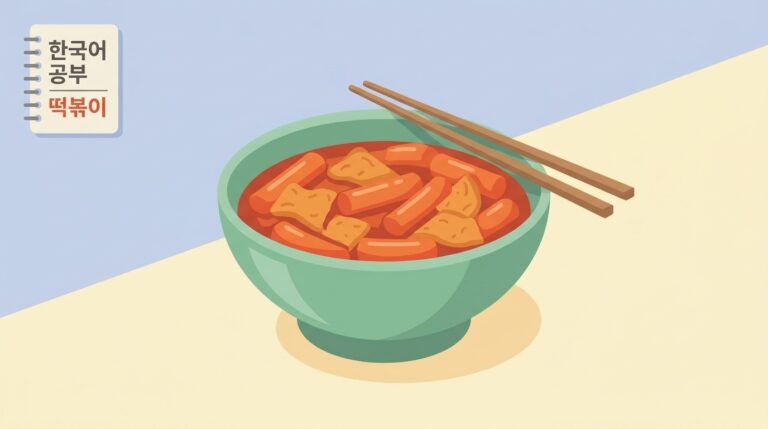
Phase 1: Empathy – Story-Driven Opening
안녕하세요! I am your lead editor at Daily Hangul! Have you ever sat in a buzzing street market in Seoul, staring at a bubbling pan of vibrant, crimson tteokbokki (떡볶이), completely mesmerized yet terrified of how spicy it might be? Or maybe you were shopping in Myeongdong and wanted to ask for that stunning red sweater hanging in the front window, but your mind completely blanked on how to say ‘red’ in Korean?
Don’t worry, you are not alone! Many of our beginner learners tell us that colors in Korean feel confusing at first because dictionary translations sound too formal or rigid. But here is the secret: learning colors in Korean isn’t just about memorizing words—it is your golden ticket to unlocking food, K-Pop, and everyday fashion! Based on feedback from thousands of A1 learners, we’ve designed this simple, step-by-step guide so you can spot, order, and describe everything red in Korea with total confidence.
Phase 2: Core Expressions Deep Dive
1. 빨간색 (Ppal-gan-saek)
- Pronunciation: Ppal-gan-saek (Think of ‘Ppal’ like a snappy ‘pal’ with extra pop, ‘gan’ like ‘gun’, and ‘saek’ like ‘sack’)
- Meaning: Direct: Red color | Real Nuance: The standard noun for the color red.
- K-Culture Moment: Browsing through clothes at a K-fashion boutique in Hongdae and pointing out a red outfit.
- Editor’s Insight: The ending 색 (saek) literally means ‘color’. Whenever you add 색 to a color word, you are turning it into a clear noun!
- Situation Spectrum: Casual ✅ / Semi-formal ✅ / Formal ✅
- 🤔 Think About It: In your native language, do you use the word ‘color’ after naming a color, or do you just say the color name alone?
2. 빨개요 (Ppal-gae-yo)
- Pronunciation: Ppal-gae-yo (‘Ppal’ + ‘gae’ like ‘get’ without the ‘t’ + ‘yo’)
- Meaning: Direct: It is red / It turns red | Real Nuance: Used when describing something that is currently red or blushing.
- K-Culture Moment: A classic K-Drama scene where the main character gets embarrassed and their friend teases, “얼굴이 빨개요!” (Your face is red!)
- Editor’s Insight: This is a descriptive verb! K-Pop icon HyunA even has a world-famous song called Red (빨개요).
- Situation Spectrum: Casual ✅ / Semi-formal ✅ / Formal ⚠️
- 🤔 Think About It: How does your culture describe someone blushing compared to the direct phrase ‘turning red’ in Korean?
3. 빨간 맛 (Ppal-gan mat)
- Pronunciation: Ppal-gan mat (‘Ppal-gan’ + ‘mat’ like ‘maht’)
- Meaning: Direct: Red flavor | Real Nuance: The exhilarating, sweet-and-spicy flavor profile of iconic Korean street food, or a passionate, energetic vibe!
- K-Culture Moment: Singing along to Red Velvet’s summer hit song Red Flavor (빨간 맛) at a Noraebang (karaoke)!
- Editor’s Insight: In Korean food culture, red is not just a visual sight—it is a sensory taste experience representing spicy deliciousness.
- Situation Spectrum: Casual ✅ / Semi-formal ⚠️ / Formal 🚫
- 🤔 Think About It: Can colors have ‘flavors’ in your native language? Why do you think red is linked to flavor in Korea?
Phase 3: Textbook Korean vs. Real Korean
Situation 1: Shopping for a red shirt in Myeongdong
- 📖 Textbook Korean: “저는 빨간색 옷을 원합니다.” (Jeo-neun ppal-gan-saek os-eul won-ham-ni-da. – I want red color clothes.)
- 🗣️ Real Native Korean: “빨간색으로 보여주세요!” (Ppal-gan-saek-eu-ro bo-yeo-ju-se-yo! – Please show me the red one!)
- 💡 Why the difference? Native Korean speakers rarely say “I want…” when shopping. Instead, they politely ask staff to show them an item using ~보여주세요 (please show me).
Situation 2: Asking if a dish is red and spicy
- 📖 Textbook Korean: “이 음식은 빨간색입니까?” (I eum-sig-eun ppal-gan-saek-im-ni-ka? – Is this food red color?)
- 🗣️ Real Native Korean: “이거 많이 빨개요?” (I-geo man-i ppal-gae-yo? – Is this very red/spicy?)
- 💡 Why the difference? In street food settings, asking if something is 빨개요 (red) is a natural, conversational way to gauge both color and spice level!
Phase 4: K-Culture Deep Dive & Non-Verbal Etiquette
4-1. Nunchi (눈치) & Table Manners for Red Foods
When eating brightly colored red food like tteokbokki or kimchi-jjigae, native Koreans always practice good table Nunchi. Look around the restaurant—you will often spot a stack of aprons (앞치마 – ap-chi-ma). Putting one on before eating shows you know the drill and saves your outfit from accidental red pepper sauce splatters! Also, when pointing at red items in a shop, use an open hand rather than pointing a single index finger directly at a person or item.
4-2. The Cultural Code of Red
In Korea, red carries dual energy. On one hand, it represents high passion and cheer—think of the ‘Red Devils’ supporting the national soccer team or vibrant K-Pop concepts. On the other hand, red is the signature color of Korean comfort food! From chili paste (gochujang) to chili flakes (gochutgaru), red signifies warm, mouth-watering flavor that brings people together.
Phase 5: Interactive Roleplay Scenario
Setting: A vibrant, steamy street food cart (Pojangmacha) near Hongdae Station.
NPC Character: Ajoumma (Warm and energetic street food vendor wearing a floral visor).
- Ajoumma: 어서 오세요! 뭐 줄까요? (Eo-seo o-se-yo! Mwo jul-kka-yo? / Welcome! What can I get you?)
- Learner (You): 🎭 Pointing at the red rice cakes with a friendly smile
안녕하세요! 이거 빨간색 떡볶이예요? (An-nyeong-ha-se-yo! I-geo ppal-gan-saek tteok-bok-ki-ye-yo? / Hello! Is this the red tteokbokki?) - Ajoumma: 맞아요! 매콤하고 맛있어요! (Ma-ja-yo! Mae-kom-ha-go mas-iss-eo-yo! / That’s right! It’s spicy and delicious!)
- Learner (You): 🎭 Looking slightly worried about the spice level
많이 빨개요? 매워요? (Man-i ppal-gae-yo? Mae-wo-yo? / Is it very red? Is it spicy?) - Ajoumma: 조금 매워요! 못 먹어요? (Jo-geum mae-wo-yo! Mot meog-eo-yo? / It’s a little spicy! Can you not eat spicy food?)
- Learner (You): 🎭 Nodding bravely
괜찮아요! 빨간 맛 좋아해요! (Gwaen-chan-a-yo! Ppal-gan mat jo-a-hae-yo! / It’s okay! I love the red flavor!) - Ajoumma: 아이구, 잘먹네! 1인분 줄게요! (A-i-gu, jal meong-ne! Il-in-bun jul-ge-yo! / Aw, awesome! I’ll give you one portion!)
- Learner (You): 🎭 Bow politely with both hands
감사합니다! 앞치마 있어요? (Gam-sa-ham-ni-da! Ap-chi-ma iss-eo-yo? / Thank you! Do you have an apron?)
🔀 Interactive Choice Point
The Ajoumma asks if you want your red tteokbokki extra spicy. What do you answer?
* Option A: “네, 더 빨간색 주세요!” (Ne, deo ppal-gan-saek ju-se-yo!)
* Option B: “조금만 주세요, 빨개요!” (Jo-geum-man ju-se-yo, ppal-gae-yo!)
* Option C: “매운 거 잘 못 먹지만 빨간 맛 도전할래요!” (Mae-un geo jal mot meok-ji-man ppal-gan mat do-jeon-hal-lae-yo!)
— Feedback —
* Option A (Risk): Ppal-gan-saek is a noun. Saying “give me more red color” sounds slightly awkward to the vendor.
* Option B (Bad): Grammatically fragmented! It means “Give me a little, it is red!” which confuses the vendor.
* Option C (BEST!): Perfect! It means “I’m not great with spicy food, but I want to challenge the red flavor!” The vendor will love your enthusiasm and might even give you extra fish cakes!
Phase 6: 10-Second Emotion Shadowing Drill
Practicing with emotion helps your brain retain vocabulary 3x faster! Repeat these out loud:
[😊 Excited & Hungry]빨간색 / 떡볶이 / 주세요! (Ppal-gan-saek / tteok-bok-ki / ju-se-yo!)[🥺 Shy & Cautious]이거 / 많이 / 빨개요? (I-geo / man-i / ppal-gae-yo?)[🎵 Playful & Confident]저는 / 빨간 맛이 / 좋아요! (Jeo-neun / ppal-gan mas-i / jo-a-ha-yo!)
Phase 7: K-Culture Mini Dictionary
- 빨간색 (Ppal-gan-saek) | Noun | Red color. Use this when picking out items, clothes, or colors on a menu.
- 앞치마 (Ap-chi-ma) | Noun | Apron. Crucial word when eating red soups or spicy dishes in Korea!
- 떡볶이 (Tteok-bok-ki) | Noun | Chewy rice cakes cooked in a sweet and spicy red chili sauce.
- 빨간 맛 (Ppal-gan-mat) | Noun/Phrase | ‘Red flavor’. Expresses spicy-sweet food or energetic K-Pop vibes.
Phase 8: Survival Kit for Travelers
TOP 3 Survival Phrases
- Phrase 1: 빨간색 있어요? (Ppal-gan-saek iss-eo-yo? / Do you have this in red?)
- Pro Tip: Point to any shirt or phone case and say this to ask for a red version!
- Phrase 2: 이거 빨간색인데 매워요? (I-geo ppal-gan-saek-in-de mae-wo-yo? / This is red, is it spicy?)
- Pro Tip: Use this at food stalls before ordering red-looking soups.
- Phrase 3: 앞치마 주세요! (Ap-chi-ma ju-se-yo! / Please give me an apron!)
- Pro Tip: Say this to any server before eating red sauce dishes to protect your clothes.
Editor’s Travel Note
Planning a street food tour in Seoul? Download the Naver Map app before you go! Google Maps doesn’t offer full walking navigation in Korea, so Naver Map is essential for finding famous red tteokbokki alleys in Sindang-dong or hidden Hongdae eateries.
Phase 9: One Step Deeper
Did you know there is a unique cultural taboo regarding the color red in Korea? While red food and clothes are loved, you should never write a living person’s name in red ink! Historically, names of deceased ancestors were recorded in red ink on official registries. While younger Koreans treat this casually, writing someone’s name in red pen is still considered bad luck or disrespectful. Stick to blue or black pens when writing cards or signing documents in Korea!
💬 Your Turn: What is your absolute favorite red Korean dish? Have you tried Tteokbokki or Kimchi Stew yet? Tell us in the comments below!
Phase 10: FAQ & Common Mistakes
Q: Is there a difference between 빨강 (Ppal-gang) and 빨간색 (Ppal-gan-saek)?
A: Both refer to red! 빨강 is the pure noun ‘redness/red’, while 빨간색 explicitly adds the word ‘color’ (색). In everyday conversation, they are virtually interchangeable!
Q: Can I use “빨개요” to describe sunburned skin or blushing?
A: Yes, absolutely! Anything that turns red—whether it’s cheeks, a tomato, or a sunburn—can be described using 빨개요 (ppal-gae-yo).
Q: Does all red Korean food burn your tongue?
A: Not at all! Dishes like dak-galbi or mild tteokbokki use red pepper paste (gochujang) which provides a rich, sweet, and savory balance rather than pure heat.
🚨 Common Mistakes Warning Board
- ❌ Mistake 1: Writing a friend’s name in red pen on a birthday card.
- Correct Action: Use black, blue, or decorative gold/silver ink for names!
- ❌ Mistake 2: Saying “빨간색 원해요” (Ppal-gan-saek won-hae-yo) when shopping.
- Correct Action: Say “빨간색 주세요” (Please give me red) or “빨간색 보여주세요” (Please show me red).
- ❌ Mistake 3: Eating red soup without asking for an apron.
- Correct Action: Politely shout “앞치마 주세요!” (Ap-chi-ma ju-se-yo!) to save your shirt!
Phase 11: Action Mission & Engagement
3-Step Action Mission
- 🥉 Bronze Level: Practice saying “빨간색 주세요” (Ppal-gan-saek ju-se-yo) 3 times out loud in front of a mirror.
- 🥈 Silver Level: Snap a photo of a red object near you and post it on social media with the caption: “이것은 빨간색이에요!” (I-geot-eun ppal-gan-saek-i-e-yo!).
- 🥇 Gold Level: Visit a local Korean restaurant or grocery store and successfully order a red item or ask for an apron in Korean!
🎮 K-Culture Mission: Search for Red Velvet’s song Red Flavor (빨간 맛) on YouTube and spot how many times they sing “빨간 맛” in the chorus!
Phase 12: Interactive Quiz Challenge
Test your knowledge with these quick questions!
- Situation Quiz: You are at a store and want to see a sweater in red. What should you say?
- A) 빨간색 원합니다
- B) 빨간색 보여주세요
- C) 빨간 맛 주세요
- Fill in the Blank: “이거 많이 __________?” (Is this very red / spicy?)
- A) 빨개요
- B) 색깔요
- C) 앞치마
- Culture True or False: It is perfectly polite to write your Korean friend’s name in red pen.
- True / False
Click here to reveal the answers & explanations!
- Answer: B) 빨간색 보여주세요 (Please show me the red one – natural and polite shopping phrase!)
- Answer: A) 빨개요 (Descriptive verb form for ‘is red/turning red’.)
- Answer: False (Writing names in red ink is traditionally avoided as it symbolizes death or bad luck!)







