

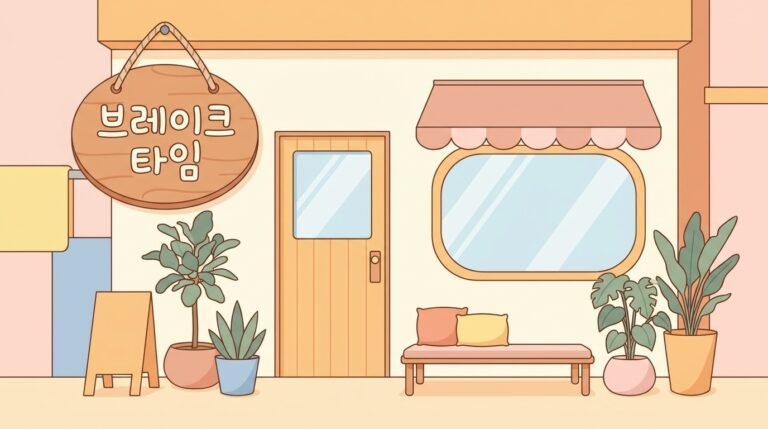
Phase 1: 공감 (Empathy & Storytelling)
안녕하세요! 매일한글 에디터입니다. (Hello! I’m your Daily Hangul Chief Editor!) Imagine this: You’ve been walking through the buzzing streets of Seongsu-dong or Yeonnam-dong after a full morning of sightseeing. Your stomach is growling, and you finally arrive at that famous Han-ok style pasta or Galbi-jjim spot you saved on Instagram weeks ago. You pull open the door, smelling the incredible garlic and grilled meats… only to have a staff member politely cross their arms into an ‘X’ and say, “죄송합니다, 브레이크 타임이에요!” (Sorry, it’s break time!).
Your heart sinks. In Korea, most trendy restaurants take a mandatory mid-day breather—usually between 3:00 PM and 5:00 PM—to prep fresh ingredients and let the kitchen staff rest. If you don’t know how to ask about break times in advance or double-check at the door, you might end up wandering hungry! Based on real feedback from hundreds of intermediate learners, mastering just a few polite B1-level phrases will turn you from a stranded tourist into a savvy food navigator who never misses a legendary meal. Let’s make sure your food tour goes smoothly without empty stomach heartbreaks!
Phase 2: 핵심 표현 3선 심층 분석 (3 Key Expressions)
1. 브레이크 타임 몇 시부터예요? (Break time myeot si-buteo-yeyo?)
- Pronunciation: [Break-time myeot she-boo-teo-ye-yo?] (Sounds like “mute” without the ‘u’, followed by ‘she-boo-toe-ye-yo’)
- Meaning: Literal: From what time is break time? | Nuance: “When does your mid-day break start?”
- K-Culture Moment: You see a line forming at 2:20 PM outside a famous Tteokbokki restaurant on K-Drama Weightlifting Fairy Kim Bok-joo, and people are anxiously checking their watches before the prep time kicks in.
- Editor’s Insight: Koreans imported the English phrase “Break Time” directly! You don’t need a complex dictionary word like ‘휴식 시간’ (hyusik sigan) when talking to restaurant staff; “브레이크 타임” is instantly understood everywhere.
- Situation Spectrum: Casual ⚠️ | Semi-formal ✅ | Formal ✅
- 🤔 Think About It: Why do you think modern Korean mixes English loanwords like “break time” with native Korean grammar endings like “~몇 시부터예요?” How does your native language adapt modern slang?
2. 지금 식사 가능한가요? (Jigeum siksa ganeung-hangayo?)
- Pronunciation: [Ji-geum shik-sa gah-neung-hahn-gah-yo?]
- Meaning: Literal: Is meal possible right now? | Nuance: “Are you still serving food right now?”
- K-Culture Moment: Entering a cosy K-BBQ place at 2:45 PM when tables are half-cleared, asking the chef directly at the counter.
- Editor’s Insight: Using ‘식사’ (siksa – formal term for meal/dining) instead of just ‘밥’ (bap) elevates your Korean to a polite B1 level. It shows respect to the staff who might be preparing to close up.
- Situation Spectrum: Casual 🚫 | Semi-formal ✅ | Formal ✅
- 🤔 Think About It: In your country, do you ask “Are you open?” or “Can we eat now?” Notice how Korean focuses on whether the action of eating is possible!
3. 라스트 오더 언제예요? (Lasteu odeor eonje-yeyo?)
- Pronunciation: [Last-oh-deor eon-je-ye-yo?]
- Meaning: Literal: When is last order? | Nuance: “What time is your last call for food orders?”
- K-Culture Moment: Ordering your last batch of Naengmyeon (cold noodles) right before the kitchen shuts down for the afternoon break.
- Editor’s Insight: Last order usually happens 30 to 45 minutes before the official break time starts. Knowing this prevents you from being turned away even if you arrive before break time begins!
- Situation Spectrum: Casual ⚠️ | Semi-formal ✅ | Formal ✅
- 🤔 Think About It: Why is knowing the ‘Last Order’ time often more critical in Korea than knowing when break time officially starts?
Phase 3: 교과서 한국어 vs 진짜 한국어 (Textbook vs Real Native Korean)
Situation 1: Asking if they are taking break time now
- 📖 교과서 한국어: “지금 영업을 중단하는 휴식 시간입니까?” (Is it currently the rest time where business operations stop? – Way too rigid!)
- 🗣️ 진짜 한국어: “혹시 지금 브레이크 타임인가요?” (By any chance, is it break time right now?)
- 💡 왜 다를까? Native speakers soft-launch questions with ‘혹시’ (hoksi – by any chance) to sound gentle and respectful, rather than demanding direct business status.
Situation 2: Asking when you need to finish eating
- 📖 교과서 한국어: “몇 시에 식당 문을 닫습니까?” (At what time do you close the restaurant door?)
- 🗣️ 진짜 한국어: “몇 시까지 먹고 나가야 돼요?” or “라스트 오더 끝났나요?” (By what time should we finish up? / Did last order end?)
- 💡 왜 다를까? Asking when the door closes sounds like you are inquiring about night closure. Asking about finishing up shows consideration for their shift switch.
Phase 4: K-Culture 딥다이브 & 비언어적 매너 (Culture Deep Dive)
4-1. 눈치 (Nunchi) & Gestures
- The Soft ‘Tilt & Hand Glance’: When approaching a host at 2:30 PM, make eye contact, offer a polite half-bow (15-degree tilt), and gently point to your wrist/watch while asking.
- Reading the Room (Nunchi): If you see staff putting on street clothes, sitting together at a table eating their own lunch (called ‘지워크’ or ‘직원 식사’), or turning the main entryway sign to flipped wood, that’s your non-verbal cue that break time has started. Don’t barge in!
4-2. Cultural Code Analysis: The Fast-Paced Rest Culture
In Korea’s bustling culinary scene, restaurants operate on intense efficiency. To maintain high food quality for dinner service, kitchens stop operating entirely for 1.5 to 2 hours. This period isn’t just taking a break—it’s when fresh side dishes (반찬 – banchan) are chopped and broths are simmered for round two. Recognizing this culture shows deep appreciation for Korean food artisans!
Phase 5: 실전 롤플레이 시나리오 (Real-Life Roleplay)
Setting: A popular Kimchi-jjigae restaurant in Hongdae. Time is 2:25 PM.
Character: Staff Member (직원 – Jigwon) looking slightly busy prepping cutlery.
- You: 🎭 (Bow lightly and step inside) 저기요, 혹시 지금 식사 가능한가요?
(Jeogiyo, hoksi jigeum siksa ganeung-hangayo? / Excuse me, is dining possible right now?) - 직원: 아, 저희 3시부터 브레이크 타임인데요…
(A, jeohee se-si-buteo break time-indeyeo… / Ah, our break time starts at 3:00…) - You: 🎭 (Checking phone clock) 아! 그럼 라스트 오더는 몇 시예요?
(A! Greom lasteu odeor-eun myeot si-yeyo? / Ah! Then when is the last order?) - 직원: 라스트 오더는 2시 30분까지예요! 5분 남았어요.
(Lasteu odeor-eun i-si sam-sip-bun-kkaji-yeyo! O-bun nam-as-seo-yo. / Last order is until 2:30! You have 5 minutes left.) - You: 🎭 (Relieved smile) 아 다행이다! 빨리 주문할게요. 자리 있나요?
(A dahaeng-ida! Ppalli jumun-hal-geyo. Jari in-nayo? / Ah, thank goodness! I’ll order quickly. Is there a seat?) - 직원: 네, 안쪽 2번 테이블로 앉으세요!
(Ne, an-jjok i-beon table-ro an-jeu-seyeo! / Yes, please sit at table #2 inside!) - You: 🎭 (Walking in swiftly) 감사합니다! 금방 주문할게요.
(Gamsahamdida! Geumbang jumun-hal-geyo. / Thank you! I’ll order right away.) - 직원: 네, 메뉴판 보시고 바로 불러주세요~
(Ne, menyupan bosigo baro bulleo-juseyo~ / Yes, take a look at the menu and call me right away~)
🔀 Interactive Branching Choice:
If the staff says: “죄송한데, 라스트 오더 마감됐어요!” (Sorry, last order is closed!), what do you do?
- Option A: Sit down anyway and beg for a quick soup.
- Feedback (Risk 🚫): Extremely rude in Korea! Kitchen grills/burners are already turned off.
- Option B: Say “아, 알겠습니다! 다음에 올게요!” (Ah, I understand! I’ll come next time!) and bow politely.
- Feedback (Best ✅): Perfect! Leaving a friendly impression means they’ll welcome you warmly tomorrow.
- Option C: Stand in front of the door looking sad until they change their mind.
- Feedback (Bad ⚠️): Creates severe awkwardness (불편함) for staff during their break time.
Phase 6: 10초 감정 섀도잉 드릴 (10-Second Emotion Shadowing Drill)
Practice reading these out loud with rhythm and native emotion!
[🥺 아쉽고 급한 느낌 - Anxious & Hurried]
저기요… / 혹시 지금 / 식사 가능해요? /
(Jeogiyo… / hoksi jigeum / siksa ganeng-haeyo?)-
[😊 안도하고 기쁜 느낌 - Relieved & Friendly]
아, 다행이다! / 빨리 주문할게요! / 감사해요! /
(A, dahaeng-ida! / ppalli jumun-hal-geyo! / gamsa-haeyo!) -
[🥹 아쉬움을 뒤로한 예의 바른 느낌 - Polite Disappointment]
아~ / 브레이크 타임이군요! / 다음에 다시 올게요! /
(A~ / break time-igun-yo! / da-eum-e dasi ol-geyo!)
Phase 7: K-Culture 미니 사전 (Mini Dictionary)
- 라스트 오더 (Lasteu Odeor) | Last Order | The ultimate cutoff time for kitchen orders before break time or closing.
- 재료 소진 (Jaeryo Sojin) | Ingredients Sold Out | When a popular restaurant closes break time early because all fresh food ran out.
- 입장 마감 (Ipjang Magam) | Entry Closed | No more customers allowed inside the building even if break time hasn’t officially hit.
- 연중무휴 (Yeonjung-muhyu) | Open All Year Round | Means open 365 days, but watch out: they still usually have daily break times!
Phase 8: 여행자를 위한 생존 키트 (Traveler’s Survival Kit)
TOP 3 Survival Phrases
- “브레이크 타임 몇 시부터예요?” (When does break time start?)
- “포장도 브레이크 타임 걸리나요?” (Is takeout also restricted during break time?)
- “몇 시에 다시 문 열어요?” (What time do you reopen?)
Editor’s Travel Note
Don’t get tricked by outdated Google Maps info! Download the Naver Map App Download or KakaoMap before strolling. Search for the restaurant name in Korean—they list real-time daily 브레이크 타임 (Break Time) and 휴무일 (Days Off) updated directly by owners!
Phase 9: “한 발 더 깊이” (One Step Deeper)
Korea is famous for its fast-paced ‘Pali-pali’ (빨리빨리) service culture. However, the strict enforcement of ‘Break Time’ in modern Korean dining shows a shift toward healthy workplace standards and craft pride. Chefs use this time to reset, ensure hygiene, and eat meals together like family. Respecting break time means participating in modern Korean culinary ethics!
💬 Your Turn: Have you ever experienced being turned away by a restaurant break time in Korea or your home country? Drop a comment below and share your funny story!
Phase 10: FAQ & 오해 방지 (FAQ & Common Mistakes)
Q: Is break time mandatory for all restaurants in Korea?
A: No! Large franchise fast-food chains, food courts in department stores, and 24-hour Gimbap spots usually do NOT have break times. It mostly applies to independent restaurants and trendy hot spots.
Q: Can I sit inside and wait until break time ends?
A: Generally no. Staff turn down lighting, clean floors, and rest. It’s best to pop into a nearby café and come back when they reopen.
Q: Does takeout (포장 – pojang) work during break time?
A: Usually the kitchen shuts down entirely, so takeout is also stopped unless pre-ordered.
🚨 Common Mistakes TOP 3
- Mistake: Arriving 5 minutes before break time expecting full meal service.
- Correct Action: Aim to arrive at least 45 minutes before break time starts.
- Mistake: Asking “오늘 문 열어요?” (Are you open today?) when asking about break time.
- Correct Action: Ask specifically “지금 식사 돼요?” (Can we eat now?).
- Mistake: Confusing ‘휴무일’ (Closed day) with ‘브레이크 타임’ (Daily afternoon break).
- Correct Action: Check if the entire shop is off or just paused for the afternoon.
Phase 11: 액션 미션 & 참여 유도 (Action Missions)
- 🥉 Bronze Mission: Practice saying “브레이크 타임 몇 시부터예요?” 3 times out loud in front of the mirror.
- 🥈 Silver Mission: Open Naver Maps, find a famous restaurant in Seoul, and locate its highlighted Break Time hours.
- 🥇 Gold Mission: On your next trip to Korea, ask a restaurant staff member about their last order time in Korean!
🎮 K-Culture Mission: Watch a food vlog or K-Drama eating scene today! Notice if you spot a small sign on the door saying “Break Time 15:00~17:00”. Point it out!
Phase 12: 인터랙티브 퀴즈 챌린지 (Interactive Quiz)
Q1. You arrive at a famous dining spot at 2:40 PM. Break time starts at 3:00 PM. What is the smartest expression to use?
1) 얼른 밥 주세요! (Give me food fast!)
2) 혹시 지금 라스트 오더 끝났나요? (By any chance, is last order closed?)
3) 왜 문 안 닫았어요? (Why haven’t you closed the door?)
Click to reveal Answer & Explanation
Answer: 2) 혹시 지금 라스트 오더 끝났나요?
Explanation: Since break time is only 20 minutes away, last order might already be closed! Checking politely is the most natural B1 Korean move.
Q2. True or False: “브레이크 타임” is an authentic native Korean word created centuries ago.
Click to reveal Answer & Explanation
Answer: False!
Explanation: It is an English loanword (Konglish adaptation) widely used across modern Korean commerce and daily life!







