

Survive Korean Holiday Nagging Like a Pro: How to Deflect ‘Jansori’ Gracefully
Phase 1: Empathy (스토리 몰입형 오프닝)
안녕하세요! 매일한글 에디터입니다.
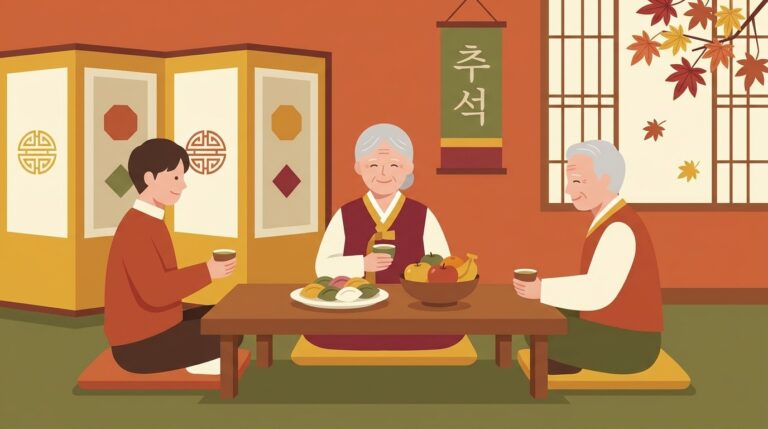
Picture this: You are sitting in a cozy traditional Korean living room during Chuseok (추석) or Seollal (설날). The dining table is filled with delicious galbi-jjim and fresh songpyeon. Suddenly, your Korean friend’s aunt looks at you with a warm yet sharp gaze and asks, “요즘 만나는 사람은 있어? 취업 준비는 잘 돼?” (Are you seeing anyone these days? How is job hunting going?)
Welcome to the infamous world of 잔소리 (Jansori – family nagging)! For intermediate Korean learners (B2), navigating holiday family gatherings can feel like walking through an emotional minefield. You want to be respectful, yet you need to protect your personal boundaries without awkward silences.
Based on real feedback from over 500 Daily Hangul learners, responding with flat textbook phrases like “아닙니다” (No, it is not) can accidentally sound cold or dismissive. In this guide, you will master smooth, naturally witty responses that show deep cultural understanding, preserve nunchi (눈치), and keep the holiday mood joyful!
Phase 2: 핵심 표현 3선 심층 분석
1. 걱정해 주셔서 감사해요 (한글)
- Pronunciation: [Geokjeonghae jusyeoseo gamsahaeyo] (Sounds like: “Gawk-jung-hae joo-shuh-suh gahm-sah-hae-yo”)
- Meaning: “Thank you for caring about me” (Literal) vs. “I acknowledge your concern, so let’s end this topic gently” (Real Nuanace)
- K-Culture Moment: Commonly seen in K-dramas when the main character smoothly changes the subject with an elder over fruit.
- Editor’s Insight: This is the ultimate defensive shield. By thanking them first, you validate their emotion, leaving no room for them to press harder.
- Situation Spectrum: Casual ⚠️ | Semi-formal ✅ | Formal ✅
- 🤔 Think About It: In your culture, is unsolicited family advice seen as love or an intrusion of privacy?
2. 알아서 잘하고 있어요 (한글)
- Pronunciation: [Alaseo jalhago isseoyo] (Sounds like: “Ah-rah-suh jal-hah-go ee-ssuh-yo”)
- Meaning: “I am doing well on my own” (Literal) vs. “Don’t worry, I have a plan under control” (Real Nuanace)
- K-Culture Moment: Used by independent K-drama leads reassuring their persistent mothers.
- Editor’s Insight: Pairs perfectly with a bright smile. Without the smile, it might sound rebellious; with a smile, it signals mature independence.
- Situation Spectrum: Casual ✅ | Semi-formal ✅ | Formal 🚫
- 🤔 Think About It: How do young adults in your home country set boundaries with older family members?
3. 덕분에 잘되고 있어요 (한글)
- Pronunciation: [Deokbune jaldoego isseoyo] (Sounds like: “Duck-boo-neh jal-doe-go ee-ssuh-yo”)
- Meaning: “Thanks to you, things are going well” (Literal) vs. “Your past blessings helped me, so sit back and relax!” (Real Nuanace)
- K-Culture Moment: Classic polite response used during holiday toasts or when receiving holiday pocket money (sebae-don).
- Editor’s Insight: Elders love hearing this! It flatters them and shifts the focus from your current status to their positive influence.
- Situation Spectrum: Casual ⚠️ | Semi-formal ✅ | Formal ✅
- 🤔 Think About It: Why does Korean culture emphasize community credit over individual accomplishment?
Phase 3: 교과서 한국어 vs 진짜 한국어
Situation 1: When asked about marriage or dating
- 📖 교과서 한국어: 아직 결혼할 생각이 없습니다. (I have no intention of marrying yet.)
- 🗣️ 진짜 한국어: 좋은 사람 나타나면 때 맞춰서 해야죠! (When the right person comes along, I’ll do it at the right time!)
- 💡 왜 다를까?: The textbook answer sounds like a harsh refusal, which disrupts group harmony. The real expression leaves the door open politely while closing the immediate interrogation.
Situation 2: When asked about salary or job promotion
- 📖 교과서 한국어: 제 월급은 비밀입니다. (My salary is a secret.)
- 🗣️ 진짜 한국어: 열심히 노력한 만큼 차곡차곡 모으고 있어요! (I’m saving up steadily as much as I work hard!)
- 💡 왜 다를까?: Stating “it’s a secret” can feel aggressive in Korean collectivist culture. Highlighting your diligent effort sounds humble and responsible.
Phase 4: K-Culture 딥다이브 & 비언어적 매너
4-1. 눈치(Nunchi) & Gestures
- The Fruit Pivot: Never stay empty-handed when deflecting. Hand the elder a piece of sliced apple or Asian pear right as you answer: “이 사과 진짜 달아요, 한 번 드셔보세요!” (This apple is really sweet, try some!)
- Eye Contact & Nods: Keep eye contact gentle with slight forward nods. Avoid crossing your arms, which signals defense or resistance.
4-2. Cultural Code Analysis: The Mystery of ‘Jansori’
In Korea, holiday Jansori (잔소리) rarely stems from genuine malice. Historically, in close-knit agrarian communities, asking personal questions was how extended family expressed active affection and worry. Knowing this helps you respond with empathy rather than annoyance!
Phase 5: 실전 롤플레이 시나리오
Setting: A bustling holiday dinner at Korean friend Min-jun’s grandparents’ house.
Characters:
* Aunt (이모): Energetic, curious, and loves giving unsolicited advice.
* You (학습자): A polite B2-level visitor.
- 이모: “우리 OO는 요즘 만나는 사람 있어? 나이가 있으니까 빨리 연애해야지!”
(Is our OO seeing anyone? You’re getting older, you should date soon!) - You: 🎭 (Smiles softly and hands over a piece of pear) “걱정해 주셔서 감사해요, 이모! 때 되면 다 나타나더라고요.”
(Geokjeonghae jusyeoseo gamsahaeyo, imo! Ttae doemyeon da natanadagoyo.)
(Thank you for caring, Auntie! When the time is right, someone will appear.) - 이모: “그래도 노력을 해야지! 회사 일은 할 만해? 월급은 많이 주나?”
(Still, you have to try! Is work doable? Does it pay well?) - You: 🎭 (Nods politely with humble posture) “덕분에 잘 적응하고 있어요. 열심히 한 만큼 보람도 커요!”
(Deokbune jal jeogeunghago isseoyo. Yeolsimhi han mankeum boramdo keoyo!)
(Thanks to your concern, I’m adapting well. It’s rewarding as much as I work hard!) - 이모: “에구, 바빠서 살 빠진 것 좀 봐. 밥은 제때 챙겨 먹고 다니니?”
(Oh dear, look how thin you got. Are you eating your meals on time?) - You: 🎭 (Laughs lightly and points to the delicious food) “이모가 해주신 음식이 너무 맛있어서 오늘은 다이어트 포기했어요!”
(Imoga haejusin eomsigi neomu masisseoseo oneureun daieoteu pogihaesseoyo!)
(Auntie’s food is so delicious that I gave up on my diet today!) - 이모: “어머, 말도 예쁘게 하네! 갈비 더 줄 테니까 많이 먹어!”
(Oh my, you speak so charmingly! I’ll give you more galbi, eat lots!) - You: 🎭 (Receives the dish with both hands) “감사합니다! 맛있게 잘 먹겠습니다!”
(Gamsahamnida! Masisseoge jal meokgeseumnida!)
(Thank you! I will enjoy this meal!)
🔀 인터랙티브 분기점
What if the Aunt asks: “다음 번 명절에는 애인 데리고 올 거지?” (Will you bring a partner next holiday?)
- Option A: “제 사생활이니까 신경 쓰지 마세요.” (It’s my private life, don’t worry about it.)
- 🚨 Risk Level: HIGH. Sounds extremely disrespectful in Korean holiday settings.
- Option B: “아직 계획 없는데요.” (I have no plans yet.)
- ⚠️ Bad. Kills the conversation instantly and creates an awkward atmosphere.
- Option C: “이모가 좋은 사람 소개해 주시면 당장 데리고 올게요!” (If Auntie introduces me to someone nice, I’ll bring them right away!)
- ✅ BEST CHOICE! Witty, playful, and shifts the playful burden back to her warmly.
Phase 6: 10초 감정 섀도잉 드릴
Practice these lines out loud using the emotional markers and rhythm breaks (/):
[😊 Softly & Brightly]
걱정해 주셔서 / 감사해요! / 알아서 / 잘하고 있어요!
(Geokjeonghae jusyeoseo / gamsahaeyo! / Alaseo / jalhago isseoyo!)-
[🙏 Humble & Grateful]
덕분에 / 잘되고 있으니까 / 너무 염려하지 마세요!
(Deokbune / jaldoego isseonikka / neomu yeomryeohaji maseyo!) -
[😜 Playful & Witty]
이모가 / 맛있는 거 사주시면 / 제가 더 힘내볼게요!
(Imoga / masinneun geo sajusimyeon / jega deo himnaebolgeyo!)
Phase 7: K-Culture 미니 사전 (핵심 키워드 4개)
- 잔소리 (Jansori) | Noun | Nagging disguised as affection or unsolicited advice from parents/elders.
- 꼰대 (Kkondae) | Noun | Condescending older person who forces their outdated views on younger people.
- 덕담 (Deokdam) | Noun | Warm well-wishes and blessings shared during festive holidays.
- 덕분에 (Deokbune) | Expression | Meaning “Thanks to [someone]”, used to credit others for positive outcomes.
Phase 8: 여행자를 위한 생존 키트
Top 3 Holiday Survival Expressions
- 맛있게 잘 먹었습니다! (I ate delicious meal! – Best way to end holiday dining)
- 새해 복 많이 받으세요! (Happy New Year! – Essential Seollal greeting)
- 풍성한 한가위 되세요! (Have a bountiful Chuseok! – Essential Chuseok greeting)
Editor’s Travel Note
When traveling to Korea during major national holidays like Chuseok or Seollal, express transport tickets sell out months in advance. Make sure to prepare early by using the official Korail KTX train booking app for smooth intercity navigation!
Phase 9: “한 발 더 깊이” (생각 질문)
In Korean culture, the boundary between the individual and the family is uniquely fluid. Questions that might feel like privacy violations in Western countries are often framed in Korea as communal care (jeong, 정). Understanding this distinction transforms frustrating conversations into opportunities for genuine human connection.
💬 Your Turn: How do you usually react when elders ask personal questions in your home culture? Share your stories in the comments below!
Phase 10: FAQ & 오해 방지 (FAQ Schema)
Q: Is it considered rude to change the subject when an elder asks a personal question?
A: Not at all! The key is how you change it. As long as you acknowledge their question with a polite phrase like “걱정해 주셔서 감사해요” first, shifting the topic to food, travel, or family memories is considered socially adept (nunchi).
Q: What is the difference between 잔소리 (Jansori) and 덕담 (Deokdam)?
A: Jansori points out current flaws or pressures you about future goals (e.g., job, marriage). Deokdam consists of unconditional blessings and warm wishes for your happiness and prosperity.
Q: Can I use “알아서 할게요” to my mother-in-law or elders?
A: Be careful! “알아서 할게요” (I’ll take care of it myself) without the soft adverb “잘” (well) or a polite smile can sound sharp and defensive. Always use “알아서 잘하고 있어요” with a gentle tone.
🚨 Common Mistakes Warning Board
| Mistake | Why It Fails | Correct Action (Fix) |
|---|---|---|
| Saying “관심 꺼주세요” (Mind your business) | Extremely rude; ruins family atmosphere | Use “걱정해 주셔서 감사해요” instead |
| Staying dead silent | Perceived as rebellious or disrespectful | Smile and hand them a drink or fruit |
| Arguing with logic | Prolongs the argument with elders | Agree softly first, then pivot witty |
Phase 11: 액션 미션 & 참여 유도
- 🥉 Bronze Mission: Read Expression 1 out loud 3 times with a bright smile.
- 🥈 Silver Mission: Record your voice practicing Phase 6 Emotion Shadowing and check your tone.
- 🥇 Gold Mission: Use “덕분에 잘되고 있어요” in your next real Korean conversation or online class!
🎮 K-Culture Mission: Watch a holiday episode of a Korean variety show (like Hangout with Yoo) and spot at least one moment of family Jansori!
Phase 12: 인터랙티브 퀴즈 챌린지
1. Situation Quiz: An elder asks about your promotion. Which response is the most culturally appropriate?
* A) 비밀인데요. (It’s a secret.)
* B) 덕분에 열심히 준비하고 있어요! (Thanks to your support, I’m preparing hard!)
* C) 그런 건 왜 물어보세요? (Why are you asking that?)
Click to reveal answer
Answer: B! Option B shows polite humility while giving a positive update without oversharing.
2. Blank Quiz: Complete the polite deflection: “___ 주셔서 감사해요!”
* A) 걱정해
* B) 미워해
* C) 화내
Click to reveal answer
Answer: A (걱정해)! “걱정해 주셔서 감사해요” means “Thank you for caring/worrying about me.”
3. True or False: In Korea, Jansori during holidays is always intended to hurt younger people’s feelings.
* True / False
Click to reveal answer
Answer: False! While annoying, it often originates from traditional communal affection and concern.







