

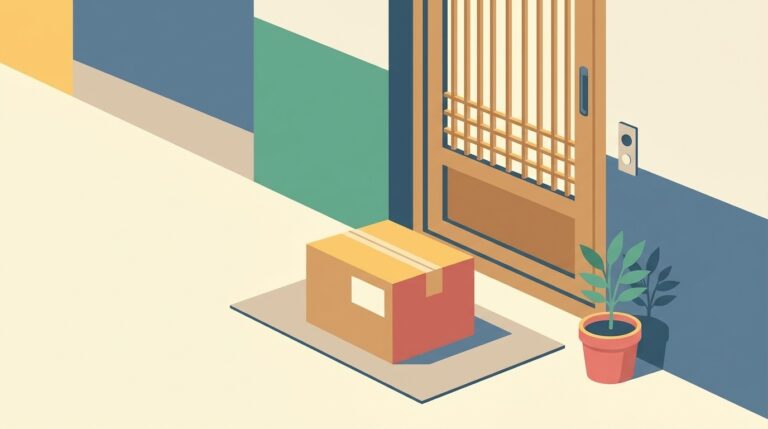
Master Korean Food Delivery: How to Say “Leave It at the Door”
Phase 1: Empathy & Story
안녕하세요! 매일한글 에디터입니다. Imagine this: It is 10 PM in Seoul. You just finished a long day of sightseeing, and your mouth is watering for spicy tteokbokki or crispy Korean fried chicken. You open your food delivery app, place the order, and suddenly your phone rings—or worse, someone rings the doorbell while you are sitting in your cozy pajamas! Panic sets in. You wanted to simply write, “Please leave it at the door,” but you hesitated, unsure of the exact Korean phrase.
You are not alone! Over 80% of our A2 Korean learners report feeling nervous when interacting with local delivery riders. Based on real feedback from hundreds of expats and travelers in Korea, we created this guide to eliminate that anxiety forever. By learning just one key delivery phrase today, you will unlock seamless, stress-free late-night food deliveries straight to your doorstep!
Phase 2: Core Expressions Deep Dive
1. 문 앞에 놔주세요 (Mun ap-e nwa-juseyo)
- Pronunciation: [Mun ap-e nwa-joo-seh-yo] (Sounds like “Moon” + “App-e” + “Nwa” (like ‘NW’ in ‘Anward’) + “Juice-Hey-Yo”)
- Meaning: “Please leave it in front of the door.”
- K-Culture Moment: You see this phrase everywhere in modern Korean K-Dramas whenever main characters order late-night chimaek (chicken & beer) to avoid waking up their roommates.
- Editor’s Insight: 문 (mun) means door, 앞 (ap) means front, and 놔주세요 (nwa-juseyo) comes from 놓다 (to place/leave) combined with the polite requesting ending -아/어 주세요.
- Situation Spectrum: Casual ⚠️ | Semi-formal ✅ | Formal ✅
- Notice: This is the ultimate standard polite phrase for delivery notes!
- 🤔 Think About It: In many Western countries, riders ring the bell and wait. In fast-paced Korea, contactless door drop-offs are preferred for speed and privacy. How does food delivery culture compare in your home country?
2. 벨 누르지 마세요 (Bel nureuji maseyo)
- Pronunciation: [Bel doo-reh-ji mah-seh-yo] (Think of “Bell” + “Noo-ree-jee” + “Mah-say-yo”)
- Meaning: “Please do not ring the doorbell.”
- K-Culture Moment: Essential for pet owners whose dogs bark loudly, or families with sleeping babies!
- Editor’s Insight: 벨 (bel) is doorbell, and -지 마세요 (-ji maseyo) means “Please do not do [action]”.
- Situation Spectrum: Casual ⚠️ | Semi-formal ✅ | Formal ✅
3. 도착하면 전화해 주세요 (Dochak-hamyeon jeonhwa-hae juseyo)
- Pronunciation: [Doh-chak-ha-myeon jeon-hwa-hae joo-seh-yo]
- Meaning: “Please call me when you arrive.”
- K-Culture Moment: Used when your apartment entrance door requires a passcode or keycard access.
- Editor’s Insight: 도착하면 means “when [you] arrive”, and 전화해 주세요 means “please give me a phone call”.
- Situation Spectrum: Casual ⚠️ | Semi-formal ✅ | Formal ✅
Phase 3: Textbook Korean vs. Real Native Korean
Situation 1: Leaving Food at the Door
- 📖 Textbook Korean: 음식을 문 앞에 놓아 주십시오. (Eomsig-eul mun ap-e no-a jusipsio.)
- 🗣️ Real Native Korean: 문 앞에 놔주세요~ (Mun ap-e nwa-juseyo~) or 문 앞에 두고 가주세요! (Mun ap-e dugo gajuseyo!)
- 💡 Why is it different? The textbook phrase uses high formal ending -하십시오 which sounds like a military command or legal text. Native Koreans prefer the softer, friendly -주세요 with a tilde (~).
Situation 2: Asking Rider to Knock Instead
- 📖 Textbook Korean: 초인종을 누르지 마시고 노크하십시오. (Choinjong-eul nureuji masigo nokeuhasipsio.)
- 🗣️ Real Native Korean: 벨 X 노크 부탁드려요! (Bel X nokeu butakdeuryeoyo!)
- 💡 Why is it different? On delivery app request boxes, space is limited! Koreans use short, clear symbols like ‘X’ and informal noun phrases like 부탁드려요 (Please/Thank you).
Phase 4: K-Culture Deep Dive & Non-Verbal Manners
4-1. Nunchi & Delivery Gestures
If you happen to open the door right as the delivery driver is placing your food down, don’t freeze! Slightly bow your head at a 15-degree angle, take the food with both hands, and say a soft “감사합니다!” (Gamsahabnida!). Using both hands shows respect and nunchi (cultural etiquette sense) in Korean social interactions.
4-2. Culture Code: The Contactless Delivery Boom
Korea’s food delivery infrastructure is arguably the fastest in the world, driven by the Palli-Palli (Hurry-Hurry) culture. Contactless delivery (비대면 배달) became the default norm. Writing clear requests in the app ensures the rider can complete the delivery in seconds and move to their next stop efficiently!
Phase 5: Real-Life Roleplay Scenario
Setting: You ordered fried chicken through a delivery app. The rider arrives at your apartment door.
Characters: 🚴 Delivery Rider (NPC) vs. 😃 You (A2 Korean Learner)
- 🚴 Rider: 🎭 (Rings bell twice) 배달왔습니다! (Baedal-wasseumnida! – Food delivery is here!)
- 😃 You: 🎭 (Speaking through the door) 네! 문 앞에 놔주세요! (Ne! Mun ap-e nwa-juseyo! – Yes! Please leave it at the door!)
- 🚴 Rider: 🎭 (Nods) 네, 문 앞에 두고 갑니다~ (Ne, mun ap-e dugo gamnida~ – Okay, leaving it at the front door~)
- 😃 You: 🎭 (Politely) 감사합니다! 맛있게 먹을게요! (Gamsahabnida! Mas-issge meogeulgeyo! – Thank you! I will enjoy the food!)
- 🚴 Rider: 🎭 (Walking away) 맛있게 드세요! (Mas-issge deuseyo! – Enjoy your meal!)
- 😃 You: 🎭 (Waits 5 seconds until footsteps fade, opens door) 찾았다! (Chaj-atda! – Got it!)
- 🚴 Rider: 🎭 (Shouts from elevator) 좋은 하루 되세요! (Jo-eun haru doeseyo! – Have a nice day!)
- 😃 You: 🎭 (Smiles brightly) 네, 수고하세요! (Ne, sugohaseyo! – Thanks for your hard work!)
🔀 Interactive Choice Point
What should you write in the rider request box if your baby is sleeping?
* Option A: 문 앞에 놔주시고 벨 누르지 마세요. (Mun ap-e nwa-jusigo bel nureuji maseyo.)
* Option B: 음식을 바닥에 버려주세요. (Eomsig-eul badag-e beoryeojuseyo.)
* Option C: 빨리 오세요! (Ppalli oseyeo!)
Feedback:
* Option A (BEST): Perfect! Clear, polite, and protects your baby’s sleep. ✅
* Option B (BAD): 버려주세요 means “please throw it away in the trash”! 🚫
* Option C (RISK): Sounding impatient might seem rude without polite context. ⚠️
Phase 6: 10-Second Emotion Shadowing Drill
- [😊 Friendly & Polite]
문 앞에 / 놔주세요~
(Mun ap-e / nwa-juseyo~) -
[🥺 Gentle Request]
아기가 자고 있어서 / 벨 누르지 말아주세요.
(Agiga jago isseoseo / bel nureuji marajuseyo.) -
[🙏 Grateful Tone]
문 앞에 두고 / 가주시면 됩니다. 감사합니다!
(Mun ap-e dugo / gajusimyeon doemnida. Gamsahabnida!)
Phase 7: K-Culture Mini Dictionary
- 요청사항 (Yocheong-sahang) | Delivery Requests | The text box in delivery apps where you write notes for the store or rider.
- 라이더 (Rider) | Delivery Driver | The person delivering your food on a scooter or bicycle.
- 공동현관 (Gongdong-hyeongwan) | Main Building Entrance | The passcode door at the entrance of Korean apartment complexes.
- 선결제 (Seongyeolje) | Pre-payment | Paying online beforehand via app so you don’t need to hand cash to the rider.
Phase 8: Traveler’s Survival Kit
Top 3 Emergency Phrases
- 문 앞에 놓아주세요. (Mun ap-e no-ajuseyo.) – Please leave it at the door.
- 비밀번호는 #1234입니다. (Bimilbeonhoneun #1234-imnida.) – Main entrance passcode is #1234.
- 음식 나왔나요? (Eomsik nawannayo?) – Is the food ready?
Editor’s Travel Note
Before ordering food in Korea, make sure you complete your Naver Map app download to easily check your current accommodation street address in Korean characters (도로명 주소)!
Phase 9: One Step Deeper (Culture Insight)
In Korea’s dense urban apartment living, contactless door delivery relies heavily on high mutual social trust. Leaving fresh food outside doors without fear of theft highlights the safety and community efficiency in modern Korean city life.
💬 Your Turn: What is the most popular food delivery item in your home country? Tell us in the comments below!
Phase 10: FAQ & Common Mistakes
Q: Can I use “놔주세요” (nwa-juseyo) with drivers older than me?
A: Yes! -주세요 is a polite standard honorific suffix perfectly suitable for all service interactions in Korea.
Q: What if my apartment complex has a lobby password key pad?
A: You must write 공동현관 비밀번호: [Code] in the rider requests box so they can enter the building!
Q: Is it okay to pay cash on delivery?
A: Most riders prefer pre-paid app orders (선결제). Cash payment requires prior selection in the app and is becoming rare.
🚨 Common Mistakes TOP 3
- ❌ Saying “문 앞에 버려주세요” -> 버리다 means to discard in trash! Use 놔주세요 or 두고 가주세요 instead.
- ❌ Forgetting the lobby door passcode -> The rider will get stuck outside and call you in Korean!
- ❌ Using ultra-informal language like “문 앞에 놔” -> Always keep -주세요 to stay polite to hardworking delivery personnel.
Phase 11: Action Mission
- 🥉 Bronze: Say “문 앞에 놔주세요” aloud 3 times in front of your mirror today.
- 🥈 Silver: Copy this phrase into your smartphone notes app so you can paste it during your next Korea trip!
- 🥇 Gold: Order food using a Korean delivery app and successfully request contactless drop-off!
🎮 K-Culture Mission: Watch a modern Korean vlog or K-Drama episode and listen for when someone says “배달 왔습니다!”.
Phase 12: Interactive Quiz Challenge
Q1. Situation: You want the delivery driver to leave food outside and knock gently instead of ringing the bell. Which note is best?
1) 벨 누르지 말고 노크해 주세요.
2) 집에 오지 마세요.
3) 문을 열어 주세요.
Click to reveal Answer & Explanation
Correct Answer: 1) 벨 누르지 말고 노크해 주세요. (Please don’t ring the bell, please knock.)
Explanation: Option 2 means “Don’t come home” and Option 3 means “Please open the door”.
Q2. Fill in the blank: 문 ___ 놔주세요. (Please leave it in front of the door)
1) 뒤에 (dwi-e)
2) 앞에 (ap-e)
3) 위에 (wi-e)
Click to reveal Answer & Explanation
Correct Answer: 2) 앞에 (ap-e)
Explanation: 앞 means front. 뒤 means behind, and 위 means on top of.







