

Phase 1: Empathy & Storytelling
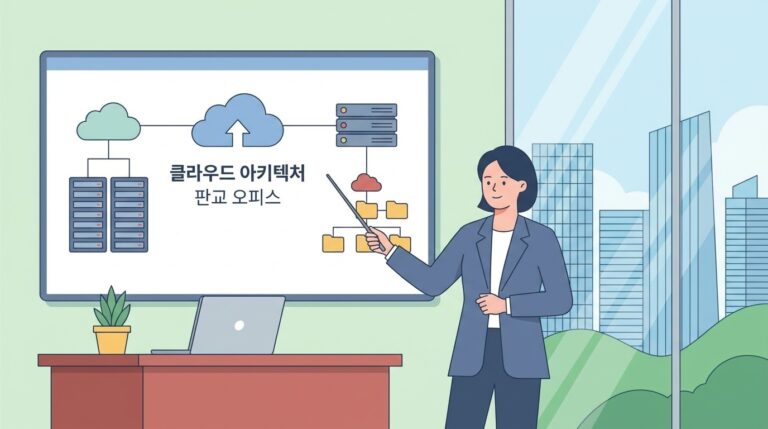
안녕하세요! 매일한글 (Daily Hangul) editor here! Imagine sitting in a sleek IT team meeting in Pangyo Techno Valley—Korea’s Silicon Valley. Your team lead asks you to evaluate whether to migrate your company’s infrastructure to AWS, Azure, or Naver Cloud. You know your cloud architecture inside and out in English, but as soon as the team starts firing off nuanced Korean tech phrasing like “가성비와 호환성을 고려했을 때…” or “서버 안정성 측면에서 따져보면…”, you feel stuck using overly rigid textbook expressions.
Comparing cloud computing services at a C1 advanced level requires subtle logic, diplomatic hesitation, and professional vocabulary that commands authority in a high-stakes Korean board meeting. After working with dozens of global engineers transitioning into Korean tech conglomerates, I’ve compiled this ultimate masterclass to bridge your high-level tech knowledge with natural, persuasive Korean. Let’s make sure your next architecture review sounds native, sharp, and confident!
Phase 2: Core Expressions Deep Dive
1. 장단점을 따져보다 (To weigh the pros and cons)
- Pronunciation: [Jang-dan-jeom-eul tta-jyeo-bo-da] (Sounds like: Jang-dan-jum-ul ttah-jyuh-bo-dah)
- Meaning: Literally “to closely inspect the good and bad points.” NUANCE: Used when evaluating options with sharp analytical rigor before making a strategic decision.
- K-Culture Moment: Often seen in K-Dramas featuring corporate strategy teams comparing vendor quotes or tech stack migrations.
- Editor’s Insight: Don’t just say “비교하다” (to compare). “따져보다” conveys that you are scrutinizing SLA metrics, pricing models, and security protocols carefully.
- Situation Spectrum:
- Casual: 🚫
- Semi-formal: ⚠️
- Formal: ✅
- 🤔 Think About It: Why does Korean workplace culture value visible thoroughness (“따져보다”) over quick snap judgments during technical reviews?
2. ~을/를 감안할 때 (Considering / Taking into account that…)
- Pronunciation: [eul/reul gam-an-hal ttae] (Sounds like: eul/reul gahm-ahn-hahl tteh)
- Meaning: Direct translation is “when considering [X]”. NUANCE: Sets up a balanced contextual rationale before delivering your final technical recommendation.
- K-Culture Moment: Frequently used by C-level executives in Seongnam tech hubs when hedging risk against unexpected server load spikes.
- Editor’s Insight: Using “감안할 때” allows you to acknowledge drawbacks (e.g., high cost) while emphasizing greater advantages (e.g., lower latency).
- Situation Spectrum:
- Casual: 🚫
- Semi-formal: ⚠️
- Formal: ✅
- 🤔 Think About It: How does starting a critique with a contextual phrase reflect the indirect communication style common in Korean business diplomacy?
3. 호환성 측면에서 (In terms of compatibility / interoperability)
- Pronunciation: [ho-hwan-seong cheuk-myeone-seo] (Sounds like: ho-hwahn-sung chook-myuhn-eh-suh)
- Meaning: “From the perspective of compatibility.” NUANCE: A sophisticated technical transition phrase used to isolate a specific metric during system evaluation.
- K-Culture Moment: Standard terminology during technical RFP (Request for Proposal) defense presentations in Korean enterprise software projects.
- Editor’s Insight: Replace basic locatives like “~에서” with “~ 측면에서” to instantly elevate your spoken Korean to C1 executive caliber.
- Situation Spectrum:
- Casual: 🚫
- Semi-formal: ⚠️
- Formal: ✅
- 🤔 Think About It: Notice how Korean tech discourse embeds Sino-Korean terms (측면 – 側面, 호환 – 互換) for exact, concise conceptualization.
Phase 3: Textbook Korean vs. Real Korean
Situation 1: Comparing Pricing Models
* 📖 Textbook Korean: 이 클라우드 서비스는 가격이 싸고 성능이 좋습니다.
* 🗣️ Real Korean: 가성비를 감안할 때 이 솔루션이 훨씬 효율적입니다.
* 💡 Why the difference? Textbook Korean uses simplistic terms like “싸다” (cheap). C1 tech Korean uses high-level vocabulary like “가성비” (cost-effectiveness) and “효율적” (efficient) to sound professional.
Situation 2: Expressing Migration Concerns
* 📖 Textbook Korean: 다른 플랫폼으로 바뀌면 문제가 생길 수 있습니다.
* 🗣️ Real Korean: 기존 시스템과의 호환성 측면에서 리스크가 존재합니다.
* 💡 Why the difference? Saying “문제가 생기다” sounds informal and vague. Enterprise-level Korean relies on precise terms like “호환성” (compatibility) and “리스크가 존재하다” (risk exists).
Phase 4: K-Culture Deep Dive & Non-Verbal Nuances
4-1. Nunchi & Professional Gestures
In a Pangyo tech review meeting, eye contact should be composed and respectful. When presenting cloud architecture diagrams, use two hands or extend an open palm toward the projection screen rather than pointing with a single index finger. When expressing hesitation about a cloud provider’s stability, tilt your head slightly and use a soft, lower tone to signal analytical caution rather than aggressive opposition.
4-2. Tech Culture Code: Pangyo Techno Valley
Korea’s cloud infrastructure ecosystem blends international platforms like AWS with powerful domestic giants such as Naver Cloud and KT Cloud. Domestic cloud providers are often preferred by public sector and financial institution clients due to local compliance and zero-latency data centers within Gyeonggi province. Understanding this balance is critical when pitching technical architecture to Korean enterprise stakeholders.
Phase 5: Interactive Roleplay Scenario
Characters:
* You: C1 Cloud Architect presenting to the team.
* Team Lead Min (민 팀장님): Sharp, data-driven IT Project Manager at a Pangyo tech company.
Dialogue:
1. 민 팀장님: 이번에 새로 들어가는 프로젝트, 클라우드 인프라 비교 분석은 어떻게 돼가고 있나요?
(M-in tim-jang-nim: I-beon-e sae-ro deu-reo-ga-neun deu-ro-jek-teu, keul-ra-u-deu in-pheu-ra bi-gyo bun-seok-eun eo-tteoh-ge dwae-ga-go in-na-yo?)
“How is the cloud infrastructure comparative analysis coming along for our new project?”
🎭 (Leans forward, looking directly at your slides with high interest)
- You: 네, AWS와 네이버 클라우드를 중심으로 장단점을 따져보았습니다.
(Ne, AWS-wa Naver Cloud-reul jung-sim-eu-ro jang-dan-jeom-eul tta-jyeo-bo-at-seum-ni-da.)
“Yes, I’ve closely weighed the pros and cons, focusing on AWS and Naver Cloud.”
🎭 (Confidently opening the architecture comparison slide with a calm posture) -
민 팀장님: 보수적인 우리 금융 고객사 트래픽을 처리하기엔 어떤가요?
(Bo-su-jeok-in u-ri geum-yung go-gaek-sa teu-rae-phik-eul cheo-ri-ha-gi-en eon-ga-yo?)
“How does it look for handling traffic for our conservative financial client?”
🎭 (Tapping pen on the desk thoughtfully) -
You: 데이터 보안규제를 감안할 때, 국내 리전을 갖춘 네이버 클라우드가 유리합니다.
(Dae-i-teo bo-an-gyu-je-reul gam-an-hal ttae, guk-nae ri-jeon-eul gat-chun Naver Cloud-ga yu-ri-ham-ni-da.)
“Taking data security regulations into account, Naver Cloud with its domestic region holds the advantage.”
🎭 (Gently gesturing toward the security compliance chart) -
민 팀장님: 그래요? 하지만 기존 글로벌 MSA 앱들과의 호환성은요?
(Geu-rae-yo? Ha-ji-man gi-jon geul-ro-beol MSA aep-deul-gwa-ui ho-hwan-seong-eun-yo?)
“Is that so? But what about compatibility with our existing global Microservice Architecture apps?”
🎭 (Raising an eyebrow inquisitive of cross-platform integration) -
You: 호환성 측면에서는 AWS가 훨씬 유연하지만, 기술 지원 응답 속도는 네이버가 빠릅니다.
(Ho-hwan-seong cheuk-myeone-seo-neun AWS-ga hweol-ssin yu-yeon-ha-ji-man, gi-sul ji-won eung-dap sok-do-neun Naver-ga ppa-reum-ni-da.)
“In terms of compatibility, AWS is much more flexible, but Naver offers faster technical support response times.”
🎭 (Maintaining a balanced, objective tone) -
민 팀장님: 비용 모니터링 체계는 어떤 쪽이 더 낫습니까?
(Bi-yong mo-ni-teo-ring che-gye-neun eo-tteon jjok-i deo nat-seum-ni-ka?)
“Which platform offers a better cost monitoring framework?”
🎭 (Nodding in agreement with the team lead's sharp metric choice) -
You: 가성비와 운영 편의성을 고려해 최종 보고서 형태로 정리하여 금일 내 보고드리겠습니다.
(Ga-seong-bi-wa un-yeong pyeon-ui-seong-eul go-ryeo-hae choe-jong bo-go-seo hyeong-tae-ro jeong-ri-ha-yeo geum-il nae bo-go-deu-ri-get-seum-ni-da.)
“Considering cost-effectiveness and operational convenience, I will finalize it into a report and submit it today.”
🎭 (Slight bow of respect showing professional closure)
🔀 Interactive Decision Point
How do you answer when Team Lead Min asks: “비용 절감 측면만 보면 어디가 제일 낫죠?” (Looking strictly at cost reduction, which one is best?)
- Option A: “무조건 네이버 클라우드가 제일 쌉니다.” (Naver Cloud is unconditionally the cheapest.)
- Option B: “단순 인프라 비용만 감안할 때 B사가 저렴하지만, 마이그레이션 공수를 따져봐야 합니다.” (Taking only raw infrastructure costs into account, Provider B is cheaper, but we must weigh migration labor.)
- Option C: “글쎄요, 저도 잘 모르겠습니다.” (Well, I don’t really know either.)
Feedback:
* Option A (Risk): Too absolute! At C1 level, overly blunt statements ignore technical trade-offs like data transfer fees.
* Option B (BEST): Perfect! Demonstrates strategic analytical capability using C1 connectors (“~감안할 때”, “~따져보다”).
* Option C (Bad): Shows lack of preparation for an architectural evaluation lead.
Phase 6: 10-Second Emotion Shadowing Drill
[🧐 Analytical & Confident]
장단점을 / 면밀히 따져본 결과 / 이 솔루션이 최적입니다.
(Jang-dan-jeom-eul / myeon-mil-hi tta-jyeo-bon gyeol-gwa / i sol-lu-syyeon-i choe-jeok-im-ni-da.)-
[⚖️ Diplomatic & Objective]
호환성 측면에서는 우수하지만 / 비용 상승을 / 감안해야 합니다.
(Ho-hwan-seong cheuk-myeone-seo-neun u-su-ha-ji-man / bi-yong sang-seung-eul / gam-an-hae-ya ham-ni-da.) -
[💼 Professional & Decisive]
서버 안정성을 고려했을 때 / 국내 리전 활용을 / 적극 추천합니다.
(Seo-beo an-jeong-seong-eul go-ryeo-haess-eul ttae / guk-nae ri-jeon hwal-yong-eul / jeok-geuk chu-cheon-ham-ni-da.)
Phase 7: K-Culture Mini Dictionary
- 가성비 (Ga-seong-bi) | Cost-to-Performance Ratio | Essential metric in Korean tech vendor selection when balancing budget limits against performance.
- 마이그레이션 공수 (Ma-i-geu-ra-e-syeon Gong-su) | Migration Labor/Man-hours | Used when discussing engineering workload needed to transfer databases or software stacks.
- 트래픽 폭주 (Teu-rae-phik Pok-ju) | Traffic Surge/Spike | Refers to massive user traffic surges, e.g., during live ticketing or K-pop album releases.
- 기술 지원 (Gi-sul Ji-won) | Technical Support / SLA Response | Critical decision criterion when choosing local Korean cloud providers over international ones.
Phase 8: Expat & Professional Survival Kit
Top 3 Business Tech Expressions
- 슬랙 채널로 스펙 공유해 주세요. (Slack chae-neol-lo seu-phek gong-yu-hae ju-se-yo.) — Please share the specification doc via Slack.
- SLA 보장 범위가 어떻게 되나요? (SLA bo-jang beom-wi-ga eo-tteoh-ge dwae-na-yo?) — What is the covered SLA guarantee scope?
- 운영 공수를 줄이는 게 우선입니다. (Un-yeong gong-su-reul ju-ri-neun ge u-seon-im-ni-da.) — Reducing operational workload is our top priority.
Editor’s Expat Note
When navigating Korean IT operations, downloading local tech ecosystem communication tools is essential. Check the Naver Cloud Platform Official Console Portal to familiarize yourself with localized cloud lexicon and administrative dashboards used across corporate South Korea.
Phase 9: A Step Deeper (Cultural Insight)
In Korean corporate technology culture, cloud platform migration is rarely just an engineering decision—it is deeply tied to organizational risk management and interpersonal trust. Using high-level phrasing like “~을 감안할 때” or “~측면에서” signals that you are protecting your team and company from potential risk while honoring the hierarchy of decision-makers. Demonstrating this balanced thoroughness builds trust quickly among Pangyo tech executives.
💬 Your Turn: Which cloud provider does your current team rely on? Share your thoughts in Korean in the comments using the phrase “~ 측면에서 유용합니다”!
Phase 10: FAQ & Common Mistakes
Q: Is “비교하다” wrong to use when comparing cloud platforms?
A: Not wrong, but basic. For C1 business contexts, use “장단점을 따져보다” or “비교 분석하다” to sound analytical and authoritative.
Q: What is the difference between “~을 감안할 때” and “~을 고려할 때”?
A: Both mean “considering…”, but “감안할 때” carries a nuanced focus on taking unfavorable factors or constraints into account before making a judgment.
Q: How do I express cloud downtime concerns respectfully?
A: Use indirect passive constructions like “서버 장애 가능성을 배제할 수 없습니다” (We cannot rule out the possibility of server outages) rather than blunt warnings.
🚨 Common Mistakes Warning Board
- ❌ Mistake: “이 서비스는 너무 싸요.” (Sounds cheap/unprofessional)
- ✅ Correct Action: Use “이 서비스는 가성비 측면에서 우수합니다.”
- ❌ Mistake: “호환성에 문제가 있어요.” (Overly abrasive)
- ✅ Correct Action: Use “기존 시스템과의 호환성을 검토할 필요가 있습니다.”
- ❌ Mistake: “제가 생각할 때 이거 쓰세요.” (Lacks corporate gravitas)
- ✅ Correct Action: Use “운영 효율성을 고려해 본 솔루션을 제안합니다.”
Phase 11: Action Missions
- Bronze Mission (Self Practice): Write 3 sentences comparing two apps on your phone using “~ 측면에서”.
- Silver Mission (Community Share): Post a short technical summary on LinkedIn or Korean learning forums comparing AWS and Azure using “장단점을 따져보다”.
- Gold Mission (Real Life Application): Use “~을 감안할 때” during your next Korean office stand-up or engineering sync meeting!
🎮 K-Culture Mission: Watch a tech conference key note on Kakao or Naver Tech YouTube, and spot how many times speakers use Sino-Korean abstract nouns ending in “~성” (e.g., 안정성, 확장성, 호환성)!
Phase 12: Interactive Quiz Challenge
- Fill in the blank: 기존 시스템과의 ________ 측면에서 AWS가 우수합니다. (In terms of compatibility…)
- A) 가성비
- B) 호환성
- C) 트래픽
🔍 Click to reveal Answer & Explanation
Correct Answer: B) 호환성 (Compatibility)
Explanation: 호환성 means systems integration/compatibility. Combine it with ~측면에서 to form “호환성 측면에서”.
- True or False: Say “이 클라우드는 진짜 싸네요” is recommended during an executive presentation in Pangyo.
🔍 Click to reveal Answer & Explanation
Correct Answer: False
Explanation: At C1 advanced level, say “가성비가 뛰어납니다” or “비용 효율성이 높습니다” instead of the colloquial word “싸다”.







