

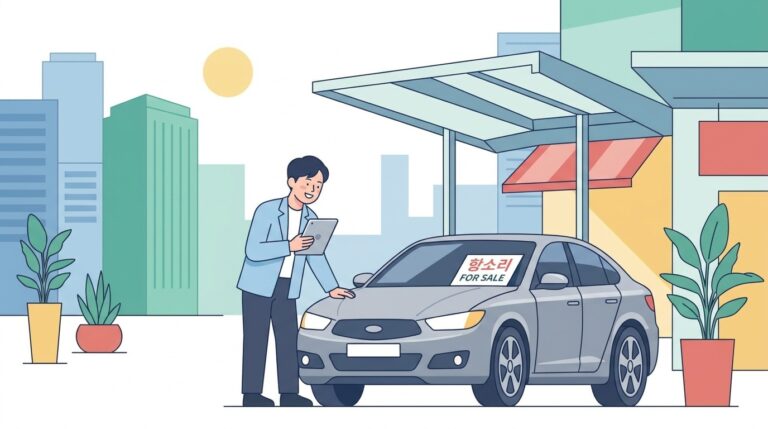
안녕하세요! 매일한글 에디터입니다. Have you ever watched a Korean drama where a character gets handed the keys to a surprisingly cheap used car, only to end up stranded on the side of the highway near the Han River with smoke billowing out of the hood? Buying a used car (중고차 매매) in Korea can be an empowering milestone whether you are living here long-term or exploring the countryside. However, navigating dealer talk, checking maintenance records (정비 이력), and ensuring you aren’t getting a “flooded car” (침수차) requires a refined set of intermediate phrases. Many learners know basic car terms, but slip up when negotiating subtle condition checks with savvy dealers at complexes or online platforms. Today, based on real feedback from expats and local drivers, we’ll equip you with B2-level expressions and cultural nuance to buy with total confidence!
1. 무사고 차량 맞나요? (Musago charyang mannayo?)
- Pronunciation: Mu-sa-go cha-ryang mang-na-yo? (Sounds like “Moo-sah-go cha-ryang mahn-nah-yo”)
- Meaning: Direct: “Is this a no-accident vehicle?” / Nuance: “Can you guarantee this car hasn’t been in a major structural accident?”
- K-Culture Moment: Often heard in realistic slice-of-life Korean dramas when a pragmatic character is verifying vehicle papers at a dealership.
- Editor’s Insight: “무사고” technically refers to major frame damage in legal dealership terms. Minor fender-benders might still count as “무사고” if outer panels were replaced. Knowing this distinction impresses dealers immediately!
- Situation Spectrum: Casual: ⚠️ / Semi-formal: ✅ / Formal: ✅
- 🤔 Think About It: In Korea, written vehicle history transparency is heavily emphasized. How does car safety verification reflect accountability in your home country?
2. 정비 이력서 좀 볼 수 있을까요? (Jeongbi ireokseo jom bol su isseulkayo?)
- Pronunciation: Jeong-bi i-reok-seo jom bol su is-seul-kka-yo? (Sounds like “Jung-bee ee-ruck-suh jom bol soo ees-seul-kah-yo”)
- Meaning: Direct: “Can I see the maintenance record?” / Nuance: “Could you kindly provide the detailed service history for this vehicle?”
- K-Culture Moment: Used by meticulous buyer characters who inspect every detail before making a big transaction.
- Editor’s Insight: Adding “좀” (jom) softens your request politeness while maintaining a firm, knowledgeable stance.
- Situation Spectrum: Casual: ⚠️ / Semi-formal: ✅ / Formal: ✅
- 🤔 Think About It: Korean polite phrasing uses softening words like “좀” to avoid sounding overly demanding during business inquiries.
3. 가격 네고는 얼마나 가능한가요? (Gagyeok negoneun eolmana ganeunghangayo?)
- Pronunciation: Ga-gyeok ne-go-neun eol-ma-na ga-neung-han-ga-yo? (Sounds like “Gah-gyuck neh-go-neun ul-mah-nah gah-neung-hahn-gah-yo”)
- Meaning: Direct: “How much is price nego possible?” / Nuance: “Is there any room for price negotiation?”
- K-Culture Moment: Heard in local car buying vlogs and entertainment shows when bargaining at secondhand markets or auto dealers.
- Editor’s Insight: “네고” (Nego) comes from negotiation. Using this loanword shows you understand local shopping slang and keeps the mood light yet direct.
- Situation Spectrum: Casual: ✅ / Semi-formal: ✅ / Formal: ⚠️
- 🤔 Think About It: How do loanwords blended with native grammar facilitate friendly business discussions in Korean culture?
📖 교과서 한국어: “이 차의 가격을 할인해 주실 수 있습니까?” (Can you give a discount on this car’s price?)
🗣️ 진짜 한국어: “혹시 가격 네고 살짝 가능할까요?” (Is a slight price nego possible by any chance?)
💡 왜 다를까?: Textbook phrases sound stiff and litigious. “혹시” (by any chance) and “살짝” (slightly) cushion the bargaining request in real-life Korean trade etiquette.
📖 교과서 한국어: “차량 내부 상태가 양호합니다.” (The car interior condition is good.)
🗣️ 진짜 한국어: “실내 관리 완전 깨끗하게 잘 되어 있네요!” (The interior maintenance is super clean and well-kept!)
💡 왜 다를까?: Native speakers use emphatic adverbs like “완전” and focus on how well it was “managed” (관리) rather than just stating dry adjectives.
4-1. Nunchi & Gestures
When inspecting a used car, maintain steady eye contact when asking about accident history, but nod softly as the dealer explains. Use two hands when handing over or receiving registration documents (자동차 등록증). Crouching down to check tire tread while gently tapping the rubber shows you are a thoughtful examiner!
4-2. Cultural Code Analysis
Platforms have transformed Korean used car culture into a tech-driven, highly regulated system. Showing awareness of “침수 이력” (flood history check) reflects smart consumer awareness, especially after heavy summer monsoon seasons (장마철).
Dealer (딜러): 어서 오세요! 찾으시는 모델 있으신가요? (Welcome! Is there a model you are looking for?)
Buyer (나): 네, 3년 이내 준중형 아반떼 보고 있어요. (Yes, I’m looking for an Avante under 3 years old.) 🎭 Taps fingers on notebook thoughtfully.
Dealer (딜러): 마침 상태 아주 좋은 차량이 오늘 들어왔습니다! (As luck would have it, a car in great condition arrived today!)
Buyer (나): 혹시 이 차 무사고 차량 맞나요? (By any chance, is this a no-accident car?) 🎭 Looks attentively at the vehicle sheet.
Dealer (딜러): 그럼요! 단순 교환만 있는 무사고입니다. (Of course! It’s no-accident with only simple parts replacement.)
Buyer (나): 그렇군요. 정비 이력서도 같이 확인할 수 있을까요? (I see. Could I also check the maintenance record together?) 🎭 Politely hands over a pen.
Dealer (딜러): 네, 성능점검표 바로 출력해 드리겠습니다. (Yes, I will print the performance check sheet right away.)
Buyer (나): 감사합니다. 상태가 괜찮으면 가격 네고 살짝 가능할까요? (Thank you. If the condition is fine, would a slight price nego be possible?) 🎭 Smiles warmly with open body language.
🔀 Interactive Branching:
Option A: “에이, 더 깎아주세요! 너무 비싸요!” (A bit aggressive/demanding)
Option B: “상태가 괜찮으면 가격 네고 살짝 가능할까요?” (Polite, soft negotiation)
Option C: “가격 안 깎아주면 그냥 갈게요.” (Blunt ultimatum)
Feedback:
* Option A (Bad): Might cause the dealer to feel defensive. Negotiating requires softeners in Korea.
* Option B (Best): Uses “혹시” and “살짝” to sound respectful yet clear about intent.
* Option C (Risk): You might lose a good car unnecessarily without starting a constructive conversation.
- [😊 기대감을 담아] 혹시 / 가격 네고 / 살짝 가능할까요?
- [🧐 꼼꼼하고 신중하게] 정비 이력서도 / 같이 / 확인할 수 있을까요?
- [확신에 찬 목소리로] 성능 점검표 / 다시 확인해 볼게요!
- 성능점검표 (Seongneung-jeomgeompyo) | Inspection Report | The official mandatory technical checklist showing body repairs and engine status.
- 침수차 (Chimsu-cha) | Flooded Car | Vehicles damaged by severe water exposure, a key warning point in secondhand markets.
- 시운전 (Si-unjeon) | Test Drive | The crucial act of taking the car for a short trial spin before signing contracts.
- 명의이전 (Myeong-ui-ijeon) | Title Transfer | The administrative process of changing vehicle ownership registration.
TOP 3 Survival Phrases:
1. 시운전 해봐도 될까요? (Si-unjeon haebwado doelkayo?) – Can I take it for a test drive?
* Pro Tip: Always ask before getting into the driver’s seat.
2. 타이어 트레드 남아있나요? (Taieo teuredeu nama-innayo?) – Is there tread left on the tires?
* Pro Tip: Shows you are checking practical wear-and-tear items.
3. 당일 명의이전 가능해요? (Dang-il myeong-ui-ijeon ganeunghaeyo?) – Is same-day title transfer possible?
* Pro Tip: Essential if you need the vehicle immediately.
Editor’s Travel Note:
Before visiting a complex, research listings through certified online auto platform applications to verify real-time market averages (시세).
In Korean car culture, buying a vehicle represents a significant life step often tied to family or career milestones. Because trust (신뢰) is central to commercial transactions in Korea, using polite request forms rather than direct demands fosters a collaborative spirit with sellers. Showing respect for the dealer’s business while firmly asking for official documentation yields the best results.
💬 Your Turn: Have you ever negotiated a big purchase in Korea or your home country? Share your experience in the comments below!
Q: What is the difference between 무사고 (No Accident) and 완전 무사고 (100% No Accident)?
A: “무사고” means no structural frame damage, but minor bolt-on parts (like outer doors or fenders) might have been replaced. “완전 무사고” means zero replaced parts whatsoever!
Q: Can foreigners buy and register a used car in Korea?
A: Yes! You need a valid Residence Card (ARC), domestic driver’s license, and proof of auto insurance before title transfer.
Q: How can I avoid buying a flooded car (침수차)?
A: Check official safety histories and inspect seatbelt lower straps or under-dashboard wiring for mud traces.
🚨 Common Mistakes TOP 3:
1. Mistake: Asking “할인해 주세요” bluntly without building rapport.
* Correct Action: Use “가격 네고 살짝 가능할까요?” after inspecting the vehicle condition together.
2. Mistake: Forgetting to check the “성능점검표” date.
* Correct Action: Ensure the inspection report is recent.
3. Mistake: Driving away without auto insurance active.
* Correct Action: Activate auto insurance (자동차 보험) before completing title transfer on the spot.
- Bronze Mission: Read expression #1 and #3 out loud three times using emotional shadowing pauses.
- Silver Mission: Write a mock negotiation sentence in the comments using “살짝 가능할까요?”.
- Gold Mission: Look up a vehicle listing on a Korean car portal and identify its accident history terminology!
🎮 K-Culture Mission: Watch a Korean vlog about buying a secondhand car and spot when they mention “성능점검표”!
-
Situation Quiz: You want to negotiate the price politely. What should you say?
Click to view answer & explanation
Answer: “혹시 가격 네고 살짝 가능할까요?”
Explanation: “혹시” (by any chance) and “살짝” (slightly) cushion your polite negotiation request.
-
Fill-in-the-blank: 차를 사기 전에 반드시 ( ____ ) 이력서를 확인해야 합니다.
Click to view answer & explanation
Answer: 정비 (Maintenance)
Explanation: Checking the maintenance history (정비 이력서) helps verify past vehicle care.
-
True or False: “무사고” always means zero parts were ever replaced on the car.
Click to view answer & explanation
Answer: False!
Explanation: “무사고” permits minor outer panel replacements as long as the structural frame was undamaged. “완전 무사고” means zero replacements.







