

안녕하세요! 매일한글 에디터입니다.
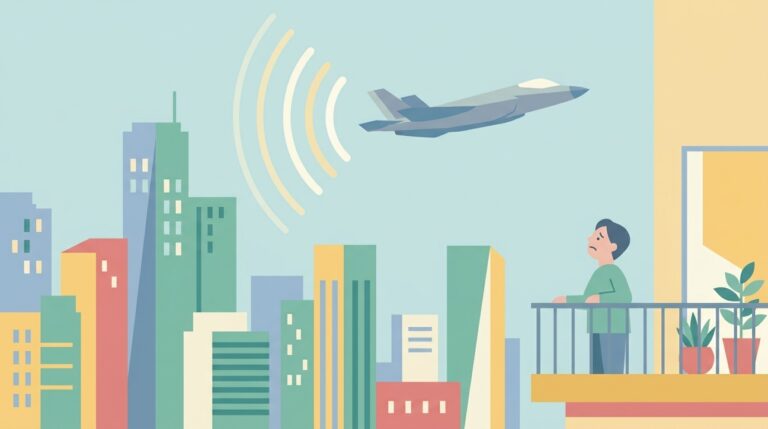
Imagine living in a trendy studio in Daegu or Gwangju, sipping your morning coffee, when suddenly—ROAR!—a fighter jet tears through the sky, rattling your windows and drowning out your favorite K-Drama. Welcome to the complex, highly debated world of South Korean military airbase relocation (군 공항 이전) and noise damage compensation (소음 피해 보상).
This isn’t just a dry policy issue; it’s a massive social, cultural, and political battleground where national security clashes with regional development and civic rights. For C2 advanced learners, mastering the lexicon of public hearings, civic resistance, and administrative litigation is the ultimate test of your sociolinguistic competence. Let’s dive deep into the sophisticated vocabulary that shapes editorials in the Chosun Ilbo or The Hankyoreh.
Phase 2: Core Expressions (핵심 표현 3선 심층 분석)
1. 국방력 강화 vs 주민 생존권 (Gukbangnyeok ganghwa vs jumin saengjongwon)
- Pronunciation: gook-bahng-nyeok gahng-hwa versus joo-min saeng-john-won (Think “gook-bahng” like a deep “gook” soup + “nyeok” like “nack”).
- Meaning: Strengthening National Defense vs. Residents’ Right to Survival.
- K-Culture Moment: This classic dichotomy frequently stars in Korean political thrillers like The Steel Rain or investigative journalism programs like SBS Inside Story (그것이 알고 싶다), highlighting the tragic clash between national duty and individual sacrifice.
- Editor’s Insight: This phrase represents the ultimate ideological tug-of-war in modern Korea. On one side, Korea’s unique geopolitical position demands robust defense systems (국방력 강화); on the other, rapid urbanization has placed residential zones right next to older military bases, prompting residents to demand their basic rights (주민 생존권).
- Situation Spectrum: Casual 🚫 | Semi-formal ⚠️ | Formal ✅
- 🤔 Think About It: How does your home country balance national security with private property and quality-of-life rights?
2. 핌피(PIMFY)와 님비(NIMBY) 현상 (Pimpi-wa Nimbi hyeonsang)
- Pronunciation: Pim-pee wah Nim-bee hyun-sahng
- Meaning: PIMFY (Please In My Front Yard) and NIMBY (Not In My Back Yard) phenomena.
- K-Culture Moment: In real estate-obsessed South Korea, moving a military airport brings “NIMBY” reactions from the proposed hosting region due to noise, but “PIMFY” reactions from developers looking to build high-rise apartments on the vacated prime land.
- Editor’s Insight: While borrowed from English, these terms are heavily naturalized in Korean public discourse. Koreans use them to analyze regional egoism (지역 이기주의) during public hearings (공청회).
- Situation Spectrum: Casual ⚠️ | Semi-formal ✅ | Formal ✅
- 🤔 Think About It: Why do you think military infrastructure causes such severe NIMBYism in Korea compared to other countries?
3. 소음 등고선 (So-eum deung-go-seon)
- Pronunciation: so-eum deung-go-sun (like “seon” in “sunny”).
- Meaning: Noise Contour Lines (WECPNL / Weighted Equivalent Continuous Perceived Noise Level).
- K-Culture Moment: If you watch local news in affected areas like Suwon, Gwangju, or Daegu, you’ll see complex maps overlaid with colorful concentric circles—these are the 소음 등고선 determining who gets cash compensation.
- Editor’s Insight: In Korean administrative law, whether you reside inside or outside a specific 소음 등고선 (usually above 80 or 85 WECPNL) determines your eligibility for compensation. It’s a source of immense legal friction and neighborhood disputes.
- Situation Spectrum: Casual 🚫 | Semi-formal ⚠️ | Formal ✅
- 🤔 Think About It: Is drawing a literal line on a map a fair way to compensate someone for environmental distress?
Phase 3: Textbook Korean vs. Real Korean (교과서 한국어 vs 진짜 한국어)
Scenario 1: Discussing Noise Complaints
- 📖 Textbook: 군 공항 소음 때문에 스트레스를 받습니다. (I am stressed due to military airport noise.)
- 🗣️ Real Korean: 전투기 굉음 때문에 일상생활이 불가능할 지경이에요. 머리가 다 지끈거려요. (The roar of the fighter jets makes daily life practically impossible. My head is literally throbbing.)
- 💡 Why the difference? C2 speakers avoid passive verbs and clinical terms like 소음 (noise) in favor of sensory nouns like 굉음 (deafening roar) and physical idiomatic reactions like 머리가 지끈거리다 (head throbbing/aching).
Scenario 2: Pointing Out Government Inaction
- 📖 Textbook: 정부는 주민들의 요구를 들어주어야 합니다. (The government must listen to the residents’ demands.)
- 🗣️ Real Korean: 정부가 보상 기준안을 두고 표퓰리즘적 미봉책만 내놓으며 지지부진하게 시간만 끌고 있어요. (The government is just dragging its feet with populist, stopgap compensation measures while letting the issue stagnate.)
- 💡 Why the difference? To operate at a C2 level, you must utilize highly descriptive hanja-based idioms like 미봉책 (stopgap measure) and 지지부진하다 (stagnant/dragging on) to criticize public policy.
Phase 4: K-Culture Deep Dive & Non-Verbal Etiquette
4-1. Civic Action & Public Hearings (공청회) Etiquette
In Korea, civic negotiations regarding military bases are highly emotionally charged yet deeply structured. When attending or discussing a public hearing (공청회):
* The “Pity and Appeal” Eye Contact: When local residents speak, they use intense, direct eye contact with government officials, often accompanied by physical gestures like holding up petitions (탄원서) with both hands to show utmost earnestness.
* Bow of Resolution: Community leaders often bow deeply (almost 90 degrees) before delivering a speech, signaling that they represent the collective will (중론) of the community, not just personal greed.
4-2. The Real Estate/Defense Nexus in Korean Media
In dramas like Stranger (비밀의 숲) or localized political satires, the relocation of a military base is never just about defense. It is depicted as a web of insider trading, land speculation (부동산 투기), and backroom deals. Understanding this connection is crucial for understanding why military relocation issues occupy front-page news for decades.
Phase 5: Interactive Roleplay (실전 롤플레이 시나리오)
The Setting
A high-stakes public debate regarding the relocation of the K-2 Airbase.
* Characters:
* 김 지사 (Governor Kim): Trying to mediate between the Ministry of National Defense and angry locals.
* 박 위원장 (Chairperson Park): Head of the Local Residents’ Noise Countermeasure Committee.
Dialogue
- 김 지사 (Governor Kim): 🎭 (차분하게 양손을 테이블 위에 올리며) 여러분, 국가 안보의 엄중함과 지역 주민들의 고충을 균형 있게 다루어야 할 시점입니다.
(Everyone, it is time to balancedly address the gravity of national security and the grievances of local residents.) - 박 위원장 (Chairperson Park): 🎭 (서류뭉치를 치켜들며) 균형이라니요! 지난 수십 년간 주민들이 감내해 온 소음 피해는 단순한 ‘고충’이 아니라 생존권 유린입니다!
(Balance?! The noise damage residents have endured for decades isn’t just a ‘grievance’—it is the violation of our right to survive!) - 김 지사 (Governor Kim): 🎭 (안타까운 표정으로 고개를 끄덕이며) 박 위원장님의 말씀에 십분 공감합니다. 하지만 대체 부지 선정 과정에서 발생하는 지자체 간 갈등도 무시할 수 없습니다.
(I fully sympathize with your words, Chairperson Park. However, we cannot ignore the conflicts between local governments during the alternative site selection process.) - 박 위원장 (Chairperson Park): 🎭 (한숨을 내쉬며) 소음 등고선 기준도 현실성 없는 탁상행정의 표본입니다. 실제 데시벨 측정값과 괴리가 큽니다.
(The noise contour line standards are a prime example of unrealistic, deskbound administration. There is a huge discrepancy with actual decibel measurements.) - 김 지사 (Governor Kim): 🎭 (목소리를 부드럽게 낮추며) 법률적 테두리 내에서 소음 보상 구역을 확대 적용할 수 있도록 국방부와 긴밀히 조율 중입니다.
(We are closely coordinating with the Ministry of National Defense to expand the noise compensation zone within the legal framework.) - 박 위원장 (Chairperson Park): 🎭 (단호하게 눈빛을 반짝이며) 임시방편식 미봉책은 사절합니다. 원천적인 해결은 오직 조속한 공항 이전뿐입니다.
(We refuse temporary, stopgap measures. The only fundamental solution is the prompt relocation of the airport.) - 김 지사 (Governor Kim): 🎭 (진지하게 주민들을 바라보며) 이전 부지 주민들과의 합의안 도출을 위해 주민투표 및 재정적 인센티브 안을 구상 중이니 시간을 조금만 더 주십시오.
(We are designing a referendum and financial incentive plans to reach an agreement with the residents of the relocated site, so please give us a little more time.) - 박 위원장 (Chairperson Park): 🎭 (엄숙하게 선언하듯) 더 이상의 지지부진한 시간 끌기는 좌시하지 않겠습니다. 주민 공동의 행동권을 행사할 것입니다.
(We will not stand by and watch any more sluggish foot-dragging. We will exercise our collective right to action.)
🔀 Interactive Choice Point
As Governor Kim’s advisor, how do you recommend he respond to Chairperson Park’s threat of collective action?
- A) Hardline Defense: “국가 안보 사업에 대한 불법적 집단행동은 법과 원칙에 따라 엄정 사법 처리될 수밖에 없음을 경고하십시오.”
- B) Empathetic Compromise: “주민들의 피해 규모를 과학적으로 재조사하기 위한 ‘민관합동 조사위원회’ 구성을 제안하십시오.”
- C) Financial Incentive Card: “이전 대상지에 제공될 천문학적인 경제 지원 규모를 언론에 선제적으로 터뜨려 여론을 돌리십시오.”
Feedback:
- Selecting A (Risk): Escalates the conflict immediately. In Korea, threatening legal action against citizens protesting environmental suffering often triggers massive public backlash and media criticism.
- Selecting B (Best): Demonstrates genuine “Nunchi” and procedural fairness. Creating a joint public-private task force (민관합동 조사단) builds trust and defuses immediate threats of civil disobedience.
- Selecting C (Bad): Highly risky. It portrays the government as trying to buy out human rights with cash, which could provoke both the sender and receiver regions.
Phase 6: 10-Second Emotional Shadowing Drill
Practicing high-level emotional delivery. Pay attention to the pauses (/) and emotional cues.
- Sentence 1: [😡 Extremely Frustrated & Direct]
- “언제까지 / 국가 안보라는 명목 하에 / 주민들의 일방적인 희생만 / 강요할 셈입니까?”
- Eon-je-kka-ji / guk-ga an-bo-ra-neun myeong-mok ha-e / ju-min-deul-ui il-bang-jeok-in hui-saeng-man / gang-yo-hal sem-ip-ni-ka?
- (How long do you intend to force the unilateral sacrifice of residents under the guise of national security?)
- Sentence 2: [🥺 Empathetic yet Firm]
- “주민 여러분의 고통을 / 뼈저리게 느끼고 있으며, / 합리적인 보상안 도출을 위해 / 배수의 진을 치고 협상하겠습니다.”
- Ju-min yeo-reo-bun-ui go-tong-eul / pyeo-jeo-ri-ge neu-ki-go is-seu-myeo, / hap-ri-jeok-in bo-sang-an do-chul-eul wi-hae / bae-su-ui jin-eul chi-go hyeop-sang-ha-ges-seup-ni-da.
- (I deeply feel the pain of the residents, and I will burn my bridges to negotiate a rational compensation plan.) Note: 배수의 진을 치다 (back against the wall/burning bridges) is a classic tactical idiom.
Phase 7: K-Culture Mini-Dictionary (핵심 키워드 4선)
- 탁상행정 (Tak-sang-haeng-jeong) | Deskbound/Bureaucratic Administration | Used to criticize government policies created by officials who only look at screens and papers without visiting the actual troubled sites.
- 배수의 진 (Bae-su-ui jin) | Burning one’s bridges (Lit. Lining up troops with water at their back) | Used when a negotiating party has no room to retreat and must fight for survival.
- 상생 협력 (Sang-saeng hyeop-ryeok) | Win-win cooperation | The preferred diplomatic euphemism used by political bodies when trying to make two warring parties compromise.
- 주거권 (Ju-geo-gwon) | Housing/Residential Rights | The constitutional right to live in a clean, quiet, and safe environment, often cited during noise litigation.
Phase 8: Traveler’s Survival Kit (현지 실전 가이드)
Survival Phrases for Environmental Stress:
- “에어컨 필터 청소 때문에 문을 열어뒀는데, 전투기 소리가 너무 심하네요.”
- Air-con filter cheong-so ttae-mun-e mun-eul yeol-eo-dweot-neun-de, jeon-tu-gi so-ri-ga neo-mu sim-ha-ne-yo.
- (I left the window open to clean the AC filter, but the jet noise is incredibly loud.)
- “여기 혹시 소음 피해보상 구역에 해당하나요?”
- Yeo-gi hok-si so-eum pi-hae-bo-sang gu-yeok-e hae-dang-ha-na-yo?
- (Does this area happen to fall under the noise damage compensation zone?)
- “귀마개 없이는 밤에 도저히 잠을 잘 수가 없어요.”
- Gwi-ma-gae eop-si-neun bam-e do-jeo-hi jam-eul jal su-ga eops-eo-yo.
- (I absolutely cannot sleep at night without earplugs.)
Editor’s Travel Note:
If you are planning to rent an apartment (Officetel) in South Korean cities with major airbases like Daegu (Dong-gu area) or Suwon, make sure to check the noise levels beforehand. You can use the 국가소음정보시스템 (National Noise Information System Website) to look up real-time environmental noise maps. Note: Information subject to change depending on local government zoning policies.
Phase 9: Deep Dive (한 발 더 깊이)
South Korea’s rapid economic transformation created a unique urban layout: high-density residential areas built directly adjacent to military zones that were once isolated countryside. This creates a cultural clash. Koreans deeply value 공동체 의식 (community consciousness) and national defense duty due to the ongoing armistice with North Korea. However, the rise of 개인 주거권 (individual housing rights) has challenged old collectivist expectations. To discuss Korean military base issues is to analyze the shift from absolute national sacrifice to individual constitutional protection.
💬 Your Turn: Do you think national security should always trump individual comfort? Let us know your thoughts in the comments below!
Phase 10: FAQ & Common Mistakes (자주 묻는 질문 & 실수)
Q: Why do Koreans use ‘WECPNL’ instead of regular decibels (dB) in noise discussions?
A: Koreans use WECPNL (항공기 소음 단위) because it factors in the frequency of flights, time of day (night flights are penalized heavier), and the psychological impact of jet noise, making it a more comprehensive index for legal compensations than instantaneous decibel levels.
Q: Is ‘NIMBY’ always used negatively in Korea?
A: Mostly, yes. It is used in media to critique regional self-interest. However, local residents defend themselves by stating it’s a matter of basic human survival, not mere selfishness.
Q: Can foreigners living in Korea apply for military noise damage compensation?
A: Yes! If a foreign national is legally registered (외국인등록) and resides within the designated 소음 등고선 zone during the assessment period, they are eligible for the same municipal compensation schemes.
🚨 Common Mistakes Alert!
- Mistake 1: Confusing 소음 (general noise) with 굉음 (roaring noise). When talking about military jets, using 소음 sounds too weak. Use 굉음 to sound natural.
- Mistake 2: Saying “군공항을 이사하다” (moving the airport). 이사하다 is only for personal homes. For military/public infrastructure, always use 이전하다 (移轉-).
- Mistake 3: Saying “소음 돈” for noise money. The legally correct term is 소음 피해 피해보상금 (noise damage compensation).
Phase 11: Action Mission (액션 미션)
- Bronze: Read a Korean news headline containing the keyword ‘군 공항 이전’ and translate the main conflict.
- Silver: Write a short paragraph (3-4 sentences) in Korean expressing your opinion on public infrastructure disputes using the word ‘탁상행정’ or ‘배수의 진’.
- Gold: Share this post on your social media with the hashtag #DailyHangul and describe how military noise issues are handled in your native country in advanced Korean.
Phase 12: Interactive Quiz (퀴즈 챌린지)
- Which word refers to an unrealistic, deskbound administrative policy?
- A) 상생협력
- B) 탁상행정
- C) 소음등고선
- Fill in the blank: “정부의 정책은 근본적인 해결책이 아닌 일시적인 ( )에 불과하다.”
- A) 미봉책 (Stopgap measure)
- B) 주거권 (Residential right)
View Answers & Explanations (클릭하여 정답 보기)
- Correct Answer: B) 탁상행정. This refers to administration done on desks without knowing the real situation of the field.
- Correct Answer: A) 미봉책. The sentence translates to: “The government’s policy is nothing more than a temporary stopgap measure, not a fundamental solution.”







