

C2 Korean Masterclass: The Battle for Credibility—Navigating South Korea’s Counseling Credential Crisis
Phase 1: 공감 (The Wild West of K-Counseling: A Deep Breath of Shared Reality)
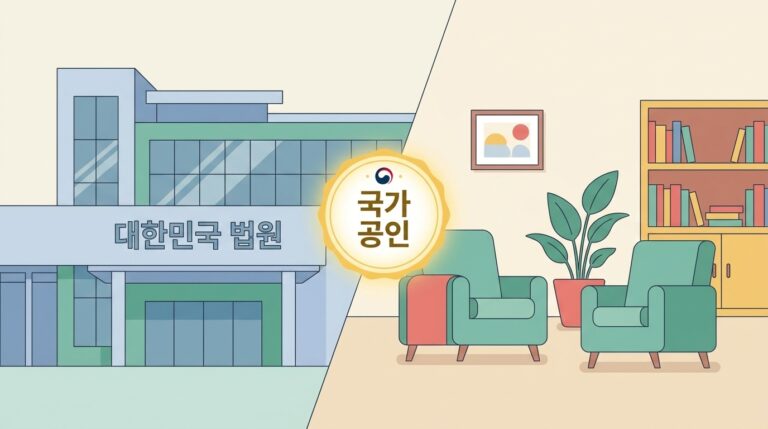
안녕하세요! Your Korean bestie and Daily Hangul’s Chief Editor is back! Have you ever watched a K-Drama where a character, completely overwhelmed by the intense societal pressures of Seoul, decides to seek mental health support? You see them sitting in a cozy, dimly lit counseling room, shedding tears of relief. It feels incredibly healing, right?
But here’s a real, heavy-hitting topic that is currently sparking massive debates across South Korea’s legal and social landscape: How do you actually know if your therapist is a real, state-certified expert?
In South Korea, mental health awareness has skyrocketed, but with it came a massive challenge: a chaotic flood of private, unregulated counseling certificates (자격증 난립 – jageokjeung nallip). Literally, anyone can take a 15-hour online course and print a fancy-looking certificate calling themselves a “Psychological Counselor.” Today, we are diving deep into the sophisticated language surrounding the nationalization of counseling credentials (국가 자격화 – gukga jagyeokhwa).
By mastering this C2-level discourse, you won’t just be speaking Korean—you will be analyzing complex socio-political dynamics like a true native intellectual. Let’s dive in!
Phase 2: 핵심 표현 3선 심층 분석 (Advanced Linguistic Toolkit)
To discuss national policy and societal debates, we need heavy-duty, nuanced vocabulary. Here are three crucial expressions used by policymakers, professional psychologists, and news anchors.
1. 자격증이 난립하다 (Jageokjeung-i nallip-hada)
- Pronunciation: Jah-gyeok-jeung-ee nal-lip-hada (Sounds like “nal-leep” where the tongue swiftly hits the roof of the mouth for the double ‘l’ sound).
- Meaning: The chaotic proliferation/flooding of unverified licenses/certificates.
- K-Culture Moment: You will hear this term on high-end investigative journalism shows like SBS’s Unanswered Questions (그것이 알고 싶다) when exposing fraudulent therapy centers exploiting vulnerable people.
- Editor’s Insight: Nallip (난립/亂立) literally translates to “disorderly standing.” It carries a highly critical, disapproving tone, implying that the sheer quantity of these certificates is causing immense public confusion.
- Situation Spectrum: Casual: 🚫 | Semi-formal: ⚠️ | Formal: ✅
- 🤔 Think About It: How does your home country regulate mental health professionals? Does the concept of “unregulated certifications” exist in your culture, and how do you linguistically express skepticism toward them?
2. 제도의 사각지대 (Jedo-ui sagakjidae)
- Pronunciation: Jeh-do-ui sah-gak-jee-dae (Make sure the ui sound is pronounced clearly as ‘eui’ or ‘eh’ in fluent speech).
- Meaning: The blind spot of a system/policy.
- K-Culture Moment: Used constantly in legal dramas like Stranger (비밀의 숲) to describe societal loopholes where victims cannot receive legal protection because the law hasn’t caught up to reality.
- Editor’s Insight: Sagakjidae (사각지대) means “blind spot” (literally, a dead-angle zone). Combining it with jedo (system/institution) highlights that the legal framework fails to monitor these unauthorized counseling practices.
- Situation Spectrum: Casual: 🚫 | Semi-formal: ⚠️ | Formal: ✅
- 🤔 Think About It: In Korean culture, exposing the sagakjidae is considered a crucial duty of the free press to protect the public. Is there a similar metaphor in your native tongue?
3. 국가 자격화로 일원화하다 (Gukga jagyeokhwa-ro il-won-hwa-hada)
- Pronunciation: Gook-gah jah-gyeok-hwah-roh eel-won-hwah-hada (The transition from il to won should be seamless, almost sounding like eerwon).
- Meaning: To unify/standardize under a single national licensing system.
- K-Culture Moment: Standard jargon found in editorial columns in the Chosun Ilbo or JoongAng Ilbo, debating how to restructure the national mental health system.
- Editor’s Insight: Ilwonhwa (일원화/一元化) means “unification” or “monopolizing into a single system.” It is the ultimate solution proposed by legitimate academic associations to weed out fake therapists.
- Situation Spectrum: Casual: 🚫 | Semi-formal: 🚫 | Formal: ✅
Phase 3: 교과서 한국어 vs 진짜 한국어 (Textbook vs. Street-Smart Korean)
As a C2 learner, you need to navigate both formal panel debates and casual water-cooler gripes about this issue.
Situation 1: Expressing that there are too many fake experts out there.
- 📖 Textbook Style: “공인되지 않은 심리 상담가가 너무 많습니다.” (Gong-in-doeji aneun simri sangdamga-ga neomu mansumnida.)
- Translation: There are too many unaccredited psychological counselors.
- 🗣️ Real Intellectual Slang: “검증 안 된 민간 자격증이 판을 치고 있어요.” (Geomjeung an doen mingan jageokjeung-i paneul chigo isseoyo.)
- Translation: Unverified private certificates are completely running rampant (ruling the board).
- 💡 Why the Difference? Paneul chida (판을 치다) is an idiomatic expression meaning “to run wild” or “to dominate a scene in an unruly manner.” It captures the frustration of legitimate professionals far better than the dry textbook alternative.
Situation 2: Demanding stricter government control.
- 📖 Textbook Style: “정부는 법을 만들어 통제해야 합니다.” (Jeongbu-neun beobeul mandeoreo tongje-haeya hamnida.)
- Translation: The government must make a law and control it.
- 🗣️ Real Intellectual Slang: “하루빨리 법제화를 통해 자격 요건을 소급 적용하거나 규제해야 합니다.” (Haruppalli beopjehwa-reul tonghae jageok yogeoneul sogeup jeogyong-hageona gyuje-haeya hamnida.)
- Translation: We must urgently legislate this to either retroactively apply qualification requirements or regulate them.
- 💡 Why the Difference? Using highly academic legal terms like beopjehwa (legislation – 법제화) and sogeup jeogyong (retroactive application – 소급 적용) elevates your Korean to the level of a policy analyst.
Phase 4: K-Culture 딥다이브 & 비언어적 매너 (Socio-Cultural Deep Dive)
4-1. The Body Language of Intellectual Debate
When discussing heavy societal issues like mental health policy in Korea, non-verbal cues are critical.
* The “Deep Sigh and Head Shake” (한숨과 고개 젓기): When discussing the victims of unlicensed counseling, slowly shaking your head while letting out a quiet sigh (han-sum) conveys deep empathy and frustration with the system.
* Maintain Humble Eye Contact (겸손한 시선 처리): Unlike Western debates where continuous, piercing eye contact is seen as confident, in a Korean professional setting, look slightly down at your notes or nod thoughtfully while listening to the opposing view before countering.
4-2. The K-Drama Connection: The Healing Boom vs. The Reality
In dramas like It’s Okay to Not Be Okay (사이코지만 괜찮아) or Daily Dose of Sunshine (정신병동에도 아침이 와요), we see professional, highly structured psychiatric settings. However, in reality, Koreans seeking counseling often avoid hospital records due to the lingering social stigma of psychiatric treatment. Instead, they turn to private counseling centers—making them incredibly vulnerable to the jageokjeung nallip crisis. The current push for 국가 자격화 (Nationalization) is aimed directly at protecting these vulnerable individuals.
Phase 5: 실전 롤플레이 시나리오 (The Policy Debate Live-Play)
Characters:
* 민우 (Min-woo): A certified clinical psychologist arguing for strict state control.
* 혜원 (Hye-won): A private counselor arguing for transitional measures to protect existing practitioners.
[Scene: A high-profile television debate studio in Yeouido, Seoul.]

민우: 🎭 (단호한 표정으로 카메라를 바라보며)
      현재 민간 자격증이 만 개가 넘습니다. 이로 인한 피해는 고스란히 국민들에게 돌아가고 있습니다.
      (Currently, there are over 10,000 private certificates. The resulting damage is borne entirely by the public.)

혜원: 🎭 (차분하게 고개를 저으며 반박한다)
      그 점은 동의합니다만, 법제화를 통해 일순간에 규제해 버리면 현업에 종사하는 선의의 피해자가 속출할 것입니다.
      (I agree with that point, but if we regulate them all at once through legislation, well-meaning practitioners currently in the field will suffer one after another.)

민우: 🎭 (안경을 고쳐 쓰며 한 걸음 나아간다)
      그렇기 때문에 법제화 과정에서 유예 기간을 두되, 자격 요건은 엄격히 '국가 자격화'로 일원화해야 합니다.
      (That's why we should provide a grace period during the legislative process, but the qualification requirements must be strictly unified under national certification.)

혜원: 🎭 (생각에 잠기듯 고개를 까닥이며)
      일원화의 취지에는 공감합니다. 다만, 기존 실무 경력을 어떻게 소급 적용해 인정해 줄지가 핵심 관건이겠군요.
      (I empathize with the purpose of unification. However, how we retroactively recognize existing practical experience will be the key issue.)
🔀 Your Turn: Interactive Choice!
How would you, as the moderator, steer this debate? Choose your path:
- A. “양측의 입장이 팽팽하군요. 그렇다면 외국의 선진 사례는 어떠합니까?”
- Feedback: Best! You smoothly acknowledge both sides and pivot to international comparisons, keeping the debate productive and objective.
- B. “대충 넘어가고 다음 주제로 가시죠.”
- Feedback: Bad! Way too casual and dismissive. Destroys the professional atmosphere of a C2 debate.
- C. “누구 말이 맞는지 투표로 결정합시다.”
- Feedback: Risk! Too simplistic for a complex legislative debate. Shows a lack of understanding of bureaucratic processes.
Phase 6: 10초 감정 섀도잉 드릴 (High-Emotional Shadowing Drill)
Practice saying this sentence with the right emotional weight, focusing on the pauses (/).
“제도의 사각지대에서 / 눈물 흘리는 피해자들을 위해 / 더 이상 법제화를 / 미룰 수 없습니다!”
Pronunciation: Jedo-ui sagakjidae-eseo / nunmul heullineun pihaeja-deureul wihae / deo isang beopjehwa-reul / mirul su eopsumnida!
Empathy Map:
[🥺 끓어오르는 정의감과 안타까운 감정을 가득 담아 단호하게]Translation: We can no longer postpone legislation for the victims shedding tears in the blind spots of the system!
Phase 7: K-Culture 미니 사전 (Socio-Political Keyword Dictionary)
- 상담남용 (Sangdam-namyong) | Consultation Abuse | The act of unqualified individuals performing pseudo-therapy sessions, often causing secondary trauma to patients.
- 공인 자격증 (Gong-in Jageokjeung) | State-Accredited License | A credential officially recognized and regulated by the South Korean government, ensuring a high standard of practice.
- 소급 적용 (Sogeup Jeogyong) | Retroactive Application | A legal principle of applying a new law or regulation to actions or agreements that occurred before the law was written.
- 진입 장벽 (Jinyip Jangbyeok) | Entry Barrier | The structural or legal hurdles that prevent unqualified individuals from entering a highly specialized professional market.
Phase 8: 여행자를 위한 생존 키트 (The Advanced Living Guide)
If you ever need mental health support while living in South Korea, or if you are researching this field, keep these in mind:
Survival Phrases
- “이 센터는 보건복지부 공인 자격증을 가진 선생님이 상담하시나요?”
- Are the counseling sessions conducted by a therapist certified by the Ministry of Health and Welfare?
- “상담 기록이 국민건강보험에 남는지 확인하고 싶습니다.”
- I would like to check if my counseling sessions will be recorded in my National Health Insurance history.
- “사설 기관 말고 국가에서 운영하는 정신건강복지센터가 어디에 있나요?”
- Where is the government-run Mental Health Welfare Center, rather than a private institution?
Editor’s Travel Note: For reliable mental health resources in Korea, avoid searching blindly on blogs. Instead, download the 네이버 지도 (Naver Map) app and search for “정신건강복지센터” (National Mental Health Center) which are state-certified and offer free or highly subsidized professional counseling.
Phase 9: 한 발 더 깊이 (The Socio-Cultural Reflection)
In South Korea, the urge to codify everything into “national certifications” stems from a deep-rooted cultural belief in state-sanctioned meritocracy. Since the days of the Joseon Dynasty’s civil service exams (과거제도), Koreans have trusted state-verified exams above all else to guarantee fairness and quality. The fight over jageokjeung nallip is not just a professional dispute; it is a battle for “trust” (신뢰) in a high-pressure society where fake credentials can ruin lives.
💬 Your Turn: Do you think state certification guarantees better mental health counseling, or does it limit creative and diverse therapeutic approaches? Tell us in the comments below!
Phase 10: FAQ & 오해 방지 (FAQ Schema & Common Pitfalls)
Q: Can anyone legally open a counseling center in Korea right now?
A: Unfortunately, yes. Under current loopholes, many centers can open simply by registering as a general business or consulting firm without verifying their therapeutic credentials.
Q: What is the most trusted counseling credential in Korea?
A: Look for counselors licensed as Clinical Psychologists (임상심리사) by the Ministry of Health and Welfare or those certified by prestigious academic bodies like the Korean Psychological Association (한국심리학회).
Q: Is the term “국가 자격화” only used for counseling?
A: No, it is used across various industries when transitioning from private certifications to standardized national licensing systems (e.g., dog trainers, art therapists).
🚨 흔한 실수 (Common Mistakes) 경고판
- Incorrect: 저는 민간 자격증을 무시합니다. (Too blunt/rude)
- Correct: 아직 민간 자격증에 대한 제도적 정비가 필요해 보입니다. (Refined C2 critique of the system)
Phase 11: 액션 미션 & 참여 유도 (The Daily Hangul Challenge)
- 🥉 Bronze: Read the Phase 6 shadowing sentence aloud 3 times, focusing on the dramatic pauses.
- 🥈 Silver: Write a 3-sentence opinion on your Instagram story using the word 사각지대 (blind spot) and tag
#DailyHangul. - 🥇 Gold: Translate this sentence into natural Korean: “We must create a unified system to prevent the damage caused by unverified licenses.” (Hint: Use 일원화하다 and 난립!)
Phase 12: 인터랙티브 퀴즈 챌린지 (The Final Exam)
Test your mastery of C2-level counseling policy Korean!
Q1. What does “자격증 난립” mean?
- A) Getting a license very quickly
- B) The chaotic flooding of unregulated certificates
- C) Studying for a state exam
Q2. Fill in the blank: “법률의 ______를 해결하기 위해 새로운 법안을 발의했다.”
- A) 사각지대 (Blind spot)
- B) 지름길 (Shortcut)
- C) 이정표 (Milestone)
🔍 Click here to reveal the answers and explanations!
- Q1 Answer: B | Nallip refers to the disorderly, chaotic proliferation of certifications.
- Q2 Answer: A | Sagakjidae is the perfect legal term to describe a loophole or blind spot in a law.







