

C1 Korean Masterclass: Navigating Smart Grids and IoT Energy Management in Korea
Phase 1: Empathy (Our Cozy Connection)
안녕하세요! It’s your favorite Daily Hangul editor and cultural navigator here!
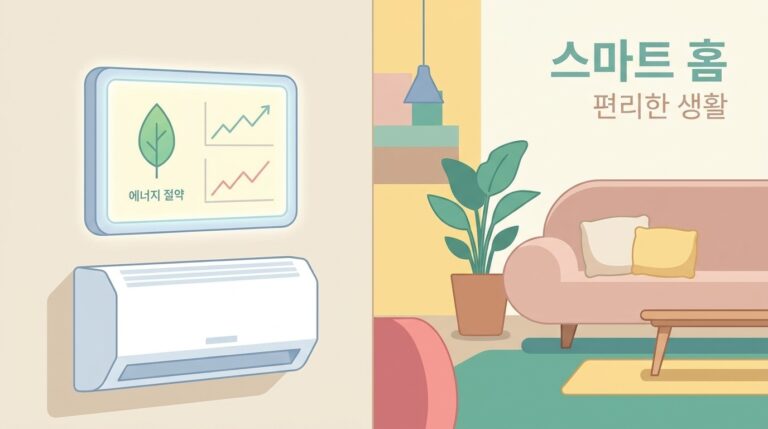
Imagine this: You’ve just moved into a sleek, ultra-modern officetel (오피스텔) in the heart of Seoul during the sweltering peak of August or the freezing depth of January. Korea’s smart homes are a dream—everything from your underfloor heating (난방) to your air conditioner (에어컨) can be controlled via an app. But then, you hear about the dreaded “progressive tax” (누진세) on electricity. You open your smart home energy monitoring app, and it’s filled with advanced terms like “peak load control” and “real-time power consumption.”
If looking at your Korean smart grid dashboard makes you feel like you accidentally signed up for an engineering degree, don’t worry! This is a very common pain point for advanced learners. Today, we’re going to master the high-level vocabulary and cultural nuances of Smart Grids and IoT Energy Management (스마트 그리드와 에너지 관리) so you can confidently manage your smart home and talk about green tech like a local tech expert!
Phase 2: Deep Dive into 3 Essential Expressions
Let’s unpack three high-level expressions that will instantly elevate your Korean to the C1 level when discussing energy and IoT.
1. 전력 소비를 최적화하다 (jeon-ryeok so-bi-reul choe-jeok-hwa-ha-da)
- Pronunciation: Jun-ryuk so-bee-reul chwe-juk-hwa-ha-dah (Rhymes with “fun duck” + “so bee” + “chwe juck hwa ha dah”)
- Meaning: To optimize power consumption
- K-Culture Moment: You will see this phrase splashed across ads for modern Samsung SmartThings or LG ThinQ appliances. It’s the ultimate green-tech buzzword in Korea.
- Editor’s Insight: ‘최적화 (Optimization)’ is a Sino-Korean word combining 최 (most), 적 (suitable), and 화 (make into). In the context of Korea’s high population density and reliance on energy imports, optimizing power is considered both an economic necessity and a civic duty.
- Situation Spectrum: Casual: 🚫 | Semi-formal: ⚠️ | Formal: ✅ (Perfect for presentations, app interfaces, or discussing smart homes with your landlord.)
- 🤔 Think About It: How does your home country encourage energy saving compared to Korea’s highly digitized smart home notifications?
2. 대기 전력을 차단하다 (dae-gi jeon-ryeok-eul cha-dan-ha-da)
- Pronunciation: Dae-gee jun-ryuk-eul cha-dan-ha-dah (Think “day” + “gee” + “jun ryuk” + “cha” as in charger + “dan”)
- Meaning: To cut off standby power (phantom load)
- K-Culture Moment: Many Korean apartments feature a master switch by the front door labeled “대기전력 차단” which cuts off power to unused outlets when you leave.
- Editor’s Insight: Koreans are highly conscious of ‘대기 전력’ (standby/vampire power). Mentioning that you “대기 전력을 철저히 차단한다” (thoroughly cut off standby power) will make you sound incredibly eco-conscious and culturally integrated.
- Situation Spectrum: Casual: ⚠️ | Semi-formal: ✅ | Formal: ✅
- 🤔 Think About It: Does your culture have a specific word for “phantom energy” or “standby power” that is as widely used in daily life as in Korea?
3. 누진세 폭탄을 피하다 (nu-jin-se pok-tan-eul pi-ha-da)
- Pronunciation: Noo-jin-seh pok-tan-eul pee-ha-dah (Pronounced like “noo-jin-seh” + “poke-tahn” + “pee-hah-dah”)
- Meaning: To avoid a progressive tax bomb (an extremely high electricity bill due to tiered pricing)
- K-Culture Moment: In mid-August, Korean news channels are flooded with warnings about the “누진세 폭탄” (progressive tax bomb) due to non-stop air conditioning.
- Editor’s Insight: While ‘폭탄’ literally means “bomb,” Koreans use it metaphorically for overwhelming bills (요금 폭탄) or work (업무 폭탄). Using this blend of high-level tax vocabulary with colloquial metaphor is a hallmark of C1 fluency.
- Situation Spectrum: Casual: ✅ | Semi-formal: ✅ | Formal: ⚠️
- 🤔 Think About It: Why do you think Koreans use the dramatic word “bomb” (폭탄) for unexpected utility bills?
Phase 3: Textbook Korean vs. Real-Life Korean
Let’s bridge the gap between classroom Korean and actual native usage in the smart home era.
Situation 1: Explaining how your smart home app works
- 📖 Textbook: “스마트홈 애플리케이션이 전력 사용량을 조절합니다.” (The smart home application regulates power consumption.)
- 🗣️ 진짜 한국어: “앱이 실시간으로 전력량을 모니터링하면서 알아서 전력을 제어해 줘요.”
- 💡 Why the difference? While ‘조절하다’ is grammatically correct, native speakers prefer ‘알아서 제어해 주다’ (automatically controls/takes care of it) to emphasize the smart, autonomous nature of modern IoT devices.
Situation 2: Expressing worry about a high heating bill in winter
- 📖 Textbook: “겨울철 난방비가 많이 나올까 봐 걱정됩니다.” (I am worried that winter heating bills will be high.)
- 🗣️ 진짜 한국어: “겨울에 난방 잘못 틀었다가 난방비 폭탄 맞을까 봐 무서워요.”
- 💡 Why the difference? To “hit a heating bill bomb” (난방비 폭탄 맞다) is the standard, vivid idiom Koreans use to express the dread of seasonal utility bills.
Phase 4: K-Culture Deep Dive & Non-verbal Manners
4-1. The “Eco-Savy” Gesture
When discussing smart homes and energy saving in Korea, there is a strong non-verbal emphasis on being 꼼꼼하다 (meticulous). When Koreans talk about turning off standby power, they often mimic the clicking of a switch with their thumb or point to the smart wall-pad (월패드) in the living room with a polite, open-hand gesture rather than pointing with a single finger.
4-2. Cultural Code: The Smart Grid Apartment
Korea is one of the world’s leaders in smart grid integration due to its high-density apartment culture (아파트 단지). Entire apartment complexes are connected to centralized energy management systems (EMS). This has created a unique culture where neighbors compare their energy usage ranks (e.g., “Our household used 15% less energy than the building average this month!”) via their wall-pads, turning energy conservation into a friendly, gamified community effort.
Phase 5: Real-Life Roleplay Scenario
Setting: You are discussing how to set up your new smart apartment’s IoT system with Mr. Kim, your tech-savvy building manager (관리소장님).
Characters:
- 민우 (Minwoo / You): A resident who wants to optimize energy settings to avoid high bills.
- 김 소장님 (Manager Kim): The experienced, proud manager of your smart complex.
- 김 소장님: 민우 씨, 이번에 새로 입주하셨죠? 우리 아파트는 스마트 그리드가 연동되어 있어서 에너지 관리가 아주 편리합니다.
(Minwoo, you just moved in, right? Our apartment is integrated with a smart grid, making energy management very convenient.) -
민우: 네, 소장님! 그런데 스마트 월패드 화면에 뭐가 너무 많아서 전력 소비를 어떻게 최적화해야 할지 잘 모르겠어요.
(Yes, Manager! But there’s so much on the smart wall-pad screen that I’m not sure how to optimize my power consumption.) -
김 소장님: 하하, 처음엔 다들 어려워하시죠. 우선 ‘스마트 대기 전력 차단’ 기능을 활성화해 두세요. 가전제품을 안 쓸 때는 대기 전력이 자동으로 차단됩니다.
(Haha, everyone finds it hard at first. First, activate the ‘Smart Standby Power Cut-off’ function. When appliances aren’t in use, standby power is automatically cut off.) -
민우: (머리를 긁적이며) 🎭 아, 자동으로요? 안 그래도 이번 여름에 에어컨 때문에 누진세 폭탄을 맞을까 봐 걱정했거든요.
(Ah, automatically? Actually, I was worried I might get hit with a progressive tax bomb this summer because of the air conditioner.) -
김 소장님: 걱정 마세요. 실시간 전력 사용량이 목표치를 초과하면 스마트홈 앱으로 바로 알림이 가니까요.
(Don’t worry. If your real-time power usage exceeds the target, you’ll get an instant notification on your smart home app.) -
민우: (안도하며) 🎭 다행이네요. 그럼 앱에서 전력 수요 반응(DR) 서비스도 신청할 수 있는 건가요?
(That’s a relief. Then can I also apply for the Demand Response (DR) service on the app?) -
김 소장님: 오, DR 서비스도 아시네요! 맞아요, 전력 피크 시간대에 절전하면 포인트를 주는데, 그걸로 관리비를 차감받을 수 있어요.
(Oh, you know about the DR service too! That’s right, if you save energy during peak hours, you get points, which can be used to deduct your maintenance fees.) -
민우: 와, 대박이네요! 당장 오늘 저녁부터 앱을 연동해서 스마트하게 관리해 봐야겠어요. 감사합니다!
(Wow, that’s awesome! I should link the app and manage it smartly starting tonight. Thank you!)
🔀 Interactive Choice Point
How would you respond to the manager’s explanation about saving money through the DR service?
- Option A: “귀찮은데 그냥 대충 쓸게요.” (It’s a hassle, I’ll just use it roughly.)
- Feedback (Bad): Extremely blunt and dismissive. It ruins the cooperative community vibe Koreans value.
- Option B: “아, 그 피크 시간대에 가전제품 작동을 최소화하면 되는 거죠? 한번 실천해 보겠습니다!” (Ah, so I just need to minimize appliance usage during peak hours, right? I’ll try putting it into practice!)
- Feedback (Best): Demonstrates high-level comprehension (피크 시간대, 최소화, 실천) and a highly cooperative, positive attitude.
- Option C: “포인트 많이 주나요? 돈 안 되면 안 할래요.” (Do they give a lot of points? If it doesn’t make money, I won’t do it.)
- Feedback (Risk): Too money-focused and direct, which can sound slightly rude to an older manager.
Phase 6: 10-Second Emotion Shadowing Drill
Practice these natural pauses (/) and emotional inflections to sound exactly like a native speaker!
- [😰 Worried & Expressive]
“이번 여름엔 / 에어컨을 많이 틀어서 / 진짜 누진세 폭탄 맞을까 봐 / 너무 걱정돼요.”
(This summer / because I ran the AC a lot / I’m really worried / I might get hit with a progressive tax bomb.) -
[💡 Bright & Impressed]
“우와, / 외출하면 / 대기 전력이 알아서 차단된다니 / 진짜 편하네요!”
(Wow, / when I go out / standby power is automatically cut off / that’s so convenient!)
Phase 7: K-Culture Mini-Dictionary
- 누진세 (Nu-jin-se) | Progressive Tax
- In Korea, residential electricity rates are tiered. The more you use, the exponentially higher the rate per kWh becomes.
- 대기 전력 (Dae-gi Jeon-ryeok) | Standby/Vampire Power
- Energy consumed by appliances while they are switched off but still plugged into the wall.
- 월패드 (Wol-pae-deu) | Wall-pad
- The wall-mounted touch-screen terminal in Korean apartments that controls lighting, heating, security, and tracks utility usage.
- 에너지 효율 등급 (E-neo-ji Hyo-yul Deung-geup) | Energy Efficiency Rating
- The colorful 1-to-5 scale sticker found on Korean appliances. Level 1 (1등급) is the most efficient and highly coveted!
Phase 8: Survivor’s Travel Kit
- Survival Phrase 1: “보일러 외출 모드는 어떻게 설정하나요?” (How do I set the boiler to ‘Away’ mode?)
- Pro Tip: In Korean winters, never turn your boiler completely off when going out, or the pipes might freeze. Always use 외출 모드 (Away Mode).
- Survival Phrase 2: “이 건물 스마트 홈 앱 이름이 뭐예요?” (What is the name of this building’s smart home app?)
- Survival Phrase 3: “관리비 고지서에 전기세가 왜 이렇게 많이 나왔죠?” (Why is the electricity bill in this maintenance statement so high?)
Editor’s Travel Note:
To manage your electricity bills in real-time, consider searching for your utility provider’s mobile services or downloading the official app provided by KEPCO (한국전력공사) known as “한전 ON” on the Google Play Store or Apple App Store. It helps you track your consumption tier before the “bomb” hits!
Phase 9: “Going Deeper” (Reflecting on Korean Society)
Korea’s obsession with smart grids and real-time energy tracking is deeply tied to its rapid economic development and collectivist mindset. Because Korea imports over 90% of its energy resources, energy conservation has historically been treated as a patriotic act. This social consciousness is now seamlessly blended with cutting-edge technology. When you participate in “Demand Response” programs in Korea, you aren’t just saving pennies—you are actively participating in a national green network.
💬 Your Turn: Does your country have a similar system where citizens coordinate to save energy during peak hours? Let us know in the comments below!
Phase 10: FAQ & Common Mistakes
Q: Can I turn off the smart wall-pad entirely to save electricity?
A: It is not recommended. The wall-pad manages safety features like gas leak detection, elevator calling, intercoms, and fire alarms. It uses minimal power, so it’s best to keep it on.
Q: What is the difference between ‘전기 요금’ and ‘전기세’?
A: ‘전기 요금’ is the technically correct term (electricity fee), but almost all native Koreans colloquially refer to it as ‘전기세’ (electricity tax) because it feels like a mandatory public tariff.
🚨 Common Mistakes Alert!
- Saying “에어컨을 아끼다” to mean saving energy: ‘아끼다’ means to cherish or save. Use “전기를 절약하다” (save electricity) or “에어컨 사용을 줄이다” (reduce AC usage).
- Confusing ‘보일러’ (heating) with ‘히터’ (space heater): Korean floor heating is powered by a gas 보일러 (boiler). A 히터 refers to electric fan heaters.
- Leaving the boiler completely OFF in winter: This can lead to a burst pipe disaster. Always leave it on “외출” (Away).
Phase 11: Action Mission
- 🥉 Bronze Mission: Check the appliances in your house or a Korean drama scene and locate their 에너지 효율 등급 (Energy Efficiency Sticker).
- 🥈 Silver Mission: Write a comment below using the phrase “누진세 폭탄을 피하기 위해…” (To avoid the progressive tax bomb…).
- 🥇 Gold Mission: If you live in Korea, open your wall-pad or smart app and switch your standby power settings to auto-cut off, or take a screenshot of your real-time usage graph!
Phase 12: Interactive Quiz Challenge
1. Situation Quiz
Your friend left their air conditioner running at 18°C all day while going to work. What warning should you give them?
* A) 전기세 폭탄 맞을 수 있으니까 조심해!
* B) 대기 전력이 최적화되니까 걱정 마!
Reveal Answer & Explanation
Correct Answer: A
Leaving the AC on blast will result in a “tax bomb” (요금/전기세 폭탄). Option B is incorrect because ‘대기 전력’ is only for standby mode when devices are off, not when they are actively running.
2. Fill-in-the-Blank
안 쓰는 가전제품의 플러그를 뽑으면 (______ )을/를 차단하여 에너지를 절약할 수 있습니다.
* Hint: Standby power
Reveal Answer & Explanation
Correct Answer: 대기 전력
Unplugging unused appliances cuts off ‘대기 전력’ (standby power) to save energy.
3. True or False
In Korea, ‘전기세’ (electricity tax) is a formal, official term used in legal documents.
* True
* False
Reveal Answer & Explanation
Correct Answer: False
The official legal term is ‘전기 요금’ (electricity fee). However, ‘전기세’ is widely used in everyday casual conversation.







