

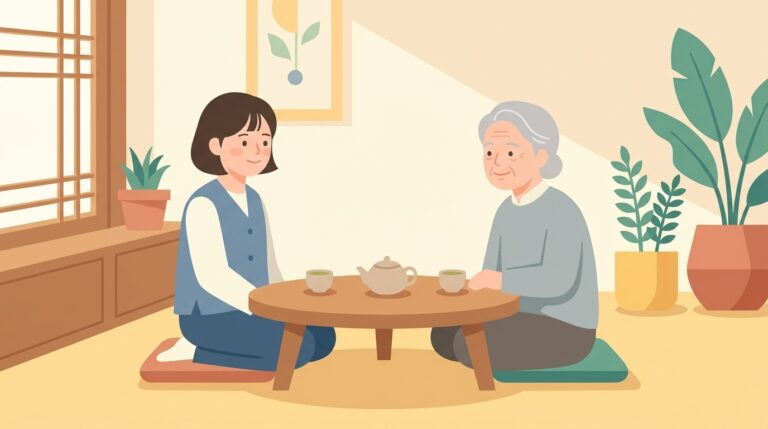
Navigating Korea’s Silent Crisis: Understanding Eldercare & Social Inequality in Korean
안녕하세요! It’s your favorite study buddy and Daily Hangul Editor. Have you ever watched a poignant K-drama like My Mister (나의 아저씨) or Dear My Friends (디어 마이 프렌즈) and felt your heart ache during scenes depicting elderly characters struggling to make ends meet?
Behind Korea’s ultra-modern facade of neon lights, K-pop, and high-speed tech lies a deeply complex societal shift: a rapidly aging population and a rising wealth gap among the elderly. As a C1-level learner, you aren’t just here to order coffee; you’re here to understand the heartbeat of Korean society. Today, we’re diving deep into the nuanced vocabulary surrounding social inequality, elder poverty, and welfare. Let’s learn how to discuss these heavy but vital topics with deep empathy and linguistic precision.
Phase 2: Core Expressions Deep Dive
1. 고령화 사회 (Goryeong-hwa sahoe)
- Pronunciation: goh-ryeong-hwa sah-hweh (Sounds like “go-ryung-hwa sah-whey”)
- Meaning: Aging society (an aging population structure)
- K-Culture Moment: You will hear this word daily on news broadcasts like KBS or JTBC when discussing Korea’s demographic shift, or in documentaries discussing the loneliness of the elderly.
- Editor’s Insight: 고령 (Goryeong) means high/advanced age, and 화 (hwa) means “-ization” or transformation. Korea has transitioned from an aging society to an aged society (고령사회) at an unprecedented speed, making this a pivotal term in any sociological debate.
- Situation Spectrum: Casual (⚠️ – too heavy for a casual chat about hobbies) | Semi-formal (✅) | Formal (✅)
- 🤔 Think About It: How does your home country’s speed of aging compare to Korea’s, and how is it reflected in your language?
2. 빈곤층 (Bingon-cheung)
- Pronunciation: been-gohn-cheung (Sounds like “been-gohn-chung”)
- Meaning: The poor; the impoverished class
- K-Culture Moment: In sociological dramas or political thrillers like Secret Forest (비밀의 숲), characters often debate policies targeting the 노인 빈곤층 (elderly impoverished class).
- Editor’s Insight: 빈곤 (Bingon) means poverty, and 층 (cheung) means layer or class. When talking about social stratification in Korea, using 층 makes your analysis sound academic and objective, rather than overly emotional.
- Situation Spectrum: Casual (🚫) | Semi-formal (✅) | Formal (✅)
- 🤔 Think About It: Why does Korean have so many classified terms for social strata compared to English?
3. 복지 사각지대 (Bok-ji sagak-jidae)
- Pronunciation: bok-jee sah-gak-jee-dae (Sounds like “bok-jee sah-gak-jee-deh”)
- Meaning: Blind spot in social welfare
- K-Culture Moment: This term frequently appears in humanitarian reality shows or news segments reporting on elderly citizens who do not qualify for government aid due to strict, outdated family-support laws.
- Editor’s Insight: 사각지대 (Sagak-jidae) literally means “dead zone” or “blind spot” (like a driver’s blind spot). Combining it with 복지 (welfare) highlights the systemic flaws where vulnerable people slip through the cracks of the system.
- Situation Spectrum: Casual (⚠️) | Semi-formal (✅) | Formal (✅)
- 🤔 Think About It: What constitutes a “welfare blind spot” in your culture, and how do people advocate for those left behind?
Phase 3: Textbook Korean vs. Real Conversational Korean
We often learn dry, theoretical terms in textbooks, but Koreans use more visceral, empathetic phrasing in daily life.
- Situation 1: Describing someone struggling financially due to age
- 📖 Textbook: 그 노인은 경제적 빈곤 상태에 처해 있습니다. (That elderly person is in a state of economic poverty.)
- 🗣️ Real Korean: 그 할머니, 하루하루 겨우 버티고 계시더라고요. (That grandmother is barely getting by day by day.)
- 💡 Why it’s different: Koreans rarely use cold terms like “경제적 빈곤” when talking about a specific person they know. Expressing it as “겨우 버티다” (barely holding on) shows deep, human empathy.
- Situation 2: Expressing concern over the aging population trend
- 📖 Textbook: 인구 고령화 문제가 심각해지고 있습니다. (The problem of population aging is becoming serious.)
- 🗣️ Real Korean: 이러다간 진짜 나라가 늙어 가겠어요. 걱정이에요. (At this rate, the country is literally going to grow old. I’m worried.)
- 💡 Why it’s different: Real-life conversations use active, vivid metaphors. Describing the country itself as “growing old” (늙어 가다) makes the issue feel urgent and personal.
Phase 4: K-Culture Deep Dive & Non-Verbal Manners
4-1. Nunchi & Respectful Demeanor
When discussing senior citizens or interacting with them in Korea, your posture, gaze, and tone of voice carry immense weight.
* The Head Bow: When discussing sensitive topics with an older person, tilt your head slightly forward to show empathy and respect. Avoid intense, direct eye contact if they are sharing their personal hardships; instead, look down slightly and nod slowly.
* Active Listening (Chua-im-sae): Keep using soft interjections like “아… 그렇군요” (Ah… I see) or “아이구…” (Oh dear…) in a low, warm tone to show you are emotionally present.
4-2. The Reality of “폐지 줍는 할머니” (The Cart-pulling Grandmothers)
If you visit Seoul, you will inevitably see elderly men and women pulling heavy wooden carts piled high with discarded cardboard (폐지). This is a stark visual representation of elder poverty in Korea. Many seniors collect cardboard all day for just a few thousand won. In modern K-dramas, this image is used to immediately communicate a character’s socioeconomic vulnerability, highlighting the urgent need for a stronger safety net.
Phase 5: Real-World Roleplay Scenario
Scenario: Discussing Social Issues over Coffee
You are talking to Min-jun (민준), a social worker at a community welfare center in Seoul, about the challenges he faces daily in his job.
Characters:
* 민준 (Min-jun): Passionate social worker, slightly fatigued but deeply caring.
* You (C1 Learner): An empathetic friend trying to understand the depth of Korea’s welfare system.
[Dialogue]
- 민준: (한숨을 쉬며) 요즘 독거노인 분들이 늘어나면서 센터 일이 정말 정신이 없네요.
(yoh-jeum dok-geo-no-in boon-deul-ee neol-eo-nah-myeon-seo sen-teo il-ee jeong-mal jeong-sin-ee eop-neh-yo.)
(sighs) Lately, with the increase of elderly living alone, things at the center have been absolutely hectic. -
You: (끄덕이며) 아, 많이 바쁘시겠어요. 아무래도 고령화 사회가 빠르게 진행되다 보니 센터의 역할이 더 중요해진 것 같아요.
(ah, mahn-ee bah-ppeu-si-get-eo-yo. ah-moo-rae-do goryeong-hwa sahoe-ga bba-reu-ge jin-haeng-doe-da boh-ni sen-teo-ui yeok-hal-ee deo joong-yo-hae-jin geot gat-ah-yo.)
🎭 (Nodding) Ah, you must be very busy. Since our society is aging so rapidly, the center’s role seems to have become even more critical. -
민준: 맞아요. 그런데 복지 제도가 있어도 실질적인 지원을 못 받으시는 분들이 많아 걱정입니다.
(mah-jah-yo. geon-deh bok-ji je-do-ga it-eo-do sil-jil-jeok-in ji-won-eul mot bad-eu-si-neun boon-deul-ee mahn-ah geok-jeong-im-ni-da.)
That’s true. But my worry is that despite having welfare systems in place, there are still many who do not receive practical support. -
You: 아… 그게 바로 말씀하시던 복지 사각지대 문제군요. 실제로 어떤 어려움을 겪고 계신가요?
(ah… geu-ge bah-ro mal-sseum-ha-si-deon bok-ji sagak-jidae moon-je-goon-yo. sil-je-ro eo-tteon eo-ryeo-oom-eul gyeok-go gyeh-sin-ga-yo?)
🎭 (Looking concerned) Ah… that must be the “welfare blind spot” issue you mentioned. What kind of difficulties do they actually face? -
민준: 부양의무자 기준 때문에 서류상으로는 자녀가 있어서 기초생활수급자에서 탈락하시는 분들이 많아요. 실제로는 교류가 없는데도요.
(boo-yang-ui-moo-ja gi-joon ttae-moon-e seo-ryu-sang-eu-ro-neun ja-nyeo-ga it-eo-seo gi-cho-saeng-hwal-soo-geup-ja-eh-seo tal-rak-ha-si-neun boon-deul-ee mahn-ah-yo. sil-je-ro-neun gyo-ryu-ga eop-neon-deh-do-yo.)
Because of the “family supporter obligation” rule, many fail to qualify for basic livelihood security benefits simply because they have children on paper—even if they have zero actual contact with them. -
You: 자녀가 있다는 이유만으로요? 실제로는 혼자 힘겹게 사시는데… 정말 모순적이네요.
(ja-nyeo-ga it-da-neun ee-yoo-man-eu-ro-yo? sil-je-ro-neun hon-ja him-gyeop-ge sah-si-neun-deh… jeong-mal moh-soon-jeok-ee-neh-yo.)
🎭 (Frowning slightly) Just because they have children? When in reality, they are struggling all alone… That is incredibly contradictory. -
민준: 그러니까요. 법과 제도가 현실을 다 담지 못하는 거죠. 현장에서 볼 때마다 참 가슴이 아픕니다.
(geu-ri-kka-yo. beop-gwa je-do-ga hyeon-sil-eul dah dam-ji mot-ha-neun geo-jyo. hyeon-jang-eh-seo bol ttae-ma-da cham ga-seum-ee ah-peum-ni-da.)
Exactly. The laws and systems fail to reflect the reality on the ground. It breaks my heart every time I witness it. -
You: (손을 지긋이 잡으며) 민준 씨 같은 분들이 목소리를 내주셔야 사회가 변할 수 있어요. 힘내세요.
(Min-jun ssi gat-eun boon-deul-ee mok-so-ri-leul nae-joo-sya-ya sah-hoe-ga byeon-hal soo it-eo-yo. him-nae-seh-yo.)
🎭 (Gently patting their arm or hand) It’s only when people like you raise their voices that society can change. Stay strong.
🔀 Interactive Choice
How would you steer the conversation next?
- Choice A: “국회나 정부에서 관련 법을 개정하려는 움직임은 없나요?” (Isn’t there any movement in the National Assembly or government to revise the relevant laws?)
- Feedback: Best! Perfect for C1 level. Shows a high-level understanding of policy and actively drives the conversation into systemic solutions.
- Choice B: “기부금을 더 많이 모아야겠네요. 제가 기부할 수 있는 방법이 있을까요?” (We should gather more donations. Is there a way I can donate?)
- Feedback: Good. Very empathetic and proactive, though shifts the focus from structural discussion to personal charity.
- Choice C: “할아버지, 할머니들은 그냥 시골로 가시는 게 낫지 않나요?” (Wouldn’t it be better for the elderly to just go to the countryside?)
- Feedback: Risk! This can sound insensitive or overly simplistic, ignoring the lack of medical infrastructure in rural areas.
Phase 6: 10-Second Emotion Shadowing Drill
Practice speaking with real emotional cadence. Pause at / and match the mood in the brackets.
- [🥺 Deeply empathetic & concerned]
실제로는 / 혼자 살고 계시는데 / 서류 때문에 / 지원을 못 받는다니 / 너무 안타까워요.
(Sil-je-ro-neun / hon-ja sal-go gyeh-si-neun-deh / seo-ryu ttae-moon-e / ji-won-eul mot ban-da-ni / neo-moo an-ta-kka-wo-yo.)
“To think they are living completely alone / but cannot receive aid / simply because of paperwork / is so heartbreaking.” -
[🔥 Resolute & demanding change]
고령화 문제는 / 더 이상 미룰 수 없는 / 우리 사회 모두의 / 과제입니다.
(Goryeong-hwa moon-je-neun / deo ee-sang mi-rul soo eop-neun / oo-ri sah-hoe moh-doo-ui / gwa-je-im-ni-da.)
“The aging population issue / is a task for our entire society / that can no longer / be postponed.”
Phase 7: K-Culture Mini-Dictionary
- 독거노인 (Dok-geo-no-in) | Elderly living alone | Used extensively in social welfare, news, and charity campaigns to describe vulnerable seniors without cohabitating family.
- 기초생활수급자 (Gi-cho-saeng-hwal-soo-geup-ja) | Recipient of basic livelihood security benefits | A vital administrative term for individuals receiving governmental financial aid.
- 노령연금 (No-ryeong-yeon-geum) | Basic Old-Age Pension | Government-provided monthly pension for senior citizens over 65 who fall in the lower income bracket.
- 고독사 (Go-dok-sa) | Solitary death (dying alone) | A tragic term describing seniors (and sometimes middle-aged people) who pass away alone without anyone knowing for days.
Phase 8: Traveler’s Survival Kit
Survival Expressions for Volunteering or Community Interaction:
- 도와드릴까요? (Do-wa-deu-ril-kka-yo?) | Can I help you? | Pro Tip: Use when you see an elderly person struggling with a heavy cart or stairs.
- 조심해서 들어가세요. (Jo-sim-hae-seo deol-eo-ga-seh-yo.) | Please get home safely. | Pro Tip: A warm, respectful parting phrase to seniors you meet in residential areas.
- 날씨가 추운데 건강 조심하세요. (Nal-ssi-ga choo-oon-deh geon-gang jo-sim-ha-seh-yo.) | It’s cold out, please take care of your health. | Pro Tip: Perfect way to show genuine warmth during the winter season.
Editor’s Travel Note
If you want to engage in social volunteering during your stay in Korea, you can search for local community welfare centers. Search for “종합사회복지관” (Comprehensive Social Welfare Center) using the Naver Map App to find facilities near your accommodation. Note: Volunteering guidelines and requirements may change, so always check their websites beforehand.
Phase 9: “Going Deeper” (Thought-Provoking Essay)
Traditionally, Korean society was built on Confucian ideals of filial piety (효, Hyo), where caring for elderly parents was strictly the family’s duty. However, as the economic structure shifted to a fast-paced, hyper-competitive urban lifestyle, families fragmented. The speed of this transition has left both the state and individuals unprepared, resulting in a systemic gap where seniors are caught between a fading traditional family structure and an developing public welfare net.
💬 Your Turn: How does your country handle the transition of eldercare from families to the government? Let’s discuss in the comments below!
Phase 10: FAQ & Avoiding Misunderstandings
Q: Why do so many Korean seniors still work manual labor jobs?
A: Unlike some Western countries with long-established social security nets, Korea’s national pension system (국민연금) was only established in 1988. Many of today’s elderly did not have enough time to pay into the system to receive a livable pension, forcing them to seek physically demanding jobs late in life.
Q: Can I use the word “노인” (No-in) directly to a senior citizen?
A: No. While “노인” is the correct administrative and academic term for “elderly,” calling someone “노인” to their face is considered cold and rude. Instead, address them politely as “어르신” (Eoreusin – respected elder) or simply “할머니” (Grandmother) / “할아버지” (Grandfather) in informal, warm contexts.
Q: Is talking about elder poverty taboo in Korea?
A: Not at all. It is widely recognized as one of the most critical societal issues of our time. Showing interest in this topic and discussing it empathetically with younger Koreans will showcase your deep understanding of their society’s current challenges.
🚨 Common Mistakes Alert
- Mistake 1: Calling an elderly stranger “늙은이” (Neul-geun-i).
- Why: This is a highly derogatory, slangy term for “old geezer/person.”
- Correct Action: Always use 어르신 (Eoreusin).
- Mistake 2: Using informal Banmal to older people who seem lower in social status (e.g., street collectors).
- Why: Age always dictates language in Korea, regardless of economic status.
- Correct Action: Use polite honorifics (존댓말) consistently.
- Mistake 3: Saying “돈이 없다” (Don-i eop-da) to describe a senior’s poverty directly.
- Why: It sounds too blunt and unrefined in serious discussions.
- Correct Action: Use 형편이 어려우시다 (hyeong-pyeon-i eo-ryeo-oo-si-da – “their circumstances are difficult”).
Phase 11: Action Mission
- 🥉 Bronze Mission: Write a 3-sentence diary entry in Korean expressing your thoughts on the aging society using the word 고령화 사회.
- 🥈 Silver Mission: Share this post on your social media with your thoughts on how your country handles social welfare compared to Korea, tag #DailyHangul.
- 🥇 Gold Mission: Next time you see an elderly street vendor or someone struggling in Korea, politely use one of our Traveler’s Survival Kit phrases!
Phase 12: Interactive Quiz Challenge
1. Situation Quiz
Which of the following is the most natural and polite way to express sympathy toward an elderly person facing economic hardship in a conversation with a native speaker?
* A) 그 할아버지는 빈곤층에 속합니다. (Geu hal-a-beo-ji-neun bin-gon-cheung-e sok-ham-ni-da.)
* B) 그 할아버지, 요즘 형편이 많이 어려우신 것 같아 걱정이에요. (Geu hal-a-beo-ji, yo-jeum hyeong-pyeon-i man-i eo-ryeo-oo-sin geot gat-a geok-jeong-i-e-yo.)
* C) 그 할아버지는 돈이 한 푼도 없어요. (Geu hal-a-beo-ji-neun don-i han pun-do eop-seo-yo.)
Reveal Answer & Explanation
Correct Answer: B
* Explanation: Option B uses the honorific verbal endings and soft, empathetic phrasing (“형편이 어려우시다”), making it culturally respectful and natural. Option A is too academic/cold, and Option C is excessively blunt.
2. Fill-in-the-Blank
Fill in the blank with the correct term that represents the “welfare blind spot.”
복지 혜택을 받아야 하지만 제도적 문제로 지원을 받지 못하는 구역을 ‘복지
___________’라고 부릅니다.
Reveal Answer & Explanation
Correct Answer: 사각지대 (Sagak-jidae)
* Explanation: 사각지대 (blind spot/dead zone) combines with 복지 to describe areas uncovered by social safety nets.







