

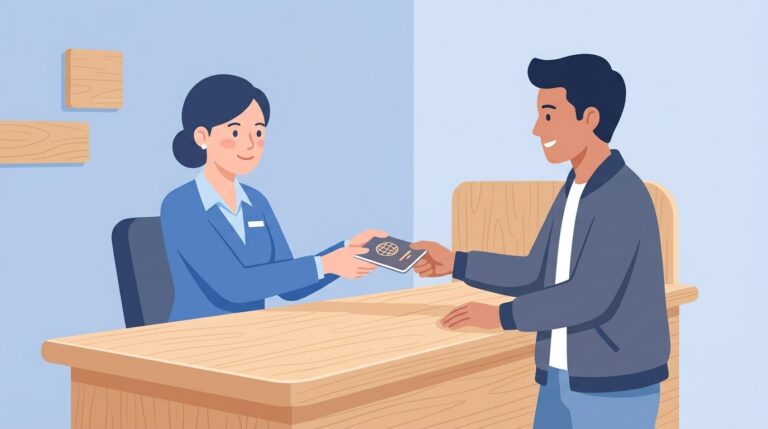
Master Currency Exchange in Korea: A1 Guide to ‘환전하러 왔어요’ (I’m here to exchange money)
Phase 1: Empathy (Welcome, My Friend!)
안녕하세요! (An-nyeong-ha-se-yo!) Welcome back to Daily Hangul, your premium tutoring space! I’m your lead editor and culture navigator.
Imagine this: You’ve just landed in Seoul. The neon lights of Hongdae are calling, and you can smell the sweet, crispy Hotteok (sweet pancakes) from a nearby street cart. You reach for your wallet, but wait… you only have USD, EUR, or SGD bills! To buy that delicious street food or purchase a cute souvenir in a traditional market like Insadong, you need cold, hard Korean cash—Won (원).
Walking into a sleek Korean bank in Seoul can feel incredibly intimidating for absolute beginners (A1). Your heart races, the security guard approaches, and your mind goes blank.
Don’t panic! Today, we are going to master one simple, magical phrase that will make the bank teller smile and hand you your Korean Won with ease. Let’s learn how to say “환전하러 왔어요” (I’m here to exchange money). By the end of this guide, you will walk into any bank in Myeongdong like a local!
Phase 2: Deep Dive into the Top 3 Key Expressions
Let’s break down the three most vital phrases you need at the currency exchange counter. Remember, at the A1 level, we focus on short, high-impact sentences!
1. 환전하러 왔어요. (Hwan-jeon-ha-reo wass-eo-yo.)
- Pronunciation: Hwan-jeon-hah-ruh wass-uh-yo (Sounds like “Hwan-jun” + “ha-ruh” + “was-uh-yo”)
- Meaning: I’m here to exchange money.
- K-Culture Moment: You often hear this in travel reality shows when K-pop idols travel abroad and have to manage their own budget. They hesitantly walk up to foreign exchange booths saying this exact phrase with a nervous smile!
- Editor’s Insight: This is a combination of 환전 (hwan-jeon) meaning “money exchange,” -하러 (ha-reo) meaning “in order to do,” and 왔어요 (wass-eo-yo) meaning “I came.” It is polite, natural, and immediately tells the teller what you need.
- Situation Spectrum: Casual: ⚠️ (Too informal for a bank) | Semi-formal: ✅ (Perfect!) | Formal: ✅
- 🤔 Think About It: In Korean, we often omit the pronoun “I” (저는 / jeo-neun). Why do you think Korean culture values omitting “I” in daily conversations compared to English?
2. 달러를 원화로 바꿔 주세요. (Dal-leo-reul won-hwa-ro ba-kkwo ju-se-yo.)
- Pronunciation: Dahl-luh-reul won-hwah-roh bah-kwo-joo-seh-yo
- Meaning: Please change US Dollars into Korean Won.
- K-Culture Moment: In dramas where characters prepare for an emergency business trip to Seoul, they hand over a stack of hundred-dollar bills at the bank while saying this.
- Editor’s Insight: 바꿔 주세요 (ba-kkwo ju-se-yo) means “Please change/exchange for me.” You can swap 달러 (dal-leo / USD) with 유로 (yu-ro / EUR) or 엔 (en / JPY) depending on your home currency!
- Situation Spectrum: Casual: 🚫 | Semi-formal: ✅ | Formal: ✅
- 🤔 Think About It: The suffix -주세요 (ju-se-yo) literally translates to “please give me.” How does adding “please give me” to an action verb make Korean requests sound polite yet warm?
3. 여권 여기 있어요. (Yeo-gwon yeo-gi iss-eo-yo.)
- Pronunciation: Yuh-gwon yuh-gi ees-uh-yo
- Meaning: Here is my passport.
- K-Culture Moment: In any Korean airport scene, characters dramaticially hand over their navy or red passports at the gate or counter.
- Editor’s Insight: You cannot exchange money in Korea without a passport. It is a legal requirement! Keep this phrase handy as you pass your passport to the bank officer.
- Situation Spectrum: Casual: 🚫 | Semi-formal: ✅ | Formal: ✅
Phase 3: Textbook Korean vs. Real-Life Korean
Many textbooks teach you overly formal or complex sentences that sound like a robot. Let’s look at the difference!
Situation 1: Declaring your purpose at the bank desk
- 📖 Textbook Korean: 외화를 한국 돈으로 환전하고자 합니다. (Oe-hwa-reul han-guk don-eu-ro hwan-jeon-ha-go-ja ham-ni-da.)
- Translation: “I wish to exchange foreign currency into Korean currency.”
- 🗣️ Real-Life Korean: 환전하러 왔어요. (Hwan-jeon-ha-reo wass-eo-yo.)
- Translation: “I’m here to exchange money.”
- 💡 Why the difference? The textbook version uses -하고자 합니다, which is reserved for formal essays or official announcements. Saying this to a teller might make them think you are reading from a 1990s dictionary! The real-life version is friendly, polite, and natural.
Situation 2: Asking for the exchange rate
- 📖 Textbook Korean: 오늘의 환율은 어떻게 고시되어 있습니까? (On-eul-ui hwan-yul-eun eo-tteo-ke go-si-doe-eo its-seup-ni-ka?)
- Translation: “How is today’s exchange rate officially announced?”
- 🗣️ Real-Life Korean: 오늘 환율이 어떻게 돼요? (On-eul hwan-yul-i eo-tteo-ke dwae-yo?)
- Translation: “What is today’s exchange rate?” (Literally: How does today’s exchange rate become?)
- 💡 Why the difference? Real Koreans use the flexible verb 어떻게 돼요? (eo-tteo-ke dwae-yo?) to ask about prices, sizes, and rates in a soft, polite manner rather than using rigid legal terms.
Phase 4: K-Culture Deep Dive & Non-Verbal Manners
4-1. The Double-Hand Handshake (두 손 예절)
In Korea, hands show respect. When handing over your physical money or your passport to the bank teller, never use one hand!
* How to do it: Hold your passport/cash with both hands, or support your right wrist/elbow lightly with your left hand as you hand it over. Bow your head slightly while doing so. This immediately signals to the teller that you respect them and Korean culture.
4-2. The Bank Waiting Ticket (대기표)
When you enter a Korean bank, do not walk straight to the counter. Look for a small machine near the entrance that prints out a slip of paper with a number. This is called a 대기표 (dae-gi-pyo / waiting ticket). Look for the button that says 외환 (oe-hwan / foreign exchange) or ask the security guard: “환전요?” (Hwan-jeon-yo? / Money exchange?), and they will happily press the button for you!
Phase 5: Interactive Roleplay Scenario
Meet Ji-won, a super friendly bank teller at the Shinhan Bank branch in Myeongdong. She is used to tourists but loves it when someone tries to speak Korean!
The Dialogue (A1 Level)
- Ji-won (Teller): 어서 오세요! 무엇을 도와드릴까요?
(Eo-seo o-se-yo! Mu-eot-eul do-wa-deu-ril-ka-yo?)
🎭 Smiling warmly and bowing slightly
“Welcome! How can I help you?” -
You (Traveler): 안녕하세요. 환전하러 왔어요.
(An-nyeong-ha-se-yo. Hwan-jeon-ha-reo wass-eo-yo.)
🎭 Bowing back slightly, holding your bag
“Hello. I’m here to exchange money.” -
Ji-won (Teller): 네, 어떤 돈을 바꿔 드릴까요?
(Ne, eo-tteon don-eul ba-kkwo deu-ril-ka-yo?)
🎭 Typing on her keyboard
“Sure, which currency would you like to exchange?” -
You (Traveler): 달러를 원화로 바꿔 주세요.
(Dal-leo-reul won-hwa-ro ba-kkwo ju-se-yo.)
🎭 Pointing to your envelope of USD
“Please change US Dollars to Korean Won.” -
Ji-won (Teller): 알겠습니다. 여권 좀 보여 주세요.
(Al-get-seup-ni-da. Yeo-gwon jom bo-yeo ju-se-yo.)
🎭 Reaching her hand out politely
“Understood. Please show me your passport.” -
You (Traveler): 네, 여권 여기 있어요.
(Ne, yeo-gwon yeo-gi iss-eo-yo.)
🎭 Handing over the passport with both hands
“Yes, here is my passport.” -
Ji-won (Teller): 감사합니다. 잠시만 기다려 주세요.
(Gam-sa-ham-ni-da. Jam-si-man gi-da-ryeo ju-se-yo.)
🎭 Counting the cash and processing the transaction
“Thank you. Please wait a moment.” -
You (Traveler): 네, 감사합니다!
(Ne, gam-sa-ham-ni-da!)
🎭 Nodding politely
“Yes, thank you!”
🔀 Choose Your Path!
At Step 5, instead of handing over your passport, what if you forgot it in your hotel room? What would you say?
- A) “여권 없어요!” (Yeo-gwon eops-eo-yo!)
- B) “죄송해요, 여권이 호텔에 있어요.” (Joe-song-hae-yo, yeo-gwon-i ho-tel-e iss-eo-yo.)
- C) “여권? 안 돼요.” (Yeo-gwon? An dwae-yo.)
Feedback on your choice:
- Select A (Risk): While grammatically correct (“I don’t have a passport”), saying it bluntly without an apology might sound slightly rude or aggressive to the bank teller.
- Select B (BEST!): “Sorry, my passport is at the hotel.” This is polite, explains the situation perfectly, and uses basic words you know! Ji-won will likely advise you to bring it back or ask if you have a copy on your phone.
- Select C (BAD): This sounds like “Passport? No way.” It is extremely confusing and might make the teller think you are refusing to show identification.
Phase 6: 10-Second Emotional Shadowing Drill
To sound like a natural Korean speaker, you need the right rhythm and emotion! Practice saying these sentences out loud by pausing at the / marks and matching the emotion.
- [😊 Friendly & Confident]
안녕하세요! / 환전하러 / 왔어요.
(An-nyeong-ha-se-yo! / Hwan-jeon-ha-reo / wass-eo-yo.) -
[🤲 Polite & Requesting]
달러를 / 원화로 / 바꿔 주세요.
(Dal-leo-reul / won-hwa-ro / ba-kkwo ju-se-yo.) -
[💖 Respectful & Warm]
네, / 여권 / 여기 있어요!
(Ne, / yeo-gwon / yeo-gi iss-eo-yo!)
Phase 7: K-Culture Mini Dictionary
- 환율 (Hwan-yul) | Exchange Rate
- The exchange rate between currencies. You will see this word on electronic screens inside banks or in commercial districts.
- 수수료 (Su-su-ryo) | Service Fee / Commission
- The small fee the bank charges for exchanging money. Some places boast “수수료 우대” (discounted transaction fees) for tourists!
- 현금 (Hyeon-geum) | Cash
- Actual physical bills. Korea is highly digitized, but you still need Hyeon-geum for traditional markets, street food stalls, and charging your subway card.
- 동전 (Dong-jeon) | Coins
- Coins (10, 50, 100, 500 Won). Keep a small coin purse handy because coin change can stack up quickly!
Phase 8: Survivor’s Kit for Travelers
Survival Phrases TOP 3
- 봉투 필요해요? (Bong-tu pil-yo-hae-yo?)
- Meaning: “Do you need an envelope?” (Tellers often ask this so you can safely store your cash).
- Your Response: “네, 주세요.” (Ne, ju-se-yo / Yes, please.)
- 영수증 주세요. (Yeong-su-jeung ju-se-yo.)
- Meaning: “Please give me the receipt.”
- 여기 서명해 주세요. (Yeo-gi seo-myeong-hae ju-se-yo.)
- Meaning: “Please sign here.” (You will need to sign a digital pad to finalize the exchange).
Editor’s Travel Note ✈️
Pro Tip: In Korea, you cannot load your transportation card (T-Money card) using a credit card; you must use cash (Won) at the subway stations! Therefore, make sure to exchange at least 20,000 to 30,000 Won immediately at the airport bank before heading into Seoul.
To find the nearest bank branches with the best rates, we highly recommend downloading the Naver Map App rather than using Google Maps, which does not update real-time walking routes in Korea.
(Disclaimer: Exchange rates and bank fees vary daily and are subject to market conditions.)
Phase 9: “Going One Step Deeper” (Cultural Insight)
In western countries, money exchange can sometimes feel like a cold transaction. However, in Korea, the bank service culture is famously warm and fast—often described as 빨리빨리 (Ppal-li-ppal-li / Hurry, hurry) culture mixed with high-class hospitality.
Because banks care deeply about customer satisfaction, you will notice tellers bowing, using extremely honorific speech, and offering you small candies or comfortable seats. Expressing your thanks with a simple bow and a polite “감사합니다” makes the process a beautiful mutual exchange of cultural respect.
💬 Your Turn!
Have you ever exchanged money in another country? What was your biggest worry? Let us know in the comments below!
Phase 10: FAQ & Common Mistakes
Q: Can I exchange money using my credit card at a bank counter?
A: No. You must provide physical cash (e.g., paper USD, EUR, JPY bills) to exchange it for paper Korean Won. If you want to withdraw money directly from your card, you should look for an ATM with a “Global/Foreign Card” logo instead.
Q: Is it better to exchange money at the airport or in the city?
A: Generally, banks in downtown areas like Myeongdong or Hongdae offer slightly better exchange rates (higher value) and lower fees than airport booths. Exchange a small amount at the airport for transport, and the rest in the city!
Q: Do banks accept slightly torn or written-on foreign bills?
A: Korean banks are very strict about currency quality. If your bills have writing, major creases, or small tears, the machine or the teller might reject them. Always bring crisp, clean bills!
🚨 Common Mistakes Alert!
- Mistake: Handing over cash with only one hand.
- Correct Action: Use both hands to show respect.
- Mistake: Forgetting your physical passport (carrying only a digital photo on your phone).
- Correct Action: Bring your actual physical passport. Banks cannot legally process currency exchange without scanning the physical document.
- Mistake: Confusing the words 환전 (Hwan-jeon / Money exchange) and 운전 (Un-jeon / Driving).
- Correct Action: Say Hwan-jeon clearly! Saying “운전하러 왔어요” means “I came here to drive,” which will leave the bank teller very confused!
Phase 11: Action Mission & Engagement
Let’s put your new knowledge into action with these fun challenges!
- 🥉 Bronze Mission: Practice saying “환전하러 왔어요” 5 times in front of the mirror with a big friendly smile!
- 🥈 Silver Mission: Write down “달러를 원화로 바꿔 주세요” on a sticky note and stick it to your passport protector so you don’t forget it on your flight to Korea.
- 🥇 Gold Mission: When you arrive in Korea, use these exact phrases at a bank instead of speaking English. Report back to our Instagram page @DailyHangul to let us know how it went!
Phase 12: Interactive Quiz Challenge
Test your knowledge before you pack your bags!
Q1. What does “원화” (Won-hwa) mean?
- A) US Dollars
- B) Korean Currency (Won)
- C) Coins
💡 Click to reveal the Answer!
Correct Answer: B
원화 (Won-hwa) is the formal term for South Korean currency (KRW). 달러 (Dal-leo) is dollars!
Q2. Fill in the blank: “여권 _____ 있어요.” (Here is my passport.)
- A) 진짜 (jin-jja)
- B) 어디 (eo-di)
- C) 여기 (yeo-gi)
💡 Click to reveal the Answer!
Correct Answer: C
여기 (yeo-gi) means “here.” So “여권 여기 있어요” means “Here is my passport.”
Q3. True or False: In Korea, it is polite to pass your bank card or cash with just your index and middle finger.
- A) True
- B) False
💡 Click to reveal the Answer!
Correct Answer: B (False)
Always use both hands! Using just two fingers can be interpreted as highly disrespectful.
See you in the next lesson of Daily Hangul! 여행 잘 하세요! (Have a great trip!)







