

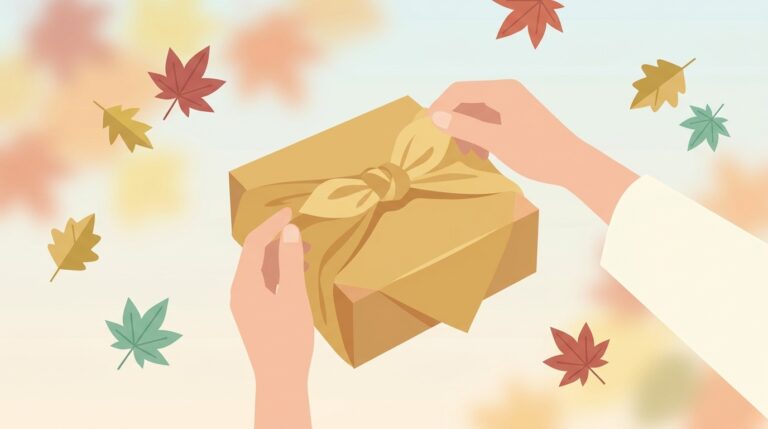
Master the Art of Chuseok & Seollal Gifting: How to Exchange Holiday Gift Sets Like a True Local
Phase 1: Empathy (공감) — The Holiday Gift Set Dilemma
안녕하세요! It’s your favorite Korean culture navigator and editor from Daily Hangul (매일한글)!
Imagine this: It’s a week before Chuseok (Korean Thanksgiving), and you walk into a local E-Mart or Homeplus. The aisles are packed with gorgeous, stacked boxes wrapped in luxurious silk cloths (bojagi). You peek inside one and see… beautifully arranged cans of Spam nestled next to premium cooking oils. In another, glistening Asian pears the size of bowling balls.
Your Korean co-worker or mother-in-law suddenly hands you one of these heavy boxes with a warm smile, saying: “약소하지만 성의로 준비했어요.” (It’s not much, but I prepared it with sincerity.)
Your heart races. What do I say? Do I open it now? What on earth do I give them in return without looking rude or overdoing it?
Don’t panic! Gifting in Korea is an elegant dance of jeong (정 – affection) and social etiquette. Today, we’re cracking the code of exchanging holiday gift sets (명절 선물 세트) so you can navigate Chuseok and Seollal like a polished, culturally savvy local. Let’s dive in!
Phase 2: Deep-Dive into 3 Essential Expressions (핵심 표현 3선 심층 분석)
1. 약소하지만 제 성의예요. (Yag-so-ha-ji-man je seong-ui-yeo-yo)
- Pronunciation Guide: “Yahk-so-hah-jee-mahn jeh sung-we-yeh-yo” (Sounds like yak-so + “but” + je + seong-ui + “it is”).
- Meaning: “It is modest/small, but it is my sincerity (heart).”
- K-Culture Moment: You will see this in almost every family-themed K-Drama. A humble son-in-law presents a box of red ginseng to his father-in-law with a slight bow.
- Editor’s Insight: Even if you bought an incredibly expensive Hanwoo (premium Korean beef) set, Korean humility dictates that you downplay your gift as “modest” (약소하다). It shifts the focus from the monetary value to your 성의 (sincerity/thoughtfulness).
- Situation Spectrum: Casual (⚠️ – too formal for close friends) | Semi-formal (✅) | Formal (✅)
- 🤔 Think About It: In your culture, do you brag about how great a gift is, or do you play it down like Koreans do? Why does humility play such a huge role in East Asian gifting?
2. 이런 건 안 준비하셔도 되는데, 감사해요. (I-reon geon an jun-bi-ha-syeo-do doe-neun-de, gam-sa-hae-yo)
- Pronunciation Guide: “Ee-run gun ahn joon-bee-hah-syuh-doh dweh-noon-deh, gahm-sah-heh-yo.”
- Meaning: “You really didn’t need to prepare something like this, but thank you so much.”
- K-Culture Moment: Used when receiving a gift. In variety shows like I Live Alone, guests say this when visiting someone’s home and receiving a welcome gift.
- Editor’s Insight: This is the ultimate “polite hesitation” phrase. Accepting a gift too eagerly can look greedy in Korea. Saying “you didn’t have to” shows that you value their effort and money, not just the physical item.
- Situation Spectrum: Casual (✅ – can shorten to 이런 거 안 줘도 되는데 고마워!) | Semi-formal (✅) | Formal (✅)
- 🤔 Think About It: How do you politely decline or hesitate in your native language before accepting a gift?
3. 덕분에 따뜻한 명절 보낼 것 같아요. (Deok-bun-e tta-tteut-han myeong-jeol bo-nael geot gat-a-yo)
- Pronunciation Guide: “Duk-boon-eh ttah-tteut-hahn myung-jul boh-nel gut gaht-ah-yo.”
- Meaning: “Thanks to you, I think I will spend a warm holiday.”
- K-Culture Moment: A classic text message sent after returning home with a holiday gift set from a boss or business partner.
- Editor’s Insight: 덕분에 (thanks to you) is a magical word that instantly builds jeong (social bonding). Using “warm” (따뜻한) metaphorically expresses deep emotional gratitude.
- Situation Spectrum: Casual (✅) | Semi-formal (✅) | Formal (✅)
Phase 3: Textbook Korean vs. Real Korean (교과서 한국어 vs. 진짜 한국어)
Scenario 1: Reacting to a gift
- 📖 Textbook style: “선물을 주셔서 감사합니다.” (Thank you for giving me a gift. – Sounds like a robot or a grammar book exercise.)
- 🗣️ Real Korean: “와, 뭘 이런 걸 다 준비하셨어요! 너무 감사해요.” (Wow, why did you prepare all of this! Thank you so much!)
- 💡 Why the difference? Real Korean relies heavily on dramatic exclamation (뭘 이런 걸 다… – “What is all this…”) to show surprise and appreciation. It sounds incredibly warm and natural.
Scenario 2: Giving a gift to a coworker/neighbor
- 📖 Textbook style: “이 선물을 받으세요.” (Please receive this gift. – Sounds demanding and awkward.)
- 🗣️ Real Korean: “명절이라 작은 것 좀 준비해 봤어요. 부담 없이 받으세요.” (Since it’s the holidays, I prepared a little something. Please accept it without any pressure.)
- 💡 Why the difference? Asking someone to accept something “without pressure” (부담 없이) is a key linguistic lubricant in Korea that makes the recipient feel comfortable accepting it.
Phase 4: K-Culture Deep Dive & Non-Verbal Manners
4-1. The Art of Handing Over the Box (Nunchi & Gestures)
- Two Hands are Mandatory: Never, ever hand over or receive a gift set with one hand. Always use both hands. Keep your elbows slightly tucked in, and offer a gentle bow (about 15 degrees).
- Don’t Open It Immediately: Unlike in Western cultures where opening a gift in front of the giver is expected, in Korea, it is polite to set the gift aside and open it privately later, unless the giver explicitly says, “Open it!” (어우, 얼른 열어봐요!).
4-2. The Spam & Tuna Phenomenon
Why is canned Spam packaged like gold in Korea? During the post-Korean War era, Spam was a rare, luxury item sourced from US military bases. Over time, it became a beloved comfort food. Today, sleek blue boxes filled with Spam and canola oil are considered highly practical, premium gifts. It’s not cheap—it’s delicious and highly functional!
Phase 5: Real-Life Roleplay Scenario
Setting: Office hallway, one day before the Chuseok holiday break.
Characters:
* Min-jun (민준): Your friendly team leader (과장님) who always looks out for you.
* You (우주): A mid-level foreign employee at a Seoul marketing agency.
민준: (Holding a heavy, elegant box wrapped in gold cloth)
      우주 씨, 잠깐 시간 괜찮아요? 🎭 (따뜻하게 웃으며 다가온다)

우주: 아, 과장님! 네, 괜찮습니다. 무슨 일이세요?

민준: 이거 별건 아닌데, 명절이라 우주 씨 주려고 하나 준비했어요.
      집에서 맛있게 먹어요. 🎭 (두 손으로 묵직한 상자를 건넨다)

우주: 와... 과장님, 이런 건 안 준비하셔도 되는데... 진짜 감사해요!
      🎭 (감동한 표정으로 두 손으로 정중히 상자를 받는다)

민준: 아이고, 타지에서 고생하는데 명절이라도 든든하게 먹어야죠.
      스팸이랑 고급 참기름 세트예요.

우주: 우와, 제가 진짜 좋아하는 것들이에요!
      과장님 덕분에 정말 따뜻한 명절 보낼 것 같아요. 🎭 (눈을 맞추며 꾸벅 인사한다)

민준: 좋아하니 다행이네. 연휴 동안 푹 쉬고 맛있는 거 많이 먹고 와요!

우주: 네! 과장님도 가족분들과 함께 즐거운 한가위 보내세요!
🔀 Interactive Choice Point
How would you reply if Min-jun asks: “우주 씨는 이번 연휴에 뭐 해요?” (What are you doing this holiday?)
- A. “그냥 집에서 잠이나 자려고요.” (I’m just going to sleep at home.)
- B. “친구들이랑 한국 음식 만들어서 홈파티 하기로 했어요!” (I decided to make Korean food and have a home party with friends!)
- C. “비밀이에요. 알려드릴 수 없어요.” (It’s a secret. I can’t tell you.)
Feedback:
- Selection A (Risk): Too blunt. While honest, it might make your manager feel sad that you are lonely on a big holiday.
- Selection B (Best): Perfect! It shows you are actively engaging with Korean culture and spending the holiday productively, which will make your manager feel happy for you.
- Selection C (Bad): Extremely cold and rude in a Korean workplace setting where some personal sharing is expected to build rapport.
Phase 6: 10-Second Emotional Shadowing Drill
Practice these with the exact emotional pauses (/) and tones!
[🥺 Surprised and deeply touched]
“와… / 이런 건 진짜 / 안 준비하셔도 되는데… / 너무 감사해요!”
(Wah… / ee-run gun jeen-jjah / ahn joon-bee-hah-syuh-doh dweh-noon-deh… / nuh-moo gahm-sah-heh-yo!)-
[😊 Proud and humble while giving]
“약소하지만 / 제 성의니까 / 부담 없이 / 받아주세요!”
(Yahk-so-hah-jee-mahn / jeh sung-ui-nee-kkah / boo-dahm up-see / bah-dah-joo-seh-yo!)
Phase 7: K-Culture Mini-Dictionary
- 한가위 (Han-ga-wi) | Another native Korean word for Chuseok (autumn eve). Often used in formal holiday greetings.
- 보자기 (Bo-ja-gi) | Traditional Korean wrapping cloth used to wrap gifts, representing protection and good fortune.
- 성의 (Seong-ui) | Sincerity, effort, or heart. It’s the intangible value that Koreans look for in any gift.
- 정 (Jeong) | Deep emotional connection, affection, and mutual attachment that bonds Korean society together.
Phase 8: Traveler’s Survival Kit
Top 3 Survival Phrases
- “선물용 포장 가능할까요?” (Can I get this gift-wrapped?) – Pro Tip: Use this at department store counters to get beautiful traditional wrapping.
- “추석 연휴에 영업하나요?” (Are you open during Chuseok holiday?) – Pro Tip: Many local restaurants close on Chuseok day itself.
- “택배 발송 마감이 언제예요?” (When is the shipping deadline?) – Pro Tip: Gift sets must be shipped early as delivery networks freeze up during holidays.
Editor’s Travel Note
During major holidays, public transport is fully booked months in advance (called the “gwi-gyeong-gil” or exodus to hometowns). If you are traveling, download the KORAIL Talk App early to check for returned tickets, or use the Naver Map App to find alternative express bus routes.
Phase 9: “One Step Deeper” (한 발 더 깊이)
In the West, giving someone a box of Spam or cooking oil might feel like a last-minute grocery run. But in Korea, these sets are highly respected because of the underlying philosophy of 실용주의 (Pragmatism) blended with 정 (Jeong). Giving something that the recipient will actually eat and use daily is considered far more caring than giving a pretty but useless decorative item. It is a warm wish for health and sustenance.
💬 Your Turn: Have you ever received a “surprising” holiday gift in Korea? Let us know in the comments below!
Phase 10: FAQ & Avoiding Misunderstandings
Q: Can I give cash instead of a gift set?
A: Yes, especially to parents or close older relatives. However, cash should always be placed in a clean, tasteful envelope (preferably with a holiday message written on it), never handed over bare.
Q: What is the budget limit for gift-giving at work?
A: Under the Kim Young-ran Act (anti-graft law), gifts to public officials, teachers, and sometimes corporate clients are legally capped (usually around 50,000 to 150,000 KRW depending on the item). For general coworkers, 30,000 to 50,000 KRW sets are standard.
Q: Is it okay to regift holiday sets?
A: Because Koreans receive so many identical Spam or tuna sets, “regifting” (선물 돌려막기) is actually incredibly common! Just make sure the original outer box has no personalized cards or scratches.
🚨 Common Mistakes Warning Board
- Mistake 1: Giving a set of 4 items. (The number 4 sounds like ‘death’ in Korean culture. Aim for odd numbers or standard corporate layouts).
- Mistake 2: Tipping cash directly. (Tipping is not practiced in Korea, and cash without an envelope feels transactional/insulting).
- Mistake 3: Saying “You’re welcome” (천만에요) when someone thanks you for a gift. (Instead, say “마음에 드셨으면 좋겠네요” – I hope you like it).
Phase 11: Action Mission
- Bronze Medal: Say “명절 잘 보내세요!” (Have a great holiday!) to your local convenience store clerk or security guard this week.
- Silver Medal: Buy a small fruit set or healthy snack, and present it to a Korean neighbor or colleague using the phrase: “약소하지만 제 성의예요.”
- Gold Medal: Take a photo of a holiday gift set you see in the wild (supermarket or shop) and tag us on Instagram with the Korean caption of what’s inside!
Phase 12: Interactive Quiz Challenge
Test your holiday IQ!
- Which gift is culturally highly appreciated and NOT considered cheap in Korea?
- A) A single red rose
- B) A premium box of Spam & Canola Oil
- C) A set of 4 sharp kitchen knives
- True or False: You should always open a gift immediately in front of the giver to show excitement.
🔍 Click here for the Answers & Explanations!
- Correct Answer: B
- Explanation: Canned meat sets are highly practical and beloved. A single rose is too romantic/casual, and 4 knives are bad luck (due to the number 4 and sharp objects cutting relationships).
- Correct Answer: False
- Explanation: In Korea, it is polite to receive the gift with both hands, express gratitude, and open it later in private to avoid showing potential disappointment or focus on material cost.
- Explanation: In Korea, it is polite to receive the gift with both hands, express gratitude, and open it later in private to avoid showing potential disappointment or focus on material cost.







