

Navigating ‘K-Military’ Talk: Shortened Service & Pay Hikes Explained Like a Local
Phase 1: Empathy (Dive Into the K-Army Talk!)
안녕하세요! It’s your favorite Daily Hangul editor and cultural navigator here!
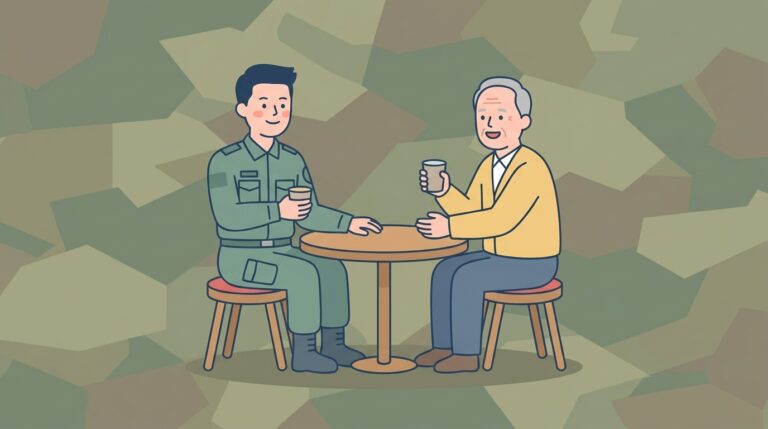
Picture this: You are at a cozy Chimaek (chicken and beer) spot in Mapo with your Korean friends. Suddenly, the topic shifts. Someone sighs deeply, looking at their phone, and says, “Did you hear? The Sergeant (병장) salary is actually hitting 2 million KRW soon!” Instantly, the table erupts into a heated debate comparing their own “grueling old days” to the “modernized army.”
If you have male Korean friends, classmates, or colleagues, military service (군대 – Gundae) is a topic that will inevitably come up. It is the ultimate bonding subject, filled with nostalgic groans, proud boasting, and complex social nuances. Lately, the hottest talking points are the shortening of the mandatory service period (군 복무 단축) and the drastic increase in sergeant salaries (병장 월급 인상).
For advanced (C2) learners, mastering this discourse isn’t just about knowing military vocabulary; it’s about understanding the deep-seated social shifts, generational divides, and emotional landscapes of Korean men. Today, we’re going beyond textbook definitions to help you navigate these conversations with native-level cultural intelligence.
Phase 2: Deep-Dive into 3 Essential Expressions
To sound like a true insider, you need to master these three socio-cultural terms that dominate modern military conversations.
1. 라떼는 말이야 (Latte-neun Mariya)
- Pronunciation: Lah-tteh-neun mah-ree-yah (Sounds like “Latte is a horse”—a famous Korean pun!)
- Meaning: “Back in my day…” (Literally: “As for the latte…” playing on “나 때는 말이야” / “When I was your age/rank…”)
- K-Culture Moment: In K-Dramas like D.P. or office comedies, senior figures use this phrase just before launching into a long, grueling story about how tough things were in the past.
- Editor’s Insight: Use this with a playful, slightly dramatic sigh. It instantly disarms older Korean men and shows you understand the generational gap regarding the military service shortening.
- Situation Spectrum: Casual ✅ | Semi-formal ⚠️ | Formal 🚫
- 🤔 Think About It: How does your home culture handle generational gaps in shared national experiences?
2. 형평성 논란 (Hyeongpyeongseong Nonlan)
- Pronunciation: Hyung-pyung-sung noll-an (Focus on the smooth transition between ‘ng’ and ‘p’)
- Meaning: Controversy over fairness/equity.
- K-Culture Moment: This term frequently appears in news editorials and late-night debate shows discussing why older reservists (who served longer for pennies) feel a sense of relative deprivation (상실감) compared to newly enlisted soldiers.
- Editor’s Insight: This is a high-level academic term, but in casual military debates, it’s used to intellectually criticize or defend the sudden wage hikes.
- Situation Spectrum: Casual ⚠️ | Semi-formal ✅ | Formal ✅
- 🤔 Think About It: Why is the concept of “fairness” so incredibly sensitive in contemporary Korean society?
3. 격세지감 (Gyeokse-jigam)
- Pronunciation: Gyuk-seh-jee-gahm (Pronounce ‘Gyuk’ quickly, like ‘Yuck’ with a ‘G’)
- Meaning: Sensing a rapid, unrecognizable change in the world; “how times have changed!”
- K-Culture Moment: Often uttered by grandfathers or older uncles when they hear that soldiers can now use smartphones (일과 후 휴대폰 사용) after their daily duties.
- Editor’s Insight: This four-character idiom (사자성어) instantly elevates your Korean to a highly sophisticated level. It expresses deep reflection rather than simple bitterness.
- Situation Spectrum: Casual ✅ | Semi-formal ✅ | Formal ✅
- 🤔 Think About It: Does your native language have a single word that captures this bittersweet feeling of rapid generational evolution?
Phase 3: Textbook Korean vs. Real Korean
Let’s look at how textbooks teach military terms versus how natives actually speak when discussing the service shortening and salary hikes.
Situation 1: Talking about the shortened service period
- 📖 Textbook: “군 복무 기간이 단축되어 군인들이 기뻐합니다.” (The military service period has been shortened, so soldiers are happy.)
- 🗣️ Real Korean: “요즘 군대 진짜 짧아졌더라고요. 군 생활 할 만하겠어요.” (Military service has gotten so short lately. It actually seems doable.)
- 💡 Why the difference? Textbook expressions sound like a written news report. Real Koreans use colloquial phrasing like “~할 만하다” (worth doing/doable) to describe the shortened 18-month service.
Situation 2: Discussing the salary increase
- 📖 Textbook: “병장의 월급이 대폭 인상될 계획입니다.” (The sergeant’s salary is planned to be drastically increased.)
- 🗣️ Real Korean: “병장 월급 이백만 원 시대라니, 진짜 군대 상전벽해네요.” (The era of 2 million KRW sergeant salary… the military has truly undergone a complete transformation.)
- 💡 Why the difference? Using the idiom 상전벽해 (Sangjeon-byeokhae – mulberry fields turning into the blue ocean) shows a profound mastery of Korean, perfectly encapsulating the dramatic shift from earning $100/month to nearly $1,500/month.
Phase 4: K-Culture Deep-Dive & Non-verbal Manners
4-1. Nunchi & Gestures
When discussing the military, never minimize the hardship of those who served in the past. Even if you think 18 months is short compared to 3 years in the 1970s, to the person who lived it, every single day in the barracks was mentally and physically taxing.
* The Gesture: Nod slowly, tilt your head slightly back, and let out a deep sigh (한숨) when someone tells a military hardship story. This show of empathy (공감) is crucial.
4-2. Cultural Code: The ‘Military Compensation’ Debate
In Korea, military service is mandatory for all able-bodied men. Historically, it was seen as a duty of absolute sacrifice. However, the recent pay hike to 2 million KRW and the reduction of army service to 18 months has triggered a massive cultural shift. Older generations sometimes worry about the “weakening” of the military spirit, while the younger generation views it as a basic, overdue human rights and labor compensation issue. Understanding this tension will make your conversations incredibly rich.
Phase 5: Interactive Roleplay Scenario
Setting: A local BBQ restaurant. You are speaking with Ji-hoon (지훈), a 28-year-old colleague who completed his service 6 years ago, and Min-woo (민우), a 19-year-old cousin who is about to enlist next month.
- 지훈 (Ji-hoon): (Sighs, flipping a piece of pork belly) 아휴, 뉴스 봤어? 내년에 병장 월급이 이백만 원까지 오른대. 나 때는 한 달에 십오만 원 받았는데…
- You: 진짜요? 지훈 씨 때는 그렇게 적었어요? 정말 격세지감이네요. (Really? It was that low during your time, Ji-hoon? How times have changed!)
- 민우 (Min-woo): (Shyly) 그래도 형, 요즘 군대도 나름대로 힘들어요. 핸드폰 쓸 수 있어도 훈련은 똑같이 받으니까요.
- 지훈 (Ji-hoon): 야, 그래도 군 복무 기간도 엄청 단축됐잖아! 육군은 이제 일 년 반이면 전역인데, 솔직히 편해진 건 맞지.
- You: 형평성 얘기가 나올 만하네요. 하지만 민우 씨 입장에서는 입대하는 것 자체가 큰 스트레스겠어요. (It makes sense why people debate fairness. But for Min-woo, just enlisting must be a huge stress.)
- 민우 (Min-woo): 맞아요… 복무 기간이 짧아졌어도 청춘을 바치는 건 똑같잖아요.
- 지훈 (Ji-hoon): (Laughing) 하하, 듣고 보니 그렇네. 그래, 가기 전에 삼겹살이나 많이 먹어둬라.
- You: 맞아요, 민우 씨! 맛있는 것 많이 먹고 몸 건강히 다녀오는 게 최고예요! (That’s right, Min-woo! Eating delicious food and returning in good health is the absolute best!)
🔀 Your Turn: Interactive Choice!
How would you respond to Ji-hoon saying, “Do you think the military has gotten too easy these days?”
- Option A: “네, 요즘 군대는 군대도 아니죠.” (Yes, today’s military isn’t even a real military.)
- Option B: “복무 기간은 줄었지만, 단절감이나 정신적 스트레스는 여전할 것 같아요.” (The service period is shorter, but the feeling of isolation and mental stress must still be the same.)
- Option C: “돈 많이 주니까 요즘 애들이 부러워요.” (They get paid a lot, so I’m jealous of kids these days.)
Feedback:
- Best Choice (Option B): Excellent! This shows deep empathy for both sides and uses advanced socio-cultural reasoning. You acknowledge the physical changes while validating the emotional hardships of modern soldiers.
- Risk Choice (Option C): Be careful. Minimizing their service as just “earning money” can sound insensitive to young men who are giving up their freedom.
- Bad Choice (Option A): Avoid this. This can trigger intense defensive reactions from younger Koreans who still undergo rigorous physical training.
Phase 6: 10-Second Emotional Shadowing Drill
Practice saying this sentence with a mix of awe and a slightly dramatic sigh, mimicking a middle-aged Korean uncle!
“병장 월급 / 이백만 원 시대라니… / 정말 / 격세지감이네요!”
* Pronunciation: Byeong-jang wol-geup / i-baek-man won si-dae-ra-ni… / jeong-mal / gyeok-se-ji-gam-i-ne-yo!
* Guide: [🥺 With wide eyes, expressing slight disbelief, then transitioning into a warm, wise nod on ‘격세지감’]
* Meaning: The era of a 2 million KRW sergeant salary… truly, how times have changed!
Phase 7: K-Culture Mini-Dictionary
- 군필 (Gun-pil) | Finished Military Service: An essential resume and social label for Korean men indicating they have completed their duty.
- 미필 (Mi-pil) | Not Yet Served: Someone who has not yet completed their service, often a source of anxiety for young men planning their careers.
- 짬밥 (Jjam-bap) | Military Food / Seniority: Slang for military rations. Often used in workplaces to describe someone’s years of experience (“짬밥이 차다”).
- 현타 (Hyeon-ta) | Reality Hit / Epiphany: The sudden, overwhelming realization of reality, often felt by older reservists comparing their past wages to current ones.
Phase 8: Survivor’s Kit for Travelers & Expats
Survival Expressions for Military Talk:
- “몸 건강히 다녀오세요!” (Mom geon-gang-hi da-nyeo-o-se-yo!)
- Pro Tip: The ultimate, most polite blessing you can say to any young Korean man heading to the army.
- “제대(전역)가 언제예요?” (Je-dae / Jeon-yeok-i eon-je-yeo-yo?)
- Pro Tip: Asking when their discharge date is shows you genuinely care about their countdown.
- “군 생활 진짜 고생하셨네요.” (Gun saeng-hwal jin-jja go-saeng-ha-syut-ne-yo.)
- Pro Tip: Use this to older males when they finish telling a military story. It immediately wins their favor.
Editor’s Travel Note:
To see how deeply military culture is integrated into Korean daily life, search for military surplus or retro activewear on the Naver Map App. Visiting areas near military hubs like Chuncheon or Paju will give you a real-world glimpse into this vital aspect of Korean society. (Note: Military schedules and access zones are subject to change due to national security regulations.)
Phase 9: “Going Deeper” (A Cultural Reflection)
In many countries, military service is either voluntary or perceived as a distant concept. In South Korea, however, the military is a shared baseline of male socialization. It defines corporate hierarchies, shapes political debates, and influences dating dynamics. The transition toward a shorter service and higher pay is not merely a policy shift; it is a fundamental restructuring of how Korean society values young citizens’ time and sacrifice.
💬 Your Turn: How does your country honor or compensate those who serve in the military? Let us know in the comments below!
Phase 10: FAQ & Common Mistakes
Q: Is it okay for foreigners to talk about the Korean military?
A: Yes! In fact, Koreans love when foreigners show an educated interest in this topic. Just remember to remain neutral and avoid making jokes that dismiss the difficulty of the training.
Q: What is the difference between ‘제대’ (Jedae) and ‘전역’ (Jeonyeok)?
A: Historically, ‘제대’ was more common in daily speech, while ‘전역’ (literally “transfer of service to reserve”) is the official administrative term. Today, they are used interchangeably in casual conversations.
Q: Can I use military slang like “당나라 군대” (undisciplined army) in business meetings?
A: Absolutely not. This is highly casual and borderline derogatory. Stick to formal vocabulary like “군 기강” (military discipline) in formal settings.
🚨 Common Mistakes Alert!
- Mistake 1: Saying “군대 축하해요!” (Congratulations on the military!) to someone enlisting.
- Correct Action: Say “몸 건강히 다녀오세요” (Return in good health) instead. Enlistment is rarely a joyous celebration.
- Mistake 2: Assuming all Korean men loved their military days.
- Correct Action: Read the room. If they avoid the topic, do not press for details.
Phase 11: Action Mission
- Bronze Medal: Memorize the term “격세지감” and use it next time a Korean friend mentions a change in technology or trends.
- Silver Medal: Find a military-themed K-Drama scene (like in Crash Landing on You or Descendants of the Sun) and write down three military terms you hear.
- Gold Medal (The Ultimate Challenge): Initiate a conversation with a Korean friend by asking: “요즘 군대 월급이 많이 올랐다면서요?” (I heard military salaries went up a lot lately?) and actively listen to their opinion.
Phase 12: Interactive Quiz Challenge
Test your knowledge of Korean military discourse!
- Which phrase is a pun on “Back in my day” used playfully by older generations?
- True or False: The current mandatory military service for the ROK Army is approximately 3 years.
👀 Click here to reveal the Answers & Explanations!
- Answer: 라떼는 말이야 (Latte-neun Mariya).
- Explanation: It plays on “나 때는 말이야” to humorously sound like “Latte is a horse.”
- Answer: False.
- Explanation: Due to the gradual shortening of service, the current Army service period is 18 months (1.5 years).
- Explanation: Due to the gradual shortening of service, the current Army service period is 18 months (1.5 years).







