

Publish Your Own Story: A Guide to Indie Publishing and E-books in Korea
Phase 1: Empathy (스토리 몰입형 오프닝)
안녕하세요! I’m your Daily Hangul editor and your personal cultural navigator! 🇰🇷✨
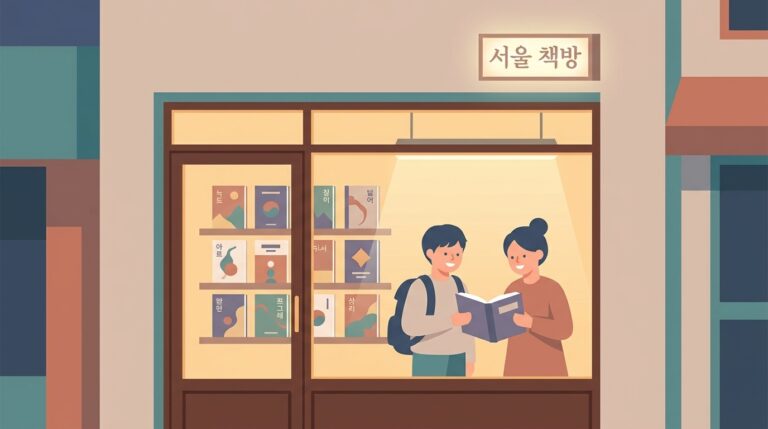
Have you ever wandered through the narrow, cozy alleys of Yeonnam-dong or Ikseon-dong and stumbled upon a tiny, beautifully lit bookstore? Unlike massive chains, these independent bookshops (독립서점 – dong-nip-seo-jeom) are filled with highly personal, quirky, and aesthetically pleasing books. From deeply emotional essay collections to hyper-specific travel logs, Korea is currently living through a golden age of 독립 출판 (Indie Publishing) and 전자책 (e-book) creation.
But here’s the catch: as an advanced C1 learner, you don’t just want to read these books. You want to publish your own! Maybe you want to share your unique experience of living in Korea, compile your photography, or launch an e-book on Tumblbug (Korea’s premier crowdfunding platform).
However, when you dive into the Korean publishing scene, you quickly realize that textbook Korean won’t help you negotiate with printers, format EPUBs, or pitch to indie bookstore owners. You might find yourself drowning in professional jargon or struggling to sound persuasive yet polite.
Don’t worry! Today, we are going to unlock the exact, high-level expressions and cultural nuances you need to navigate the Korean indie publishing world like a seasoned writer. Let’s make your literary dream a reality! ✍️📖
Phase 2: Deep Dive into 3 Essential Expressions (핵심 표현 3선 심층 분석)
To sound like a professional indie author in Korea, you need to master expressions that balance creative passion with business savvy. Let’s look at three essential phrases.
1. 1인 출판사를 차리다 (il-in chul-pan-sa-reul cha-ri-da)
- Pronunciation: il-in chul-pan-sa-reul cha-ri-da (Sounds like: “il-een chool-pan-sah-rul chah-ree-dah”)
- Meaning: To set up/establish a one-person publishing house.
- K-Culture Moment: You’ll hear this constantly in vlogs on YouTube featuring young Korean creators who document their daily lives as “one-person publishers” working from hip cafes in Mapo-gu.
- Editor’s Insight: The verb 차리다 is a wonderfully versatile, casual-yet-professional word meaning “to set up” or “to open” a business (e.g., 가게를 차리다). Using this instead of the clinical “설립하다” (to establish) makes you sound highly natural and entrepreneurially active.
- Situation Spectrum: Casual (✅) | Semi-formal (✅) | Formal (⚠️)
- 🤔 Think About It: In many Western countries, writers often publish directly under their own names on Amazon. In Korea, registering a formal “one-person publishing house” (1인 출판사) is highly popular because it allows you to get an official ISBN and distribute to major bookstores. Why do you think institutional legitimacy is so highly valued in Korean creative markets?
2. 원고를 투고하다 (won-go-reul tu-go-ha-da)
- Pronunciation: won-go-reul too-go-ha-da (Sounds like: “won-go-rul too-go-hah-dah”)
- Meaning: To submit a manuscript (to a publisher or bookstore).
- K-Culture Moment: In K-Dramas set in office environments, you often see desperate writers sending countless emails with the subject line “원고 투고합니다” to publishing editors, hoping for that one golden acceptance letter.
- Editor’s Insight: While 제출하다 (to submit) is used for homework or general documents, 투고하다 is the exclusive, high-level literary term for submitting manuscripts. Using this word instantly signals to printers and editors that you understand the industry.
- Situation Spectrum: Casual (🚫) | Semi-formal (✅) | Formal (✅)
- 🤔 Think About It: “투(投)” means “to throw” and “고(稿)” means “draft/manuscript.” You are literally “throwing your manuscript” into the world. How does this imagery compare to the English word “submission”?
3. 소장 가치를 높이다 (so-jang ga-chi-reul nop-i-da)
- Pronunciation: so-jang gah-chee-rul nop-ee-dah (Sounds like: “so-jahng gah-chee-rul nop-ee-dah”)
- Meaning: To increase the collectible/keepable value of something.
- K-Culture Moment: Indie authors often use high-quality paper, holographic foil covers, or include special goods (굿즈) to entice buyers. They say, “소장 가치를 높이기 위해 특별한 표지를 디자인했어요” (We designed a special cover to make it highly collectible).
- Editor’s Insight: 소장 (收藏) means possessing/keeping something precious. In the age of digital e-books, physical indie books must have “소장 가치” (collectible value) to survive. This is a crucial marketing keyword when writing book descriptions or crowdfunding pitches.
- Situation Spectrum: Casual (✅) | Semi-formal (✅) | Formal (✅)
- 🤔 Think About It: What makes a physical book “worth keeping” (소장 가치가 있는) for you? Is it the texture of the paper, the scent, or the cover design?
Phase 3: Textbook Korean vs. Real Korean (교과서 한국어 vs 진짜 한국어)
Let’s compare the stiff expressions found in standard curricula with the organic phrases used by real Korean creators.
Situation 1: Explaining that you are self-publishing
- 📖 Textbook: 저는 책을 스스로 출판할 것입니다. (Jeo-neun chaeg-eul seu-seu-ro chul-pan-hal geos-im-ni-da.)
- Translation: “I will publish the book by myself.”
- 🗣️ Real Korean: 이번에 독립 출판으로 책을 내게 되었어요. (I-beon-e dong-nip chul-pan-eu-ro chaeg-eul nae-ge doe-eot-eo-yo.)
- Translation: “I’ve ended up releasing a book through independent publishing this time.”
- 💡 Why the difference? Real Koreans rarely use “스스로” (by oneself) in this context. Instead, they use the noun 독립 출판 (indie publishing) and the humble, natural passive form -게 되다 (to end up doing/it has been decided that), which sounds much less boastful and more inviting.
Situation 2: Asking a bookstore owner if they will stock your book
- 📖 Textbook: 제 책을 당신의 책방에서 판매해 주십시오. (Je chaeg-eul dang-sin-ui chaek-bang-e-seo pan-mae-hae ju-sip-si-o.)
- Translation: “Please sell my book at your bookstore.”
- 🗣️ Real Korean: 저희 책 입고가 가능한지 여쭤보고 싶습니다. (Jeo-hui chaek ip-go-ga ga-neung-han-ji yeo-jjeo-bo-go sip-seum-ni-da.)
- Translation: “I would like to ask if it is possible to stock our book in your store.”
- 💡 Why the difference? “판매하다” (to sell) sounds overly transactional and aggressive. The professional term for a bookstore taking in inventory is 입고 (stocking/incoming goods). Using “입고 가능 여부” (whether stocking is possible) shows respect for the bookstore owner’s curation.
Phase 4: Cultural Deep Dive & Non-Verbal Etiquette (K-Culture 딥다이브)
4-1. The Etiquette of “입고 문의” (Inquiring about Stocking)
When visiting an independent bookstore to pitch your book, never just hand over your book and ask them to sell it on the spot.
* The Approach: It is highly customized. Sending a polite, well-formatted email (called an 입고 제안서 – stocking proposal) with a PDF preview is the gold standard.
* Non-verbal Tip: If you visit a bookstore in person to say hello, buy a book first! Supporting the shop owner before asking them to support you builds instant rapport. When handing over your business card (명함), hold it with both hands and present it so the text faces the receiver.
4-2. The Crowdfunding Culture: Tumblbug (텀블벅)
In Korea, indie publishing and crowdfunding go hand in hand. Tumblbug (텀블벅) is the Korean equivalent of Kickstarter, heavily focused on creative writing, design, and indie publishing. Successful campaigns don’t just sell a book; they sell a “concept.” Authors often include “굿즈” (goods/merchandise) like bookmarks, perfume inspired by the book’s theme, or keyrings to increase the 소장 가치.
Phase 5: Real-Life Roleplay Scenario (실전 롤플레이)
Scenario: You are meeting Min-ji, the curator and owner of “소소한 책방” (Soso Bookstore), a trendy independent bookshop in Mapo, Seoul. You want to pitch your newly printed essay book about your life as an expat in Korea.
Characters:
* You (C1 level writer): Enthusiastic, professional, respectful.
* 민지 (Min-ji, Bookstore Owner): Friendly but has high standards for book curation.
- You: 안녕하세요, 대표님! 인스타그램으로 늘 소식 접하다가 직접 보니까 책방이 정말 예쁘네요. (🎭 Smiling warmly, handing over your business card with both hands)
- 민지: 아, 안녕하세요! 찾아주셔서 감사해요. 명함 감사히 받겠습니다. 어떤 책을 쓰시나요?
- You: 이번에 제가 한국에서의 일상을 담은 에세이를 독립 출판으로 내게 되었어요. 책 제목은 <서울의 사계절>입니다.
- 민지: 와, 흥미로운 주제네요! 요즘 독립 출판하시는 분들이 참 많아졌어요. 책의 실물이나 샘플을 볼 수 있을까요?
- You: 네, 그럼요! 실물 책의 소장 가치를 높이기 위해 일러스트 표지랑 종이 질감에 신경을 많이 썼어요. (🎭 Handing over the book carefully, letting her feel the texture)
- 민지: 정말 그렇네요. 표지 톤이 저희 책방 분위기랑 잘 어울려요. 책방에 입고가 가능한지 제안서를 보내주셨나요?
- You: 네, 어제 메일로 상세한 입고 제안서를 보내드렸는데, 바쁘실 것 같아서 직접 가볍게 인사드리고 싶었습니다.
- 민지: 센스 있으시네요! 메일 확인해 보고 긍정적으로 검토해서 이번 주 내로 연락드릴게요.
🔀 Interactive Choice Point
How do you respond to Min-ji’s promising response?
- Option A: “바쁘실 텐데 시간 내어 검토해 주셔서 정말 감사합니다. 연락 기다리겠습니다!”
- Option B: “꼭 입고해 주세요! 제가 SNS에 홍보 많이 할게요!”
- Option C: “감사합니다. 혹시 입고 수수료는 몇 퍼센트인가요? 지금 바로 계약서 쓸까요?”
🧐 Feedback on Your Choice
- Option A (Best): Perfect! It expresses polite gratitude, acknowledges her busy schedule, and professionally wraps up the conversation without rushing the business transaction.
- Option B (Risk): A bit too pushy and informal. Bookstore owners curate based on quality and fit, not just because you promise to post on SNS.
- Option C (Bad): Too aggressive. Discussion of distribution fees (배분율) and contracts (계약) should be handled formally over email after she agrees to stock the book, not right on the shop floor.
Phase 6: 10-Second Emotion Shadowing Drill (10초 감정 섀도잉)
To sound truly natural, you must master the cadence and emotional weight of Korean speech. Practice these sentences with the indicated emotion and pauses (/).
- [😊 Expressing proud excitement]
- 이번에 / 독립 출판으로 / 책을 내게 되었어요!
- i-beon-e / dong-nip chul-pan-eu-ro / chaeg-eul nae-ge doe-eot-eo-yo!
- [✨ Softly persuasive and marketing-focused]
- 실물 책의 / 소장 가치를 높이기 위해 / 정말 신경 많이 썼어요.
- sil-mul chaeg-ui / so-jang ga-chi-reul nop-i-gi wi-hae / jeong-mal sin-gyeong man-i sseot-eo-yo.
- [🙏 Politely business-like]
- 혹시 책방에 / 입고가 가능한지 / 여쭤보고 싶습니다.
- hok-si chaek-bang-e / ip-go-ga ga-neung-han-ji / yeo-jjeo-bo-go sip-seum-ni-da.
Phase 7: K-Culture Mini-Dictionary (K-Culture 미니 사전)
- 종이책 (jong-i-chaek) | Noun | Physical/Paper Book.
- Usage: Despite the rise of e-books, “종이책” remains highly popular in Korea’s indie scene due to its tactile appeal.
- 판형 (pan-hyeong) | Noun | Book format / Page size.
- Usage: When printing, you must decide on the exact “판형” (e.g., A5, B6) with the printing house.
- 독립서점 (dong-nip-seo-jeom) | Noun | Independent bookstore.
- Usage: Small bookstores that curate unique books based on the owner’s personal taste rather than bestseller lists.
- 교정교열 (gyo-jeong-gyo-yeol) | Noun | Proofreading and editing.
- Usage: The painstaking process of correcting typos and grammar before finalizing the manuscript.
Phase 8: The Indie Publisher’s Survival Kit (출판 여행자 생존 키트)
Survival Phrases TOP 3
- “인쇄 견적을 받아보고 싶습니다.” (in-swae gyeon-jeog-eul bad-a-bo-go sip-seum-ni-da.)
- Meaning: “I would like to receive a printing quote.”
- Pro Tip: Use this when contacting printer shops in Chungmuro (충무로), the historic heart of Seoul’s printing industry.
- “EPUB 파일 검수 중이에요.” (EPUB pa-il geom-su jung-i-e-yo.)
- Meaning: “I am inspecting/checking the EPUB file.”
- Pro Tip: If you are publishing an e-book, “검수” is the professional word for testing the file on various e-readers.
- “북페어에 셀러로 참가하게 되었어요.” (buk-pe-eo-e sel-leo-ro cham-ga-ha-ge doe-eot-eo-yo.)
- Meaning: “I’ll be participating as a seller at the book fair.”
- Pro Tip: Korea hosts massive indie book fairs like Seoul Art Book Fair (UNLIMITED EDITION). It’s the ultimate playground for indie publishers.
Editor’s Travel Note
- Essential Tool: If you are physically distributing books, download the Naver Map App to find hidden independent bookstores in Seoul’s residential alleys.
- Industry Insight: Most indie bookstores operate on a 위탁 판매 (consignment sale) basis, usually keeping a 30% to 35% commission. Always clarify the consignment terms via email before shipping your books!
Phase 9: “Going Deeper” – Cultural Reflection (한 발 더 깊이)
In Korea, the boom of “one-person publishing” and “indie bookstores” is closely tied to the concept of 소확행 (Sohwakhaeng)—small but certain happiness. In a highly competitive, fast-paced society, writing a highly personal, niche book or curated reading in a quiet indie shop offers a rare form of emotional healing (힐링). Unlike traditional publishing, which focuses on mass appeal, Korean indie publishing values vulnerability, raw emotions, and eccentric hobbies. It proves that even the most hyper-local, personal story has a place in the market.
💬 Your Turn: If you were to publish your own indie book in Korea, what would the title be? Let us know in the comments below! We’d love to hear your creative ideas!
Phase 10: FAQ & Avoiding Misunderstandings (자주 묻는 질문)
Q: Can foreigners easily register a “one-person publishing house” (1인 출판사) in Korea?
A: Yes, but you need a valid visa that allows business activities (such as an F-series visa). The registration process itself is simple and done at your local district office (구청). If you are on a student or tourist visa, it is much easier to collaborate with a registered Korean publisher or self-publish globally via international e-book platforms.
Q: What is the standard commission fee for Korean indie bookstores?
A: Typically, it is 30% to 35% of the book’s retail price. Some shops charge a flat fee, but consignment (위탁) is the standard.
Q: Do I need an ISBN to sell books in Korea?
A: For selling in independent bookstores, many owners do not require an ISBN. However, if you want your book to be sold in major online/offline bookstores like Kyobo Book Centre (교보문고) or Aladin (알라딘), a formal ISBN registration is absolutely mandatory.
🚨 Common Mistakes Alert!
- Mistake: Sending a generic bulk email to 50 bookstores asking for stocking.
- Correct Action: Personalize each email! Mention why your book fits their specific bookstore curation.
- Mistake: Saying “제 책 좀 팔아주세요” (Please sell my book).
- Correct Action: Say “입고 문의 드립니다” (I inquire about stocking your book). It sounds much more professional.
- Mistake: Ignoring formatting rules (판형) of printers.
- Correct Action: Always request a “Mock-up” (가제본 – dummy book) from the printer before committing to a run of 500 copies.
Phase 11: Action Mission & Engagement (액션 미션)
- 🥉 Bronze Mission: Go to Instagram, search the hashtag
#독립서점(independent bookstore), find one that catches your eye, and write a polite comment in Korean: “꼭 한번 방문해보고 싶어요!” (I really want to visit sometime!) - 🥈 Silver Mission: Write a 3-sentence introduction of your imaginary book using the grammar -게 되다 (e.g., “이번에 한국 생활에 관한 에세이를 내게 되었습니다.”).
- 🥇 Gold Mission: Draft a mock 입고 제안서 (stocking proposal email) to a Korean bookstore owner using at least two expressions learned today, and share it with your Korean language partner for feedback!
Phase 12: Interactive Quiz Challenge (인터랙티브 퀴즈)
Test your knowledge of Korean publishing culture and language!
- Which term refers to the collectible value of a physical book?
- A) 판매 가격 (pan-mae ga-gyeok)
- B) 소장 가치 (so-jang ga-chi)
- C) 인쇄비 (in-swae-bi)
- Fill in the blank: “이번에 새로운 소설을 독립 출판으로 _______ 되었어요.”
- A) 내게 (nae-ge)
- B) 보게 (bo-ge)
- C) 사게 (sa-ge)
- True or False: Independent bookstores in Korea always require your book to have a registered ISBN.
- A) True
- B) False
👀 Click here to reveal the Answers & Explanations!
- Correct Answer: B) 소장 가치
- Explanation: “소장 가치” means collectible value. A is retail price, and C is printing costs.
- Correct Answer: A) 내게
- Explanation: “책을 내다” is the natural idiom for publishing/releasing a book. Combined with “-게 되다”, it becomes “내게 되었어요.”
- Correct Answer: B) False
- Explanation: Many quirky independent bookstores curation-focused shops love unique books even if they do not have a formal ISBN.







