

Master the Art of Banchan Refills: How to Ask for More Side Dishes Like a K-Foodie
안녕하세요! (Annyeonghaseyo!) Hello there, my dear Korean-learning friend! It’s your trusty Daily Hangul editor and cultural navigator here.
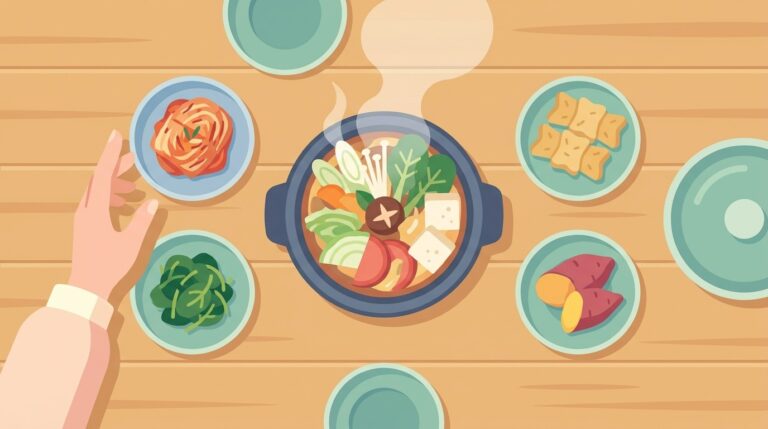
Have you ever sat down at a cozy restaurant in Seoul, surrounded by sizzles of Korean BBQ or the rich aroma of Kimchi Jjigae, and stared longingly at those empty little ceramic plates? Yes, I am talking about 반찬 (Banchan – side dishes)—the colorful, savory, sweet, and spicy little plates that make Korean meals so legendary.
You finished your favorite sweet soy-marinated potatoes (감자조림 – Gamjajorim) or that crisp, perfectly fermented Kimchi, and you want more. But then, panic sets in. How do I ask for more? Will they charge me? Is it rude to ask?
Don’t worry! I’ve walked many of my international students through this exact mini-crisis. Today, we are going to unlock the cultural superpower of requesting banchan refills confidently, politely, and like a true local.
Phase 2: Three Essential Banchan Refill Expressions
To make sure you never stare at an empty plate again, here are the top 3 magic phrases you need to know.
1. 반찬 좀 더 주시겠어요? (Banchan jom deo jusigesseoyo?)
- Pronunciation: Bahn-chahn johm duh joo-shee-gess-uh-yo? (Think “jom” like “gem” but with an ‘o’, and “deo” like “duh” in English).
- Meaning: “Could I please have some more side dishes?”
- K-Culture Moment: This is the gold standard of polite requests. You’ll hear this in every family K-Drama when a character is politely visiting their partner’s home or dining with older colleagues.
- Editor’s Insight: The word 좀 (jom) literally means “a little,” but in Korean, it acts as a magical softener. It makes your request sound humble and extremely polite, rather than demanding.
- Situation Spectrum: Casual ✅ | Semi-formal ✅ | Formal ⚠️
- 🤔 Think About It: In many Western countries, you pay for extra sides. Why do you think Korea offers them for free? What does this say about the Korean concept of hospitality?
2. 이거 리필 좀 해주세요. (Igeo ripil jom haejuseyo.)
- Pronunciation: Ee-guh ree-peel johm hae-joo-seh-yo.
- Meaning: “Please refill this one.”
- K-Culture Moment: Perfect for trendy spots in Hongdae or busy BBQ restaurants where speed is key.
- Editor’s Insight: Koreans love using English loanwords, and 리필 (ripil – refill) is widely understood. Pointing to a specific dish while saying “Igeo” (this) is incredibly efficient.
- Situation Spectrum: Casual ✅ | Semi-formal ✅ | Formal 🚫
3. 이모님, 김치 좀 더 주세요! (Imonim, kimchi jom deo juseyo!)
- Pronunciation: Ee-moh-nim, gim-chee johm duh joo-seh-yo.
- Meaning: “Auntie, more Kimchi please!”
- K-Culture Moment: Picture a bustling, traditional tent bar (포장마차 – Pojangmacha) or a neighborhood soup place (국밥집 – Gukbapjib).
- Editor’s Insight: 이모 (Imo) means maternal aunt, and adding 님 (nim) makes it a respectful yet incredibly warm way to call a female restaurant owner or server. It instantly breaks the ice!
- Situation Spectrum: Casual ✅ | Semi-formal ⚠️ | Formal 🚫
Phase 3: Textbook Korean vs. Real-Life Korean
Let’s compare what traditional textbooks teach you versus how real Koreans actually speak in restaurants.
Situation 1: Asking for more side dishes
- 📖 Textbook Korean: “반찬을 더 많이 가져다주십시오.” (Please bring me more side dishes.) – This sounds like a cold, military command.
- 🗣️ 진짜 (Real) Korean: “이거 좀 더 주실 수 있으세요?” (Could you please give me a bit more of this?)
- 💡 Why is it different? Real Korean prioritizes soft, indirect questions (“Could you do this for me?”) rather than direct, imperative statements to maintain social harmony.
Situation 2: Finding out if side dishes are self-serve
- 📖 Textbook Korean: “반찬은 스스로 가져와야 합니까?” (Must I bring the side dishes myself?)
- 🗣️ 진짜 (Real) Korean: “여기 반찬 셀프예요?” (Is the banchan self-service here?)
- 💡 Why is it different? Koreans use the English word “self” (셀프) as an adjective to describe self-service setups, which are highly common in modern, casual eateries.
Phase 4: K-Culture Deep Dive & Non-Verbal Manners
4-1. Nunchi (눈치) & Table Gestures
Before you yell out for a refill, use your 눈치 (Nunchi – situational quick-wittedness). Look around the restaurant. Do you see a counter with a sign that says “추가 반찬은 셀프입니다” (Additional side dishes are self-service)? If so, do not call the server! Grab your plate and head to the self-bar.
If it’s table service, politely raise your hand to about shoulder level, make eye contact with the server, and give a gentle nod. Never snap your fingers or wave aggressively—that’s a major cultural faux pas!
4-2. The “Jeong” (정) of Banchan
Free refills are rooted in the Korean concept of 정 (Jeong)—a deep feeling of attachment, warmth, and collective sharing. Food in Korea is not just fuel; it’s an expression of care. To leave a guest with empty side plates is considered poor hospitality. So, don’t feel guilty about asking! However, the golden rule of Jeong is mutual respect: only order what you can finish to prevent food waste.
Phase 5: Real-Life Roleplay Scenario
Let’s practice! You are at a busy Galbi (Ribs) restaurant. Your friendly server, Min-ji (민지), is rushing past your table.
- 민지 (Server): 맛있게 드시고 계세요? 혹시 필요한 거 있으세요?
(Masitge deusigo gyeseyo? Hoksi piryohan geo isseuseyo?)
🎭 [Smiling warmly, holding a tray]
“Are you enjoying your meal? Do you need anything by chance?” - You (Learning): 아, 네! 정말 맛있어요. 저… 반찬 좀 더 주시겠어요?
(Ah, ne! Jeongmal masisseoyo. Jeo… banchan jom deo jusigesseoyo?)
🎭 [Politely pointing to your empty potato dish with a gentle smile]
“Ah, yes! It’s really delicious. Uh… could we get some more side dishes?” - 민지 (Server): 어떤 거 더 드릴까요?
(Eotteon geo deo deurilkkayo?)
“Which ones would you like more of?” - You (Learning): 이 감자조림이랑 어묵볶음 좀 더 주세요.
(I gamjajorim-irang eomukbokkeum jom deo juseyo.)
“More of these sweet potatoes and stir-fried fish cakes, please.” - 민지 (Server): 아, 네! 바로 갖다 드릴게요.
(Ah, ne! Baro gatda deurilgeyo.)
🎭 [Nodding and picking up your empty plates]
“Ah, yes! I’ll bring them right away.” - You (Learning): 감사합니다!
(Gamsahamnida!)
🎭 [Slightly bowing your head in gratitude]
“Thank you!”
🔀 Choose Your Path! What would you say if the server was super busy?
- A) “여기요!! 왜 반찬 안 줘요?” (Hey!! Why aren’t you giving me banchan?)
- B) “저기요, 바쁘신데 죄송하지만 이거 리필 좀 부탁드려요.” (Excuse me, I’m sorry to bother you while you’re busy, but could you please refill this?)
- C) “저기… 반찬…” (Excuse me… banchan…)
🎭 [Staring at the floor in absolute silence]
Feedback:
- Selection A (Bad): 🚫 Oh no! This is way too aggressive and rude in Korean culture. You will cause a loss of face (체면) for both yourself and the restaurant staff.
- Selection B (Best): ✅ Perfect! You acknowledged their busyness with “바쁘신데 죄송하지만” (I’m sorry you’re busy, but…), making you the ultimate polite diner. They will gladly bring you extra!
- Selection C (Risk): ⚠️ While not rude, trailing off might leave the server confused, and you might not get your food because they didn’t hear you clearly.
Phase 6: 10-Second Emotion Shadowing Drill
Let’s practice speaking with local rhythm and emotion. Pay attention to the pauses (/) and your tone!
- [😊 Polites & Warm]
저기요~ / 이거 / 리필 좀 / 해주세요!
(Jeogiyo~ / igeo / ripil jom / haejuseyo!) - [🥺 Shy but Hungry]
죄송한데… / 김치 좀 / 더 주실 수 / 있으세요?
(Joesonghande… / kimchi jom / deo jusil su / isseuseyo?)
Phase 7: K-Culture Mini Dictionary
- 밑반찬 (Mitbanchan): Basic, pre-made side dishes that can be stored easily (like pickled radishes, seasoned spinach).
- 셀프바 (Self-bar): The self-service station in modern restaurants where you can grab unlimited refills yourself.
- 이모님 (Imonim): Literally “maternal aunt,” used as a warm, respect-filled call-out for middle-aged female restaurant staff.
- 개인접시 (Gaeinjopsi): Individual small plates used to share main dishes from communal pots.
Phase 8: Survivor’s Kit for Travelers
Survival Phrases TOP 3
- “물 좀 주세요.” (Mul jom juseyo) – “Please give me some water.”
- “여기 계산서 좀 주시겠어요?” (Yeogi gyesanseo jom jusigesseoyo?) – “Could we get the bill here, please?”
- “남은 거 포장해 주세요.” (Nameun geo pojanghae juseyo) – “Please pack the leftovers for takeout.”
💡 Editor’s Travel Note: To find the absolute best local restaurants that aren’t tourist traps, skip global search engines and download the Naver Map App. It offers the most accurate user reviews and real-time subway/bus schedules across South Korea.
Phase 9: “A Step Deeper” (Cultural Essay)
In Western dining cultures, asking for extra ingredients or sides often results in line-item additions to the bill. In Korea, however, a table filled with empty side plates is sometimes seen as a sign of an unsatisfying host. The free refill policy is an unwritten social contract of generosity. This collective dining mindset emphasizes sharing a communal table over individual portions.
💬 Your Turn: How does restaurant sharing culture in your country compare to Korea’s banchan sharing? Let me know in the comments below!
Phase 10: FAQ & Avoiding Common Mistakes
Q: Can I get unlimited refills of expensive side dishes like raw crab (양념게장) or meat?
A: Generally, ordinary vegetable, tofu, and fish cake banchan are freely refilled. However, highly expensive side dishes like raw marinated crab, heavy meat dishes, or some premium seafood may incur an extra charge. If you aren’t sure, it’s safe to ask, “이것도 리필 돼요?” (Is this refillable too?).
Q: Is it rude to ask for refills multiple times?
A: It is completely fine to ask two or three times! However, asking for a fifth refill of the same dish when your table is already full of food might look slightly greedy. Keep an eye on how much you can eat.
Q: Do I need to tip the server for bringing me refills?
A: No! Korea is a strictly no-tipping culture. Tipping can actually be confusing or awkward for local staff. A sincere “잘 먹었습니다” (I ate well) is the best tip you can give.
🚨 Common Mistakes Alert!
- Mistake 1: Grabbing food from the self-bar with your personal, used chopsticks.
- Correct Action: Always use the communal tongs provided at the self-bar!
- Mistake 2: Calling a young male server “이모” (Auntie).
- Correct Action: Call them “저기요” (Excuse me) or “사장님” (President/Owner) if they appear to own the shop.
Phase 11: Action Mission & Engagement
- Bronze Mission: Read the phrases in Phase 6 out loud three times in front of your mirror.
- Silver Mission: Save this post, and next time you watch a K-Drama eating scene, try to spot if they have a “Self-Bar” or if they ask the server for more side dishes.
- Gold Mission: Go to a local Korean restaurant this weekend, look the server in the eye, and say: “반찬 좀 더 주시겠어요?”
Phase 12: Interactive Quiz Challenge
Test your new K-Foodie knowledge!
1. What does the word “좀” (jom) do in a request?
- A) It makes the sentence sound urgent.
- B) It softens the request to make it polite.
- C) It means you want a massive portion.
2. True or False: You should always tip the server when they bring you delicious banchan refills.
View Answers & Explanations
- Correct Answer: B. “좀” is a magic softener that makes any request sound humble and polite!
- Correct Answer: False. South Korea is a strictly non-tipping country. Polite verbal gratitude is the best way to show appreciation!







