

C1 Korean Masterclass: Leaving No Trace (LNT) While Camping in Korea
Phase 1: Empathy (Welcome, Outdoor Enthusiasts!)
안녕하세요! Welcome back to Daily Hangul (매일한글). Your go-to guide for learning natural, culturally rich Korean. I’m your chief editor and local cultural navigator, and today, we are heading into the breathtaking wilderness of Korea!
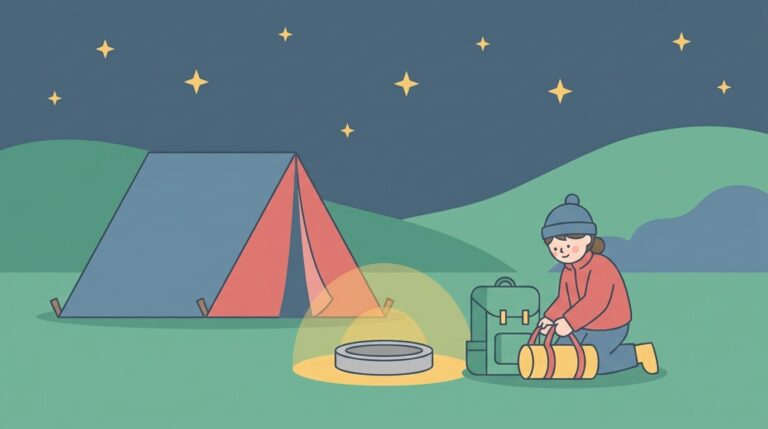
Imagine this: You’ve set up a cozy tent in a gorgeous valley in Gangwon-do (강원도), surrounding yourself with the soothing sound of the flowing river and the whispering wind. You’ve just finished a delicious meal of Samgyeopsal (삼겹살 – pork belly) grilled over a portable stove. But as you pack up, you notice the trash cans are full, and there’s a strict “Bring Your Own Trash Back” policy. You want to ask the campsite manager or local campers how to properly dispose of everything without leaving a single trace, but your standard textbook Korean feels a bit too rigid for this nuanced, eco-conscious situation.
In Korea, the LNT (Leave No Trace) movement—often referred to locally as “Clean Camping” (클린 캠핑) or “No-Trash Camping” (쓰레기 없는 캠핑)—is taken very seriously. Today, we’ll dive deep into C1-level advanced Korean expressions that will help you communicate your eco-friendly intentions smoothly, showing deep respect for both the local community and Korea’s beautiful nature.
Let’s master the language of a truly mindful camper!
Phase 2: Deep Dive into 3 Essential Expressions
Here are three advanced expressions to express LNT concepts like a local.
1. 흔적을 남기지 않다 (heun-jeok-eul nam-gi-ji an-ta)
- Pronunciation: Heun-jeok-eul nam-gi-ji an-ta (Sounds like “Hwn-jeok-eul nam-gi-ji ahn-tah”)
- Meaning: To leave no trace (literally, “to not leave footprints/traces”)
- K-Culture Moment: You will often hear this in modern Korean outdoor variety shows like House on Wheels (바퀴 달린 집), where cast members carefully clean their campsite before moving to the next scenic spot, emphasizing their responsibility to nature.
- Editor’s Insight: Heun-jeok (흔적) means “trace” or “vestige.” Using this phrase shows that you are not just cleaning up basic garbage, but preserving the environment in its pristine, original state.
- Situation Spectrum: Casual (⚠️ – sounds a bit poetic) / Semi-formal (✅) / Formal (✅)
- 🤔 Think About It: How does your culture view the balance between public convenience (like providing trash cans everywhere) and individual responsibility (carrying your own trash home) when outdoors?
2. 머문 자리를 깨끗하게 정리하다 (meo-mun ja-ri-reul kkae-kkeut-ha-ge jeong-ri-ha-da)
- Pronunciation: Meo-mun ja-ri-reul kkae-kkeut-ha-ge jung-ri-ha-da (Sounds like “Muh-moon jah-ree-reul kkae-kkeut-hah-gae jung-ree-hah-dah”)
- Meaning: To clean up the place where one has stayed
- K-Culture Moment: This is a deeply rooted Korean cultural proverb: “아름다운 사람은 머문 자리도 아름답습니다” (A beautiful person leaves a beautiful space behind). You will see this written near mountain trailheads and restrooms.
- Editor’s Insight: Meo-muda (머물다) means “to stay.” This expression carries an emotional warmth and a sense of civic duty, implying that your presence should only leave positive energy, not physical clutter.
- Situation Spectrum: Casual (✅) / Semi-formal (✅) / Formal (✅)
- 🤔 Think About It: In Korean, the space you occupy is an extension of yourself. How does this compare to the linguistic expressions of cleanliness in your native language?
3. 되가져가다 (doe-ga-jeo-ga-da)
- Pronunciation: Doe-gah-juh-gah-dah (Sounds like “Dweh-gah-juh-gah-dah”)
- Meaning: To take back (what you brought)
- K-Culture Moment: Frequently printed on signs in National Parks (Gyeongju, Seoraksan), encouraging hikers to pack out their own food waste and recyclables.
- Editor’s Insight: The prefix doe- (되-) means “back” or “return.” Combined with gajyeogada (가져가다 – to take), it emphasizes the ethical loop of outdoor consumption: what came in with you must leave with you.
- Situation Spectrum: Casual (✅) / Semi-formal (✅) / Formal (✅)
- 🤔 Think About It: Why do you think Korean outdoor policies place such a strong linguistic emphasis on “bringing things back” rather than just “throwing things away”?
Phase 3: Textbook Korean vs. Real-world Korean
Situation 1: Asking if you need to take your trash back home
- 📖 Textbook Korean: 쓰레기를 집으로 가져가야 합니까? (Sseu-re-gi-reul jib-eu-ro ga-jeo-ga-ya hab-ni-ka?) – “Must I take the trash to my house?” (Accurate, but feels robotic and overly literal).
- 🗣️ Real-world Korean: 여기 쓰레기 종량제 봉투에 담아서 버려야 하나요, 아니면 되가져가야 하나요? (Yeo-gi sseu-re-gi jong-ryang-je bong-tu-e dam-ah-seo beo-ryeo-ya ha-na-yo, a-ni-myeon doe-ga-jeo-ga-ya ha-na-yo?) – “Should I put the trash in a standard plastic bag here, or do I need to pack it out with me?”
- 💡 Why the difference? Korea uses a strict volume-rate garbage disposal system called Jongryangje (종량제). Real-world Korean incorporates this system, showing you understand local rules.
Situation 2: Promising to clean up your campsite thoroughly
- 📖 Textbook Korean: 저는 이곳을 청소하겠습니다. (Jeo-neun i-got-eul cheong-so-ha-get-seub-ni-da.) – “I will clean this place.” (Sounds like a chore assignment).
- 🗣️ Real-world Korean: 걱정 마세요. 머문 자리 흔적도 없이 깔끔하게 치우고 갈게요. (Geok-jeong ma-se-yo. Meo-mun ja-ri heun-jeok-do eob-si kkal-kkeut-ha-ge chi-u-go gal-gae-yo.) – “Don’t worry. I’ll tidy up the space where I stayed so thoroughly that there won’t be a single trace left.”
- 💡 Why the difference? The phrase “흔적도 없이” (without a single trace) combined with “치우고 갈게요” (I’ll clean and go) sounds incredibly reassuring and proactive.
Phase 4: K-Culture Deep Dive & Non-Verbal Etiquette
4-1. Nunchi (눈치) & Campfire Etiquette
When camping in Korea, Nunchi (tact/situational awareness) plays a major role in LNT. If you are doing “Bul-meong” (불멍 – staring blankly at a campfire), make sure to use a fire mesh or a fire pit plate. Leaving ash on the ground is considered extremely bad manners (Manners-ga eob-da – 매너가 없다). When packing up, collect even the finest ash into a designated ash bin (jae-su-geo-ham – 재수거함).
4-2. The “Clean Camping” (클린 캠핑) Trend
On Korean social media platforms like Instagram, search for hashtags like #클린캠퍼 (Clean Camper) or #백패킹LNT. Modern Korean outdoor enthusiasts take pride in showing photos of their campsites after they have packed up, showing completely empty, pristine spots. It has become a badge of honor among the younger generation.
Phase 5: Real-World Roleplay Scenario
Setting: A beautiful mountain valley campsite in Pocheon. You are checking out, and you want to make sure you’ve handled your campsite waste perfectly. You are speaking with Mr. Kang, the friendly but meticulous local campsite manager.
Characters:
* You (Eco-conscious Camper)
* Mr. Kang (Campsite Manager)
- Mr. Kang: 🎭 Approaching your tent with a warm smile
어이구, 벌써 정리하시게요? 하룻밤 잘 쉬셨나 모르겠네.
(Eo-i-gu, beol-sseo jeong-ri-ha-si-ge-yo? Ha-rut-bam jal swi-syeot-na mo-reu-get-ne.)
“Oh, packing up already? I hope you had a good night’s rest.” -
You: 🎭 Smiling warmly and bowing slightly
네, 덕분에 정말 힐링하고 갑니다. 주변 경치가 너무 아름답더라고요.
(Ne, deok-bun-e jeong-mal hil-ling-ha-go gab-ni-da. Ju-byeon gyeong-chi-ga neo-mu a-reum-dap-deo-ra-go-yo.)
“Yes, thanks to you, I had a truly healing experience. The surrounding scenery is absolutely beautiful.” -
Mr. Kang: 🎭 Nodding proudly
그렇죠? 우리 포천 계곡이 물도 맑고 공기도 끝내줘요. 그런데 쓰레기 정리는 어떻게 도와드릴까요?
(Geu-reot-jyo? U-ri Po-cheon gye-gok-i mul-do malg-go gong-gi-do kkeut-nae-jwo-yo. Geon-de sseu-re-gi jeong-ri-neun eo-tteo-ke do-wa-deu-ril-kka-yo?)
“Right? Our Pocheon Valley has clear water and amazing air. By the way, how can I help you organize your trash?” -
You: 🎭 Gesturing to your neatly packed bags
저희가 가져온 쓰레기는 최대한 되가져가려고 다 패킹해 두었어요. 혹시 음식물 쓰레기만 따로 버릴 수 있는 곳이 있을까요?
(Jeo-hui-ga ga-jeo-on sseu-re-gi-neun choe-dae-han doe-ga-jeo-ga-ryeo-go da pae-king-hae du-eot-eo-yo. Hok-si eum-sik-mul sseu-re-gi-man tta-ro beo-ril su it-neun got-i is-seul-kka-yo?)
“We packed up all the trash we brought to take it back with us as much as possible. Is there a separate place where we could dispose of food waste only?” -
Mr. Kang: 🎭 Impressed, raising his eyebrows
아이고, 진짜 클린 캠퍼시네! 요즘 쓰레기 그냥 두고 가는 사람들 때문에 골치 아픈데… 음식물은 저기 개수대 옆 파란 통에 비우시면 됩니다.
(Ai-go, jin-ja keul-rin kaem-peo-si-ne! Yo-jeum sseu-re-gi geu-nyang du-go ga-neun sa-ram-deul ttae-mun-e gol-chi a-peun-de… Eum-sik-mul-eun jeo-gi gae-su-dae yeop pa-ran tong-e bi-u-si-myeon doeb-ni-da.)
“Oh, you are a true clean camper! These days, people just leaving their trash behind gives me a headache… For food waste, you can empty it into the blue bin next to the sink over there.” -
You: 🎭 Nodding respectfully
알겠습니다. 저희가 머문 자리는 흔적도 안 남게 깨끗이 정리하고 가겠습니다. 분리수거도 완벽하게 마쳤어요.
(Al-get-seub-ni-da. Jeo-hui-ga meo-mun ja-ri-neun heun-jeok-do an nam-ge kkae-kkeut-i jeong-ri-ha-go ga-get-seub-ni-da. Bun-ri-su-geo-do wan-byeok-ha-ge ma-cheot-eo-yo.)
“Understood. We will clean up so that not a single trace is left of where we stayed. We’ve finished separating recyclables perfectly too.” -
Mr. Kang: 🎭 Giving a big thumbs-up
아이구, 고마워요! 다음에도 저희 캠핑장 오시면 제가 좋은 명당자리로 빼놓을게요. 조심히 가세요!
(Ai-gu, go-ma-wo-yo! Da-eum-e-do jeo-hui kaem-ping-jang o-si-myeon je-ga jo-eun myeong-dang-ja-ri-ro pae-nol-ge-yo. Jo-sim-hi ga-se-yo!)
“Wow, thank you! Next time you visit our campsite, I’ll reserve the absolute best spot for you. Travel safely!”
🔀 Interactive Choice Point
Mr. Kang asks if you need any plastic bags for leftover embers from your campfire.
- Option A: “아니요, 불멍하고 남은 재까지 저희가 완벽하게 수거함에 비우고 흔적 없이 갈게요!” (No, we will clean up the ashes from our campfire completely in the ash bin and leave no trace!)
- Option B: “귀찮은데 그냥 여기 바닥에 묻어두고 가도 되죠?” (It’s a hassle, so is it okay if we just bury them in the dirt here?)
- Option C: “재는 그냥 바람에 날아가니까 상관없어요.” (Ashes just blow away in the wind, so it doesn’t matter.)
Feedback on Your Choice:
- Best (Option A): Mr. Kang will be absolutely thrilled! You showed a perfect understanding of Korean LNT principles and respected the local campsite rules.
- Bad (Option B): Danger! Burying campfire ash in the dirt can kill the grass, pollute local soil, and even cause underground fires. Mr. Kang will be very disappointed.
- Risk (Option C): Leaving hot ashes to blow away is a major forest fire hazard. In dry seasons, this can lead to severe fines and eco-damage.
Phase 6: 10-Second Emotional Shadowing Drill
Practice speaking with the genuine warmth of an eco-conscious camper!
- [😊 Expressing deep appreciation and proactive promise]
저희가 / 머문 자리는 / 흔적도 없이 / 깨끗이 / 치우고 갈게요.
(Jeo-hui-ga / meo-mun ja-ri-neun / heun-jeok-do eob-si / kkae-kkeut-i / chi-u-go gal-gae-yo.)
Intonation Tip: Put a light, friendly bounce on “머문 자리는” and end “갈게요” with a warm, rising tone to show sincerity. -
[🌱 Showing polite environmental responsibility]
자연을 위해서 / 쓰레기는 / 모두 / 집으로 / 되가져갈게요.
(Ja-yeon-eul wi-hae-seo / sseu-re-gi-neun / mo-du / jib-eu-ro / doe-ga-jeo-gal-gae-yo.)
Intonation Tip: Soften your voice slightly on “자연을 위해서” (for nature) to sound incredibly considerate.
Phase 7: K-Culture Mini-Dictionary
- 클린 캠핑 (Clean Camping): The localized Korean term for LNT. It means camping in a way that minimizes environmental impact.
- 종량제 봉투 (Jongryangje Bongtu): Standard government-issued trash bags. In Korea, you must buy these specific bags to throw away non-recyclable waste.
- 불멍 (Bul-meong): A portmanteau of “불” (fire) and “멍하니” (vacantly). The popular Korean outdoor activity of zoning out while watching a campfire.
- 백패킹 (Backpacking): Carrying all your gear on your back, heavily associated with the LNT movement among Korean youth.
Phase 8: Traveler’s Survival Kit
Survival Expressions TOP 3
- “화로대 받침대 있나요?” (Hwa-ro-dae bat-chim-dae it-na-yo?)
- “Do you have a stand/plate for the fire pit?” (Essential for protecting the ground from heat).
- “재 버리는 곳이 어디예요?” (Jae beo-ri-neun got-i eo-di-ye-yo?)
- “Where is the place to discard ash?”
- “이건 일반 쓰레기인가요?” (I-geon il-ban sseu-re-gi-in-ga-yo?)
- “Is this general waste (non-recyclable)?”
Editor’s Travel Note
When camping in Korea, check municipal boundaries. Trash bags (Jongryangje Bongtu) bought in Seoul cannot be used in Gangwon-do! You must buy them at a local convenience store near your campsite. To find nearby official campsites and convenience stores easily, make sure to download the Naver Map App before you head out.
Phase 9:
Frequently Asked Questions (FAQ)
Q: What does "흔적을 남기지 않다 (heun-jeok-eul nam-gi-ji an-ta)" mean in Korean and how do you pronounce it?
A: In Korean, "흔적을 남기지 않다 (heun-jeok-eul nam-gi-ji an-ta)" is pronounced [Heun-jeok-eul nam-gi-ji an-ta (Sounds like "Hwn-jeok-eul nam-gi-ji ahn-tah"] and means: To leave no trace (literally, "to not leave footprints/traces")
Q: What does "머문 자리를 깨끗하게 정리하다 (meo-mun ja-ri-reul kkae-kkeut-ha-ge jeong-ri-ha-da)" mean in Korean and how do you pronounce it?
A: In Korean, "머문 자리를 깨끗하게 정리하다 (meo-mun ja-ri-reul kkae-kkeut-ha-ge jeong-ri-ha-da)" is pronounced [Meo-mun ja-ri-reul kkae-kkeut-ha-ge jung-ri-ha-da (Sounds like "Muh-moon jah-ree-reul kkae-kkeut-hah-gae jung-ree-hah-dah"] and means: To clean up the place where one has stayed
Q: What does "되가져가다 (doe-ga-jeo-ga-da)" mean in Korean and how do you pronounce it?
A: In Korean, "되가져가다 (doe-ga-jeo-ga-da)" is pronounced [Doe-gah-juh-gah-dah (Sounds like "Dweh-gah-juh-gah-dah"] and means: To take back (what you brought)







