

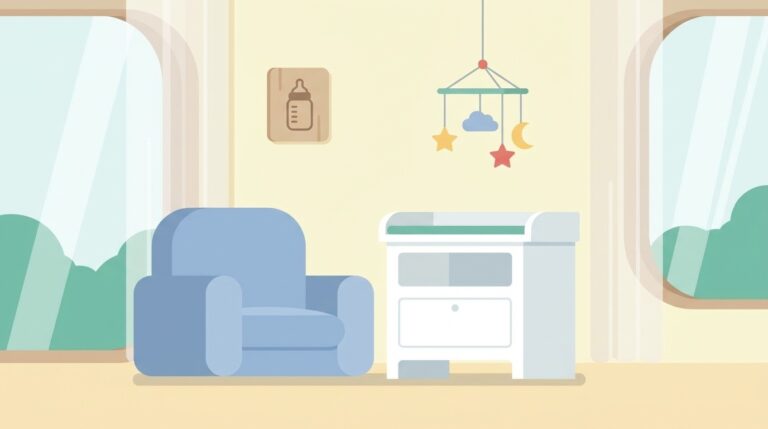
Finding a Nursing Room in Korea: Your Ultimate Stress-Free Guide
Phase 1: Empathy (Welcome to Daily Hangul!)
안녕하세요! (An-nyeong-ha-se-yo!) Hello! I am your lead editor and your personal K-Culture Navigator at Daily Hangul.
Imagine this: You are exploring a beautiful, bustling shopping mall in Seoul, like Starfield Coex Mall, with your beautiful baby. Suddenly, your little one starts crying—it is feeding time! You look around, but everything is in Korean, and you feel a wave of panic. “How do I ask for a nursing room in Korean? Will they understand me?”
Take a deep breath. You are not alone! Many traveling parents face this exact moment of worry. At Daily Hangul, we hear these stories from our global community every day. Today, we are going to learn how to find a nursing room (suyu-sil) easily and confidently. By the end of this guide, you will be navigating Korean malls like a local pro, keeping both you and your baby happy!
Phase 2: Key Expressions Analysis (Top 3)
Let’s learn the three most important phrases for finding a nursing room. Even if you are an absolute beginner (A1), these simple phrases will be your magic keys!
1. 수유실 어디에 있어요? (Suyu-sil eo-di-e isseo-yo?)
- Pronunciation: Soo-yoo-sheel uh-dee-eh ees-suh-yo? (Sounds like “Sue-you-sheer” + “uh-dee-eh” + “is-saw-yo”)
- Meaning: Where is the nursing room?
- K-Culture Moment: You will hear this frequently at information desks in department stores (like Shinsegae or Lotte) or subway stations in K-Dramas featuring young families.
- Editor’s Insight: Suyu-sil (수유실) literally means “lactation/nursing room.” Eo-di-e isseo-yo? (어디에 있어요?) is the most useful survival pattern meaning “Where is…?”
- Situation Spectrum: Casual ⚠️ | Semi-formal ✅ | Formal ✅
- 🤔 Think About It: In your country, is a nursing room called a “baby care room,” “parenting room,” or “lactation room”? In Korea, “Suyu-sil” specifically focuses on feeding and resting spaces for babies.
2. 수유실이 있어요? (Suyu-sil-i isseo-yo?)
- Pronunciation: Soo-yoo-shee-ree ees-suh-yo?
- Meaning: Is there a nursing room?
- K-Culture Moment: Use this when entering a museum, cafe building, or a smaller public facility to check if they even have one.
- Editor’s Insight: This is a yes/no question. If they say “네 (Ne / Yes),” you can follow up with “어디에 있어요? (Where is it?)”.
- Situation Spectrum: Casual ⚠️ | Semi-formal ✅ | Formal ✅
- 🤔 Think About It: Koreans value polite inquiry. Ending your sentence with “~요 (-yo)” ensures you sound respectful to staff members.
3. 몇 층에 있어요? (Myeot cheung-e isseo-yo?)
- Pronunciation: Myut choong-eh ees-suh-yo? (Sounds like “Mee-yut” + “chung-eh” + “is-saw-yo”)
- Meaning: Which floor is it on?
- K-Culture Moment: Korean department stores are huge! Often, the nursing room is located on a specific floor (usually the baby/kids’ clothing floor).
- Editor’s Insight: Myeot (몇) means “which/how many” and cheung (층) means “floor.”
- Situation Spectrum: Casual ⚠️ | Semi-formal ✅ | Formal ✅
- 🤔 Think About It: How does your culture organize shopping malls? In Korea, grouping similar services (like children’s wear and nursing rooms) on the same floor is highly standardized.
Phase 3: Textbook Korean vs. Real Korean
Let’s look at how textbooks teach this versus how real Koreans actually say it in public spaces.
Situation 1: Asking an information desk clerk
- 📖 Textbook Korean: 수유실이 어디에 위치합니까? (Suyu-sil-i eo-di-e wi-chi-hap-ni-ka? – “Where is the nursing room located?”)
- 🗣️ 진짜 (Real) Korean: 수유실 어디 있어요? (Suyu-sil eo-di isseo-yo? – “Where’s the nursing room?”)
- 💡 Why is it different? The textbook version is grammatically correct but sounds extremely stiff and robotic, like a military briefing. Real Koreans drop unnecessary particles (like ‘-i’) and use the softer “있어요?” ending.
Situation 2: Asking if a facility exists nearby
- 📖 Textbook Korean: 이곳에 영유아 수유를 위한 공간이 존재합니까? (I-got-e yeong-yu-a suyu-reul wi-han gong-gan-i jon-jae-hap-ni-ka? – “Does a space exist here for infant nursing?”)
- 🗣️ 진짜 (Real) Korean: 혹시 수유실 있어요? (Hok-si suyu-sil isseo-yo? – “Excuse me, is there a nursing room?”)
- 💡 Why is it different? Adding 혹시 (hok-si / by any chance) at the beginning makes your question sound much softer, polite, and natural to Korean ears!
Phase 4: K-Culture Deep Dive & Non-verbal Manners
4-1. Nunchi (눈치) & Gestures
- The Soft Bow: When approaching an information desk, start with a slight head nod or a soft bow. It instantly shows respect.
- Pointing Politely: If a clerk points in a direction, do not point back with a single index finger. Instead, use an open hand with palm facing slightly upward to gesture in that direction.
- Voice Level: Korean nursing rooms are quiet zones where babies sleep or feed. When entering, keep your voice to a whisper.
4-2. The Korean Baby-Friendly Culture
Korea is incredibly supportive of families traveling with infants. Most major subway stations, KTX train stations, department stores (Hyundai, Lotte, Shinsegae), and large supermarkets (E-Mart, Homeplus) have state-of-the-art Suyu-sil. They are often equipped with hot water dispensers, bottle sterilizers, changing tables, and private nursing cubicles!
Phase 5: Real-life Roleplay Scenario
Setting: You are on the 3rd floor of a trendy department store in Seoul, carrying your sleepy baby. You approach the information desk clerk (Ji-won).
Clerk (Ji-won): 어서 오세요! 무엇을 도와드릴까요?
(Eo-seo o-se-yo! Mu-eot-eul do-wa-deu-ril-ka-yo?)
"Welcome! How can I help you?"

You: 저기요... 혹시 수유실 있어요?
(Jeo-gi-yo... hok-si suyu-sil isseo-yo?)
"Excuse me... is there a nursing room by any chance?"

Clerk (Ji-won): 네, 있습니다. 5층에 있어요.
(Ne, is-seup-ni-da. O-cheung-e isseo-yo.)
"Yes, we have one. It's on the 5th floor."

You: 아, 5층요? 감사합니다.
(Ah, o-cheung-yo? Gam-sa-hap-ni-da.)
"Ah, the 5th floor? Thank you."
🔀 Interactive Choice Point!
How will you respond now to get more details?
* Choice A: “엘리베이터 어디 있어요?” (Where is the elevator?) ➔ Best choice for strollers!
* Choice B: “수유실 멀어요?” (Is the nursing room far?) ➔ Good to estimate time.
* Choice C: “그냥 가요.” (I’ll just go.) ➔ A bit abrupt, but understandable if you are in a rush.
Feedback on your choice:
- Choice A (Best): Fantastic! Taking a stroller on an escalator is dangerous. Asking “엘리베이터 어디 있어요? (El-li-be-i-teo eo-di isseo-yo?)” is smart and highly practical.
- Choice B (Risk): The clerk might explain in complex Korean. Keep it simple if you are A1!
- Choice C (Bad): Walking away without saying thank you might seem slightly impolite. A simple “감사합니다 (Thank you)” is always appreciated.
Phase 6: 10-Second Emotional Shadowing Drill
Practice speaking like a real Korean mom or dad with emotional pauses (/ marks the pause).
[🥺 Desperately seeking help]
저기요… / 혹시 / 수유실 / 있어요?
(Jeo-gi-yo… / hok-si / suyu-sil / isseo-yo?)-
[😊 Relieved and grateful]
아! / 5층요? / 감사합니다!
(Ah! / o-cheung-yo? / gam-sa-hap-ni-da!)
Phase 7: K-Culture Mini Dictionary
- 기저귀 교환대 (Gijeogwi gyohandae) | Diaper Changing Table | Found inside almost all Korean nursing rooms.
- 유모차 (Yumocha) | Stroller/Baby Carriage | You can often rent these for free at department store information desks!
- 아기 의자 (Agi uija) | Baby Chair/High Chair | Essential when dining out at Korean restaurants.
- 온수 (Onsu) | Hot Water | Necessary for making formula milk. Look for the water dispenser labeled 온수.
Phase 8: Traveler’s Survival Kit
Survival Phrases TOP 3
- 여기 유모차 빌려요? (Yeogi yumocha billyeoyo?) – “Can I borrow a stroller here?”
- 화장실 어디예요? (Hwajangsil eodiyeyo?) – “Where is the restroom?”
- 기저귀 어디서 갈아요? (Gijeogwi eodiseo garayo?) – “Where can I change the diaper?”
Editor’s Travel Note
Before heading out, download the Naver Map App on your phone. You can search “수유실” (copy and paste this word!) directly on the map to find the nearest nursing rooms in your area instantly. Note: Location services and database accuracy may vary depending on local updates.
Phase 9: “A Step Deeper” (Cultural Insight)
In Korea, public spaces are rapidly adapting to be highly inclusive of young parents. The modern design of Korean Suyu-sil reflects a collective social care mindset. It is not just a “toilet corner” but a dedicated, clean, and respected welfare space. When using these facilities, you will notice a high level of cleanliness and mutual respect among parents.
💬 Your Turn: Does your home country have separate, beautifully equipped nursing rooms in public malls, or are they integrated into restrooms? Let us know in the comments below!
Phase 10: FAQ & Common Mistakes
Q: Can fathers enter the nursing room (수유실)?
A: Generally, yes! Most modern Korean family rooms have a common area for diaper changing and bottle feeding where fathers are welcome. However, the inner “lactation room” (for breast-feeding) is strictly restricted to mothers.
Q: Are nursing rooms free to use in subway stations?
A: Yes, absolutely free. You might need to press a call button next to the door to ask station staff to unlock it for security and hygiene reasons. Just say “수유실이요 (Suyu-sil-i-yo)” through the intercom.
Q: Can I find hot water for formula there?
A: Yes! Almost all major nursing rooms in Korea provide purified water dispensers with hot water (온수).
🚨 Common Mistakes Alert!
- Mistake 1: Calling it a “Baby Toilet” (아기 화장실).
- Correct Action: Use 수유실 (Suyu-sil).
- Mistake 2: Speaking too loudly inside the nursing room.
- Correct Action: Keep your voice low to avoid waking sleeping babies.
- Mistake 3: Not saying thank you to the helpful staff.
- Correct Action: Always end your conversation with a polite 감사합니다 (Gam-sa-hap-ni-da).
Phase 11: Action Mission & Engagement
- Bronze Medal: Read “수유실 어디에 있어요?” out loud 5 times in front of a mirror.
- Silver Medal: Take a screenshot of the word 수유실 so you can show it to a Korean if you ever lose your voice.
- Gold Medal: When traveling in Korea, find a nursing room sign in a public space, snap a photo, and tag @DailyHangul on Instagram!
Phase 12: Interactive Quiz Challenge
Test your knowledge! Click on the toggle buttons below to reveal the answers.
1. Which word means “Nursing Room” in Korean?
- A) 화장실 (Hwajangsil)
- B) 수유실 (Suyu-sil)
- C) 엘리베이터 (Ellibeiteo)
👉 Click to reveal the answer!
Correct Answer: B) 수유실 (Suyu-sil)
Explanation: 화장실 means restroom, and 엘리베이터 means elevator. Easy, right? You got this!
2. True or False: Fathers are strictly banned from entering all parts of a “Suyu-sil” in Korea.
👉 Click to reveal the answer!
Correct Answer: False
Explanation: Fathers can enter the common baby-care areas (for bottle feeding, diaper changing, and resting). Only the private breast-feeding cubicles are private for mothers.







