

C1 Korean Masterclass: Talking About Korea’s Booming ‘Petconomy’ (펫코노미)
Phase 1: Empathy (공감) — The Rise of ‘K-Pet Culture’
안녕하세요! It’s your friendly K-Culture Navigator and senior editor at Daily Hangul (매일한글)!
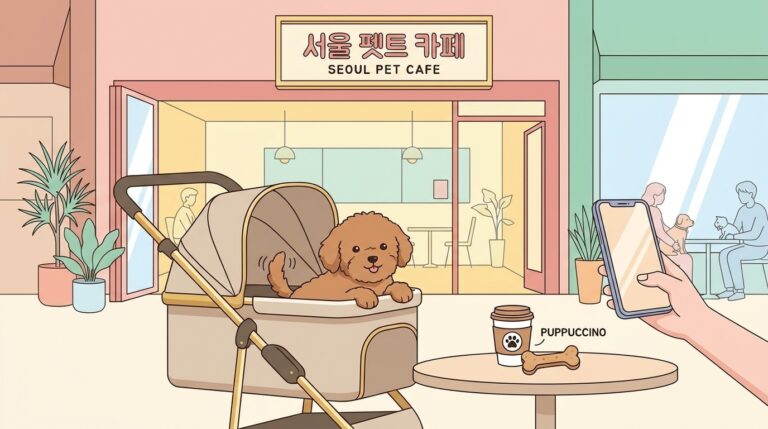
Have you recently watched a K-Drama and noticed characters treating their dogs to luxurious spa days, or maybe you’ve scrolled through Instagram and seen Korean pet cafes serving “puppuccinos” (멍푸치노) in beautiful porcelain cups?
Korea’s pet culture has undergone a massive, lightning-fast evolution. Not too long ago, pets were often referred to as aewandongmul (애완동물 – toy/companion animals). Today, we call them banryeodongmul (반려동물 – companion animals/life partners), and they are treated as full-fledged family members. This cultural shift has birthed the Petconomy (펫코노미)—a booming market of premium pet services, tech, and gourmet food.
As a C1-level learner, you don’t just want to say “I like dogs.” You want to discuss social trends, analyze market shifts, and express nuanced opinions on how Korea is transforming into a pet-centric society. Let’s dive deep into the sophisticated vocabulary and cultural insights you need to talk like a true Seoulite!
Phase 2: Deep Dive into 3 Essential C1 Expressions
1. 반려동물 (Ban-ryeo-dong-mul)
- Pronunciation: [Bahl-ryeo-dong-mool] (Sounds like “bahn-ryuh-dong-mool” with a soft, flowing ‘n’ to ‘r’ transition)
- Meaning: Companion Animal (literally “partner-life-animal”) vs. the outdated 애완동물 (aewandongmul – pet/toy animal).
- K-Culture Moment: You will hear this term constantly on popular TV programs like “Dogs are Incredible” (개는 훌륭하다) or YouTube channels showing cozy pet vlogs.
- Editor’s Insight: Using 반려동물 immediately signals that you respect the modern, humanized view of pets in Korea. It carries a warm, respectful, and highly civilized nuance.
- Situation Spectrum: Casual (✅) / Semi-formal (✅) / Formal (✅)
- 🤔 Think About It: How does the linguistic shift from “toy” (애완) to “companion” (반려) reflect a changing societal mindset in your own country?
2. 가슴으로 낳아 지갑으로 길렀다 (Gaseum-euro naha jigap-euro gilleotda)
- Pronunciation: [Ga-seum-eu-ro nah-ah jee-gahp-eu-ro gheel-leot-da] (Imagine sighing with dramatic humor: “I gave birth to them with my heart, and raised them with my wallet!”)
- Meaning: Born from my heart, raised by my wallet.
- K-Culture Moment: A viral internet meme and a favorite phrase for young Koreans who spend a large portion of their disposable income on high-end pet food, stylish outfits, and health supplements.
- Editor’s Insight: This is a perfect C1 idiomatic expression that combines deep affection with a witty acknowledgment of the expensive “Petconomy” reality.
- Situation Spectrum: Casual (✅) / Semi-formal (✅) / Formal (⚠️ – too cheeky for business presentations, but great for office small talk)
- 🤔 Think About It: Is there a similar phrase in your language that captures this humorous financial sacrifice for pets?
3. 펫팸족 (Pet-pam-jok)
- Pronunciation: [Pet-pam-jok] (Syllables are short and snappy: “Pet-Pam-Jok”)
- Meaning: Pet+Family tribe (People who treat pets as family members).
- K-Culture Moment: Used heavily in news articles, marketing reports, and lifestyle blogs discussing the demographic shift toward single-person households raising pets.
- Editor’s Insight: This portmanteau is essential for discussing societal trends. Related terms include 펫코노미 (Petconomy) and 펫테크 (Pet-tech).
- Situation Spectrum: Casual (⚠️) / Semi-formal (✅) / Formal (✅)
- 🤔 Think About It: Why do you think the “Petfam” phenomenon has grown so rapidly alongside single-person households in urban areas?
Phase 3: Textbook Korean vs. Real-World Korean
Let’s compare stiff, textbook sentences with what a sophisticated Korean speaker actually says when discussing the pet industry.
Scenario A: Talking about pet spending
- 📖 Textbook: 요즘 사람들은 개에게 돈을 많이 씁니다.
(These days, people spend a lot of money on dogs.) - 🗣️ Real-World: 요즘 펫팸족들은 반려동물을 위해 아낌없이 지갑을 열어요. 완전히 가슴으로 낳아 지갑으로 기르는 셈이죠.
(These days, the “Petfam” tribe doesn’t hesitate to open their wallets for their companion animals. It’s truly a case of “giving birth with the heart and raising with the wallet.”) - 💡 Why the difference? The real-world version uses trendy social terms (펫팸족) and idiomatic metaphors (지갑을 열다, 가슴으로 낳아…) to show a much higher level of conversational fluency and emotional warmth.
Scenario B: Describing high-end pet products
- 📖 Textbook: 강아지 용품이 아주 비싸고 다양해졌습니다.
(Dog products have become very expensive and diverse.) - 🗣️ Real-World: 반려동물 시장이 고급화되면서 펫코노미 규모가 어마어마하게 커졌더라고요. 프리미엄 유모차까지 불티나게 팔린대요.
(As the pet market goes premium, the scale of the “Petconomy” has grown tremendously. Even premium strollers are reportedly selling like wildfire.) - 💡 Why the difference? It incorporates business-oriented verbs (고급화되다 – to go premium) and dynamic idioms (불티나게 팔리다 – to sell like hotcakes/wildfire).
Phase 4: K-Culture Deep Dive & Non-Verbal Manners
4-1. “Petiquette” (펫티켓) and Non-Verbal Manners in Korea
When walking a dog or visiting pet-friendly spaces in Korea, certain non-verbal codes are crucial:
* The “Yellow Ribbon” Rule: If you see a dog with a yellow ribbon on its leash, it means the dog needs space. Avoid pointing or making loud noises.
* The Eye-Contact Rule: Koreans love cute dogs, but staring directly at a stranger’s pet can be seen as intrusive. Always ask: “만져봐도 될까요?” (May I pet it?) while keeping your hands low and approaching slowly.
4-2. The “Pet Humanization” (의인화) Trend
In K-dramas, pets often have human-like lifestyles. This is reflected in “Dogvatar” cultures where dogs wear custom Hanboks during Chuseok (Korean Thanksgiving). The rising cost of pet funerals is another huge talking point—showing how deeply integrated pets are into the emotional fabric of modern Korean families.
Phase 5: Interactive Roleplay Scenario
Setting: You are chatting with Min-ji (민지), an trendy urbanite colleague, at a stylish pet-friendly cafe in Seongsu-dong.
민지: 🎭 (아메리카노를 마시며 미소를 짓고 있다)
      어머, 저기 좀 보세요! 강아지 전용 유모차에 탄 푸들 진짜 귀엽지 않아요?

유저: 🎭 (고개를 끄덕이며 맞장구를 친다)
      진짜 그렇네요! 요즘 길에서 개모차(dog stroller) 타는 반려동물들을 정말 자주 보게 돼요.

민지: 🎭 (감탄하며)
      맞아요! 요즘은 '개모차' 판매량이 아기 유모차 판매량을 넘어섰대요. 완전 펫코노미 전성시대예요.

유저: 🎭 (진지하고 흥미롭다는 표정으로)
      와, 정말요? 펫팸족이라는 말이 괜히 나온 게 아니네요. 시장이 정말 고급화된 것 같아요.

민지: 🎭 (한숨을 쉬며 웃는다)
      제 동생도 고양이 영양제랑 수제 간식에 한 달에 수십만 원을 써요.
      진짜 '가슴으로 낳아 지갑으로 기른다'는 말이 딱 맞다니까요.

유저: 🎭 (공감하며 웃는다)
      하하, 맞아요! 반려동물이 이제 단순한 애완동물이 아니라 정말 가족 구성원으로 자리 잡은 거죠.

민지: 🎭 (커피 잔을 내려놓으며)
      맞아요. 그래서 그런지 요즘은 펫 보험이나 펫 전용 호텔 같은 서비스도 엄청 핫하더라고요.

유저: 🎭 (생각에 잠기며)
      비혼 가구나 1인 가구가 늘어나는 사회적 변화랑도 관련이 깊은 것 같아요.
      반려동물이 주는 정서적 위안이 크니까요.
🔀 Choose Your Next Response!
- Option A: “맞아요. 앞으로 펫코노미 시장은 계속 성장할 수밖에 없을 것 같아요.” (Formal, analytical perspective)
- Option B: “진짜요? 저도 저희 집 고양이한테 돈 좀 덜 써야겠어요. 제 통장이 텅장이 되었거든요!” (Humorous, self-deprecating perspective)
- Option C: “옛날 애완동물 시절이랑 비교하면 지금은 정말 세상이 많이 변한 것 같아요.” (Comparative, socio-cultural perspective)
💡 Feedback on Your Choice:
- Best Choice (Option B): Excellent! Using “통장이 텅장(empty wallet)이 되다” combined with pet culture shows masterful casual fluency and emotional connection.
- Great Choice (Option A): Smooth and professional. Perfect if you want to sound like an expert on economic trends.
- Thoughtful Choice (Option C): Fantastic comparison. Highlighting the shift from ‘애완동물’ to ‘반려동물’ demonstrates a deep understanding of historical and cultural context.
Phase 6: 10-Second Emotion Shadowing Drill
Let’s practice speaking with real natural rhythm. Pay attention to the pauses (/) and the emotional cues!
- [🥺 Playfully complaining about expenses]
“가슴으로 / 낳아… / 지갑으로 / 기른다더니, / 진짜 / 통장이 / 텅장이 / 됐어요!”
(Gaseum-euro / naha… / jigap-euro / gilleon-da-deoni, / jin-jja / tong-jang-i / teong-jang-i / dwaess-eo-yo!) -
[😮 Surprised and analytical]
“반려동물 / 유모차가 / 아기 유모차보다 / 더 / 잘 팔린다니, / 정말 / 대단하지 / 않나요?”
(Ban-ryeo-dong-mul / yu-mo-cha-ga / a-gi / yu-mo-cha-bo-da / deo / jal / pal-lin-da-ni, / jeong-mal / dae-dan-ha-ji / an-na-yo?)
Phase 7: K-Culture Mini-Dictionary
- 개모차 (Gae-mo-cha) | Dog stroller | A slang blend of ‘개’ (dog) and ‘유모차’ (stroller), widely used to describe the premium dog strollers commonly seen in trendy Seoul neighborhoods.
- 댕댕이 (Daeng-daeng-i) | Doggie (Cute slang) | A popular internet slang word for ‘강아지’. It originates from the visual similarity between the Korean characters ‘대’/’디’ and ‘개’/’댕’ (called ‘Yaminjeongeum’).
- 집사 (Jip-sa) | Cat Butler | Literally meaning “butler” or “steward.” Koreans playfully call cat owners “butlers” because cats are notoriously independent and act like royalty.
- 멍푸치노 (Meong-pu-chi-no) | Puppuccino | A pet-safe drink (usually made with lactose-free milk and carob powder) served at hipster cafes for visiting dogs.
Phase 8: The Traveler’s Survival Kit
Survival Expressions for Pet Lovers
- “반려동물 동반 가능한가요?” (Is this pet-friendly/Are pets allowed?)
- “만져봐도 괜찮을까요?” (Is it okay if I pet it?)
- “우와, 정말 순하고 얌전하네요!” (Wow, it’s so gentle and well-behaved!)
Editor’s Travel Note
Planning a trip to Seoul with your furry friend, or just want to visit pet-friendly spots?
* Pro Tip: Use the Naver Map App and search for “반려동물 동반” (Pet-friendly) to find cafes, restaurants, and parks that welcome companion animals.
* Note: Regulations and opening hours for pet facilities can change frequently in Seoul, so we highly recommend double-checking on Naver Map before heading out.
Phase 9: “Going One Step Deeper” (Deep Reflection)
The explosive growth of the Petconomy is closely tied to Korea’s changing demographics. With shrinking family sizes and rising single-person households, pets have filled a crucial psychological gap, offering deep emotional companionship. While this has created beautiful pet-friendly ecosystems, it also sparks serious debates regarding pet responsibility, high veterinary costs, and urban space management.
💬 Your Turn: How do you view this phenomenon? Do you think the humanization of pets is a positive cultural evolution, or do you have reservations? Let’s discuss in the comments below! (Feel free to write in Korean!)
Phase 10: FAQ & Avoiding Common Pitfalls
Q: What is the difference between 애완동물 and 반려동물?
A: 애완동물 (Pet/Toy animal) emphasizes ownership and play, whereas 반려동물 (Companion animal) emphasizes equal companionship and treating the animal as a family member. Modern Koreans strongly prefer 반려동물.
Q: Can I use the term ‘개모차’ in a business or academic essay?
A: No, 개모차 is a casual slang/portmanteau. In formal contexts or writing, you should use 반려동물용 유모차 (stroller for companion animals).
Q: How do I politely ask someone to keep their dog away from me?
A: You can say politely, “죄송한데 제가 동물을 좀 무서워해서요, 조금만 잡아주실 수 있을까요?” (I’m sorry, but I’m a bit afraid of animals, could you please hold them closer?)
🚨 Common Mistakes Alert!
- Wrong: “우리 강아지는 진짜 귀여운 애완동물이에요.”
- Correct: “우리 강아지는 정말 소중한 반려동물이에요.”
- Why? Calling your own pet “애완동물” can sound detached or outdated to modern pet owners.
Phase 11: Action Mission & Engagement
- Bronze Mission: Read the phrases in Phase 6 out loud three times to perfect your natural flow.
- Silver Mission: Share a picture of your pet on Instagram, use the hashtag
#매일한글, and caption it with: “우리집 댕댕이, 가슴으로 낳아 지갑으로 기르는 중!” - Gold Mission: Write a short paragraph (3-4 sentences) in the comments below discussing the pros and cons of “Petconomy” using at least two of the terms learned today.
Phase 12: Interactive Quiz Challenge
Ready to test your knowledge?
Q1. Which of the following refers to a person who treats their pet as family?
1) 펫테크 (Pet-tech)
2) 펫팸족 (Petfam-jok)
3) 멍푸치노 (Meong-pu-chi-no)
Answer: 2) 펫팸족
Explanation: 펫팸족 is a portmanteau of ‘Pet’ and ‘Family’.
Q2. Translate to Korean: “Born from my heart, raised by my wallet.”
Answer: 가슴으로 낳아 지갑으로 길렀다.
Explanation: A witty, highly natural C1 expression to describe pet spending.
Q3. True or False: ‘애완동물’ is the most preferred, modern term used to describe companion pets in Korea today.
Answer: False
Explanation: ‘반려동물’ is the preferred, respectful modern term, while ‘애완동물’ is considered outdated.







