

Bowing or Praying? Navigating Korea’s Jesa Culture and Religious Clashes Like a Native
Phase 1: Empathy (스토리 몰입형 오프닝)
안녕하세요! Welcome back to another edition of Daily Hangul, your premium cultural navigator! I’m your chief editor, and today we’re diving into one of the most delicate, emotionally charged, and deeply personal aspects of Korean life: Jesa (제사 – Ancestral Rites) and the religious clashes that often happen behind closed doors.
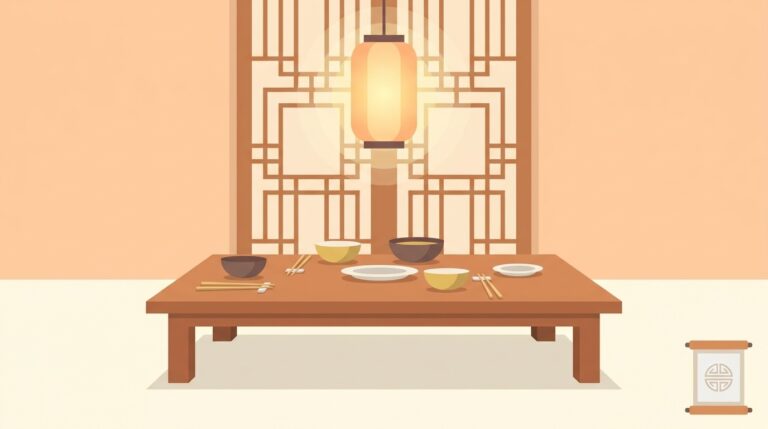
Imagine this: You’ve been invited to your Korean partner’s family home during Chuseok (추석) or Seollal (설날). The house is filled with the rich, savory smell of freshly fried Korean pancakes (jeon). Suddenly, you are guided toward a beautifully arranged table filled with food, burning incense, and a portrait of a late grandparent. Everyone lines up to bow deeply onto the floor. But you come from a devout Christian background (or simply feel uncomfortable with ancestral worship).
Your heart races. Do I bow? Will they think I am disrespectful if I refuse? What do I say?
If you’ve watched K-Dramas like My Unfamiliar Family or Reply 1988, you know that holiday family gatherings in Korea are a hotbed for “K-Dramas in real life.” The clash between traditional Confucian duties and modern religious beliefs (mostly Christianity/Catholicism) is a very real pain point for millions of Koreans and expats alike.
Today, we’re going to arm you with the precise, high-empathy vocabulary, non-verbal etiquettes, and cultural insights you need to handle this situation with absolute grace, showing respect to both your own beliefs and your Korean hosts. Let’s get started!
Phase 2: Core Expressions (핵심 표현 3선 심층 분석)
Here are three essential B2-level expressions that will save you from awkward misunderstandings during Korean family rituals.
1. 제사를 지내다 (jesareul jinaeda)
- Pronunciation: “Jeh-sah-reul jee-neh-dah” (Rhymes with: Say the Jeep name now)
- Meaning: To perform ancestral rites.
- K-Culture Moment: You’ll hear this in almost every family-themed K-Drama. Typically, the eldest son’s wife is sweating in the kitchen prepping 20 different dishes, and someone asks: “올해 제사는 몇 시에 지내요?” (What time are we holding the Jesa this year?)
- Editor’s Insight: Jesa is not just a “religious ceremony” to Koreans; historically, it is a social contract of filial piety (hyo, 효). Refusing to participate can sometimes be misconstrued as rejecting the family itself, which is why the phrasing of your decline must be incredibly polite.
- Situation Spectrum: Casual (✅) | Semi-formal (✅) | Formal (✅)
- 🤔 Think About It: How does your home culture honor deceased ancestors? Is it viewed as a religious act, or a secular memorial?
2. 묵념을 하다 (mungnyeomeul hada)
- Pronunciation: “Mung-nyeom-eul ha-dah” (The “g” in mung is very soft, almost blending into the “ny” sound: Moong-nyum-eul)
- Meaning: To pay a silent tribute / To offer a silent prayer.
- K-Culture Moment: When a family member cannot bow for religious reasons (e.g., Protestant Christians who believe bowing to any entity other than God is idolatry), they will choose mungnyeom instead.
- Editor’s Insight: This is your magic shield! If you cannot perform the deep bow (jeol, 절), offering to do mungnyeom shows that you are still actively participating in the solemnity of the moment, just in a different format.
- Situation Spectrum: Casual (✅) | Semi-formal (✅) | Formal (✅)
- 🤔 Think About It: In your native language, is there a clear distinction between “bowing” to pay respect and “worshiping”?
3. 집안 가풍 (jiban gapung)
- Pronunciation: “Jeep-ahn gah-poong” (Sounds like: Jeep + on + guy + pooh-ng)
- Meaning: Family tradition / Family ethos.
- K-Culture Moment: When discussing holiday customs, Koreans often say, “우리 집안 가풍은 좀 보수적이야” (Our family tradition is a bit conservative).
- Editor’s Insight: By attributing a practice or boundary to gapung (family tradition), you depersonalize the conflict. Instead of saying “I don’t like this,” saying “저희 집안 가풍과 달라서…” (Because it’s different from my family’s tradition…) softens the blow immensely.
- Situation Spectrum: Casual (⚠️) | Semi-formal (✅) | Formal (✅)
- 🤔 Think About It: Why is bringing up “family traditions” less offensive than bringing up “personal preferences” in collectivist societies?
Phase 3: Textbook vs. Real Korean (교과서 한국어 vs 진짜 한국어)
Let’s look at how textbooks teach you to resolve religious differences versus how real, highly empathetic native speakers actually talk.
Scenario A: Declining to bow due to your religion
- 📖 Textbook Korean: “저는 기독교인이라서 절을 할 수 없습니다.” (I am a Christian, so I cannot bow.)
- 💡 Why it feels off: It sounds like a legal declaration or an ultimatum. It creates an instant wall of “Us vs. Them.”
- 🗣️ Real Korean: “제가 교회를 다녀서, 마음으로 같이 묵념해도 괜찮을까요?” (Since I go to church, would it be okay if I join you in silent prayer instead?)
- 💡 Why it works: It uses “교회를 다니다” (go to church) which sounds softer than “기독교인” (Christian), and immediately offers an alternative (mungnyeom) to show you still want to participate with respect.
Scenario B: Inquiring about family’s religious background before a holiday
- 📖 Textbook Korean: “당신 집안의 종교는 무엇입니까?” (What is your family’s religion?)
- 💡 Why it feels off: Too intrusive and direct. Sounds like an interrogation.
- 🗣️ Real Korean: “혹시 명절에 제사 크게 지내시는 편이에요?” (By any chance, does your family tend to hold large Jesa services during holidays?)
- 💡 Why it works: In Korea, asking about Jesa is a polite, indirect way of finding out how traditional/Confucian or modern/religious a family is without asking for a direct religious label.
Phase 4: K-Culture Deep Dive & Non-verbal Manners (비언어적 매너)
4-1. The Art of “Nunchi” (눈치) During Jesa
If you find yourself at a Jesa where you cannot bow, your non-verbal actions speak louder than words. Follow these steps to maintain harmony:
* The Head Bow: When others are performing the deep floor bow (jeol), do not look around or check your phone. Stand straight, clasp your hands in front of your waist (gong-su posture, 왼손이 위로 가게 – left hand over right hand for men, right over left for women in secular/auspicious events), and bow your head deeply at a 45-degree angle. Hold this posture until they finish bowing.
* The Scent of Incense: If you are asked to put incense (hyang, 향) into the burner, do not blow out the flame with your mouth! That is considered extremely disrespectful to the spirits. Instead, gently wave your hand to extinguish the flame or shake the stick lightly.
4-2. Cultural Code: The Chuseok Kitchen Battle
In modern Korea, the real religious/cultural conflict isn’t just about bowing; it’s about labor. Traditionally, the female family members spent days cooking elaborate dishes for Jesa. Today, many Christian or highly modern families choose to bypass traditional Jesa and instead hold a 추도 예배 (chudo yebae – Christian memorial service) which involves a simple family meal instead of complex ancestral ritual food. If you marry into a traditional family, offering to help with kitchen prep (even if you don’t bow later) is the ultimate way to earn high “Nunchi points.”
Phase 5: Real-World Roleplay (실전 롤플레이)
Setting: You are visiting your Korean boyfriend Jinho’s (진호) family home for the first time during the Chuseok holiday. His mother, Eomoni (어머니), is highly traditional, but Jinho knows you are a devout Christian.
Characters:
- Eomoni (어머니): Warm but proud of her family’s long Confucian traditions.
- Jinho (진호): Your supportive boyfriend who acts as your cultural bridge.
- You (B2-Level Learner): Respectful, clear about your boundaries, but eager to make a good impression.
어머니: (향을 피우며 손짓을 하신다) 자, 이리 와서 할아버님께 절 올리거라.
Eomoni: (Beckoning while lighting incense) Come over here and bow to grandfather.

Jinho: (나를 걱정스럽게 쳐다보며) 엄마, 얘 기독교 집안이라 절하는 거 조금 어려울 수 있어.
Jinho: (Looking at me worriedly) Mom, her family is Christian, so bowing might be a bit difficult for her.

어머니: (조금 당황하며) 아... 그래? 우리 집안은 대대로 제사를 중요하게 여겨서 말이여...
Eomoni: (Slightly flustered) Oh... really? Our family has held ancestral rites very dearly for generations...

You: (어머니께 다가가 두 손을 모으며) 어머니, 할아버님 제사에 함께 참여하고 싶은데, 제가 절 대신 깊이 묵념으로 조의를 표해도 괜찮을까요?
You: (Approaching Eomoni with hands folded) Mother, I really want to participate in grandfather's Jesa. Would it be alright if I offer a deep silent prayer instead of bowing to show my respect?

어머니: (네 표정을 보고 안심하며) 아이구, 그렇게 생각해 주니 고맙네. 그럼 옆에서 같이 기도해 주련?
Eomoni: (Relieved by your warm expression) Oh, thank you for being so thoughtful. Would you join us and pray beside us then?

You: (밝게 미소 지으며) 네, 어머니! 옆에서 마음으로 정성껏 기도드릴게요. 제사 음식 차리는 것도 제가 도울게요!
You: (Smiling brightly) Yes, Mother! I will pray sincerely from my heart right next to you. Let me help set up the Jesa food too!

Jinho: (안도의 한숨을 쉬며) 고마워. 엄마, 얘 전 부치는 솜씨 엄청 좋아!
Jinho: (Sighing with relief) Thanks. Mom, she is amazing at frying Korean pancakes!

어머니: (웃으며) 그래, 그래. 그럼 우리 같이 주방으로 갈까?
Eomoni: (Laughing) Alright, alright. Shall we head to the kitchen together then?
🔀 Interactive Choice Point
During the meal, Eomoni hands you a glass of Eumbok (음복)—liquor that was offered to the ancestors, which traditionalists believe brings blessings. However, you do not drink alcohol for religious/personal reasons. What do you do?
- Option A: Drink it anyway to avoid making a scene.
- Option B: “저는 술 안 마십니다.” (I do not drink alcohol) and push the cup away.
- Option C: Receive the cup with both hands, raise it slightly to your lips to show respect, and gently set it down, saying: “제가 술을 잘 못해서 마음으로만 받겠습니다!”
💡 Feedback:
- Option A (Risk): Respectful, but violates your personal boundaries. Not sustainable if you plan to visit long-term!
- Option B (Bad): Too direct and cold. Ruins the warm atmosphere built during the ritual.
- Option C (Best!): Perfect! Receiving the cup with both hands shows respect for the blessing (음복), and the soft decline protects your boundary without offending anyone.
Phase 6: 10-Second Emotion Shadowing Drill (10초 감정 섀도잉 드릴)
Practice saying these high-empathy sentences with natural pauses (/) and emotional coloring.
- [🥺 Softly and Apologetically – Bowing Alternative]
“제가 / 교회를 다녀서 / 절 대신 / 묵념해도 괜찮을까요?”
(Je-ga / gyo-hoe-reul da-nyeo-seo / jeol dae-sin / mung-nyeom-hae-do gwen-chan-eul-kka-yo?) -
[😊 Brightly and Cooperatively – Kitchen Help]
“절은 못 하지만 / 제사 음식 준비는 / 제가 열심히 도울게요!”
(Jeor-eun mot ha-ji-man / je-sa eum-sik jun-bi-neun / je-ga yeol-sim-hi do-ul-ge-yo!) -
[🙏 Sincerely and Warmly – Declining Alcohol]
“정말 감사하지만 / 제가 술을 못 해서 / 마음으로만 / 받겠습니다.”
(Jeong-mal gam-sa-ha-ji-man / je-ga sur-eul mot hae-seo / ma-eum-eu-ro-man / bat-get-seum-ni-da.)
Phase 7: K-Culture Mini Dictionary (K-Culture 미니 사전)
- 지방 (Jibang): Paper tablet containing the names of the ancestors, used during Jesa as a temporary dwelling for their spirits.
- 차례 (Charye): A simplified ancestral rite performed on major holidays like Chuseok and Seollal morning.
- 음복 (Eumbok): The act of eating and drinking the food and wine that was offered during the ancestral service, believed to pass down ancestral blessings.
- 신주 (Shinju): Traditional wooden ancestral tablet, historically kept in family shrines for three generations.
Phase 8: Survival Kit for Travelers (여행자를 위한 생존 키트)
Survival Expressions TOP 3
- “종교가 어떻게 되세요?” (What is your religion?)
- Use this when chatting deeply with Korean friends to understand their family background before holidays.
- “제사 음식 준비하느라 고생하셨어요.” (You went through so much trouble preparing the Jesa food.)
- Say this to the mother or host of the house. It’s a guaranteed way to melt any tension!
- “저희 집은 기독교 집안이에요.” (My family is Christian.)
- A clean, universally understood way to establish your cultural/religious background in Korea.
📝 Editor’s Travel Note
If you are planning to visit traditional heritage sites like Jongmyo Shrine (종묘) in Seoul, search for “종묘대제 (Jongmyo Daeje)” on your Naver Map app. It is a massive royal ancestral ritual designated as a UNESCO Masterpiece of the Oral and Intangible Heritage of Humanity. Experiencing this outside of a private home setting will give you immense appreciation for the beauty of Korean ritual structure without any personal social pressure!
Phase 9:
Frequently Asked Questions (FAQ)
Q: What does "제사를 지내다 (jesareul jinaeda)" mean in Korean and how do you pronounce it?
A: In Korean, "제사를 지내다 (jesareul jinaeda)" is pronounced ["Jeh-sah-reul jee-neh-dah" (Rhymes with: Say the Jeep name now] and means: To perform ancestral rites.
Q: What does "묵념을 하다 (mungnyeomeul hada)" mean in Korean and how do you pronounce it?
A: In Korean, "묵념을 하다 (mungnyeomeul hada)" is pronounced ["Mung-nyeom-eul ha-dah" (The "g" in mung is very soft, almost blending into the "ny" sound: Moong-nyum-eul] and means: To pay a silent tribute / To offer a silent prayer.
Q: What does "집안 가풍 (jiban gapung)" mean in Korean and how do you pronounce it?
A: In Korean, "집안 가풍 (jiban gapung)" is pronounced ["Jeep-ahn gah-poong" (Sounds like: Jeep + on + guy + pooh-ng] and means: Family tradition / Family ethos.







