

Why Korea Fell in Love with Mid-Century Modern Design: An Advanced Linguistic & Cultural Exploration
Phase 1: Empathy (An Immersive Opening)
안녕하세요! (An-nyeong-ha-se-yo!) Welcome back to Daily Hangul. I’m your resident culture navigator and senior editor.
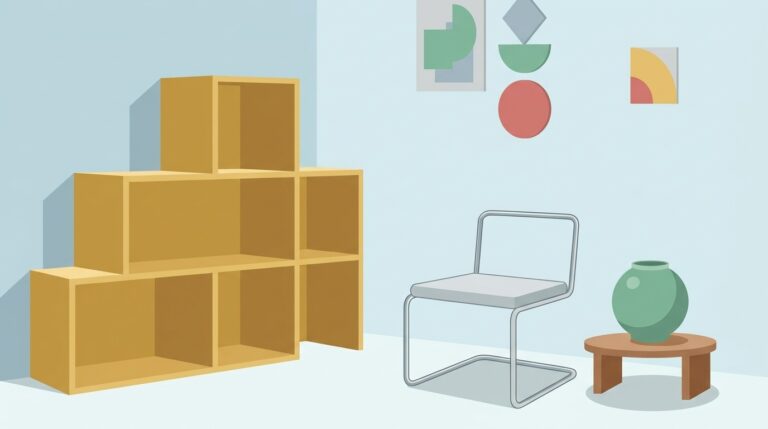
Picture this: You are watching a popular K-Drama or a reality show like I Live Alone (나 혼자 산다), and you find yourself peek-pointing at the background. Sleek Bauhaus steel frames, vibrant orange and mustard-yellow modular shelves, and iconic vintage lamps casting a warm glow. You might think, “Wait, isn’t this Mid-Century Modern?”
Indeed, it is. In Korea, this design aesthetic has transcended being a mere design trend; it is a full-blown cultural phenomenon. Yet, describing these sophisticated spaces in Korean often poses a challenge for advanced learners. Moving beyond “이 방 예뻐요” (This room is pretty) to articulating the nuanced spatial philosophy of Korean urban spaces requires deep linguistic agility.
Today, we will dive deep into why this post-war Western design style conquered the hearts of twenty- and thirty-something Koreans, while equipping you with C2-level vocabulary to discuss aesthetics, spatial dynamics, and interior design like a native tastemaker.
Phase 2: Deep Dive into 3 Essential Expressions
1. 심미안 (審美眼 – Sim-mi-an)
- Pronunciation: [Sim-mi-an] (Sounds like “see-me-ahn” with a soft, analytical cadence)
- Meaning: Aesthetic discernment; an eye for beauty.
- K-Culture Moment: Used by lifestyle curators, interior architects, and trendsetters when analyzing a well-designed space on YouTube home tours or high-end design magazines like Space (공간).
- Editor’s Insight: Combining ‘심’ (to appreciate), ‘미’ (beauty), and ‘안’ (eye), this word elevates your discourse. It denotes a refined, intellectual capacity to judge and appreciate artistic value, far beyond just having “good taste” (안목).
- Situation Spectrum: Casual (⚠️) / Semi-formal (✅) / Formal (✅)
- 🤔 Think About It: How does your native culture define someone with an “eye for beauty”? Is it tied to intellectual study, or is it considered an innate, intuitive trait?
2. 뉴트로 감성 (New-tro Gam-seong)
- Pronunciation: [New-teu-ro gam-seong] (Rhymes with “retro” but starts with “new”, followed by a soft “gum-sung”)
- Meaning: “New-tro” (New + Retro) vibe/sensibility.
- K-Culture Moment: Frequently heard in discussions about revitalized industrial spaces in Euljiro (Seoul’s “Hip-ji-ro”) or when describing the blend of traditional Hanok structures with modern steel furniture.
- Editor’s Insight: Unlike pure nostalgia, “New-tro” in Korea represents the younger generation’s interpretation and modernization of a past they never personally experienced. It’s not just old; it’s “reinterpreted cool.”
- Situation Spectrum: Casual (✅) / Semi-formal (✅) / Formal (⚠️)
- 🤔 Think About It: Why do you think modern societies, despite rapid digitalization, constantly seek comfort in physical, retro-inspired spaces?
3. 철제 프레임과 원색의 조화 (Cheol-je peu-re-im-gwa won-saek-ui jo-hwa)
- Pronunciation: [Cheol-je peu-re-im-gwa won-sae-gui jo-hwa] (Ensure the “gwa” and “ui” flow seamlessly without hard stops)
- Meaning: The harmony of steel frames and primary colors.
- K-Culture Moment: The defining architectural description of the Mid-Century Modern movement in Korea, characterized by steel tube chairs (like the Wassily or Cesca) paired with bold orange, cobalt blue, or grass green accents.
- Editor’s Insight: This phrase showcases your ability to syntactically structure design concepts using native particles and specialized vocabulary.
- Situation Spectrum: Casual (⚠️) / Semi-formal (✅) / Formal (✅)
- 🤔 Think About It: How does the contrast between cold steel and warm, vivid colors mirror the psychological state of modern city dwellers?
Phase 3: Textbook Korean vs. Real-World Korean
Situation 1: Praising a beautifully curated interior
- 📖 Textbook Korean: “방이 아주 잘 꾸며져 있고 아름답습니다.” (The room is very well decorated and beautiful.)
- 🗣️ 진짜 한국어: “공간 브랜딩을 정말 감각적으로 잘하셨네요. 완전 인스타 감성 낭낭해요!” (You did the spatial branding so tastefully. It has that perfect Instagram vibe!)
- 💡 Why the difference? C2 speakers do not just use static adjectives. Using terms like “공간 브랜딩” (spatial branding) and the colloquial “낭낭하다” (overflowing/generous) shows an organic grasp of contemporary slang and industry jargon.
Situation 2: Explaining a design highlight or focal point
- 📖 Textbook Korean: “이 붉은 가구가 중심을 잡아줍니다.” (This red furniture holds the center.)
- 🗣️ 진짜 한국어: “이 채도 높은 가구로 밋밋한 공간에 포인트를 확실히 주었네요.” (This highly saturated furniture definitely adds a bold accent/point to an otherwise flat space.)
- 💡 Why the difference? Advanced speakers replace vague words like “중심” (center) with design-specific vocabulary like “채도” (saturation) and “포인트를 주다” (to highlight/accentuate).
Phase 4: K-Culture Deep-Dive & Non-Verbal Manners
4-1. Nunchi & Gestures: Navigating a Korean Housewarming (집들이)
When invited to a newly decorated Korean home (집들이 – Jip-deu-ri), your non-verbal cues are just as critical as your spoken praise.
* The Visual Sweep: Do not stare intensely at one expensive item immediately. Instead, do a gentle, appreciative sweep of the room, nod slowly, and let out a soft “우와…” (Oo-wa…).
* Tactile Boundaries: Mid-Century Modern furniture is highly tactile, featuring molded plastic, chrome, and polished wood. Never touch or sit on premium designer items without a polite verbal cue: “한 번 앉아봐도 돼요?” (Han beon an-ja-bwa-do dwae-yo? / May I try sitting here?).
4-2. Cultural Code: Why Mid-Century Modern Captured Korea
To understand this trend, we must look at Korea’s demographic shift. The rise of 1-person households (일인 가구), coupled with the pandemic-induced homebody culture (집콕족), transformed the home from a simple sleeping quarters into a deeply personal canvas.
Koreans, traditionally living in uniform apartment structures, craved individuality. The modularity of Mid-Century Modern—where one can easily reconfigure colorful shelves and lightweight steel chairs—offered the perfect solution for micro-living spaces without sacrificing aesthetic prestige. It became the ultimate expression of 소확행 (Small but certain happiness) and personal branding.
Phase 5: Real-Life Roleplay Scenario
Characters & Background
- You (C2 Speaker): A sophisticated design enthusiast visiting an upscale studio in Mapo, Seoul.
- Min-ji (민지): A creative director who has just remodeled her workspace in the ultimate Mid-Century style.
The Conversation
- Min-ji: 어서 와요! 집들이인데 누추해서 민망하네요. 대충 해놓고 살아요.
(Welcome! It’s a housewarming, but it’s so humble I’m embarrassed. I just live simply.) - You: 🎭 (Eye widening with authentic admiration) 무슨 말씀이세요! 문 열자마자 민지 씨의 남다른 심미안이 고스란히 느껴지던걸요?
(What are you talking about! The moment the door opened, I could instantly feel your extraordinary aesthetic discernment.) - Min-ji: 아이 참, 좋게 봐주셔서 감사해요. 원목 가구만 쓰다가 이번에 분위기를 확 바꿔봤어요.
(Oh, thank you for looking at it so kindly. I used to only use solid wood, but this time I changed the atmosphere completely.) - You: 탁월한 선택이셨어요. 특히 이 철제 프레임과 원색의 조화가 정말 독보적이네요.
(It was an excellent choice. Especially this harmony of steel frames and primary colors is truly peerless.) - Min-ji: 요즘 유행하는 미드 센추리 모던 스타일에 뒤늦게 탑승한 건 아닌가 걱정했어요.
(I was worried I hopped on the trendy Mid-Century Modern train a bit too late.) - You: 전혀요! 기성 가구 배치에 머무르지 않고, 이런 빈티지 오브제들로 뉴트로 감성을 레이어드하신 건 진짜 한 수 위예요.
(Not at all! Not just stopping at ready-made furniture layouts, but layering new-tro vibes with these vintage objects is truly a cut above.) - Min-ji: 그렇게 알아봐 주시니 정말 보람차네요. 커피 한잔 내릴게요, 편하게 앉으세요!
(Hearing you recognize that makes it so rewarding. Let me brew some coffee, please make yourself comfortable!) - You: 감사해요. 이 임스 체어에 앉아보는 호사를 다 누리네요. 공간이 주는 에너지가 대단해요.
(Thank you. I get to enjoy the luxury of sitting in this Eames chair. The energy given off by this space is amazing.)
🔀 Interactive Choice Points
How will you respond when Min-ji asks: “이 조명, 어떤 것 같아요? 당근마켓에서 어렵게 구했거든요!” (How do you like this lamp? I got it with great difficulty on Karrot Market!)
- Option A: “아, 그거 요즘 길거리에 널린 디자인이네요. 무난해요.”
- Feedback (Bad): Extremely blunt and offensive. In Korea, destroying someone’s joy of “Danggeun-ing” (second-hand hunting) is a severe breach of etiquette.
- Option B: “우와, 판매자분이랑 네고(negotiation) 잘하셨나 봐요. 싸게 사셨어요?”
- Feedback (Risk): Too focused on the monetary aspect. It shifts the focus from aesthetic value to mere bargaining.
- Option C: “세상에! 이 유려한 곡선 쉐입에 바우하우스 느낌 물씬 나는 조명을 구하시다니, 디테일이 살아있네요!”
- Feedback (Best – C2 Level): Beautifully praises the specific aesthetic features (curved shape, Bauhaus vibe) and validates her effort with rich vocabulary.
Phase 6: 10-Second Emotional Shadowing Drill
Practice matching the native cadence and emotional undertones by pausing at the / marks.
- [😊 Deeply impressed and sincere]
문 열자마자 / 민지 씨의 남다른 심미안이 / 고스란히 느껴지던걸요?
(Mun yeol-ja-ma-ja / Min-ji ssi-ui nam-da-reun sim-mi-an-i / go-seu-ran-hi neuk-kyeo-ji-deon-geol-yo?) -
[🤩 Enthusiastic and complimentary]
철제 프레임과 / 원색의 조화가 / 공간의 무게감을 / 딱 잡아주네요!
(Cheol-je peu-re-im-gwa / won-saek-ui jo-hwa-ga / gong-gan-ui mu-ge-gam-eul / ttak ja-ba-ju-nae-yo!)
Phase 7: K-Culture Mini-Dictionary
- 오브제 (Ob-je | Objet): Originally from French, used in Korean design to refer to artistic, non-functional interior accent pieces that elevate space personality.
- 미니멀리즘 vs 맥시멀리즘 (Mi-ni-meol-ri-jeum vs Maek-si-meol-ri-jeum): The constant conceptual battle in Korean modern apartments—whether to empty out or to fill strategically.
- 톤앤매너 (Ton-aen-mae-neo | Tone & Manner): The overarching color palette and stylistic consistency of a space, outfit, or visual work.
- 레이어드 (Le-i-eo-deu | Layered): Combining different eras, textures, and materials to build depth in interior design.
Phase 8: The Ultimate Traveler’s Survival Kit
Survival Expressions for Design Lovers
- “이 가구, 혹시 커스텀 오더 하신 건가요?” (Did you perhaps custom-order this furniture?)
- Pro Tip: Use this to compliment unique, non-mass-produced designs.
- “공간에 조명 조도가 아주 아늑하고 절묘하네요.” (The lighting intensity in this space is so cozy and exquisite.)
- Pro Tip: Perfect when visiting curated cafes in Seongsu-dong.
- “빈티지 특유의 에이징된 멋이 잘 살아있어요.” (The aged beauty unique to vintage is beautifully preserved.)
- Pro Tip: Use this at vintage furniture showrooms in Euljiro.
Editor’s Travel Note
When exploring Seoul’s design scene, do not rely solely on general map services. Download Naver Map (네이버 지도) to find hidden vintage furniture showrooms in Hannam-dong or Seongsu-dong. For local interior inspiration and shopping, browse the Today’s House (오늘의집) application to see real-world styling layouts of Korean apartments.
Note: Showroom operating hours and access policies may change without notice; checking their official social media channels before visiting is highly recommended.
Phase 9: “One Step Deeper” (A Philosophical Reflection)
In Western cultures, interior design often revolves around grand architectural structures and historic homes. In Korea, however, over 60% of urban residents live in standardized concrete apartments. This architectural uniformity gave birth to an intense desire for “inner rebellion” through furniture.
By choosing Mid-Century Modern, young Koreans are rejecting the traditional corporate aesthetic of their parents’ generation. It is a quiet declaration of identity within a highly collectivist society. When they purchase a single, iconic modular shelf, they are not just buying storage; they are buying an anchor of self-expression.
💬 Your Turn
How does interior design reflect identity in your country? Do people prefer uniformity or bold self-expression? Let us know in the comments below!
Phase 10: FAQ & Common Mistakes
Q: Why is the style called “Mid-Century Modern” in Korea instead of a Korean translation?
A: Korea’s interior trendsetters rely heavily on global design nomenclature to maintain international stylistic standards. Using “미드 센추리 모던” links local tastes directly with global design history, creating a shared international design language.
Q: Is Mid-Century Modern considered expensive in Korea?
A: While authentic vintage pieces from Herman Miller or USM Haller cost thousands of dollars, the trend also popularized “affordable design” through domestic modular brands and high-quality replicas, making it highly accessible to the masses.
Q: How do I distinguish “Retro” from “New-tro” when talking to Koreans?
A: “Retro” (레트로) refers to a direct, nostalgic recreation of the past for those who lived through it. “New-tro” (뉴트로) is the modern reinterpretation of those elements, repackaged with a trendy, futuristic edge tailored for Gen Z and Millennials.
🚨 Common Mistakes Alert!
- Saying “인테리어가 예뻐요” to professional designers: While polite, it sounds very elementary. Instead, say “공간 구성이 매우 짜임새 있네요” (The spatial composition is highly structured/organized).
- Confusing “빈티지” (Vintage) with “헌 것” (Old/Worn thing): Calling curated vintage pieces “낡은 것” (worn-out things) can sound disrespectful. Use “세월의 흔적이 멋스럽네요” (The traces of time look stylish).
- Misusing “포인트를 주다”: Saying “포인트를 넣다” is grammatically understood, but the correct stylistic verb collocation is always “포인트를 주다” (to give/apply a point).
Phase 11: Action Missions
- 🥉 Bronze Mission: Take a photo of your favorite corner in your room and write a 1-sentence description in Korean using “심미안” or “뉴트로 감성”.
- 🥈 Silver Mission: Share your photo on Instagram, tag
@DailyHangul, and write a caption explaining the “톤앤매너” (Tone & Manner) of your space. - 🥇 Gold Mission: Walk into a design cafe, order in Korean, and confidently compliment the staff on their interior layout: “여기 철제 프레임과 가구들의 조화가 정말 감각적이네요!”
- 🎮 K-Culture Mission: Watch an episode of I Live Alone or a Korean home-tour vlog, find one piece of Mid-Century Modern furniture, and identify its color and material in Korean.
Phase 12: Interactive Quiz Challenge
1. Which expression best describes the unique aesthetic of blending retro vibes with modern reinterpretations?
- A) 올드스쿨 스타일 (Old School Style)
- B) 뉴트로 감성 (New-tro Gam-seong)
- C) 미니멀 라이프 (Minimal Life)
2. Fill in the blank:
“이 의자는 철제 프레임과 ___________의 조화가 아주 뛰어납니다.”
* A) 원색 (Primary colors)
* B) 백색 (White)
* C) 단색 (Monochrome)
3. True or False:
In Korea, it is polite to immediately touch and sit on designer furniture during a housewarming without asking first.
🔍 Click here to check the Answers & Explanations!
- Answer: B
- Explanation: “뉴트로 감성” perfectly captures the blend of retro elements with modern sensibilities.
- Answer: A
- Explanation: “원색” (primary colors like blue, yellow, and red) is the core partner to “철제 프레임” in Mid-Century Modern designs.
- Answer: False
- Explanation: Always ask before touching or sitting on curated designer furniture to show respect for the host’s expensive tastes (Nunchi!).
- Explanation: Always ask before touching or sitting on curated designer furniture to show respect for the host’s expensive tastes (Nunchi!).







