

Singing Your Heart Out: How to Hype Up a Korean Karaoke Room (Even as an Absolute Beginner!)
Phase 1: Welcome to the Ultimate Noraebang Hype Guide!
안녕하세요! (An-nyeong-ha-se-yo!) Hi there! I’m your Daily Hangul Editor, your friendly local culture navigator.
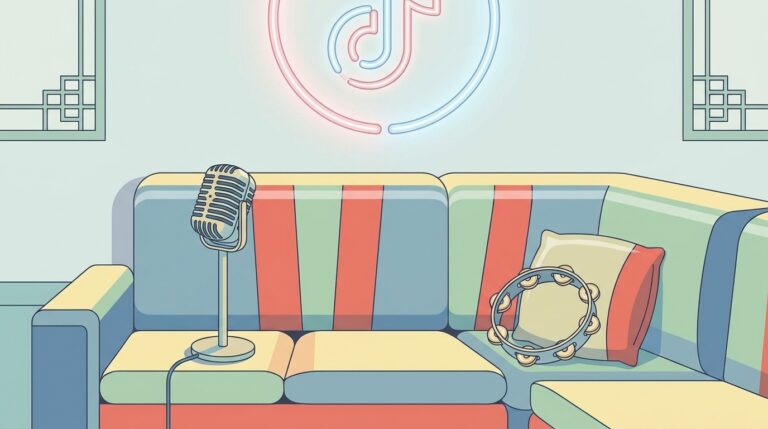
Imagine this: You are standing in a neon-lit, cozy private room in Seoul. The bass is pumping, a tambourine is in your hand, and your Korean friends are looking at you with excited eyes. It’s time for a dance song! But wait—you feel your heart race. “How do I tell them I want to speed up the song? How do I sound natural without sounding like a textbook?”
Don’t worry! Singing dance songs at a Korean 노래방 (Noraebang – Karaoke room) is not about perfect vocals; it is 100% about energy and sharing joy. Today, we will learn 3 magic expressions that will instantly make you the favorite guest in any Korean karaoke room, even if you only know three words of Korean! Let’s dive in!
Phase 2: Three Core Hype Phrases for Beginners
1. 신나게 불러요! (Sin-na-ge bul-leo-yo!)
- Pronunciation: Sheen-nah-geh bool-luh-yo! (Think of “sheen” like shiny, “nah” like a sigh of relief, “geh” like a gate, and “bool-luh-yo”.)
- Meaning: Let’s sing excitingly! / Let’s sing with high energy!
- K-Culture Moment: This is what you say right after a slow, sad ballad finishes and you want to transition into a fast-paced dance song (like a fun BTS or BLACKPINK track).
- Editor’s Insight: The word 신나다 (sin-na-da) means “to be excited.” Adding “-게” makes it “excitedly.” It is the perfect, polite-yet-friendly way to tell everyone, “Hey, let’s turn up the heat!”
- Situation Spectrum: Casual (신나게 부르자! ✅) | Semi-formal (신나게 불러요! ✅) | Formal (신나게 부릅시다! ⚠️)
- 🤔 Think About It: In your culture, is there a specific word you say to friends to encourage them to let go of their shyness and just have fun?
2. 템포 올려 주세요! (Tem-po ol-lyeo ju-se-yo!)
- Pronunciation: Tem-poh ol-lyuh joo-seh-yo! (Think of “tem-poh”, “ol-lyuh” like ‘all-yeah’, and “joo-seh-yo” like the polite ‘please’.)
- Meaning: Please raise the tempo! / Speed it up!
- K-Culture Moment: You point at the giant noraebang remote control (리모컨) and ask your friend who is holding it to speed up the song to make it extra chaotic and fun.
- Editor’s Insight: Korean karaoke machines have physical buttons to change the pitch and tempo. Shouting “템포 올려 주세요!” is a classic “insider” pro-move that shows you know exactly how to customize your karaoke experience!
- Situation Spectrum: Casual (템포 올려 줘! ✅) | Semi-formal (템포 올려 주세요! ✅) | Formal (템포를 올려 주시겠습니까? 🚫 – Way too stiff for a party!)
- 🤔 Think About It: Speeding things up is deeply tied to Korea’s fast-paced “빨리빨리” (ppal-li-ppal-li – hurry hurry) culture. Even music is more fun when it’s faster!
3. 분위기 띄워 봐요! (Bun-wi-gi tti-wo bwa-yo!)
- Pronunciation: Boon-wee-ghee tthee-wuh bwah-yo! (“Boon” like balloon, “wee-ghee” like a soft giggle, and “tthee-wuh” with a slight spit on the double ‘t’.)
- Meaning: Let’s pump up the mood! / Let’s liven things up!
- K-Culture Moment: Everyone is sitting down, looking tired. You stand up, shake the tambourine, and yell this to bring the energy back to life!
- Editor’s Insight: 분위기 (bun-wi-gi) means atmosphere or mood, and 띄우다 (tti-u-da) means to float or lift up. Literally, you are asking your friends to “lift up the atmosphere” together. It shows you care about everyone’s collective happiness.
- Situation Spectrum: Casual (분위기 띄워 봐! ✅) | Semi-formal (분위기 띄워 봐요! ✅) | Formal (분위기를 띄워 봅시다! ⚠️)
- 🤔 Think About It: How does your native language describe “lifting the mood”? Does it also involve physical actions like floating or raising?
Phase 3: Textbook Korean vs. Real-Life Korean
Let’s compare stiff textbook sentences with what cool locals actually say during a dance-song session!
Situation 1: Suggesting a fast dance song
- 📖 Textbook: 빠른 음악을 틀어 주십시오. (Ppa-reun eu-mag-eul teul-eo ju-sip-si-o. – Please play fast music.)
- 🗣️ Real-Life: 댄스곡 고고! (Daen-seu-gok go-go! – Dance song, go go!)
- 💡 Why the difference? Koreans love combining English words with active slang in casual settings. “고고” (Go-Go) instantly adds a friendly, high-energy party vibe!
Situation 2: Cheering for your friend while they sing
- 📖 Textbook: 열심히 부르십시오. (Yeol-sim-hi bu-reu-sip-si-o. – Please sing diligently.)
- 🗣️ Real-Life: 잘한다! (Jal-han-da! – You’re doing great! / Woohoo!)
- 💡 Why the difference? Singing in a noraebang isn’t a classroom test! Saying “잘한다!” is a warm, raw shout of encouragement that makes your friend feel like a superstar.
Phase 4: K-Culture Deep-Dive & Non-Verbal Manners
4-1. Noraebang Etiquette: The Art of “Nunchi”
In Korea, 눈치 (Nunchi – social wit/tact) is everything. When someone is singing a high-energy dance song, even if you don’t know the lyrics, don’t sit quietly on your phone!
* The Tambourine Duty: Grab the tambourine (탬버린) and shake it to the beat.
* The Chorus Hype: When the chorus hits, stand up and sway or clap. Showing physical enthusiasm is considered the highest form of respect for the singer!
4-2. The “Service” (서비스) Phenomenon
If you sing exciting dance songs and keep the room loud, don’t be surprised if the timer on the screen suddenly jumps from 00:05 back to 30:00! This is called 서비스 (Seo-bi-seu – free bonus time) given by the happy owner of the karaoke shop. It’s a sign that you are a legendary guest!
Phase 5: Real-Life Roleplay Scenario
Let’s practice! You are at a trendy coin noraebang in Hongdae with your energetic Korean friend, Minjun (민준).
Minjun: 소피아, 우리 이제 신나게 불러요!
        (Sophia, let's sing excitingly now!)
        🎭 [😊 waving a tambourine with a huge smile]

Sophia: 좋아요! 무슨 노래 부를까요?
        (Great! What song shall we sing?)
        🎭 [😆 eyes sparkling with excitement]

Minjun: K-pop 댄스곡 어때요?
        (How about a K-pop dance song?)
        🎭 [🕺 doing a cute little dance step]

Sophia: 와, 대박! 템포 올려 주세요!
        (Wow, awesome! Please raise the tempo!)
        🎭 [🎶 shaking her tambourine hard]

Minjun: 오! 준비 완료! 분위기 띄워 봐요!
        (Oh! Ready! Let's pump up the mood!)
        🎭 [🔥 clicking the remote control frantically]

Sophia: 민준 씨, 노래 시작해요!
        (Minjun, the song is starting!)
        🎭 [🎤 holding the microphone out to share]

Minjun: 소피아 잘한다! 같이 춤춰요!
        (Sophia, you are doing great! Let's dance together!)
        🎭 [🙌 raising both hands in the air]

Sophia: 진짜 신나요!
        (I'm so excited!)
        🎭 [🎉 jumping up and down to the beat]
🔀 Your Turn: Choose Your Path!
When the beat drops, what do you do?
* Choice A: Stand up, shake the tambourine, and shout “분위기 띄워 봐요!”
* Feedback: BEST! You are now the king/queen of the noraebang. Your Korean friends will invite you to every party!
* Choice B: Sit quietly in the corner and scroll through Instagram.
* Feedback: BAD. The energy will drop, and people might think you are bored or unhappy.
* Choice C: Try to sing a super fast Korean rap song without knowing any of the words.
* Feedback: RISK! While funny and brave, you might get tongue-tied. Keep it simple with a dance song first!
Phase 6: 10-Second Shadowing Drill
Let’s practice speaking with real Korean emotion! Pause briefly at the slashes (/) and use the emotional cues:
- 신나게 / 불러요!
- [😊 Bright, high-energy, and inviting]
- 템포 / 올려 주세요!
- [🔥 Playful, demanding, like a true DJ]
- 분위기 / 띄워 봐요!
- [🎉 Cheerfully shouting over the loud music]
Phase 7: K-Culture Mini Dictionary
- 탬버린 (Taem-beo-rin) | Tambourine | The golden instrument found in every Korean karaoke room. Essential for keeping the rhythm!
- 서비스 (Seo-bi-seu) | Free Bonus Time | Extra free minutes added to your karaoke screen by the generous owner.
- 떼창 (Tte-chang) | Group Sing-Along | The beautiful moment when everyone in the room sings the chorus of a famous dance song together at the top of their lungs.
- 리모컨 (Ri-mo-keon) | Remote Control | The giant, heavy device used to search for songs, change keys, and adjust the tempo.
Phase 8: Survival Kit for Travelers
Survival Phrases TOP 3
- 서비스 주세요! (Seo-bi-seu ju-se-yo!) – Please give us some bonus minutes! (Use this with a cute smile to the owner!)
- 마이크 볼륨 올려 주세요! (Ma-i-keu bol-ryum ol-lyeo ju-se-yo!) – Please turn up the microphone volume!
- 취소해 주세요. (Chwi-so-hae ju-se-yo.) – Please cancel (the current song). (Useful if you picked the wrong track!)
🗺️ Editor’s Travel Note
If you want a quick, cheap, and non-intimidating noraebang experience, look for a 코인노래방 (Coin Noraebang) (often called Coin-no). You pay per song (usually 500 KRW for 1 song or 1,000 KRW for 3 songs) using cash or card. To find the nearest highly-rated coin noraebang, download the Naver Map App and search for “코인노래방”.
(Note: Coin rates and operating hours may vary depending on the location and local regulations.)
Phase 9: One Step Deeper
In Korea, there is a beautiful cultural concept called 흥 (Heung). It translates roughly to an overwhelming sense of collective joy, energy, and excitement. Heung is not about individual performance; it is about sharing a happy vibe with the people around you.
When you yell “분위기 띄워 봐요!” in a noraebang, you aren’t just saying words—you are actively creating Heung with your friends. This shared energy builds deep, lifelong friendships over just a few songs.
💬 Your Turn: What is your ultimate, go-to karaoke dance song back home? Let me know in the comments below!
Phase 10: FAQ & Common Mistakes
Q: Do I need to know how to read fast Korean lyrics to sing a K-pop dance song?
A: Not at all! Most modern Korean karaoke machines display Romanized lyrics (English letters) at the top of the screen if you select the English search settings. Plus, everyone loves to sing the English choruses together anyway!
Q: What should I do if the owner gives us “Service” (서비스) time but we are too tired to sing?
A: It is polite to sing at least one more quick song to show your appreciation, or simply say “감사합니다!” (Thank you!) to the counter as you leave.
Q: Can I go to a noraebang alone?
A: Absolutely! Going to a coin noraebang alone (called 혼코노 – Hon-ko-no) is a very popular way for students and young professionals in Korea to relieve stress after a hard day.
🚨 Noraebang Common Mistakes Panel
- Mistake 1: Monopolizing the Microphone.
- Correct Action: Pass the mic! Always let others queue songs and sing along together.
- Mistake 2: Pressing ‘Cancel’ (취소) on someone else’s song.
- Correct Action: Never press the cancel button unless the person singing explicitly asks you to!
- Mistake 3: Singing only sad, slow ballads when the mood is highly energetic.
- Correct Action: Read the room! If the vibe is high, keep it high with a simple, fun dance song.
Phase 11: Action Mission!
- 🥉 Bronze Mission: Practice saying “신나게 불러요!” out loud in front of your mirror 3 times with your best happy face.
- 🥈 Silver Mission: Go to YouTube, search for a live video of your favorite K-pop group, and practice shaking a make-believe tambourine to the beat!
- 🥇 Gold Mission: Next time you go to karaoke with friends, use “템포 올려 주세요!” when a fast beat starts playing!
Phase 12: Interactive Quiz Challenge
Test your new noraebang skills!
1. What does “템포 올려 주세요!” mean?
👉 Click to reveal the answer!
Answer: “Please raise the tempo! / Speed it up!”
Use this to make a dance song even faster and more exciting!
2. True or False: You should only go to a Korean noraebang if you are a perfect singer.
👉 Click to reveal the answer!
Answer: False!
Noraebang is all about “흥” (Heung – shared joy) and having fun together, not about hitting every note perfectly.







