

Navigating Korea’s Real Estate Rollercoaster: LTV Deregulation and the Household Debt Dilemma
Phase 1: Empathy (스토리 몰입형 오프닝)
안녕하세요! It’s your trusty Daily Hangul editor and local culture navigator!
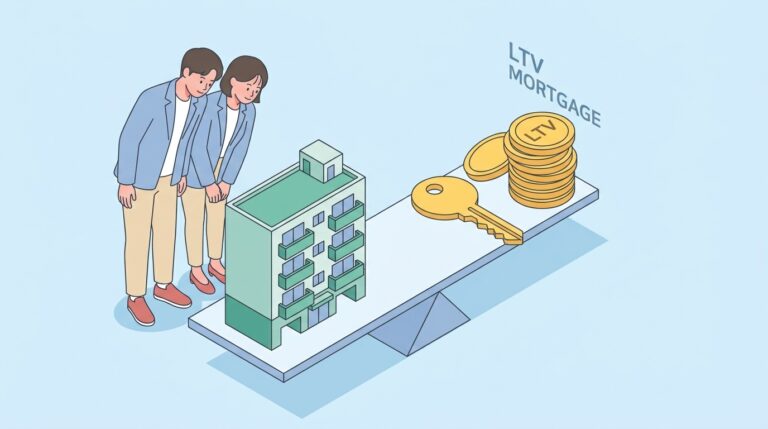
Imagine this: You are watching a highly anticipated K-drama. The protagonist, a hard-working office worker in Seoul, finally gets a chance to buy their dream apartment because the government has loosened the LTV (Loan-to-Value) limit. They pop open a bottle of somaek (소맥) in celebration! But in the very next scene, they are sitting at their desk, staring blankly at a spreadsheet showing soaring interest rates and a mountain of household debt, realizing their entire paycheck is going straight to the bank.
If you have been reading the Korean news lately or chatting with your Korean friends in their late 20s and 30s, terms like 영끌 (Yeong-kkeul – dragging every last drop of your soul to invest) and LTV 완화 (LTV deregulation) are everywhere. Navigating the Korean real estate market is tough, and discussing it in advanced Korean can feel like climbing Bukhansan in flip-flops.
Today, we are diving deep into the sophisticated world of Korean economic policy. By the end of this guide, you won’t just understand these heavy financial terms; you will be able to debate them like a seasoned Yeouido financial analyst over dinner! Let’s get started.
Phase 2: Core Expressions (핵심 표현 3선 심층 분석)
1. 주택 담보 대출 비율 (Jutaek Dambo Daechul Biyul)
- Pronunciation: Joo-taek Dam-bo Dae-chool Bee-yool (Think of “Joo” as in juice, “Daechul” sounds like day-chool)
- Meaning: Loan-to-Value (LTV) Ratio
- K-Culture Moment: You will hear this term constantly on economic debate shows like PD Notebook or in dramas dealing with realistic family struggles, where characters calculate if they can afford an apartment in Seoul.
- Editor’s Insight: Literally translated as “house mortgage loan ratio,” this is the formal, legal term. In everyday economic chat, Koreans simply use the English acronym “LTV” (엘티브이), but knowing the full Korean term is essential for formal discussions or reading news articles.
- Situation Spectrum: Casual (⚠️) / Semi-formal (✅) / Formal (✅)
- 🤔 Think About It: How does your home country regulate home loans? Is there a strict cap like Korea’s LTV, or is it more flexible? How does this impact the younger generation’s ability to buy homes?
2. 영끌 (Yeong-kkeul)
- Pronunciation: Yeong-kkeul (The “kkeul” sounds like pulling or dragging with a strong double ‘k’ sound)
- Meaning: Dragging one’s soul; borrowing to the absolute limit
- K-Culture Moment: This is a modern classic. It refers to the desperate act of pulling together every single asset, loan, and even your “soul” (영혼) to buy a house or invest in stocks before prices skyrocket.
- Editor’s Insight: This word perfectly captures the anxiety of Korea’s Millennials and Gen Z (MZ 세대) who feel that if they don’t buy a home right now, they will be left behind forever.
- Situation Spectrum: Casual (✅) / Semi-formal (✅) / Formal (⚠️ – Used in journalism, but rarely in official policy papers)
- 🤔 Think About It: Why do you think the metaphor of “pulling one’s soul” became so popular in Korea compared to just saying “highly leveraged”?
3. 가계 부채 기조 (Gagye Buchae Gijo)
- Pronunciation: Gah-gyeh Boo-chaeh Gee-joh
- Meaning: The trend/stance of household debt
- K-Culture Moment: Frequently used by news anchors reporting on the Bank of Korea’s (한국은행) monetary policy decisions and interest rate hikes.
- Editor’s Insight: “가계” means household, “부채” means debt, and “기조” means a prevailing trend or stance. This is a highly sophisticated C2-level term used when analyzing long-term economic outlooks.
- Situation Spectrum: Casual (🚫) / Semi-formal (⚠️) / Formal (✅)
- 🤔 Think About It: Is household debt considered a major national risk in your country’s current economic climate?
Phase 3: Textbook vs. Real Korean (교과서 한국어 vs 진짜 한국어)
Situation 1: Explaining that you borrowed a lot of money to buy a house.
- 📖 Textbook Korean: “주택을 구입하기 위해 많은 대출을 받았습니다.” (I received a large loan to purchase a house.)
- 🗣️ 진짜 Korean: “이번에 완전히 영끌해서 집 샀어요. 이제 숨만 쉬고 살아야 해요.”
- 💡 Why the difference? The textbook version is grammatically flawless but cold. The real-life version uses “영끌” and the classic Korean hyperbolic joke “숨만 쉬고 살아야 해요” (I have to live only breathing – meaning I have zero disposable income left after paying off the interest).
Situation 2: Expressing concern about deregulation leading to more debt.
- 📖 Textbook Korean: “대출 규제 완화는 부채를 증가시킬 위험이 있습니다.” (Easing loan regulations has the risk of increasing debt.)
- 🗣️ 진짜 Korean: “LTV를 풀면 당장은 좋아 보여도, 결국 가계 빚 폭탄으로 돌아올까 봐 걱정이에요.”
- 💡 Why the difference? Koreans love expressive compound words in discussions. “빚 폭탄” (debt bomb) is a vivid colloquial phrase that perfectly conveys the imminent danger of systemic financial collapse.
Phase 4: K-Culture Deep Dive & Non-verbal Manners
4-1. Reading the Room (Nunchi) & Body Language
When discussing real estate in Korea, Nunchi (눈치) is everything. Housing is a highly sensitive topic because of the massive wealth gap it has created.
* The Sigh (한숨): When talking about mortgage rates, a deep, slow sigh while looking down is the universal sign of solidarity. It shows you sympathize with the struggles of working-class homeowners.
* Hand Gestures: When mentioning “영끌” (Yeong-kkeul), Koreans often make a gesture of clutching their chest or pulling something heavy toward themselves with both hands, emphasizing the physical strain of dragging one’s soul.
4-2. Cultural Context: The “My Home” Obsession (내 집 마련)
In Korea, owning a home—specifically an apartment in Seoul—is not just an investment; it is the ultimate stamp of societal success and stability. This is known as 내 집 마련 (nae jip maryeon – acquiring one’s own home). Because of this deep-rooted cultural desire, any policy shifting the LTV limits instantly dominates dinner table conversations and online forums.
Phase 5: Real-Life Roleplay Scenario
Characters:
- 민우 (Min-woo): A 30-something office worker who just bought an apartment in Gyeonggi province.
- 지혜 (Ji-hye): An astute, economically savvy friend who worries about the macroeconomic trends.
Dialogue:
- 민우: 🎭 (Smiling proudly but looking slightly tired) 지혜 씨, 저 드디어 이번에 내 집 마련 성공했어요! LTV 완화 덕분에 대출이 좀 더 나오더라고요.
- 지혜: 🎭 (Surprised and congratulatory) 와, 민우 씨! 대단해요. 축하드려요! 서울 근처로 가신 거예요?
- 민우: 🎭 (Scratching his head) 네, 경기도긴 한데 서울이랑 가까워요. 진짜 영혼까지 탈탈 털어서 영끌했습니다.
- 지혜: 🎭 (Nodding sympathetically but showing slight concern) 영끌이요? 요즘 금리도 계속 오르는 추세인데, 이자 부담이 만만치 않겠어요.
- 민우: 🎭 (Sighing deeply) 맞아요. 대출 비율이 늘어나서 집은 샀지만, 매달 나가는 원리금 상환액을 보면 한숨만 나와요.
- 지혜: 🎭 (Adjusting her glasses) 이번 LTV 완화 정책이 실수요자들한테 숨통을 틔워준 건 맞는데, 전반적인 가계 부채 기조를 보면 좀 우려스럽긴 해요.
- 민우: 🎭 (Agreeing) 그러니까요. 제 주변 동료들도 너도나도 대출받아서 집 사느라 집안 빚이 장난이 아니에요.
- 지혜: 🎭 (Sighing) 정부가 규제를 풀어준 게 결국 독이 되지 않기를 바랄 뿐이에요. 아무튼 무리하신 만큼 건강 잘 챙기셔야 해요!
🔀 Interactive Choice Point
How should Min-woo respond to Ji-hye’s final worry about the debt being a potential poison?
- Option A: “맞아요. 금리가 더 오르면 진짜 감당하기 힘들 것 같아요.” (Agreement showing realistic worry)
- Option B: “에이, 설마요. 집값은 결국 우상향하니까 괜찮을 거예요.” (Optimistic view on real estate trends)
- Option C: “정부가 알아서 대책을 마련해 주겠죠.” (Passive reliance on government intervention)
💡 Feedback:
- Best Choice (Option A): Highly realistic and matches the typical Korean conversation style of sharing mutual worries to build trust.
- Risk Choice (Option B): Very common perspective in Korea, but can sound a bit naive or overly speculative depending on the listener.
- Bad Choice (Option C): Sounds too passive and detached from the harsh economic realities that Koreans take very seriously.
Phase 6: 10-Second Emotional Shadowing Drill
Practice speaking like a native by pausing at the / and adopting the specified emotion!
- [🥺 Exhausted yet proud]
진짜 / 영혼까지 탈탈 털어서 / 영끌했습니다.
(Jin-jja / yeong-hon-kka-ji tal-tal teol-eo-seo / yeong-kkeul-haet-seub-ni-da.) -
[😟 Deeply worried about the future]
금리가 더 오르면 / 진짜 / 감당하기 힘들 것 같아요.
(Geum-ri-ga deo o-reu-myeon / jin-jja / gam-dang-ha-gi him-deul geot gah-ta-yo.)
Phase 7: K-Culture Mini-Dictionary
- DSR (총부채원리금상환비율) | Debt Service Ratio
- Meaning: The ultimate gatekeeper in Korean finance. Even if LTV is relaxed, your total annual debt payments cannot exceed a certain percentage of your income.
- 하우스푸어 | House Poor
- Meaning: People who own a home but are impoverished because of the massive mortgage and interest payments they have to pay monthly.
- 금리 인상 | Interest Rate Hike
- Meaning: The absolute dread of any “Yeong-kkeul” homeowner in Korea.
- 실수요자 | End-User / Actual Buyer
- Meaning: People who buy a house to actually live in it, rather than for speculative investment (투기).
Phase 8: Survivor Kit for Travelers & Expats
Survival Phrases TOP 3
- “대출 금리가 어떻게 돼요?” (What is the mortgage interest rate?)
- Romanization: Dae-chul geum-ri-ga eo-tteo-keh dwae-yo?
- “디딤돌 대출 신청하려고 해요.” (I want to apply for the Didimdol (stepping stone) government-backed loan.)
- Romanization: Di-dim-dol dae-chul sin-cheong-ha-ryeo-go hae-yo.
- “집값 거품이 심한 것 같아요.” (I think the housing prices are highly bubbled.)
- Romanization: Jip-gapt geo-pum-i sim-han geot gah-ta-yo.
Editor’s Travel Note
If you are planning to live in Korea long-term, bookmarking the Korea Housing Finance Corporation (한국주택금융공사) website is a must. It provides official updates on various low-interest government mortgage programs for newlyweds and foreigners who qualify under specific visa classes.
Phase 9:
Frequently Asked Questions (FAQ)
Q: What does "주택 담보 대출 비율 (Jutaek Dambo Daechul Biyul)" mean in Korean and how do you pronounce it?
A: In Korean, "주택 담보 대출 비율 (Jutaek Dambo Daechul Biyul)" is pronounced [Joo-taek Dam-bo Dae-chool Bee-yool (Think of "Joo" as in juice, "Daechul" sounds like day-chool] and means: Loan-to-Value (LTV) Ratio
Q: What does "영끌 (Yeong-kkeul)" mean in Korean and how do you pronounce it?
A: In Korean, "영끌 (Yeong-kkeul)" is pronounced [Yeong-kkeul (The "kkeul" sounds like pulling or dragging with a strong double 'k' sound] and means: Dragging one's soul; borrowing to the absolute limit
Q: What does "가계 부채 기조 (Gagye Buchae Gijo)" mean in Korean and how do you pronounce it?
A: In Korean, "가계 부채 기조 (Gagye Buchae Gijo)" is pronounced [Gah-gyeh Boo-chaeh Gee-joh] and means: The trend/stance of household debt







