

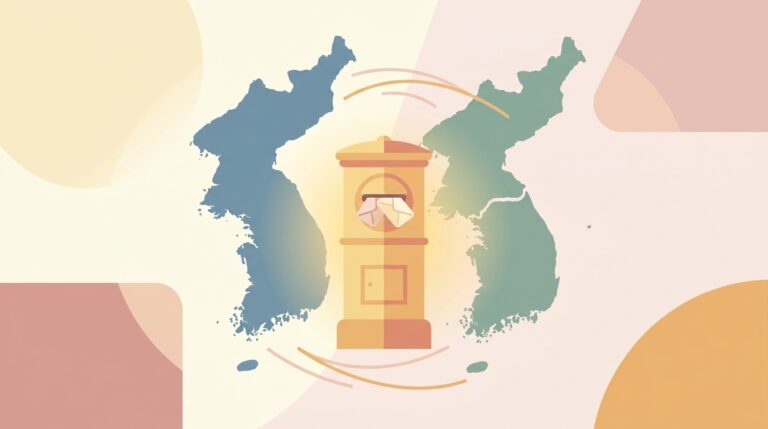
Remembering the Unhealed Scar: Navigating the Deep Vocabulary of the Korean War and Division
Phase 1: Empathy (Journey into the Heart of Korean Modern History)
안녕하세요! It’s your K-culture navigator and best friend from Daily Hangul (매일한글).
Have you ever been watching a masterpiece like TaeGukGi: The Brotherhood of War (태극기 휘날리며) or the hit drama Crash Landing on You (사랑의 불시착), only to find yourself deeply moved yet slightly lost when characters talk about family separation, ancestral hometowns, or the intangible weight of a divided nation?
As advanced (C1) learners, you already know how to order food and navigate Seoul. But to truly understand the soul of modern Korea, we must step into the deep, often bittersweet world of Korea’s modern history—specifically, the Korean War (6.25 전쟁) and the ongoing pain of division (분단의 아픔).
Many of our advanced students have told us, “I want to discuss history with my Korean friends, but I’m afraid of using insensitive terms or textbook-only phrases that sound like a lecture.” This guide is built exactly for you. Let’s explore the words that carry decades of longing, hope, and history, so you can connect with Koreans on a truly profound level.
Phase 2: Deep Dive into 3 Essential Historical Expressions
1. 실향민 (Silyangmin)
- Pronunciation: Sil-hyang-min (Sounds like “Sheel-hyahng-meen”)
- Meaning: Displaced persons / People who have lost (left behind) their ancestral hometowns in North Korea.
- K-Culture Moment: In documentaries or family dramas, elderly grandparents often look at old black-and-white photos, sighing, “나는 실향민이라 고향에 갈 수가 없어…” (Because I am a displaced person, I cannot go to my hometown…).
- Editor’s Insight: This isn’t just a political term; it’s a word soaked in tears. Sil (실) means “to lose,” and hyang (향) means “hometown.” It specifically refers to those who fled the North during the war and have been unable to return for over 70 years.
- Situation Spectrum: Casual 🚫 | Semi-formal ⚠️ | Formal ✅
- 🤔 Think About It: Does your native language have a specific word that couples “loss” with “hometown”? How does this reflect the Korean emphasis on ancestral roots?
2. 이산가족 (Isangajok)
- Pronunciation: Ee-san-ga-jok (Sounds like “Ee-sahn-gah-joke”)
- Meaning: Separated families (specifically split between North and South Korea).
- K-Culture Moment: Think of the legendary 1983 live broadcast by KBS that reunited thousands of separated families, or modern news coverage of the rare, highly emotional inter-Korean family reunions.
- Editor’s Insight: Isan (이산) means “dispersed/separated.” Unlike a simple family breakup, this term carries the tragic context of geopolitical division, where families have had zero communication—no letters, no phone calls—for decades.
- Situation Spectrum: Casual ⚠️ | Semi-formal ✅ | Formal ✅
- 🤔 Think About It: Imagine not knowing if your sibling or child is alive for 70 years. How does this reality shape the deeply emotional concept of ‘Jeong’ (정) and family ties in Korea?
3. 휴전선 (Hujeonseon)
- Pronunciation: Hyu-jeon-seon (Sounds like “Hugh-jeohn-seohn”)
- Meaning: The Military Demarcation Line / Armistice Line (literally “ceasefire line”).
- K-Culture Moment: Often visualized in military thrillers set in the DMZ (like the movie Joint Security Area – JSA).
- Editor’s Insight: Note that it is not a permanent national border (국경선). Calling it Hujeonseon emphasizes that the war is technically paused (휴전), not officially ended (종전).
- Situation Spectrum: Casual ⚠️ | Semi-formal ✅ | Formal ✅
- 🤔 Think About It: How does living just 30 miles from a active “ceasefire line” silently influence the daily psychology and mandatory military service of young South Koreans?
Phase 3: Textbook Korean vs. Real Native Korean
Situation A: Expressing the sadness of the divided peninsula
- 📖 Textbook Korean: “한국은 분단되어서 슬픕니다.” (Hangeuk-eun bundan-doeeoseo seulpeumnida. – “Korea is divided, so it is sad.”)
- 🗣️ Real Native Korean: “분단의 아픔이 여전히 우리 사회에 깊게 남아 있어요.” (Bundan-ui apeum-i yeojeonhi uri sahoe-e gipge nama isseoyo. – “The pain of division still lingers deeply within our society.”)
- 💡 Why the Difference?: The textbook version is grammatically correct but sterile. Natives use the poetic and emotionally heavy phrase 분단의 아픔 (the pain of division) to encompass the psychological, cultural, and familial scars of the war.
Situation B: Discussing the longing for reunification
- 📖 Textbook Korean: “통일을 하고 싶습니다.” (Tong-il-eul hago sipseumnida. – “I want reunification.”)
- 🗣️ Real Native Korean: “하루빨리 평화로운 남북 통일의 길이 열렸으면 좋겠어요.” (Haruppalli pyeonghwaroun nambuk tong-il-ui gil-i yeollyeosseumyeon jokesseoyo. – “I hope the path to peaceful inter-Korean reunification opens up as soon as possible.”)
- 💡 Why the Difference?: Tong-il (통일) on its own can sound like a cold political agenda. Adding phrases like “평화로운 남북 통일의 길” (the path of peaceful South-North reunification) showcases a mature, empathetic understanding of the delicate geopolitical situation.
Phase 4: K-Culture Deep Dive & Non-Verbal Manners
4-1. Demeanor & Non-Verbal Sensitivity
When discussing the Korean War or division with Koreans, especially older generations:
* Lower your voice tone: This is a subject of profound grief for many families. Avoid overly casual gestures, lighthearted laughing, or flippant remarks.
* Active Listening (경청): Nod slowly and maintain soft eye contact. If an elder shares their family history, place your hands together on your lap to show deep respect.
4-2. Cultural Code: The Art of “Han” (한) in War Melodramas
In Korean media, the war is rarely depicted as a simple “good vs. evil” action movie. Instead, it focuses on 한 (Han)—a uniquely Korean emotional state of collective grief, unresolved injustice, and deep longing. When watching modern masterpieces like Ode to My Father (국제시장), notice how the protagonist’s personal struggles mirror the national trauma. Understanding this connection is the key to unlocking C1-level cultural empathy.
Phase 5: Real-Life Roleplay Scenario
Setting: You are visiting the War Memorial of Korea (전쟁기념관) in Seoul with your Korean university senior (선배), Min-woo. As you look at the exhibit of separated families’ letters, a deep conversation begins.
Characters:
- Min-woo (민우): A thoughtful, 26-year-old Korean college student whose grandfather was a Silyangmin.
- You (Advanced Learner): An empathetic friend trying to understand the deep history.
Min-woo: (Looking at an old, torn letter) 우리 할아버지도 고향이 평양인데, 평생 가족들을 그리워하셨어.
          (Uri harabeoji-do gohyang-i Pyeongyang-inde, pyeongsaeng gajok-deul-eul geuriwohasyeosseo.)
          *🎭 Looking down with a melancholic smile.*

You: 아... 정말 마음이 아프네요. 할아버님께서 실향민이셨군요.
     (Ah... jeongmal maeum-i apeuneyo. Harabeonim-kkeseo silyangmin-isyeotgunyo.)
     *🎭 Placing a hand softly over your heart.*

Min-woo: 응, 맞아. 돌아가시기 전까지도 이산가족 상봉 신청을 하셨는데, 결국 끝내 가족들을 못 만나고 눈을 감으셨어.
          (Eung, maja. Doragasigi jeonkajido isangajok sangbong sincheong-eul hasyeotnunde, gyeolguk kkeutnae gajok-deul-eul mot mannago nun-eul gameusyeosseo.)

You: 평생을 그리움 속에 사셨을 생각을 하니 가슴이 미어집니다.
     (Pyeongsaeng-eul geurium sok-e sasyeosseul saenggak-eul hani gaseum-i mieojimnida.)
     *🎭 Speaking softly with a respectful nod.*

Min-woo: 맞아. 한반도의 분단이 단순한 역사가 아니라, 여전히 현재 진행형인 아픔이라는 걸 매번 느끼게 돼.
          (Maja. Hanbando-ui bundan-i dansunhan yeoksa-ga anira, yeojeonhi hyeonjae jinghaeng-hyeong-in apeum-irando geol maebeon neukkige dwae.)

You: 맞아요. 휴전선을 사이에 두고 같은 민족이 갈라져 있다는 현실이 참 안타까워요.
     (Majayo. Hujeonseon-eul saie dugo gateun minjok-i gallayeo itdaneun hyeonsil-i cham antakkawoyo.)

Min-woo: 그렇게 이해해 주니 정말 고마워. 다음 세대인 우리가 이 역사와 아픔을 잊지 않아야겠지?
          (Geureotge ihaehae juni jeongmal gomawo. Daeum sedae-in uri-ga i yeoksa-wa apeum-eul itji anayagetji?)

You: 네, 선배. 비록 아픈 역사지만, 평화적인 통일의 길을 계속해서 고민하고 기억하는 게 우리의 몫인 것 같아요.
     (Ne, seonbae. Birok apeun yeoksajiman, pyeonghwajeokin tong-il-ui gil-eul gyeesokhaeseo gomin-hago gieokhando ge uri-ui moks-in geot gatayo.)
     *🎭 Offering a warm, supportive look.*
🔀 Interactive Choice Point
How would you respond if Min-woo asks, “Do you think South and North Korea will ever be reunified?”
- A) “솔직히 젊은 세대들은 통일을 원치 않는다고 들었는데, 선배 생각은 어때요?”
(Honest & Critical thinking: “Honestly, I heard the younger generation doesn’t want reunification, what do you think?”)- 👉 Feedback (Best): Fantastic! It shows high cultural awareness of the generational shift in attitudes toward reunification while respectfully asking for his personal perspective.
- B) “네, 무조건 빨리 통일이 되어야 해요!”
(Overly simplistic: “Yes, reunification must happen quickly no matter what!”)- 👉 Feedback (Risk): A bit too idealistic. Advanced learners should acknowledge the complex economic and social debates surrounding unification.
- C) “글쎄요, 저랑은 상관없는 일이라 잘 모르겠어요.”
(Indifferent: “Well, it has nothing to do with me, so I don’t know.”)- 👉 Feedback (Bad): Too cold. It shuts down a meaningful conversation and lacks the empathy expected at a C1 level.
Phase 6: 10-Second Emotional Shadowing Drill
Practice speaking with authentic Korean pacing and raw emotion. Follow the pause markers (/) and channel the designated emotion.
- [🥺 Softly, feeling the tragic longing]
- “평생을 / 그리움 속에 사셨을 생각을 하니 / 가슴이 미어집니다.”
- Pyeongsaeng-eul / geurium sok-e sasyeosseul saenggak-eul hani / gaseum-i mieojimnida.
- (Thinking of how they lived their whole life in longing… my heart aches deeply.)
- [🕊️ Hopeful yet solemn]
- “비록 아픈 역사지만, / 평화로운 남북 통일의 길이 / 열렸으면 좋겠습니다.”
- Birok apeun yeoksajiman, / pyeonghwaroun nambuk tong-il-ui gil-i / yeollyeosseumyeon jokesseumnida.
- (Although it is a painful history, I hope the path to peaceful South-North reunification will open.)
Phase 7: K-Culture Mini-Dictionary
- 6.25 전쟁 (Yug-io Jeonjaeng) | The Korean War | Began on June 25th, 1950. In Korea, the war is strictly referred to by its starting date rather than “한국전쟁” in formal contexts.
- 공동경비구역 (Gongdong Gyeongbi Guyeok) | Joint Security Area (JSA) | The only portion of the DMZ where North and South Korean forces stand face-to-face. Famous as a tourist site and the setting for many historic meetings.
- 망향 (Manghyang) | Longing for one’s lost hometown | A profound literary and psychological term describing the deep yearning felt by Silyangmin.
- 종전 (Jongjeon) | Declaration of the end of the war | Distinct from Hujeon (ceasefire). The official diplomatic transition from a state of paused conflict to absolute peace.
Phase 8: Survival Kit for Travelers & Historians
Survival Expressions TOP 3
- “혹시 실례가 되지 않는다면, 전쟁 당시 이야기를 조금 들을 수 있을까요?”
- Hoksi sillye-ga doeji anneundamyeon, jeonjaeng dangsi iyagi-reul jogeum deureul su isseulkkayo?
- Pro Tip: Use this incredibly polite phrase when interviewing elders or local historians.
- “역사적인 장소라 그런지 마음이 엄숙해지네요.”
- Yeoksajeokin jangso-ra geureonji maeum-i eomsukhaejineyo.
- Pro Tip: Perfect to use when visiting places like the DMZ, Imjingak, or Seodaemun Prison.
- “이곳의 평화가 오래 지속되기를 바랍니다.”
- Igot-ui pyeonghwa-ga orae jisokdoegireul baramnida.
- Pro Tip: A respectful, neutral blessing that resonates with any Korean host.
📝 Editor’s Travel Note
When traveling to historical sites like Panmunjom (판문점) or the Demilitarized Zone (DMZ), make sure to book weeks in advance through government-approved agencies. To understand the geography of the division, download the Naver Map App to pre-plan your route from Seoul to Imjingak Peace Nuri Park. Keep in mind that photography is highly restricted in military zones—always look for signs and ask your guide before taking photos.
Phase 9: “A Step Deeper” (Cultural Essay)
To understand modern Korean society, one must realize that the Korean War is not ancient history; it is a living, breathing reality. The division of the peninsula shapes everything from South Korea’s mandatory military service (군대) to its rapid economic drive (The Miracle on the Han River), which was fueled by a desperate collective desire to rebuild from the ashes of war. When you discuss these topics with empathy, you transition from being just a foreigner who speaks Korean to someone who understands the very heartbeat of the Korean people.
💬 Your Turn: Have you ever watched a Korean movie or drama that dealt with the division of Korea? How did it make you feel? Share your thoughts in the comments below—let’s start a meaningful discussion!
Phase 10: FAQ & Avoiding Common Pitfalls
Q: Is it okay to bring up the Korean War or North Korea during casual drinking parties (술자리)?
A: Generally, it’s best to avoid it as a casual icebreaker. While younger Koreans are open to discussion, bringing up geopolitics out of nowhere can make the atmosphere unnecessarily heavy. Let the topic flow naturally if historical sites or movies are mentioned.
Q: What is the difference between ‘북한’ (Bukhan) and ‘북측’ (Bukcheuk)?
A: ‘북한’ is the standard word for North Korea used in daily life. ‘북측’ (The Northern Side) is a more formal, diplomatic, and neutral term often used in news broadcasts or official inter-Korean dialogues to show mutual respect.
Q: Why do Koreans get sensitive when the Korean War is called a “civil war” (내전)?
A: While it began as an internal conflict, it instantly became an international proxy war involving the UN, China, and the USSR. Referring to it simply as a “civil war” can sometimes minimize the massive global geopolitical tragedy that shaped the modern world.
🚨 Common Mistakes Alert!
- Mistake 1: Calling the division border a “border” (국경선 – Gukgyeongseon).
- Correct Action: Use 휴전선 (Hujeonseon – Ceasefire Line) or 군사분계선 (Gunsa-bungyeseon – Military Demarcation Line). Using “gukgyeong” implies acknowledging two separate permanent nations, which is politically sensitive.
- Mistake 2: Using overly political, polarizing terms like “빨갱이” (Red/Communist slang).
- Correct Action: Avoid cold-war era slangs. Always stick to objective terms like 북한 정권 (North Korean regime) or 북한 주민 (North Korean citizens).
- Mistake 3: Treating the war as a exciting, fictional “action movie” theme.
- Correct Action: Express solemnity (엄숙함) and respect for the lives lost.
Phase 11: Action Mission for Advanced Learners
- 🥉 Bronze Mission: Write a 3-sentence diary entry in Korean expressing your feelings about the divided family reunions using the word 이산가족.
- 🥈 Silver Mission: Share a post on your social media about a Korean historical film you watched (e.g., Ode to My Father or JSA), explaining why the concept of 분단의 아픔 is central to the plot.
- 🥇 Gold Mission: Visit a local museum or historical site (online or offline), and write a paragraph in Korean explaining the role of a 실향민 during the reconstruction era.
Phase 12: Interactive Quiz Challenge
Test your advanced understanding of Korean modern history and language nuance!
1. Which of the following terms refers specifically to people who lost access to their hometowns due to the division?
- A) 이산가족 (Isangajok)
- B) 실향민 (Silyangmin)
- C) 새터민 (Saeteomin)
🔍 Click here for the Answer & Explanation
Correct Answer: B) 실향민 (Silyangmin)
* Explanation: While Isangajok refers to separated families, Silyangmin specifically designates those who fled their native hometowns (mostly in the North) and cannot return.
2. True or False: It is culturally polite to use the term ‘국경’ (Gukgyeong) when referring to the line between South and North Korea.
🔍 Click here for the Answer & Explanation
Correct Answer: False
* Explanation: Officially, the South Korean constitution views the entire peninsula as one territory. Therefore, the line is referred to as 휴전선 (Ceasefire Line) or 군사분계선 (Military Demarcation Line), not a national border (국경).







