

안녕하세요! Welcome to Daily Hangul!
Hi there, my fellow language explorer! It’s your friendly local editor and neighborhood guide from Daily Hangul. Have you ever stood in front of a place so breathtakingly serene that you wanted to express your awe, but felt your tongue tied?
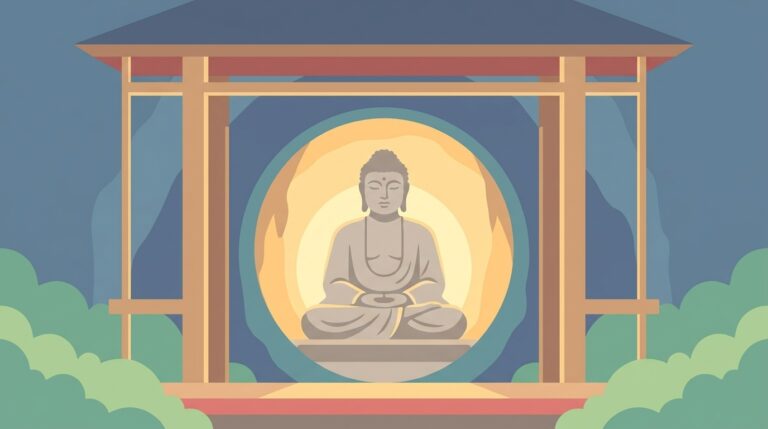
Today, we are taking a virtual trip to Gyeongju (경주), the ancient capital of the Silla Kingdom, specifically to see the magnificent Seokguram Grotto (석굴암). This artificial stone temple, nestled on Mount Toham, houses a sublime statue of Buddha looking out over the East Sea. Many of our foreign friends tell me they feel incredibly peaceful there, but struggle to find the right words to talk to locals or temple guides.
Don’t worry! Today, we will learn 3 simple, super-friendly A2-level Korean expressions that will help you share your wonder and ask simple questions at this world-famous heritage site. Let’s dive in! 🇰🇷✨
Phase 2: Deep Dive into 3 Key Expressions
1. 진짜 멋있어요! (Jinja meos-is-eoyo!)
- Pronunciation: Jeen-jah meot-eet-suh-yo! (Sounds like “Jean-ja must-eat-so-yo” without the ‘t’ in ‘must’)
- Meaning: It is truly cool! / It is beautiful!
- K-Culture Moment: Think of K-Travel shows where hosts gasp “Jinja…!” when they reach a mountain peak.
- Editor’s Insight: While “멋있다” (meos-is-da) often means “cool” or “handsome” for people, Koreans use it widely for stunning landscapes and grand architecture like Seokguram.
- Situation Spectrum: Casual (✅) / Semi-formal (✅) / Formal (⚠️)
- 🤔 Think About It: In English, we might say “It’s majestic.” Why do you think Koreans use “멋있어요” (cool/stylish) for ancient spiritual structures? It shows how we blend historical reverence with modern appreciation!
2. 사진 찍어도 돼요? (Sajin jjig-eodo dwaeyo?)
- Pronunciation: Sah-jin jjeek-uh-do dwae-yo? (Double ‘jj’ is a sharp ‘j’ sound, like the ‘j’ in jeep but stronger)
- Meaning: May I take a picture?
- K-Culture Moment: Essential before snapping a photo of the sacred Buddha behind the glass panel.
- Editor’s Insight: “~도 돼요?” (~do dwaeyo?) is the magic grammar pattern for asking permission. Use it politely with a small nod.
- Situation Spectrum: Casual (⚠️) / Semi-formal (✅) / Formal (✅)
- 🤔 Think About It: In many historical sites, flash photography is restricted. Asking permission first is a sign of high respect (Nunchi!).
- Note: Inside the Seokguram Grotto chamber, photography is actually strictly prohibited to preserve the monument. You can take photos outside!
3. 얼마나 걸려요? (Eolmana geollyeoyo?)
- Pronunciation: Uhl-mah-nah guhl-lyuh-yo?
- Meaning: How long does it take?
- K-Culture Moment: Asking the ticket officer how long the walk is from the entrance to the grotto.
- Editor’s Insight: Use this for both time and physical distance effort. It’s the ultimate survival phrase for hikers.
- Situation Spectrum: Casual (✅) / Semi-formal (✅) / Formal (✅)
- 🤔 Think About It: Time is precious when traveling. Asking “how long” helps you pace your temple walk.
Phase 3: Textbook Korean vs. Real-Life Korean
Situation 1: Expressing admiration
- 📖 Textbook: 경관이 매우 아름답습니다. (Gyeonggwan-i maeu areumdapseumnida. / The scenery is very beautiful.) – Too formal and stiff for an A2 traveler!
- 🗣️ Real-Life: 와, 진짜 멋있어요! (Wa, jinja meos-is-eoyo! / Wow, it’s truly cool!)
- 💡 Why the difference? Real Koreans express emotion instantly with short exclamation words like “와” (Wa) combined with natural polite endings.
Situation 2: Asking for directions on the trail
- 📖 Textbook: 목적지까지 소요되는 시간이 어떻게 됩니까? (Mokjeokji-kkaji soyodoeneun sigan-i eotteoke doemniba? / What is the required time to the destination?) – Sounds like a GPS voice!
- 🗣️ Real-Life: 석굴암까지 얼마나 걸려요? (Seokguram-kkaji eolmana geollyeoyo? / How long to Seokguram?)
- 💡 Why the difference? Adding “~까지” (to [place]) before “얼마나 걸려요?” makes your question incredibly natural and instantly understood.
Phase 4: K-Culture Deep Dive & Non-Verbal Manners
4-1. Temple Manners (Nunchi & Gestures)
When visiting Seokguram, silence is golden.
* The Soft Bow (반배 – Ban-bae): When entering the shrine area, slightly bend your upper body (about 15 degrees) with your hands placed gently together in front of your chest (합장 – Hapjang). This non-verbal gesture shows immense respect to the local culture and monks.
* Keep it quiet: Do not speak loudly or point directly at the Buddha statue.
4-2. The Silla Dynasty in K-Dramas
Seokguram is a masterpiece of the Silla Kingdom. If you want to feel the vibe of this era before visiting, watch the famous K-Drama Queen Seondeok (선덕여왕). It beautifully portrays the spiritual and political atmosphere of ancient Gyeongju!
Phase 5: Real-Life Roleplay Scenario
Setting: The ticket booth and trail leading up to Seokguram Grotto.
Character: Min-woo (민우), a friendly temple staff member wearing a warm vest.
- Min-woo: 안녕하세요! 석굴암에 오신 것을 환영합니다.
(Annyeonghaseyo! Seokguram-e osin geoseul hwanyeonghamnida.)
“Hello! Welcome to Seokguram.” - You (🎭 Excitedly): 안녕하세요! 석굴암 올라가고 싶어요.
(Annyeonghaseyo! Seokguram ollagago sipeoyo.)
“Hello! I want to go up to Seokguram.” - Min-woo: 네, 이 길로 쭉 올라가시면 됩니다.
(Ne, i gillo jjuk ollagasymyeon doemnida.)
“Yes, just go straight up this path.” - You (🎭 Curious): 여기서 석굴암까지 얼마나 걸려요?
(Yeogiseo Seokguram-kkaji eolmana geollyeoyo?)
“How long does it take from here to Seokguram?” - Min-woo: 걸어서 15분 정도 걸려요. 길이 아주 예쁩니다.
(Georeoseo sib-o-bun jeongdo geollyeoyo. Giri aju yeoppeumnida.)
“It takes about 15 minutes on foot. The path is very pretty.” - You (🎭 Arriving at the top): 와, 진짜 멋있어요! 안에 사진 찍어도 돼요?
(Wa, jinja meos-is-eoyo! Ane sajin jjig-eodo dwaeyo?)
“Wow, it’s truly cool! Can I take photos inside?” - Min-woo (🎭 Gently waving hands): 아, 안에서는 사진 촬영이 안 돼요. 밖에서는 괜찮습니다!
(Ah, an-eseoneun sajin chwaryeong-i an dwaeyo. Bakk-eseoneun gwaenchanhseumnida!)
“Ah, photos are not allowed inside. Outside is fine!” - You (🎭 Understanding): 아, 그렇군요. 감사합니다!
(Ah, georeokgunyo. Gamsahamnida!)
“Ah, I see. Thank you!”
🔀 Interactive Choice Point
Min-woo tells you photography is not allowed inside. How do you respond?
* A) “왜 안 돼요? 찍고 싶어요!” (Why not? I want to shoot!)
* B) “아, 그렇군요. 알겠습니다!” (Ah, I see. Understood!)
* C) (Silently snap a quick photo with your phone on silent mode)
Choice Feedback:
- Best Choice (B): Perfect! It shows you respect the local rules and cultural heritage.
- Bad Choice (A): A bit too demanding for temple manners. Rules are there to preserve the ancient stone.
- Risk Choice (C): High Risk! Temple staff or CCTV will spot you, and it is considered very disrespectful.
Phase 6: 10-Second Emotion Shadowing Drill
Practice speaking with real Korean feelings!
- [😊 Amazed and Happy]
“와 / 진짜 / 멋있어요!”
(Wa / jin-ja / meos-is-eoyo!) -
[🤔 Politely Inquiring]
“저기요, / 얼마나 / 걸려요?”
(Jeogiyo, / eol-ma-na / geol-lyeo-yo?) -
[🥺 Hoping for permission]
“여기… / 사진 / 찍어도 돼요?”
(Yeogi… / sa-jin / jji-geo-do / dwae-yo?)
Phase 7: K-Culture Mini Dictionary
- 석굴암 (Seokguram): Stone Grotto temple. Famous for its engineering and spiritual beauty.
- 경주 (Gyeongju): A city known as “the museum without walls.” The ancient capital of Silla.
- 사찰 (Sachal): Buddhist Temple. Often located deep in beautiful mountains.
- 문화재 (Munhwajae): Cultural Heritage/Property. Something precious to preserve.
Phase 8: Traveler’s Survival Kit
Survival Expressions
- 화장실 어디예요? (Hwajangsil eodi-yeyo?) | Where is the restroom? | Pro Tip: Look for the sign “화장실” near the ticket office.
- 입장료 얼마예요? (Ipjangryo eolmayeyo?) | How much is the admission fee? | Pro Tip: Seokguram is actually free to enter now (as of recent cultural policy updates), but always good to ask!
- 도와주세요. (Dowajuseyo.) | Please help me. | Pro Tip: Use this if you get lost on the mountain trail.
Editor’s Travel Note
- Essential App: Download the KakaoMap App or Naver Map App before going to Gyeongju. Google Maps does not work well for transit routes in Korea.
- Disclaimer: Temple entry regulations and bus schedules may change. Check official local tourist info before visiting.
Phase 9: “One Step Deeper” (Thinking Question)
In Korea, mountains are not just nature; they are sacred spaces. For over a thousand years, people climbed Mount Toham to make wishes. When you walk up the quiet forest path to Seokguram, you are walking the same path ancient queens, kings, and commoners walked.
💬 Your Turn: If you stood in front of the peaceful Buddha of Seokguram today, what wish would you make? Let me know in the comments below!
Phase 10: FAQ & Common Mistakes
Q: Can I take photos of the Buddha statue at Seokguram?
A: No, photography inside the glass grotto chamber is strictly prohibited to protect the ancient granite structure from light damage. However, you can take beautiful pictures of the mountain view and the temple exterior!
Q: Is the hike to Seokguram very difficult?
A: Not at all! The path from the ticket booth/parking lot to the Grotto is a relatively flat, well-maintained gravel path through a forest. It takes about 10-15 minutes of easy walking.
Q: Do I need to pay to enter?
A: As of mid-2023, national cultural heritage temple entrance fees (including Seokguram) have been waived for public visitors. However, double-check local parking fees if you are driving.
🚨 Common Mistakes Alert!
- Mistake 1: Saying “사진 찍어!” (Sajin jjigeo!) to a stranger.
- Why: It’s banmal (informal). They might feel offended.
- Correct Action: Always add “~요” -> “사진 찍어도 돼요?”
- Mistake 2: Walking in the middle of the path where monks walk.
- Why: Some temples have paths reserved for ritual walks.
- Correct Action: Walk gently on the side paths.
Phase 11: Action Mission
- Bronze Medal 🥉: Read the phrase “진짜 멋있어요!” out loud three times with different emotions.
- Silver Medal 🥈: Write a comment below using the phrase “[My Country] 진짜 멋있어요!” (e.g., “New York 진짜 멋있어요!”).
- Gold Medal 🥇: Next time you see a beautiful K-drama landscape scenery, pause it and say out loud: “와, 진짜 멋있어요!”
Phase 12: Interactive Quiz Challenge
1. Which phrase means “How long does it take?”
- A) 사진 찍어도 돼요?
- B) 진짜 멋있어요!
- C) 얼마나 걸려요?
2. (True/False) You can take flash photography inside the Seokguram Grotto chamber.
- A) True
- B) False
🎉 Click here to reveal the answers!
- Correct Answer: C (얼마나 걸려요? is used to ask about time duration!)
- Correct Answer: B (False! Photography inside the chamber is strictly banned to preserve the cultural asset.)







