

Speak Like a Local: Your Guide to Buying Roses at a Korean Flower Shop
Phase 1: Empathy (Welcome to the Flower Shop!)
안녕하세요! (Annyeonghaseyo!) I’m your Daily Hangul editor, and today we’re stepping into the beautiful world of Korean florists.
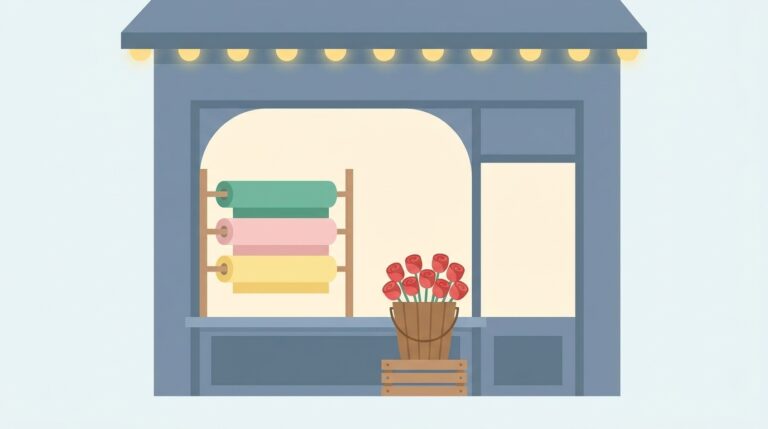
Imagine this: You’re walking down a charming street in Hongdae or Garosu-gil. You pass a cozy, sweet-smelling flower shop (꽃집 – kkot-jip) decorated with elegant pastel-wrapped bouquets. You want to buy a beautiful rose for your friend, your partner, or even just to brighten up your own Airbnb room. But as you step closer, you freeze. How do you ask for roses without sounding like a robotic translation app?
Don’t worry! Many of our learners have shared that they felt intimidated by the counter systems and formal wrapping requests in Korean. Today, we’ll turn that anxiety into pure confidence. By the end of this quick guide, you’ll know exactly how to order roses like a true Seoulite, complete with the perfect cultural etiquette. Let’s dive in!
Phase 2: Deep Dive into 3 Key Expressions
1. 장미꽃 주세요. (Jang-mi-kkot ju-se-yo.)
- Pronunciation: Jang-mi-kkot joo-seh-yo (Sounds like “Jahng-mee-kkot” with a short, soft ‘t’ sound at the end, followed by “joo-seh-yo”).
- Meaning: “Please give me roses.”
- K-Culture Moment: This is the ultimate classic line you hear in sweet K-Dramas right before a romantic confession. Simple, polite, and instantly understood.
- Editor’s Insight: While “주세요” literally means “give me,” it is incredibly polite in Korean and serves as the go-to phrase for ordering anything.
- Situation Spectrum: Casual ✅ | Semi-formal ✅ | Formal ⚠️
- 🤔 Think About It: In English, saying “give me” can sound demanding. In Korean, adding “주세요” (ju-se-yo) instantly makes it warm and polite. How does this shift your perspective on Korean directness?
2. 빨간 장미로 주세요. (Ppal-gan jang-mi-ro ju-se-yo.)
- Pronunciation: Ppal-gahn jahng-mee-ro joo-seh-yo (Make the double ‘pp’ in “Ppal” tense, like the ‘p’ sound in the English word “spit”).
- Meaning: “Please give me the red roses.”
- K-Culture Moment: On May 14th, Korea celebrates “Rose Day,” where couples express their love by exchanging fresh red roses.
- Editor’s Insight: The tiny word 로 (ro) means “by” or “with.” It’s used here to select a specific option from various colors.
- Situation Spectrum: Casual ✅ | Semi-formal ✅ | Formal ⚠️
- 🤔 Think About It: Choosing a color shows your taste! In Korean, attaching “~로” to your choice makes your order sound smooth and natural.
3. 예쁘게 포장해 주세요. (Ye-ppeu-ge po-jang-hae ju-se-yo.)
- Pronunciation: Yeh-ppeu-geh poh-jahng-hae joo-seh-yo (“Ye-ppeu-ge” means beautifully, and “po-jang” means wrapping/packaging).
- Meaning: “Please wrap it beautifully.”
- K-Culture Moment: Korean flower wrapping is an art form! Florists use multiple layers of neutral-toned tissue paper, mesh, and elegant ribbons to make even a single flower look like a masterpiece.
- Editor’s Insight: Never skip this phrase! It tells the florist you appreciate their craft, and they will put extra care into making your bouquet look stunning.
- Situation Spectrum: Casual ✅ | Semi-formal ✅ | Formal ⚠️
- 🤔 Think About It: Presentation is a huge part of gift-giving culture in Korea. How does this compare to gift-wrapping customs in your home country?
Phase 3: Textbook Korean vs. Real Korean
Let’s look at how textbooks sometimes overcomplicate things compared to how native Koreans actually speak.
Scenario 1: Requesting Roses
- 📖 Textbook Korean: 장미꽃을 원합니다. (Jang-mi-kkot-eul won-ham-ni-da. – “I want roses.”)
- 🗣️ Real Korean: 장미꽃 주세요. (Jang-mi-kkot ju-se-yo. – “Please give me roses.”)
- 💡 Why? “원하다” (to want) sounds overly dramatic and textbook-heavy. Real Koreans always use “주세요” (ju-se-yo) for a natural, friendly vibe.
Scenario 2: Specifying the Quantity
- 📖 Textbook Korean: 장미 다섯 개를 주십시오. (Jang-mi da-seot gae-reul ju-sip-si-o. – “Please grant me five pieces of roses.” – very stiff/military-like.)
- 🗣️ Real Korean: 장미 다섯 송이 주세요. (Jang-mi da-seot song-i ju-se-yo. – “Please give me five stems of roses.”)
- 💡 Why? While “개” (gae) is a general counter, flowers have their own beautiful counter word: 송이 (song-i), which means “stem” or “blossom.” Using “송이” instantly elevates your Korean level!
Phase 4: K-Culture Deep Dive & Non-verbal Manners
4-1. Nunchi (눈치) & Hand Gestures
In Korea, non-verbal respect is just as important as the words you speak. When the florist hands you the beautifully wrapped bouquet, always receive it with both hands (두 손 – du son) while giving a slight, respectful nod. If you are paying with a physical card, hand the card to the florist using both hands as well. This shows excellent manners and makes a wonderful impression!
4-2. The Korean Flower Language
In Korea, the color of the rose you choose carries deep meaning:
* Red Roses (빨간 장미): Passionate, romantic love.
* Pink Roses (분홍 장미): Sweet, happy love and grace.
* White Roses (하얀 장미): Purity and new beginnings (often used in graduation bouquets).
Phase 5: Real-Life Roleplay Scenario
Let’s practice! You’ve just walked into a lovely flower shop in Mapo-gu. The florist, Min-ji, greets you with a bright smile.
Characters:
* 민지 (Min-ji): The warm and friendly florist.
* You (Learner): Eager to buy some fresh roses.
- 민지: 어서 오세요! 어떤 꽃 찾으세요?
(Eo-seo o-se-yo! Eo-tteon kkot chat-eu-se-yo?)
🎭 [Smiling warmly] Welcome! What kind of flowers are you looking for? -
You: 안녕하세요! 혹시 장미꽃 있어요?
(An-nyeong-ha-se-yo! Hok-si jang-mi-kkot is-seo-yo?)
🎭 [Politely nodding] Hello! By any chance, do you have roses? -
민지: 네, 있어요! 어떤 색깔을 좋아하세요?
(Ne, is-seo-yo! Eo-tteon saek-kkal-eul jo-a-ha-se-yo?)
🎭 [Pointing to a fresh batch of colorful roses] Yes, we do! What color do you like? -
You: 빨간 장미로 다섯 송이 주세요.
(Ppal-gan jang-mi-ro da-seot song-i ju-se-yo.)
🎭 [Indicating the red roses with your hand] Please give me five red roses. -
민지: 네, 알겠습니다. 선물하실 건가요?
(Ne, al-get-seum-ni-da. Seon-mul-ha-sil geon-ga-yo?)
🎭 [Tilting her head slightly] Sure, understood. Is it for a gift? -
You: 네, 예쁘게 포장해 주세요.
(Ne, ye-ppeu-ge po-jang-hae ju-se-yo.)
🎭 [With an expectant smile] Yes, please wrap it beautifully. -
민지: 네, 정성껏 포장해 드릴게요. 잠시만 기다려 주세요!
(Ne, jeong-seong-kkeot po-jang-hae deu-ril-ge-yo. Jam-si-man gi-da-ryeo ju-se-yo!)
🎭 [Heading to her wrapping table] Okay, I’ll wrap it with care. Please wait a moment! -
You: 감사합니다!
(Gam-sa-ham-ni-da!)
🎭 [Bow slightly as you wait] Thank you!
🔀 Interactive Choice Point
Imagine the florist asks: “선물하실 건가요?” (Is it a gift?) What is your move?
- Choice A: “아니요, 그냥 장미 원해요.” (An-i-yo, geu-nyang jang-mi won-hae-yo.)
👉 Feedback: Risk. This sounds grammatically rigid and slightly cold. Florists will understand, but it lacks warmth. - Choice B: “네, 예쁘게 포장해 주세요.” (Ne, ye-ppeu-ge po-jang-hae ju-se-yo.)
👉 Feedback: Best! Polite, clear, and ensures your bouquet gets the beautiful Korean aesthetic wrapping. - Choice C: “응, 포장.” (Eung, po-jang.)
👉 Feedback: Bad. This uses Banmal (casual language) which is rude to use with a florist you’ve just met. Always use 존댓말 (polite language)!
Phase 6: 10-Second Emotion Shadowing Drill
Practice saying these out loud with the correct intonation and emotion! Use the / marks to pause briefly.
- “장미꽃 / 주세요!”
- [😊 Friendly & Bright]
- Jang-mi-kkot / ju-se-yo!
- “빨간 장미 / 다섯 송이 / 주세요.”
- [🧐 Confident & Clear]
- Ppal-gan jang-mi / da-seot song-i / ju-se-yo.
- “예쁘게 / 포장해 주세요!”
- [🥺 Excited & Sweetly requesting]
- Ye-ppeu-ge / po-jang-hae ju-se-yo!
Phase 7: K-Culture Mini Dictionary
- 꽃집 (Kkot-jip): Flower shop. Literally, “flower house.”
- 송이 (Song-i): Counter for flowers. Always pair this with native Korean numbers (한 송이 – one stem, 두 송이 – two stems, 세 송이 – three stems, etc.).
- 포장 (Po-jang): Wrapping/Packaging. This word is also used for food takeout (포장해 주세요 – please pack it to go).
- 로즈데이 (Ro-jeu-de-i): Rose Day. Observed on May 14th in Korea as a romantic day to confess feelings or celebrate love with roses.
Phase 8: Traveler’s Survival Kit
Survival Expressions TOP 3
- 이거 얼마예요? (I-geo eol-ma-ye-yo?) – How much is this?
- 카드 돼요? (Ka-deu dwae-yo?) – Do you accept cards? (Almost all Korean flower shops accept major international credit cards).
- 추천해 주세요. (Chu-cheon-hae ju-se-yo.) – Please recommend something. (Perfect if you aren’t sure which flowers look best together).
Editor’s Travel Note: To find the most aesthetic flower shops nearby, download the Naver Map App instead of using foreign mapping apps, which often lack updated local business details.
Phase 9: “One Step Deeper” (Cultural Reflection)
In Korea, gift-giving is deeply connected to the concept of 정 (Jeong)—a feeling of warm attachment, bond, and affection. When you buy flowers, it is rarely just a transactional purchase. Korean florists often take immense pride in their styling. If you are exceptionally polite and use words like “송이” (song-i) and “예쁘게 포장해 주세요,” don’t be surprised if the owner gives you a little extra foliage or a small flower for free as 서비스 (Seo-bi-seu – a freebie / complimentary service). It’s their way of sharing “Jeong” with you!
💬 Your Turn: Have you ever bought flowers in Korea? What color rose would you choose to give to someone special? Tell us in the comments below!
Phase 10: FAQ & Avoiding Misunderstandings
Q: Can I buy just a single rose?
A: Absolutely! Single-stem wrapped roses (한 송이 장미 – han song-i jang-mi) are incredibly popular in Korea for casual gifts, dates, or school events. They are styled beautifully with specialized mini-wrapping.
Q: Do I need to book in advance?
A: For a single flower or a basic small bouquet, walk-ins are perfectly fine. However, during major Korean holidays like Parents’ Day (어버이날 – May 8th) or graduation seasons (February), flower shops are extremely busy, so pre-ordering is recommended.
Q: What is the correct counter for counting roses?
A: Use 송이 (song-i). For example: 한 송이 (one stem), 세 송이 (three stems), 다섯 송이 (five stems). Avoid using the general item counter “개” (gae) when talking to a florist to sound more natural.
🚨 Common Mistakes Warning Board
- Mistake 1: Saying “장미를 원해요” (Jang-mi-reul won-hae-yo).
- Correct Action: Say “장미 주세요” (Jang-mi ju-se-yo). It sounds much more natural and polite.
- Mistake 2: Using standard counters like “다섯 개” (da-seot gae) for flowers.
- Correct Action: Use “다섯 송이” (da-seot song-i). It shows you respect the nuances of the Korean language!
Phase 11: Action Mission
- Bronze Medal: Read “장미꽃 주세요” (Jang-mi-kkot ju-se-yo) out loud three times with a bright smile.
- Silver Medal: Take a picture of any rose you see today and post it on your social media with the caption: “빨간 장미 주세요! #DailyHangul”.
- Gold Medal: Head to a local flower shop or practice with a language exchange partner, and order exactly: “빨간 장미 세 송이 예쁘게 포장해 주세요!”
- 🎮 K-Culture Mission: Watch a romance K-Drama this week and listen closely for the words “꽃집” (kkot-jip) or “포장” (po-jang). Let us know which drama you spotted them in!
Phase 12: Interactive Quiz Challenge
Test your new skills! Click on the toggle boxes below to check your answers.
Q1. What is the correct way to say “Please wrap it beautifully” in Korean?
👉 Click to reveal the Answer
Answer: 예쁘게 포장해 주세요. (Ye-ppeu-ge po-jang-hae ju-se-yo.)
Explanation: “예쁘게” means beautifully, and “포장해 주세요” means please wrap it.
Q2. Which counter is used for counting individual stems of flowers?
👉 Click to reveal the Answer
Answer: 송이 (song-i)
Explanation: While “개” (gae) is a general counter, “송이” is the beautiful and correct counter specifically for flowers.
Q3. True or False: “장미를 원해요” is the most natural way to order roses from a Korean florist.
👉 Click to reveal the Answer
Answer: False.
Explanation: “원하다” (to want) is rarely used in spoken Korean shopping contexts. Use “장미 주세요” (Jang-mi ju-se-yo) instead!
“, 200:







