

Phase 1: Empathy (스토리 몰입형 오프닝)
안녕하세요! (Annyeonghaseyo!) Welcome back to Daily Hangul! Your go-to spot for navigating real-life Korea like a true local. 🌟
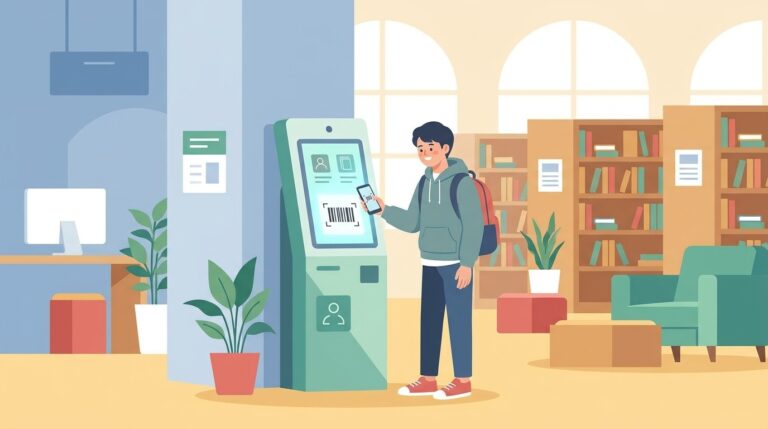
Imagine this: You step into a beautiful, quiet library in Seoul on a rainy afternoon. The atmosphere is perfect for study, filled with the soft rustling of pages and the gentle hum of white noise. You want to study in the reading room (열람실), but there’s a catch—all the desks are numbered, and there is a high-tech ticketing kiosk (좌석 발급기) standing between you and your study goals.
Everyone around you is confidently scanning their student IDs or phone barcodes, grabbing a small printed ticket, and heading inside. You stand there, looking at the screen full of Korean menus, feeling a sudden wave of panic. ‘Should I ask for help? What if I press the wrong button and take someone’s seat?’
Don’t worry! This is a classic ‘pain point’ for many international students and travelers in Korea. Today, we’re going to break down the exact phrases, cultural nuances, and digital steps you need to secure your perfect study spot with confidence. This guide is built based on real feedback from expats who went from ‘kiosk panic’ to ‘library regulars.’ Let’s dive in!
Phase 2: Core Phrases (핵심 표현 3선 심층 분석)
1. 좌석 발급기 어디에 있어요? (Jwaseok balgeupgi eodie isseoyo?)
- Pronunciation: “jwa-seok bal-geup-gi eo-di-e itt-seo-yo?” (Think of ‘jwa’ like ‘jaw’ but sharper, and ‘seok’ like ‘suck’ with a very short ‘u’ sound.)
- Meaning: “Where is the seat ticketing machine?”
- K-Culture Moment: You will see university students in popular K-Dramas like Cheese in the Trap or Law School rushing through the lobby during midterm season, scanning their surroundings for this exact machine.
- Editor’s Insight: “좌석” (jwaseok) means ‘seat’, and “발급기” (balgeupgi) means ‘issuing machine/kiosk’. In Korea, almost all public libraries use automated kiosks to allocate seats to prevent overcrowding.
- Situation Spectrum:
- Casual: ⚠️ (Only with close friends: 좌석 발급기 어디 있어?)
- Semi-formal: ✅ (Perfect for library staff or strangers: 좌석 발급기 어디에 있어요?)
- Formal: ✅ (Highly polite: 좌석 발급기가 어디에 있습니까?)
- 🤔 Think About It: How does digital convenience change the way we interact in public spaces? In Korea, kiosks reduce face-to-face friction but require a bit of linguistic prep!
2. 열람실 자리 있어요? (Yeollamsil jari isseoyo?)
- Pronunciation: “yeol-lam-sil ja-ri itt-seo-yo?” (The ‘l’ sound in ‘yeol’ blends smoothly into ‘lam’ making it sound like ‘yol-lam’.)
- Meaning: “Are there seats left in the reading room?” (Literal: “Is there reading room space?”)
- K-Culture Moment: This is the ultimate question asked by study groups right before finals, as seen in school dramas like Reply 1988 when the gang heads to the local neighborhood study rooms.
- Editor’s Insight: While “좌석” (jwaseok) is the formal word for seat, native Koreans almost always use “자리” (jari) in spoken conversation. It sounds much warmer and more natural.
- Situation Spectrum:
- Casual: ✅ (열람실 자리 있어?)
- Semi-formal: ✅ (열람실 자리 있어요?)
- Formal: ⚠️ (열람실에 좌석이 남아 있습니까?)
- 🤔 Think About It: “자리” can mean ‘seat’, ‘spot’, ‘space’, or even ‘position’ in a company. Why do you think Korean uses one word for all these physical and social spaces?
3. 이용 시간을 연장하고 싶어요. (Iyong siganeul yeonjanghago sipeoyo.)
- Pronunciation: “i-yong si-gan-eul yeon-jang-ha-go sip-eo-yo.”
- Meaning: “I would like to extend my usage time.”
- K-Culture Moment: If you are pulled into a deep study session (or watching K-Pop content under the guise of study!), you’ll need this. Korean libraries usually limit initial bookings to 3-4 hours, which you must manually extend to keep your spot.
- Editor’s Insight: “연장” (yeonjang) is an incredibly versatile word. You will use it for library seats, extending a rental car lease, or even adding hours at a karaoke room (노래방)!
- Situation Spectrum:
- Casual: ⚠️ (이용 시간 연장하고 싶어.)
- Semi-formal: ✅ (이용 시간을 연장하고 싶어요.)
- Formal: ✅ (이용 시간 연장 신청을 하고자 합니다.)
- 🤔 Think About It: Setting time limits on library desks promotes community sharing. How does this reflect the Korean value of public consideration?
Phase 3: Textbook Korean vs. Real Korean
Let’s compare what standard grammar books teach you versus what you will actually hear in a lively Korean library.
Set 1: Reserving a seat
- 📖 Textbook Korean: “좌석을 예약해 주십시오.” (Jwaseogeul yeyakae jusipsio.) – “Please reserve a seat.”
- 🗣️ Real Korean: “자리 좀 잡아 줄래?” (Jari jom jaba jullae?) – “Can you grab/save me a spot?”
- 💡 Why is it different? The textbook phrase is too robotic and is only seen on printed signs. Real friends ask each other to “hold or grab” a spot using the active verb “잡다” (to grab).
Set 2: Running out of time
- 📖 Textbook Korean: “이용 기한이 만료되었습니다.” (Iyong gihani mallyodeoieossseumnida.) – “The usage period has expired.”
- 🗣️ Real Korean: “시간 다 됐어요.” (Sigan da dwaesseoyo.) – “Time’s up! / Time is fully done.”
- 💡 Why is it different? While the kiosk might display the legalistic word “만료” (expiration), native speakers will simply tell you that the time “is done” (다 됐다) in everyday chats.
Phase 4: K-Culture Deepdive & Non-verbal Manners
4-1. 눈치 (Nunchi) & Library Etiquette
In Korean libraries, practicing “Nunchi” (tact/social situational awareness) is crucial. Here are some silent manners to observe:
* The Silent Bow (목례): When you walk past someone in the narrow aisles of the reading room, do not say “죄송합니다” out loud. Instead, make brief eye contact and do a quick 15-degree nod of the head.
* Kiosk Speed: When standing at the seat kiosk, try to have your card or app barcode open beforehand. Standing there searching through your bag can cause a quiet, invisible sigh from the busy students queuing behind you.
4-2. Culture Code: 독서실 (Dokseosil) vs. 카공족 (Kagongjok)
Korea has a unique dual-track study culture.
* On one hand, you have the ultra-quiet 독서실 (Premium Study Rooms) and public libraries where complete silence is demanded.
* On the other, you have the 카공족 (Kagongjok – Cafe Study Tribe), who prefer the white noise of trendy cafes. Knowing which vibe you want will dictate where you head for the day!
Phase 5: Real-Life Roleplay Scenario
Background: Alex is trying to issue a reading room seat at the local district library. He is confused by the kiosk options and asks Suyeon, a friendly library assistant standing nearby, for assistance.
- Suyeon (수연): 안녕하세요! 도 도움이 필요하신가요?
(Annyeonghaseyo! Do- doumi piryohasingayo?)
(Hello! Do you need some help?) -
Alex (알렉스):
🎭 Confused, pointing at the kiosk screen
네, 열람실 좌석을 발급받고 싶은데 어떻게 해야 해요?
(Ne, yeollamsil jwaseogeul balgeupbatgo sipeunde eotteoke haeya haeyo?)
(Yes, I want to get a reading room seat issued, but how do I do it?) -
Suyeon (수연):
🎭 Smiling, pointing to the card reader
아, 회원증이나 모바일 바코드가 있으신가요?
(A, hoewonjeungina mobail bakodeuga isseusingayo?)
(Ah, do you have a membership card or a mobile barcode?) -
Alex (알렉스):
🎭 Searching his phone
여기 모바일 바코드 있어요. 여기에 찍으면 되나요?
(Yeogi mobail bakodeu isseoyo. Yeogie jjigeumyeon doenayo?)
(Here is my mobile barcode. Do I scan it here?) -
Suyeon (수연): 네, 거기에 스캔해 주시고 화면에서 원하시는 자리를 누르시면 돼요.
(Ne, geogie seukaenhae jusigo hwamyeoneoseo wonhasineun jarireul nureusimeon dwaeyo.)
(Yes, scan it there and then just press the seat you want on the screen.) -
Alex (알렉스):
🎭 Tapping the screen
아, 자리를 선택했어요. 이 표를 가지고 들어가면 되죠?
(A, jarireul seontaekaesseoyo. I pyoreul gajigo deureogamyeon doejo?)
(Ah, I selected a seat. I can just go in with this ticket, right?) -
Suyeon (수연): 네, 맞아요. 기본 3시간 이용 가능하고, 나중에 연장하실 수 있어요.
(Ne, majayo. Gibon sasigan iyong ganeunghago, najunge yeonjanghasil su isseoyo.)
(Yes, that’s right. It’s available for 3 hours basic, and you can extend it later.) -
Alex (알렉스):
🎭 Bowing slightly
친절하게 설명해 주셔서 정말 감사합니다!
(Chinjeolhage seolyeonghae jusyeoseo jeongmal gamsahabnida!)
(Thank you so much for explaining it so kindly!)
🔀 Interactive Branch Points:
What should Alex do if he finishes studying early?
* A) Just walk out with his things.
Feedback: ❌ (Bad! In Korea, if you leave without checking out, the seat remains locked, preventing other students from studying. Always check out at the kiosk!)
* B) Press ‘퇴실’ (Toesil / Check-out) at the kiosk and scan his barcode.
Feedback: (Best! This immediately frees up the seat for others and keeps your library record clean!)
* C) Give his printed ticket to a random person outside.
Feedback: ⚠️ (Risk! The ticket is registered to your personal account. If they violate library rules, it could impact your membership.)
Phase 6: 10-Second Emotion Shadowing Drill
Practice saying these out loud to sound incredibly natural!
[😊 Joyful & Relieved]
와! / 마침내 / 자리 잡았다!
(Wa! / machimnae / jari jabatta!)
(Wow! / Finally / I got a seat!)-
[🥺 Desperate & Rushed]
혹시 / 열람실 자리 / 남은 거 있어요?
(Hoksi / yeollamsil jari / nameun geo isseoyo?)
(By any chance, / are there any / reading room seats left?)
Phase 7: K-Culture Mini Dictionary
- 열람실 (Yeollamsil) | Reading Room | The specific quiet zone in a library dedicated entirely to self-study.
- 학생증 (Haksaengjeung) | Student ID | Used at university libraries to bypass security gates and scan kiosks.
- 배정 (Baejeong) | Assignment/Allocation | Commonly seen on kiosk screens as ‘좌석 배정’ (Seat Allocation).
- 퇴실 (Toesil) | Check-out/Leave | The button you MUST press on the kiosk when leaving the library for the day.
Phase 8: Traveler’s Survival Kit
Top 3 Survival Expressions:
- 여기 카드 돼요? (Yeogi kadeu dwaeyo?) – Does this kiosk accept international cards?
- 비밀번호 잊어버렸어요. (Bimilbeonho ijeobeoryeosseoyo.) – I forgot my login/pin password.
- 와이파이 이름이 뭐예요? (Waipai ireumi mwoyeyo?) – What is the Wi-Fi name?
📌 Editor’s Travel Note:
To access public libraries in Seoul, it is highly recommended to download the official Seoul Public Library App (서울도서관 앱). It allows you to create a virtual membership card instantly and skip physical paperwork! (Note: Library fees and operational policies may change, so always check the local district website for the most current updates before visiting.)
Phase 9: “한 발 더 깊이” (Deep Dive Question)
In many countries, leaving your laptop, tablet, or phone unattended at a library table while you go grab lunch is an invitation for theft. However, in Korea, you will frequently see rows of empty desks with expensive iPads and MacBooks left completely out in the open. This phenomenon stems from a deep-rooted social trust and community respect in Korea, where stealing someone else’s study gear is universally looked down upon.
💬 Your Turn: Have you ever noticed this level of safety in Korean public spaces? Or would you still feel too nervous to leave your phone on a library desk? Let us know in the comments below!
Phase 10: FAQ & Common Mistakes (FAQ Schema)
Q: Can foreigners use Korean public libraries without a residency card?
A: Yes! While you can enter and read books inside the open halls freely, reserving a private reading room seat at a kiosk usually requires a library membership card, which can be issued at the information desk using your Passport or Alien Registration Card (ARC).
Q: What happens if I forget to press ‘퇴실’ (Check-out) when I leave?
A: If you leave without checking out multiple times, the library system might temporarily restrict you from booking seats for a week or more as a penalty for taking up unused space.
Q: Is there a fee to use the reading rooms?
A: Public library reading rooms managed by the city or local districts are almost always 100% free of charge!
🚨 Common Mistakes Alert:
- Mistake 1: Whispering on the phone inside the reading room.
- Correct Action: Step completely outside into the lobby or stairwell to take a phone call.
- Mistake 2: Leaving your trash on the desk.
- Correct Action: Throw away your drink cans and notes in the recycling bins labeled “재활용” (Jaehwalyong) near the restrooms.
Phase 11: Action Mission & Engagement
- 🥉 Bronze Mission: Practice pronouncing “좌석 발급기 어디에 있어요?” 3 times in front of the mirror.
- 🥈 Silver Mission: Screenshot this guide and share your favorite library vocabulary word on Instagram, tagging
@DailyHangul! - 🥇 Gold Mission: Walk into a local public library on your next trip to Korea, find the kiosk, and successfully locate the ‘Language’ (언어) or ‘열람실’ (Reading Room) buttons!
Phase 12: Interactive Quiz Challenge
Test your knowledge below! (Click to reveal answers)
Q1. Which word refers to the action of extending your library seat time limit?
Answer: 연장 (Yeonjang)
Explanation: ‘연장’ means extension. ‘배정’ means allocation, and ‘퇴실’ means check-out.
Q2. True or False: It is polite to call out ‘저기요!’ (Excuse me!) loudly to a librarian inside the quiet reading room.
Answer: False
Explanation: Inside the quiet zone, you should walk up to the information desk quietly or use a soft whisper to maintain silence for other readers.







