

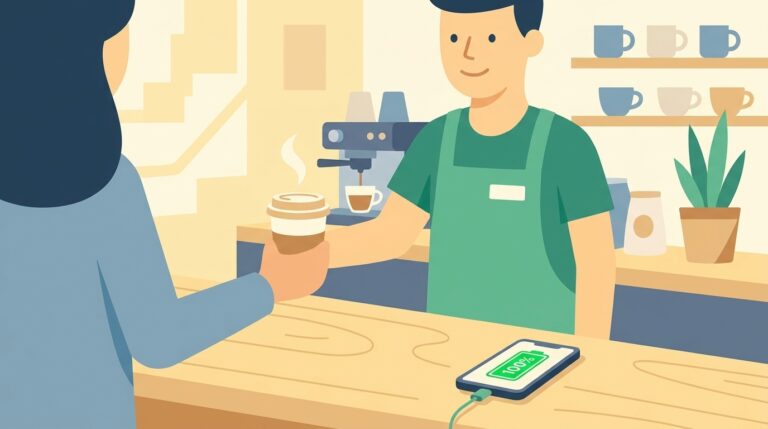
Never Get Stranded: How to Ask for a Free Phone Charger in Korea Like a Local
Phase 1: Empathy (Welcome to Daily Hangul!)
안녕하세요! (Annyeonghaseyo!) Hello! I’m your lead editor at Daily Hangul, your trusty local culture navigator.
Imagine this: You are wandering through the vibrant, neon-lit alleys of Hongdae, taking gorgeous photos for your Instagram feed. Suddenly, you look down at your screen—1% battery. Your heart sinks. In Korea, your phone is your lifeline: it’s your subway map, your digital wallet, and your translator. Without it, you are practically stranded.
If you’ve watched K-dramas, you might have seen characters casually plugging their phones into chargers behind cafe counters or renting sleek power banks from subway kiosks. It looks effortless, right? But when you try to do it in real life, anxiety kicks in. What do you say to the busy cafe barista? Can you charge your phone at a convenience store?
Don’t worry! This guide is built from the real experiences of hundreds of learners just like you who successfully navigated the “low battery emergency” in Korea. By the end of this post, you’ll know exactly how to ask for a charge with confidence and local style.
Phase 2: Key Expressions Deep Dive
Here are the top three expressions you must memorize to save your phone’s life in Korea.
1. 혹시 충전할 수 있을까요? (Hoksi chungjeonhal su isseulkkayo?)
- Pronunciation: Hok-shee choong-jeon-hal soo ee-seul-kka-yo? (Sounds like “Hawk-she” + “choong-jeon” + “hal-su-it-gayo?”)
- Meaning: “By any chance, would it be possible to charge (my phone)?”
- K-Culture Moment: You will hear this in almost every slice-of-life K-drama when a character walks into a cozy local cafe with a dead phone.
- Editor’s Insight: The word 혹시 (Hoksi) means “by any chance.” Starting your sentence with this instantly softens your request, making you sound extremely polite and respectful of the staff’s time.
- Situation Spectrum: Casual ⚠️ | Semi-formal ✅ | Formal ✅
- 🤔 Think About It: In your home country, is it common to ask staff behind a counter to charge your personal device? Why do you think Korean businesses are so accommodating with electricity?
2. 보조배터리 대여점 어디예요? (Bojobaeteori daeyeojeom eodiyeyo?)
- Pronunciation: Bo-jo-bae-tuh-ree dae-yeo-jeom eo-dee-ye-yo?
- Meaning: “Where is the power bank rental station?”
- K-Culture Moment: Seen in modern subway stations or convenience stores, where automated rental machines (like ‘Every-On’ or ‘Chungjeonman’) let you scan a QR code to rent a portable charger.
- Editor’s Insight: 보조배터리 (Bojo-baeteori) literally translates to “auxiliary battery” (power bank). Learning this word is a total game-changer for independent travelers in Korea.
- Situation Spectrum: Casual ⚠️ | Semi-formal ✅ | Formal 🚫
- 🤔 Think About It: How does the naming “auxiliary battery” differ from what you call it in your native language?
3. 충전기 빌릴 수 있을까요? (Chungjeongi billil su isseulkkayo?)
- Pronunciation: Choong-jeon-ghee beel-leel soo ee-seul-kka-yo?
- Meaning: “Could I borrow a charger?”
- K-Culture Moment: Perfect for when you find an empty wall outlet (콘센트 – konsenteu) in a cafe but forgot your cable.
- Editor’s Insight: 빌리다 (billida) means “to borrow.” Using “수 있을까요” makes it a very gentle inquiry rather than a demanding question.
- Situation Spectrum: Casual ⚠️ | Semi-formal ✅ | Formal ✅
- 🤔 Think About It: Why is asking to “borrow” a cable considered more polite than simply pointing at a charger?
Phase 3: Textbook Korean vs. Real-Life Korean
Let’s compare what traditional textbooks teach you with how Koreans actually talk in these situations.
Situation 1: Asking a cafe barista to charge your phone
- 📖 Textbook Korean: “제 핸드폰을 충전해 주십시오.” (Je haendeuponeul chungjeonhae jusipsio. – Please charge my mobile phone.)
- Why it’s awkward: It sounds like an official military command! It’s too stiff and lacks warmth.
- 🗣️ Real Korean: “혹시 핸드폰 충전 좀 부탁드려도 될까요?” (Hoksi haendeupon chungjeon jom butakdeuryeodo doelkkayo? – Could I trouble you to charge my phone for a bit, by any chance?)
- 💡 Why it’s different: Adding 좀 (jom – a little/please) and 부탁드려도 될까요 (butakdeuryeodo doelkkayo – may I request) shows high emotional intelligence and respect for the service worker.
Situation 2: Asking if a charger is available to use
- 📖 Textbook Korean: “여기에 충전기가 있습니까?” (Yeogie chungjeongi-ga itseumnika? – Is there a charger here?)
- Why it’s awkward: It sounds a bit like an interrogation.
- 🗣️ Real Korean: “혹시 충전기 쓸 수 있는 거 있을까요?” (Hoksi chungjeongi sseul su inneun geo isseulkkayo? – By any chance, is there a charger I could use?)
- 💡 Why it’s different: It focuses on the availability of a charger for your usage rather than questioning their inventory.
Phase 4: K-Culture Deep Dive & Non-verbal Manners
4-1. Nunchi (눈치) & Hand Gestures
When asking for a favor in Korea, 눈치 (Nunchi – situational awareness) is key.
* The Two-Handed Handover: If a barista agrees to charge your phone behind the counter, always hand your phone over with both hands, or with your left hand gently supporting your right forearm. This gesture shows deep respect.
* The Head Bow: A slight 15-degree nod of the head when saying “감사합니다” (Gamsahabnida) when they hand your charged phone back makes a massive positive impression.
4-2. The Korean Digital Infrastructure
Korea is one of the most connected nations on earth. In Seoul, you are never more than 5 minutes away from electricity. Many cafes have dedicated charging tables, and city buses even feature USB charging ports on the grab rails! However, remember that using electricity in small, family-owned restaurants without ordering food is considered bad manners. Always order at least a drink first!
Phase 5: Real-Life Roleplay Scenario
Setting: A trendy cafe in Mapo-gu, Seoul. Your phone battery is at 3%. You walk up to the busy counter.
NPC Character: 민수 (Min-su), an friendly cafe barista in his mid-20s.
민수: 어서 오세요! 주문 도와드릴까요?
      (Eoseo oseyo! Jumun dowa-deurilkkayo?)
      "Welcome! May I take your order?"

유진 (You): [😊 Smile warmly] 안녕하세요! 따뜻한 아메리카노 한 잔 주세요.
      (Annyeonghaseyo! Tatteuthan amerikanoh han jan juseyo.)
      "Hello! One hot Americano, please."

민수: 네, 아메리카노 한 잔 준비해 드릴게요. 더 필요한 건 없으세요?
      (Ne, amerikano han jan junbihae deurilgeyo. Deo piryohan geon eopseuseyo?)
      "Sure, I'll prepare one Americano for you. Do you need anything else?"

유진 (You): [🥺 Look slightly embarrassed, showing your dead phone]
      저... 혹시 핸드폰 충전 좀 부탁드려도 될까요?
      (Jeo... hoksi haendeupon chungjeon jom butakdeuryeodo doelkkayo?)
      "Um... could I trouble you to charge my phone for a bit, by any chance?"

민수: 아, 네! 핸드폰 주시면 카운터 뒤에서 충전해 드릴게요. 어떤 핀 쓰세요?
      (Ah, ne! Haendeupon jusimyeon kaunteo dwieseo chungjeonhae deurilgeyo. Eotteon pin sseuseyo?)
      "Ah, yes! If you give me your phone, I'll charge it behind the counter. What pin (cable type) do you use?"

유진 (You): [🙌 Handing over phone with both hands] C타입이에요. 정말 감사합니다!
      (C-taip-ieyo. Jeongmal gamsahabnida!)
      "It's a Type-C. Thank you so much!"

민수: 네, 다 되면 진동벨로 알려드릴게요. 영수증 필요하세요?
      (Ne, da doemyeon jindongbello allyeodeurilgeyo. Yeongsujeung piryohaseyo?)
      "Okay, I'll let you know via the buzzer when it's ready. Do you need a receipt?"

유진 (You): 아니요, 괜찮습니다! 감사합니다.
      (Aniyo, gwaenchansumnida! Gamsahabnida.)
      "No, that's okay! Thank you."
🔀 Choose Your Path! What would you do next?
- A) Leave your phone at the counter and sit down immediately to relax.
- B) Wait near the counter for a moment to ensure it is plugged in correctly, then take your receipt/buzzer.
- C) Walk behind the counter to plug it in yourself so you can choose the exact outlet.
💡 Feedback on Your Choice:
- Best Choice: B! It shows great manners to wait briefly while they plug it in, thanking them one more time before heading to your seat.
- Bad Choice: C! Entering the employee-only counter space is a major social taboo in Korea. Never cross behind the counter unless invited!
- Risk Choice: A! While safe, it’s always better to make sure the connection is established so you don’t end up with a dead phone 30 minutes later because the cable wasn’t pushed in all the way!
Phase 6: 10-Second Emotion Shadowing Drill
Practice saying these out loud! Pay attention to the pauses (/) and try to mimic the emotions in the brackets.
[🥺 Desperate but polite]
저… / 혹시 / 핸드폰 충전 / 가능할까요?
(Jeo… / hok-si / haen-deu-pon choong-jeon / ga-neung-hal-kka-yo?)
“Um… is phone charging possible, by any chance?”-
[😊 Relieved and grateful]
와, / 정말 / 감사합니다! / 덕분에 살았어요!
(Wa, / jeong-mal / gam-sa-hab-ni-da! / deok-bun-e sal-at-eo-yo!)
“Wow, thank you so much! You saved my life!”
Phase 7: K-Culture Mini Dictionary
| Word (Hangeul + Romanization) | English Meaning | Real-life Usage Tip |
|---|---|---|
| 보조배터리 (Bojo-baeteori) | Power Bank / Portable Charger | Often shortened colloquially to “보배” (bo-bae) among younger Koreans. |
| 충전기 (Chungjeongi) | Charger (cable/brick combo) | If you just need the cable, you can ask for the “케이블” (ke-i-beul). |
| 콘센트 (Konsenteu) | Wall Outlet | Derived from “concentric plug.” Look for these near the floor or under cafe tables. |
| 완충 (Wanchung) | Fully Charged (100%) | Short for 완전 충전 (wan-jeon chung-jeon). “완충 됐어요?” (Is it fully charged?) |
Phase 8: Traveler’s Survival Kit
Survival Expressions TOP 3
- “C타입 케이블 있나요?” (C-taip ke-i-beul innayo?) – Do you have a Type-C cable?
- Pro Tip: Most places have three-headed cables (C-type, Lightning, and Micro 5-pin).
- “충전 구역이 어디예요?” (Chungjeon gu-yeok-i eodiyeyo?) – Where is the charging area?
- Pro Tip: Many major subway stations and airports have dedicated free charging zones.
- “코드 꽂아도 돼요?” (Kodeu kkoja-do dwayo?) – May I plug this in?
- Pro Tip: Always ask this before plugging your charger into a wall socket in a small shop.
Editor’s Travel Note
When traveling in South Korea, you don’t need to carry heavy power banks everywhere. Download Naver Map App or KakaoMap App and search for “보조배터리 대여” (Power bank rental). It will display automated rental kiosks near you where you can rent a charger for about 1,000 KRW ($0.75 USD) per hour!
Phase 9: Going Deeper (Cultural Reflection)
One of the first things foreigners notice when visiting Korea is how safe it feels. You will frequently see people leaving their high-end laptops, iPhones, and wallets unattended on cafe tables while they go to the restroom or order drinks. This high level of social trust also extends to power. Asking a barista to charge your phone behind the counter is built on this shared community mindset of mutual trust and assistance.
💬 Your Turn!
Have you ever had a battery emergency in a foreign country? How do people handle this situation in your hometown? Tell us in the comments below!
Phase 10: FAQ & Common Mistakes
Q: Can I charge my phone at any convenience store (CU, GS25, Seven-Eleven)?
A: Traditionally, convenience stores offered quick charging services for a small fee (around 1,000 KRW). However, nowadays, most convenience stores have transitioned to hosting automated power bank rental kiosks instead. You can rent a portable battery, walk around with it, and return it to any other kiosk of the same brand!
Q: Is it rude to ask for a charger without buying anything?
A: Yes, it is generally considered bad manners. Always purchase at least a small item or coffee before asking for charging favors.
Q: Do Korean outlets use the same voltage as my country?
A: South Korea uses 220V, 60Hz outlets with plug types C and F (two round pins). If you are coming from North America or the UK, you will need a travel adapter.
🚨 Common Mistakes Alert!
- Mistake: Handing over your phone without unlocking it or opening the camera.
- Correct Action: If they need to verify your phone model or check if it’s charging, keep it unlocked or stay nearby to help.
- Mistake: Shouting “충전! (Chungjeon!)” to the staff.
- Correct Action: Never use single-noun demands. Always wrap it in polite phrasing: “충전기 혹시 빌릴 수 있을까요?”
- Mistake: Leaving your phone plugged into a public wall outlet and walking away.
- Correct Action: While Korea is very safe, crime still happens in crowded tourist spots. Keep your eyes on your devices.
Phase 11: Action Missions
- 🥉 Bronze Mission: Write the phrase “혹시 충전할 수 있을까요?” in your notebook three times and practice pronouncing it with our shadowing drill.
- 🥈 Silver Mission: Screenshot this guide and share your favorite Korean tip on your Instagram Stories, tagging @DailyHangul!
- 🥇 Gold Mission: Next time you go to a Korean restaurant or cafe, look for the wall outlets (콘센트) and practice asking the staff: “여기 혹시 코드 꽂아도 돼요?”
🎮 K-Culture Mission!
Watch your favorite K-drama today and look for scenes set in cafes. See if you can spot anyone charging their phone or look for the wall outlets in the background. Post the drama name in the comments!
Phase 12: Interactive Quiz
Test your knowledge below!
Q1. Which word means “Power Bank” in Korean?
- A) 콘센트 (Konsenteu)
- B) 보조배터리 (Bojo-baeteori)
- C) 충전기 (Chungjeongi)
👉 Click to reveal answer
Correct Answer: B!
보조배터리 means power bank. 콘센트 is a wall outlet, and 충전기 is a charger cable/plug.
Q2. Fill in the blank: “혹시 핸드폰 충전 ______ 될까요?” (Could I charge my phone, by any chance?)
- A) 주세요 (juseyo)
- B) 부탁드려도 (butakdeuryeodo)
- C) 빌려도 (billyeodo)
👉 Click to reveal answer
Correct Answer: B!
부탁드려도 될까요? translates to “May I request/trouble you to?” which is the most natural and polite way to ask for a favor in a Korean cafe.
Q3. [True or False] It is totally acceptable to walk behind a cafe counter to plug in your own phone.
- A) True
- B) False
👉 Click to reveal answer
Correct Answer: B (False)!
Never cross into the staff area behind the counter. Always hand your phone to the staff politely with both hands.
Disclaimer: While public charging infrastructure in Korea is incredibly robust, actual availability and policies may vary depending on individual store owners and locations.







