

Why It Hurts to Say Goodbye: Unpacking the Beautiful Korean Concept of Jeong (情)
Phase 1: Empathy (Welcome to the Heart of Korean Connection)
안녕하세요! (Annyeonghaseyo!) It is your favorite Korean bestie and lead editor from Daily Hangul.
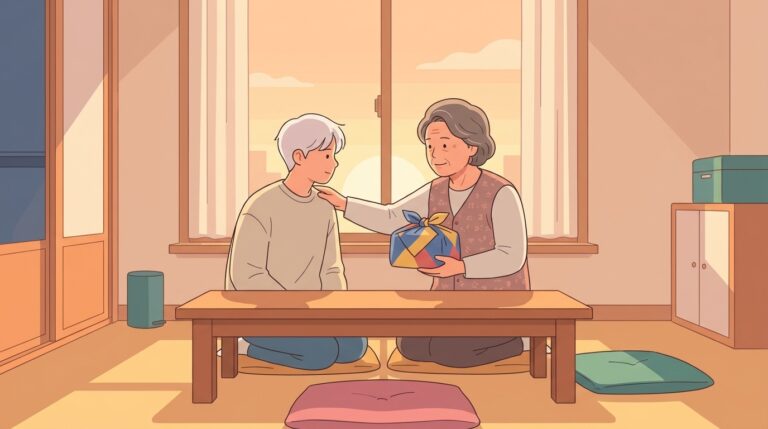
Imagine this: Your semester or trip to Seoul is coming to an end. You are packing your bags in your tiny but cozy goshiwon or host family room. Suddenly, your host mother knocks and hands you a plastic container filled with freshly made kimchi and myeolchi-bokkeum (stir-fried anchovies) for your flight. She doesn’t say “I love you,” but her eyes are glassy, and she gently pats your shoulder.
Suddenly, your chest feels incredibly heavy. You look around the room you once found too small, and now, it feels like the hardest place to walk away from.
In Korea, we have a saying for this exact heartache: “정 들이면 떠나기 힘들다” (Jeong deur-i-myeon tteo-na-gi him-deul-da), which means, “Once you grow attached, it is incredibly hard to leave.”
If you have ever felt this painful yet beautiful pull when leaving a person, a neighborhood, or even a local cafe in Korea, you have officially experienced 정 (Jeong). Today, we are going to dive deep into this unique cultural emotion, master the essential B1-level expressions to describe it, and learn how to express your gratitude like a true native so you can leave with no regrets.
Phase 2: Deep Dive into 3 Core Expressions
To truly speak like a native when saying goodbye, you need to understand these three powerful expressions that capture the bittersweet weight of Jeong.
1. 정(이) 들다 (Jeong-i deul-da)
- Pronunciation: [Jeong-ee deul-da] (Think of “jung” as in “jungle,” followed by “ee,” and “deul-da” which rhymes with “cool-da”)
- Meaning: To grow attached / To have Jeong seep into your heart over time.
- K-Culture Moment: You will hear this in almost every slice-of-life K-Drama. When a character moves to a new neighborhood, hates it at first, but months later cries when leaving, they look at their neighbors and whisper: “그새 정이 들었나 봐요” (I guess I’ve grown attached in the meantime).
- Editor’s Insight: Jeong isn’t romantic love (Sarang). Love can happen in a flash, but Jeong is like a slow-cooked stew. It accumulates quietly through shared daily routines, small gestures, and simply spending time in the same space.
- Situation Spectrum: Casual ✅ / Semi-formal ✅ / Formal ⚠️
- 🤔 Think About It: Is there a word in your native language that describes a deep, affectionate bond that you didn’t actively choose to build, but simply grew because you shared time and space together?
2. 발걸음이 안 떨어지다 (Bal-geor-eum-i an tteo-reo-ji-da)
- Pronunciation: [Bal-gauh-reum-ee an ddauh-ruh-jee-da] (The double ‘dd’ sound is tense, like the ‘t’ in ‘stop’)
- Meaning: Literal: “My footsteps won’t detach from the ground.” / Actual: Having a heavy heart that makes it impossible to walk away.
- K-Culture Moment: In family dramas, when a child is leaving for study abroad and the parents are waving at the airport, the child looks back, unable to take another step forward.
- Editor’s Insight: This is a beautiful, physical metaphor. When Koreans feel deep emotional attachment, they don’t just say “I’m sad to leave.” They express it as a physical force pulling their feet back down to the earth.
- Situation Spectrum: Casual ✅ / Semi-formal ✅ / Formal ✅
- 🤔 Think About It: Why do you think Korean culture uses physical body metaphors (like heavy footsteps or a clogged chest) to describe deep emotional barriers?
3. 시원섭섭하다 (Si-won-seop-seop-ha-da)
- Pronunciation: [Shee-won-sub-sub-ha-da] (Think of “she-one” followed by “sub-sub” like a subway sandwich, then “ha-da”)
- Meaning: Bitter-sweet / Simultaneously relieved yet sad.
- K-Culture Moment: In behind-the-scenes interviews, when actors finish filming the very last episode of a 16-episode drama, they almost always say: “드디어 끝났네요. 시원섭섭해요.” (It’s finally over. I feel relieved yet so sad.)
- Editor’s Insight: This word is a genius compound of two opposites: 시원하다 (si-won-ha-da – to feel cool/relieved) and 섭섭하다 (seop-seop-ha-da – to feel sad/disappointed about a parting). It captures the complex human reality of being happy a tough journey is over, but deeply sad to leave the people behind.
- Situation Spectrum: Casual ✅ / Semi-formal ✅ / Formal ✅
- 🤔 Think About It: When was the last time you felt “시원섭섭” in your own life? Was it graduation, leaving a job, or ending a long trip?
Phase 3: Textbook Korean vs. Real Korean
Let’s upgrade your intermediate Korean from robotic, dictionary-translated phrases to the warm, emotionally resonant language that locals actually use.
Situation 1: Saying “I will miss you” to a close host or friend
- 📖 Textbook Korean: “보고 싶을 거예요.” (Bo-go si-peul geo-yeo-yo.)
- Why it feels flat: While grammatically correct, it is a generic translation of “I will miss you” and doesn’t capture the deep sorrow of the actual parting moment.
- 🗣️ Real Korean: “벌써부터 아쉬워서 어떡해요?” (Beol-sseo-bu-teo a-swi-wo-seo eo-tteok-hae-yo?)
- Why it is better: This translates to “I’m already feeling so sad to say goodbye, what should I do?” It uses 아쉽다 (a-swip-da – to feel lingering regret/sadness about a lack or a parting), which shows you are already mourning the loss of their presence.
Situation 2: Expressing attachment to a place or community
- 📖 Textbook Korean: “저는 여기에 애착이 있습니다.” (Jeo-neun yeo-gi-e ae-chak-i it-sseum-ni-da.)
- Why it feels flat: “애착” (attachment) sounds highly academic, psychological, or clinical—almost like you are analyzing a research subject.
- 🗣️ Real Korean: “여기에 정이 많이 들어서 떠나기 쉽지 않네요.” (Yeo-gi-e jeong-i ma-ni deul-eo-seo tteo-na-gi swip-ji an-ne-yo.)
- Why it is better: This directly invokes “Jeong” and explains that because of this warm, slow-cooked bond, parting is a massive challenge. It sounds deeply human and poetic.
Phase 4: K-Culture Deepdive & Non-Verbal Manners
4-1. The Body Language of Jeong
In Western cultures, deep goodbyes are often marked by long, tight hugs. In Korea, physical touch is historically more reserved, but the body language of Jeong is intensely felt through other channels:
* The Double-Handed Accept (양손 사용): If someone gives you a parting gift or a box of side-dishes, never grab it with one hand. Accept it with both hands, slightly bowing your head. This shows you are receiving not just physical food, but their heavy emotion (Jeong).
* The Lingering Gaze & Slow Turn (아쉬운 발걸음): When walking away, do not turn around and speed off. Walk slowly, turn back at least once to wave with a slightly sad, warm smile. Speeding away looks like you have no Jeong left behind!
4-2. The K-Drama Code: “미운 정” (The Jeong of Dislike)
Did you know you can have Jeong for someone you constantly bicker with? In K-Dramas like Our Beloved Summer or Crash Landing on You, characters start off hating each other. However, through constant fighting and eating together, they develop 미운 정 (Mi-un Jeong – the bond of dislike).
Koreans believe that even negative interactions build a connection over time. That is why, when an annoying coworker or a bickering roommate leaves, you might find yourself surprisingly devastated. Jeong is inevitable whenever human lives overlap!
Phase 5: Real-Life Roleplay Scenario
Context
Sarah (a foreign exchange student) is checking out of her homestay. She is standing at the front door with her heavy suitcase, saying goodbye to her host mother, Mrs. Kim (김 아주머니), who has cooked for her every single day for six months.
[Scene: The warm entryway of a traditional Korean apartment. Mrs. Kim is holding a tightly wrapped container of homemade side-dishes.]
- 김 아주머니: (Looking sad, hands Sarah the container)
“세라 씨, 내일 진짜 비행기 타는 거예요? 시간이 어쩜 이렇게 빨라…”
(Sarah, are you really boarding the plane tomorrow? How did time go so fast…) -
세라: (Accepting the container with both hands, tearing up slightly)
“네, 이모님. 저 어제 짐을 싸는데 진짜… 발걸음이 안 떨어지더라고요.”
(Yes, Imo-nim. Yesterday as I was packing my bags, truly… my feet just wouldn’t leave.) -
김 아주머니: (Wiping her eye with her apron)
“에구, 그새 우리 세라랑 정이 듬뿍 들었나 봐. 꼭 내 진짜 딸 같았는데…”
(Aigu, I guess I’ve grown so deeply attached to our Sarah. You felt just like my real daughter…) -
세라: (Sniffling, smiling softly)
“저도 그래요. 공항 갈 생각 하니까 진짜 시원섭섭해요. 이 좁은 방도 벌써 그리울 거예요.”
(Me too. Thinking about heading to the airport makes me feel so bittersweet. I’ll already miss this tiny room.) -
김 아주머니: (Patting Sarah’s arm gently)
“비행기에서 배고프니까 이거 공항에서 꼭 챙겨 먹고. 밥 거르지 말고, 알았지?”
(You’ll be hungry on the plane, so make sure to eat this at the airport. Don’t skip meals, okay?) -
세라: (Nodding deeply)
“네, 이모님. 마지막까지 이렇게 잘 챙겨주시니까… 정 때문에 한국 진짜 못 떠나겠어요!”
(Yes, Imo-nim. Since you care for me like this until the very end… I really can’t leave Korea because of all this Jeong!) -
김 아주머니: (Laughing warmly, wiping another tear)
“말이라도 고마워라. 나라 밖에 나가도 아프지 말고, 한국 오면 무조건 우리 집으로 오는 거야!”
(Thank you for your sweet words. Don’t get sick abroad, and if you come to Korea, you must come straight to our house!) -
세라: (Squeezing her hands)
“당연하죠! 이모님도 건강하셔야 해요. 그동안 정말 감사했습니다.”
(Of course! Please stay healthy, Imo-nim. Thank you so much for everything.)
🔀 Interactive Choice Point
How should Sarah finish this emotional goodbye to maximize the Jeong?
- Option A: Give Mrs. Kim a tight, warm hug and say, “이모님, 저 그냥 한국에 계속 살래요!” (Imo-nim, I think I’ll just live in Korea forever!)
- Option B: Politely refuse the food box and say, “너무 무거워서 짐 가방에 안 들어가요. 안 주셔도 돼요.” (It’s too heavy and won’t fit in my suitcase. You don’t have to give it to me.)
- Option C: Put a envelope of cash on the table as payment for the extra food.
💡 Feedback on Your Choice:
- Option A (Best Choice): 🌟 Perfect! While a sudden hug might startle an older Korean at first, the cute exaggeration of wanting to stay forever shows incredible relational warmth. This leaves a lasting memory of deep Jeong.
- Option B (Bad Choice): ❌ Jeong Killer! Rejecting food in Korea is like rejecting their heart. Even if your suitcase is heavy, always accept it with gratitude. You can eat it at the hotel or share it with friends before boarding.
- Option C (High Risk): ⚠️ Too Transactional. Giving raw cash for emotional gestures like home-cooked meals can feel cold and commercial. If you want to show financial gratitude, buy a nice set of health supplements (like red ginseng) and hide a handwritten letter inside.
Phase 6: 10-Second Shadowing Drill
Let’s practice saying these lines with the exact emotional intonation of a native speaker. Pay attention to the pauses (/) and the emotional cues!
[🥺 In a soft, cracking voice with lingering sadness]
“여기에 / 정이 많이 들어서 / 진짜… 발걸음이 / 안 떨어지네요.”
(Yeo-gi-e / jeong-i ma-ni deul-eo-seo / jin-jja… bal-geor-eum-i / an tteo-reo-ji-ne-yo.)-
[😊 Feeling mixed emotions, looking hopeful yet nostalgic]
“이제 가려니까 / 시원섭섭하지만, / 꼭 / 다시 연락드릴게요!”
(I-je ga-ryeo-ni-ka / si-won-seop-seop-ha-ji-man, / kkok / da-si yeol-lak-deu-ril-ge-yo!)
Phase 7: K-Culture Mini Dictionary
- 정 (情 – Jeong) [jeong]: A warm feeling of attachment, love, and affinity that develops over a shared period of time and mutual experiences.
- 울컥하다 [ul-keok-ha-da]: To be suddenly choked up with emotion; when tears unexpectedly surge up to your throat.
- 듬뿍 [deum-ppuk]: Plentifully, generously, or in overflowing amounts (often used for pouring sauce, serving food, or giving love/Jeong).
- 아쉽다 [a-swip-da]: To feel sad, reluctant, or regretful about an incomplete experience or a parting of ways.
Phase 8: Traveler’s Survival Kit
Survival Expressions for Hard Goodbyes
- “그동안 정이 많이 들었는데, 너무 아쉬워요.”
(Geu-dong-an jeong-i ma-ni deul-eon-neun-de, neo-mu a-swi-wo-yo.)- Meaning: I’ve grown so attached during this time, I’m so sad to say goodbye.
- Pro Tip: Perfect to write in a card to your teacher, landlord, or language exchange partner.
- “덕분에 한국에서 좋은 추억 많이 만들고 갑니다.”
(Deok-bun-e han-guk-e-seo jo-eun chu-eok ma-ni man-deul-go gap-ni-da.)- Meaning: Thanks to you, I am leaving with so many beautiful memories of Korea.
- Pro Tip: Use this when checking out of a boutique guesthouse or finishing a homestay.
- “우리 인연 계속 이어가요. 연락 꼭 하세요!”
(U-ri in-yeon gyeo-sok i-eo-ga-yo. Yeol-lak kkok ha-se-yo!)- Meaning: Let’s keep our connection alive. Make sure to keep in touch!
- Pro Tip: “인연” (In-yeon) means a karmic connection or destiny. Using this word shows deep respect for the relationship.
✈️ Editor’s Travel Note: The Power of “손편지” (Son-pyeon-ji)
In our ultra-digital world, Koreans still hold a massive soft spot for the 손편지 (Son-pyeon-ji – handwritten letter). If you are leaving Korea, do not just send a KakaoTalk message. Buy a pretty card, write your feelings in your best Korean handwriting (even if it has typos!), and leave it on the table.
If you need to mail a physical package of return gifts back to your Korean friends once you arrive home, we highly recommend utilizing the reliable shipping options at the nearest Korean Post Office (우체국) to keep those warm connections alive!
Phase 9:
Frequently Asked Questions (FAQ)
Q: What does "정(이) 들다 (Jeong-i deul-da)" mean in Korean and how do you pronounce it?
A: In Korean, "정(이) 들다 (Jeong-i deul-da)" is pronounced [Jeong-ee deul-da] and means: To grow attached / To have Jeong seep into your heart over time.
Q: What does "발걸음이 안 떨어지다 (Bal-geor-eum-i an tteo-reo-ji-da)" mean in Korean and how do you pronounce it?
A: In Korean, "발걸음이 안 떨어지다 (Bal-geor-eum-i an tteo-reo-ji-da)" is pronounced [Bal-gauh-reum-ee an ddauh-ruh-jee-da] and means: Literal: "My footsteps won't detach from the ground." / Actual: Having a heavy heart that makes it impossible to walk away.
Q: What does "시원섭섭하다 (Si-won-seop-seop-ha-da)" mean in Korean and how do you pronounce it?
A: In Korean, "시원섭섭하다 (Si-won-seop-seop-ha-da)" is pronounced [Shee-won-sub-sub-ha-da] and means: Bitter-sweet / Simultaneously relieved yet sad.







