

Stationery Shopping 101: How to Buy Your Dream Korean Diary & Cute ‘Da-Kku’ Supplies!
안녕하세요! (Annyeonghaseyo!) Hello! I’m your lead editor and your personal ‘K-culture navigator’ from Daily Hangul.
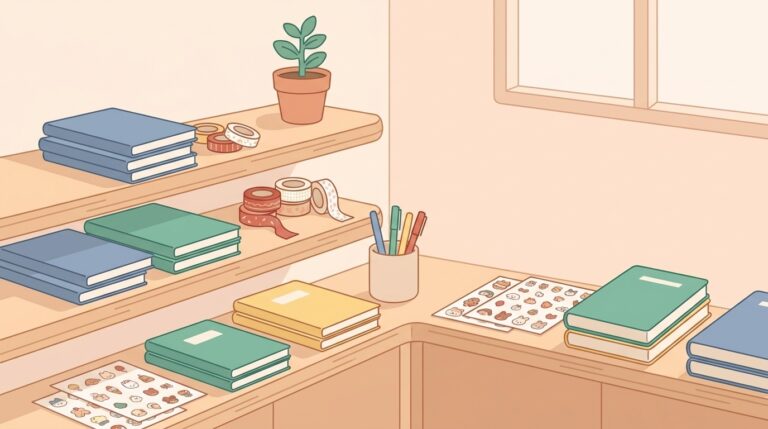
If you’ve ever stepped into a massive Korean bookstore like Gwanghwamun’s Kyobo Book Centre (교보문고) or a trendy lifestyle shop like Hottracks (핫트랙스), you already know the feeling. The soft jazz playing in the background, the aroma of fresh paper and coffee, and—most importantly—the mesmerizing aisles of beautifully designed planners, colorful stickers, and cute pens!
In Korea, diary shopping isn’t just about organizing your schedule; it’s a huge lifestyle subculture. Today, we’re going to learn the absolute essential Korean expressions you need to confidently find, ask for, and buy your perfect 다이어리 (da-i-eo-ri – diary/planner). Let’s dive in!
Phase 2: Core Expressions for Your Bookstore Adventure
Here are the top 3 powerhouse expressions you need when hunting for the perfect planner. Let’s break them down easily!
1. 다이어리 코너가 어디예요? (Where is the diary section?)
- Pronunciation: da-i-eo-ri ko-neo-ga eo-di-yeo-yo?
(Phonetic trick: Think of “da-ee-uh-ree” + “corner-gah” + “uh-dee-yo-yo?”) - Meaning: “Where is the diary section?”
- K-Culture Moment: Picture a scene in a cozy K-drama where the main characters accidentally bump into each other while searching for the same aesthetic desk planner. This is the exact phrase you’d use to get there!
- Editor’s Insight: In English, a “diary” usually means a secret journal. In Korea, 다이어리 refers to any personal planner, scheduler, or bullet journal.
- Situation Spectrum:
- Casual: 다이어리 코너 어디야? (⚠️ Use only with close friends)
- Semi-formal: 다이어리 코너가 어디예요? (✅ Perfect for bookstore staff)
- Formal: 다이어리 코너가 어디입니까? (🚫 Too stiff for a trendy shop)
- 🤔 Think About It: Why does Korean society love planners so much? It’s all about visual self-expression and starting fresh. How does your culture view journaling?
2. 만년 다이어리인가요? (Is this an undated diary?)
- Pronunciation: man-nyeon da-i-eo-ri-in-ga-yo?
(Phonetic trick: “man-nyuhn” sounds a bit like “million”) - Meaning: “Is this an undated diary?”
- K-Culture Moment: You find a gorgeous cover, but you don’t want to waste pages because it’s already April. You want an undated planner so you can write the dates yourself!
- Editor’s Insight: 만년 (man-nyeon) literally translates to “ten thousand years.” Saying “ten-thousand-year diary” is the poetic Korean way of saying it’s timeless and undated!
- Situation Spectrum:
- Casual: 이거 만년 다이어리야? (⚠️)
- Semi-formal: 만년 다이어리인가요? (✅ Polite and natural)
- Formal: 만년 다이어리입니까? (✅ Also correct, but a bit formal)
- 🤔 Think About It: Koreans love the flexibility of undated planners because they can pause and resume whenever life gets busy without leaving blank pages.
3. 다꾸 용품은 어디에 있어요? (Where are the diary-decorating supplies?)
- Pronunciation: da-kku yong-pum-eun eo-di-e is-seo-yo?
(Phonetic trick: “dah-kkoo” + “yong-poom-eun” + “uh-dee-eh ees-suh-yo?”) - Meaning: “Where are the diary-decorating supplies?” (stickers, tapes, etc.)
- K-Culture Moment: You want to join the famous Korean online community of aesthetics vloggers who do cozy, ASMR “diary decorating.”
- Editor’s Insight: 다꾸 (Da-kku) is an extremely popular Korean slang portmanteau combining 다이어리 (Diary) and 꾸미기 (Decorating).
- Situation Spectrum:
- Casual: 다꾸 용품 어디 있어? (⚠️)
- Semi-formal: 다꾸 용품은 어디에 있어요? (✅ Staff will immediately point you to sticker heaven)
- Formal: 다꾸 용품은 어디에 있습니까? (🚫)
- 🤔 Think About It: “Da-kku” represents finding happiness in tiny, artistic details (소확행 – small but certain happiness).
Phase 3: Textbook Korean vs. Real-Life Korean
Let’s see how school books teach you versus how real Koreans actually talk in stationery stores!
Situation 1: Testing a pen before buying
- 📖 Textbook Style: 이 필기구는 부드럽게 쓰입니까? (Does this writing instrument write smoothly?)
- 🗣️ Real-Life Korean: 이 펜 잘 써져요? (Does this pen write well/smoothly?)
- 💡 Why the difference? Textbook phrases are often overly formal and use archaic words like “필기구” (writing instrument). Locals just say “이 펜” (this pen) and ask if it “잘 써져요” (writes well).
Situation 2: Asking for a price
- 📖 Textbook Style: 이 물건의 가격은 얼마입니까? (What is the price of this object?)
- 🗣️ Real-Life Korean: 이거 얼마예요? (How much is this?)
- 💡 Why the difference? Directly pointing and saying “이거” (this) with “얼마예요” is fast, efficient, and naturally polite.
Phase 4: K-Culture Deep-Dive & Non-Verbal Manners
4-1. Hands & Eye Contact: The Silent Language
- Two-Handed Respect: When paying for your gorgeous new planner, always hand over your cash or credit card with two hands. Similarly, receive your bagged receipt with two hands while giving a slight, polite nod.
- Testing Pens: You will see a small notepad next to the pen displays. This is called a 시필지 (si-pil-ji – test paper). Never scribble on the display shelves or packaging; always use the provided test papers!
4-2. The “Da-Kku” (다꾸) Craze
In Korea, keeping a diary is a major hobby. It’s not just about writing down to-do lists; it’s a creative outlet. People collect 마스킹 테이프 (masking/washi tape), cute character stickers, and polaroid photos to theme their daily pages. When you buy a diary in Korea, you are stepping into a vibrant community of artistic self-care!
Phase 5: Live Roleplay Challenge
Setting: Gwanghwamun Kyobo Hottracks, surrounded by pastel-colored stationery.
Your Character: An international student looking for a cute aesthetic planner.
NPC: Minji (민지), a friendly, stylish bookstore clerk.
- Learner: 저기요, 혹시 다이어리는 어디에 있어요?
(Excuse me, by any chance, where are the diaries?) - Minji: 아, 다이어리는 저쪽 3번 구역 코너에 모여 있어요.
(Ah, diaries are gathered over there in Zone 3 corner.) - Learner (🎭 walks to Zone 3): 와, 진짜 많다! …저기요, 이거 만년 다이어리인가요?
(Wow, there are so many! …Excuse me, is this an undated diary?) - Minji: 네! 그 제품은 날짜가 안 적혀 있는 만년 다이어리 맞아요.
(Yes! That product is indeed an undated diary without dates written in.) - Learner: 다행이네요! 그럼 다꾸 스티커도 이 근처에 있어요?
(That’s a relief! Then are the diary-decorating stickers around here too?) - Minji (🎭 smiles and points): 네, 바로 옆 매대에 캐릭터 스티커랑 마스킹 테이프가 아주 많이 있어요.
(Yes, right on the next display stand, there are tons of character stickers and masking tapes.) - Learner: 정말 감사합니다. 이거 두 개 계산해 주세요.
(Thank you so much. Please ring these two up.) - Minji: 네, 감사합니다. 혹시 봉투 필요하세요?
(Sure, thank you. Do you need a bag?)
🔀 Your Turn! How do you reply to Minji’s bag question?
- Choice A: “네, 주세요.” (Yes, please give me one.) ➡️ [Best Choice] Standard, polite, and practical. (Note: Bags usually cost about 100~200 KRW in Korea).
- Choice B: “아니요, 괜찮아요.” (No, thank you/I’m fine.) ➡️ [Great Choice] Perfect if you have your own shopping tote bag!
- Choice C: “싫어요.” (I hate it/No.) ➡️ [Avoid!] Too blunt and sounds aggressive to native speakers.
Phase 6: 10-Second Emotion Shadowing Drill
Let’s practice speaking with real Korean emotion! Use the pause marks / to pace your breathing.
- [😊 With bright excitement]
“다이어리 코너가 / 어디예요?” (da-i-eo-ri ko-neo-ga / eo-di-yeo-yo?) - [🤔 With curious interest]
“이거 / 만년 다이어리예요?” (i-geo / man-nyeon da-i-eo-ri-yeo-yo?) - [💖 With absolute delight upon seeing cute stickers]
“와! / 이거 진짜 귀여워요!” (wa! / i-geo jin-jja gwi-yeo-wo-yo!)
Phase 7: K-Culture Mini-Dictionary
- 다꾸 (Da-kku): Short for Diary Decorating. The ultimate cozy hobby of customizing your planner pages.
- 마테 (Ma-te): Short for 마스킹 테이프 (Masking tape / Washi tape). Crucial for pinning cute photos and borders in your journal.
- 속지 (Sok-ji): Inner paper refills. Many Korean planners are binder-style so you can swap out the inner pages.
- 떡메 (Tteok-me): Short for 떡메모지 (non-sticky memo pads that are glued together at the top, like a pad of paper).
Phase 8: The Traveler’s Survival Kit
Essential Emergency Phrases:
- 볼펜 잘 나와요? (bol-pen jal na-wa-yo?) – Does this pen write well? (Literally: Does the ink come out well?)
- 선물 포장해 주세요. (seon-mul po-jang-hae ju-se-yo) – Please gift-wrap this.
- 영수증 버려 주세요. (yeong-su-jeung beo-ryeo ju-se-yo) – Please throw away the receipt for me.
📌 Editor’s Travel Note:
To find the absolute best stationery shops in Seoul, download the Naver Map App instead of Google Maps, which doesn’t update well in Korea. Search for “소품샵” (sopum-shop / lifestyle design shops) in trendy neighborhoods like Hongdae (홍대), Mangwon (망원동), or Ikseon-dong (익선동)!
Phase 9: “One Step Deeper” — The Korean “God-Saeng” (갓생) Trend
In late October, Korean bookstores explode with next year’s diaries. Why so early? It’s connected to the Korean trend of 갓생 (God-saeng)—a slang term combining “God” and “생” (life), meaning living an exemplary, productive, and highly organized life. For young Koreans, buying a fresh diary and filling out the first few pages with neat handwriting is a therapeutic ritual to manifest a successful, balanced year.
💬 Your Turn: Are you a daily planner person, or do you keep everything on your phone? Let us know in the comments below! (We read every single one!)
Phase 10: FAQ & Common Mistakes
Q: Can I open wrapped diaries in the bookstore?
A: No, please do not tear open the plastic wrapping. Almost all popular diaries have a designated unsealed “샘플” (Sample) copy lying on top of the pile for customers to flip through!
Q: What is the difference between 일기장 (il-gi-jang) and 다이어리 (da-i-eo-ri)?
A: An 일기장 is a traditional journal diary used purely for writing reflective personal thoughts. A 다이어리 is a more functional planner with weekly/monthly grids used for organization and “da-kku” decorating.
Q: Do Korean stationery shops accept international credit cards?
A: Yes! Major stores like Hottracks and Kyobo easily accept Visa, Mastercard, and digital options. However, for tiny local “design shops” (소품샵), keeping some cash or using T-Money can occasionally be useful.
🚨 Common Mistakes Warning Sign
- Mistake 1: Grabbing a sealed planner and trying to look inside.
- Correct Action: Look for the book with the sticker saying “샘플” (Sample) or “펼쳐보세요” (Please open and look).
- Mistake 2: Saying “다이어리 어디?” directly to a clerk.
- Correct Action: Always add “어디예요?” (Where is it?) or “어디에 있어요?” to make it polite!
- Mistake 3: Scribbling testing ink on the wood of the tables.
- Correct Action: Look for the white scrap pad (시필지) nearby.
Phase 11: Action Missions
- 🥉 Bronze Mission: Pronounce “다이어리 코너가 어디예요?” out loud three times in front of your mirror with a bright smile!
- 🥈 Silver Mission: Check your current notebook or planner. Is it a dated diary or a 만년 다이어리 (undated diary)? Write down the Korean word on a sticky note and paste it on the cover.
- 🥇 Gold Mission: Next time you go shopping (even online on a Korean site like Gmarket), try searching for the word “다꾸 스티커” and see the thousands of aesthetic designs that pop up!
Phase 12: Interactive Quiz Challenge
Test your new skills! Can you get 3/3?
1. What does the slang word “다꾸” (Da-kku) mean?
- A) Cleaning your room
- B) Diary decorating
- C) Buying books
See Answer & Explanation
Correct Answer: B
“다꾸” is a cute contraction of 다이어리 (Diary) and 꾸미기 (Decorating)! It’s an incredibly popular hobby in Korea.
2. Fill in the blank: “이거 _______ 다이어리예요?” (Is this an undated planner?)
- A) 백년 (baek-nyeon)
- B) 만년 (man-nyeon)
- C) 천년 (cheon-nyeon)
See Answer & Explanation
Correct Answer: B (만년)
“만년” (man-nyeon) literally means 10,000 years, implying a timeless, undated diary!
3. True or False: It is completely polite to hand your credit card to a cashier using only one hand.
- A) True
- B) False
See Answer & Explanation
Correct Answer: B (False)
In Korea, offering and receiving cards, cash, or items with both hands is a vital sign of politeness and respect!







