

Help, My AC is Broken! How to Report Broken Appliances in Korean Like a Local
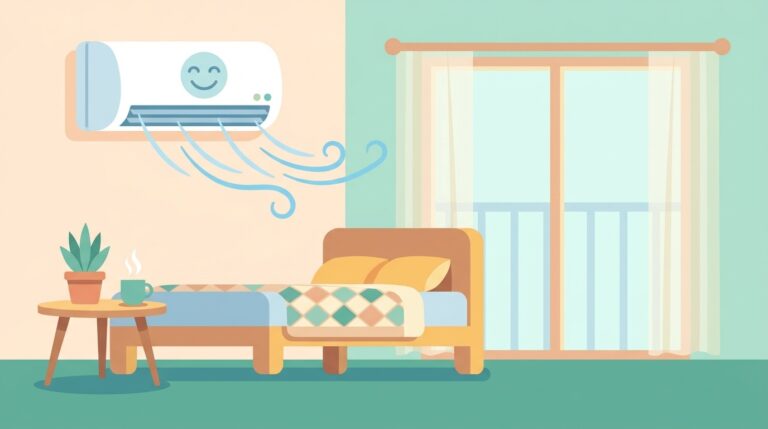
안녕하세요! (An-nyeong-ha-se-yo!) Hello! I’m your friendly Korean editor from Daily Hangul. Imagine this: you just checked into a beautiful, cozy Airbnb in Seoul. The summer heat is intense, and you can’t wait to blast the air conditioner (에어컨). You press the remote button, but… nothing happens. Oh no! 😰
Don’t panic! Today, we will learn how to explain that an appliance is broken in simple, beginner-friendly Korean. By the end of this guide, you will confidently tell your host or landlord exactly what’s wrong!
Phase 2: 3 Key Expressions Deep Dive
1. 고장 났어요 (go-jang nat-eo-yo)
- Pronunciation: go-jang-nat-uh-yo (rhymes with ‘go’ + ‘jang’ + ‘not’ + ‘uh-yo’)
- Meaning: It is broken / It doesn’t work.
- K-Culture Moment: You will often hear this in K-Dramas when the main character taps an old refrigerator or fan that suddenly stops working, saying “고장 났어!” (informal).
- Editor’s Insight: This is the ultimate ‘safety net’ phrase for any machine, device, or appliance that is broken.
- Situation Spectrum: Casual: 고장 났어 (go-jang nat-eo) ⚠️ | Semi-formal: 고장 났어요 (go-jang nat-eo-yo) ✅ | Formal: 고장 났습니다 (go-jang nat-seup-ni-da) ✅
- 🤔 Think About It: In English, we say ‘It’s acting up’ or ‘It’s dead.’ Korean uses ‘고장’ (trouble/breakdown) to specifically point out mechanical failures!
2. 안 돼요 (an dwae-yo)
- Pronunciation: ahn-dwae-yo (sounds like ‘ahn’ + ‘dwair’ + ‘yo’)
- Meaning: It doesn’t work / I can’t do it.
- K-Culture Moment: Picture a character trying to tap their transit card at a subway turnstile, but it sounds a loud error beep. They turn to the officer and say “안 돼요…” (It’s not working…).
- Editor’s Insight: ‘안’ means ‘not,’ and ‘돼요’ means ‘works/becomes.’ Put them together, and you have a magic 3-syllable phrase for absolutely anything that fails to work.
- Situation Spectrum: Casual: 안 돼 (an dwae) ⚠️ | Semi-formal: 안 돼요 (an dwae-yo) ✅ | Formal: 안 됩니다 (an deop-ni-da) ✅
- 🤔 Think About It: Simple and direct! Why use complex grammar when two syllables can save your day?
3. 안 켜져요 (an kyeo-jyeo-yo)
- Pronunciation: ahn-kyuh-jyuh-yo (sounds like ‘ahn’ + ‘kyuh’ + ‘jyuh’ + ‘yo’)
- Meaning: It won’t turn on.
- K-Culture Moment: Getting ready to watch your favorite Netflix K-Drama with snacks, but the TV screen remains dark. “어? TV가 안 켜져요!” (Oh? The TV won’t turn on!)
- Editor’s Insight: Use this when there is zero power or the screen remains blank.
- Situation Spectrum: Casual: 안 켜져 (an kyeo-jyeo) ⚠️ | Semi-formal: 안 켜져요 (an kyeo-jyeo-yo) ✅ | Formal: 안 켜집니다 (an kyeo-jim-ni-da) ✅
- 🤔 Think About It: Electronics in Korea sometimes have a master wall switch called 대기전력 스위치 (standby power switch). Before saying ‘안 켜져요’, check the wall!
Phase 3: Textbook Korean vs Real Korean
Let’s compare what dry textbooks teach you versus what Koreans actually say!
- Situation 1: Pointing out a non-functional machine
- 📖 Textbook Korean: 작동하지 않습니다. (jak-dong-ha-ji an-seup-ni-da. / “It does not operate.”)
- 🗣️ Real Korean: 안 돼요. (an dwae-yo. / “It’s not working.”)
- 💡 Why is it different? The textbook version sounds like a robot or a formal manual. Real people prefer quick, conversational words.
- Situation 2: Asking for help/repair
- 📖 Textbook Korean: 수리를 요청합니다. (su-ri-reul yo-cheong-ham-ni-da. / “I request a repair.”)
- 🗣️ Real Korean: 고쳐 주세요. (go-chyeo ju-se-yo. / “Please fix it.”)
- 💡 Why is it different? “고쳐 주세요” is warmer, polite, and immediately understandable to hosts and shop owners.
Phase 4: K-Culture Deep Dive & Non-verbal Manners
4-1. Nunchi & Gestures
When reporting a broken item to a Korean host:
* Tilt your head slightly and point to the appliance. This non-verbally signals confusion and polite distress.
* Do not hit or kick the appliance in frustration! Instead, gently tap it with one finger to show ‘it’s not responding.’
4-2. Culture Code: The Magic of “A/S” (After Service)
In Korea, repair and customer service are called A/S (pronounced A-S, 에이애스). Korea’s tech companies (like Samsung and LG) are famous for incredibly fast A/S. If you report a breakdown to your host, they might tell you, “A/S 신청할게요” (I will apply for A/S). This means help is on the way super fast!
Phase 5: Real-life Roleplay Scenario
Imagine you are staying in a cozy loft in Hongdae. The air conditioner is blowing warm air. You call your super host, Min-su.
🎭 The Dialogue
- Min-su: 안녕하세요! 지내기 어떠세요? (An-nyeong-ha-se-yo! Ji-nae-gi eo-tteo-se-yo?)
- [😊 Asking with a bright smile] “Hello! How is your stay?”
- You: 다 좋은데, 에어컨이 고장 났어요. (Da jo-eun-de, e-eo-keon-i go-jang nat-eo-yo.)
- [🥺 Looking slightly worried] “Everything is great, but the air conditioner is broken.”
- Min-su: 어머, 정말요? 에어컨이 안 켜져요? (Eo-meo, jeong-mal-yo? E-eo-keon-i an kyeo-jyeo-yo?)
- [😮 Surprised and concerned] “Oh my, really? Does it not turn on?”
- You: 켜지는데, 찬바람이 안 나와요. (Kyeo-ji-neun-de, chan-ba-ram-i an na-wa-yo.)
- [💨 Fanning yourself with your hand] “It turns on, but cold air doesn’t come out.”
- Min-su: 아, 바람이 안 시원하군요. (Ah, ba-ram-i an si-won-ha-gun-yo.)
- [🤔 Nodding slowly] “Ah, the air is not cool.”
- You: 네, 리모컨도 잘 안 돼요. (Ne, ri-mo-keon-do jal an dwae-yo.)
- [📱 Pointing to the remote control] “Yes, and the remote control doesn’t work well either.”
- Min-su: 죄송해요. 제가 오늘 고쳐 줄게요! (Joe-song-hae-yo. Je-ga o-neul go-chyeo jul-ge-yo!)
- [🙌 Clapping hands reassuringly] “I’m sorry. I will fix it for you today!”
- You: 도와주셔서 감사합니다! (Do-wa-ju-shyeo-seo gam-sa-hap-ni-da!)
- [🙇 Bowing politely] “Thank you for helping!”
🔀 Interactive Choice: What would you say if the TV is broken too?
- A: “티브이 고장 났어! 빨리 와!” (TV is broken! Come quick!)
- 🔴 Feedback (Bad): Too aggressive and informal! You are using Banmal (informal language) which might offend your friendly host.
- B: “저기요, 티브이도 안 돼요. 같이 봐 주세요.” (Excuse me, the TV doesn’t work either. Please check it together.)
- 🟢 Feedback (Best): Super polite, natural, and friendly!
- C: “TV가 죽었어요.” (The TV is dead.)
- 🟡 Feedback (Risk): While understandable, “죽다” (to die) is not typically used for appliances in polite Korean. It sounds a bit dramatic!
Phase 6: 10-Second Emotion Shadowing Drill
Read these out loud with feeling! The slashes (/) indicate short pauses.
- “에어컨이 / 고장 났어요.”
- [🥺 Sad and helpless] (e-eo-keon-i / go-jang nat-eo-yo.)
- “이거 / 안 돼요!”
- [😳 Surprised and frustrated] (i-geo / an dwae-yo!)
- “도와주세요!”
- [🙏 Polite and pleading] (do-wa-ju-se-yo!)
Phase 7: K-Culture Mini Dictionary
- 에어컨 (e-eo-keon) | Air conditioner | An absolute survival word during Korean summers (July-August).
- 세탁기 (se-tak-gi) | Washing machine | Essential for longer stays in Korea.
- 리모컨 (ri-mo-keon) | Remote control | A Konglish word derived from ‘Remote Control.’
- 냉장고 (naeng-jang-go) | Refrigerator | Literally translates to ‘cold-storage-warehouse.’
Phase 8: Survival Kit for Travelers
Survival Expressions TOP 3
- 따뜻한 물이 안 나와요. (Tta-tteut-han mul-i an na-wa-yo.)
- Meaning: Hot water is not coming out. (Crucial for showers!)
- 문이 안 열려요. (Mun-i an yeol-ryeo-yo.)
- Meaning: The door won’t open. (Useful if the digital door lock behaves weirdly.)
- 와이파이가 안 돼요. (Wa-i-pa-i-ga an dwae-yo.)
- Meaning: The Wi-Fi isn’t working.
💡 Editor’s Travel Note
Most Korean homes use modern digital keypads on doors. If your door keypad doesn’t light up, the battery might be dead. You can go to a convenience store, buy a 9V rectangular battery, hold it against the external metal contacts on the lock, and temporarily power it up! For locating nearby service centers or hardware shops, download the Naver Map App.
Phase 9: “One Step Deeper” (Thinking Point)
Korea’s “Pali-Pali” (빨리빨리 – Hurry, Hurry) culture means everything happens fast. This extends to customer service. When something is broken, Koreans expect it to be fixed within 24 hours. This high expectation makes Korean “A/S” services some of the best in the world!
💬 Your Turn: What appliance in your home breaks down the most often? Can you write its name in Korean in the comments below? Let’s practice!
Phase 10: FAQ & Common Mistakes
Q: Can I use “고장 났어요” for my body or pet?
A: No! “고장 나다” is strictly for machines and electronic devices. If you are sick, say “아파요” (a-pa-yo / I’m sick/hurts).
Q: What is the difference between “안 돼요” and “못 해요”?
A: “안 돼요” means “It does not work” or “It is not allowed.” “못 해요” means “I cannot do it” due to a lack of ability (e.g., “I can’t swim”).
Q: Is “에어컨” Konglish?
A: Yes! It is a shortened Korean version of “Air Conditioner”. Just like “리모컨” for Remote Control and “노트북” (no-teu-buk) for laptop!
🚨 Common Mistakes Warning Board
- ❌ Don’t say: “나 고장 났어요” (I am broken).
- Correct Action: Say “제 휴대폰이 고장 났어요” (My phone is broken).
- ❌ Don’t say: “이것이 일 안 해요” (This is not working – direct literal English translation).
- Correct Action: Say “이거 안 돼요” (This doesn’t work).
- ❌ Don’t shout: “빨리 고쳐!” (Fix it fast! – informal/rude).
- Correct Action: Say “고쳐 주세요” (Please fix it).
Phase 11: Action Mission & Engagement
- 🥉 Bronze Mission: Stand in front of your refrigerator right now and say “고장 났어요” 3 times!
- 🥈 Silver Mission: Take a photo of a frozen app on your phone, post it on social media with
#DailyHangul, and write: “안 돼요!” - 🥇 Gold Mission: Next time something doesn’t turn on, tell yourself in Korean: “안 켜져요!”
🎮 K-Culture Mission: Watch any K-Drama episode today. Pay close attention to when a character’s car breaks down. Can you hear them shout “고장”?
Phase 12: Interactive Quiz Challenge
Test your skills before you go! Click each question to reveal the answer.
Q1. How do you say “The washing machine (세탁기) is broken” in polite Korean?
Answer: 세탁기가 고장 났어요. (se-tak-gi-ga go-jang nat-eo-yo.)
Explanation: Just add the particle “가” after 세탁기 and add “고장 났어요”!
Q2. True or False: You should say “고장 났어요” when your dog is sick.
Answer: False!
Explanation: “고장 나다” is only for inanimate mechanical or electronic objects. For living beings, use “아파요” (a-pa-yo).
Q3. Fill in the blank: The TV won’t turn on. “TV가 안 _________.”
Answer: 켜져요 (kyeo-jyeo-yo)
Explanation: “안 켜져요” means “won’t turn on / doesn’t power on.”
Disclaimer: Travel tips and service app features may change over time. Please verify local support options during your actual stay in Korea.







