

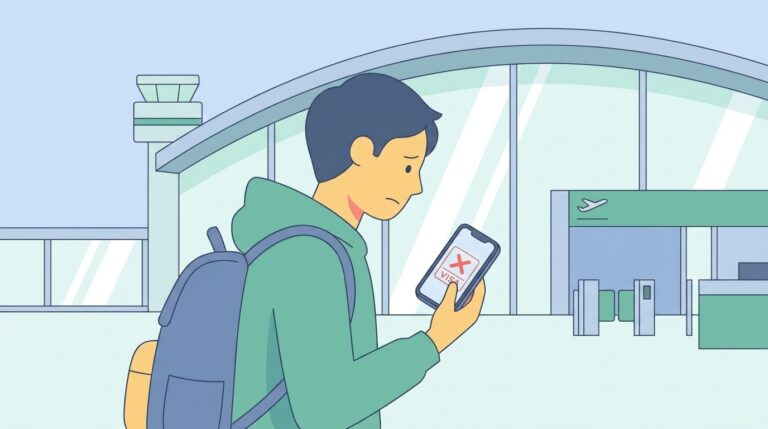
Navigating the US ESTA Maze: What to Do (and Say) When Your Travel Plans Hit a Wall
안녕하세요! Hello, fellow traveler! I’m your lead editor at Daily Hangul, and your trusted cultural navigator.
Imagine this: You’ve booked your flights, packed your bags, and you’re ready to embark on your dream trip. But then—bam! Your US ESTA application is rejected or stuck in limbo. Your heart sinks, your palms sweat, and you are left wondering what on earth to do. In Korea, where traveling abroad is practically a national pastime, dealing with sudden visa hiccups is a known stressor. Today, we’re not just going to talk about the bureaucratic steps; we are diving deep into the high-level, native Korean expressions (C2 level!) you need to express this exact frustration and conquer any travel roadblock like a true local. Let’s get started!
Phase 2: High-Level Expressions Deep Dive
1. 발을 동동 구르다 (bal-eul dong-dong gu-reu-da)
- Pronunciation: “Bal-eul dong-dong goo-reu-da” (Think of the sound of rapid, light drumming: dong-dong)
- Meaning: To stamp one’s feet in anxiety or helplessness (literally ‘to roll one’s feet continuously’).
- K-Culture Moment: You often see this in K-dramas when a character is waiting outside an emergency room or when they’ve missed their flight. It perfectly captures that restless pacing of someone who is powerless but desperate.
- Editor’s Insight: This isn’t just physical stamping; it’s a vivid idiomatic expression for extreme anxiety when things aren’t going your way. It is highly expressive and perfect for C2 speakers.
- Situation Spectrum: Casual (✅) | Semi-formal (✅) | Formal (⚠️)
- 🤔 Think About It: How does your culture physically express extreme anxiety? In Korea, dynamic body movements like stamping feet are deeply tied to emotional vocabulary.
2. 하늘이 무너지다 (ha-neul-i mu-neo-ji-da)
- Pronunciation: “Ha-neul-i moo-neo-ji-da” (Sounds like “ha-neul” + “moo-nuh-jee-da”)
- Meaning: One’s world falls apart (literally, ‘the sky collapses’).
- K-Culture Moment: Used dramatically when catastrophic news arrives—like finding out your visa is rejected the day before your flight.
- Editor’s Insight: In Korean culture, the “sky” (하늘) represents ultimate stability, hope, and destiny. When it “collapses,” it means you feel completely hopeless and devastated.
- Situation Spectrum: Casual (✅) | Semi-formal (✅) | Formal (⚠️)
- 🤔 Think About It: Is there an equivalent cosmic metaphor in your language for when everything goes wrong?
3. 정면 돌파하다 (jeong-myeon dol-pa-ha-da)
- Pronunciation: “Jeong-myeon dol-pa-ha-da” (Rhymes with “jung-myun dole-pa-ha-da”)
- Meaning: To tackle a problem head-on; to face a challenge directly.
- K-Culture Moment: In corporate or political thrillers, when a scandal breaks, the protagonist chooses to “정면 돌파” instead of hiding. In our context, it means going straight to the embassy for a regular B1/B2 visa after an ESTA rejection.
- Editor’s Insight: Formed by combining “정면” (front/face-to-face) and “돌파” (breakthrough). It shows determination, grit, and proactive energy.
- Situation Spectrum: Casual (✅) | Semi-formal (✅) | Formal (✅)
- 🤔 Think About It: Koreans highly value “정면 돌파” (confronting issues directly) over avoidance. How does this align with your personal problem-solving style?
Phase 3: Textbook Korean vs. Real Native Korean
To truly sound like a native, you need to move beyond standard textbook grammar.
Scenario 1: Describing a visa rejection
- 📖 Textbook: “비자 신청이 거절되어서 미국에 갈 수 없습니다.” (My visa application was rejected, so I cannot go to America.)
- 🗣️ Real Native: “ESTA 승인이 안 떨어져서 비행기 표 날리게 생겼어요.” (My ESTA didn’t come through, so I’m about to lose my plane ticket.)
- 💡 Why the difference? Real Koreans use the phrase “승인이 떨어지다” (approval is granted/literally ‘falls’) and “날리다” (to waste/blow away money/tickets) to sound natural and urgent.
Scenario 2: Deciding to apply for an embassy visa instead
- 📖 Textbook: “대사관에 가서 다시 비자를 신청하겠습니다.” (I will go to the embassy and apply for a visa again.)
- 🗣️ Real Native: “답답해서 그냥 대사관 인터뷰로 정면 돌파하려고요.” (It’s so frustrating, I’m just going to face it head-on with an embassy interview.)
- 💡 Why the difference? “답답하다” (stuffy/frustrated) perfectly conveys the emotional gridlock of administrative delays, while “정면 돌파” shows your active resolve.
Phase 4: K-Culture Deep Dive & Non-Verbal Manners
4-1. 눈치 (Nunchi) & Non-verbal Etiquette at the Embassy
When dealing with visa issues at the embassy or airport, 눈치 (Nunchi – situational quick-wittedness) is crucial.
* Eye Contact: Avoid glaring or looking overly defensive. Maintain a calm, respectful eye contact.
* Posture: Keep your shoulders relaxed but back. In Korea, an overly slumped posture during stressful official chats might be interpreted as a lack of preparation or sincerity.
4-2. The Korean Need for Speed: “빨리빨리” (Ppalli-Ppalli) Culture vs. Administrative Waiting
Korea is famous for its hyper-fast processing. However, when dealing with foreign visa systems like the US ESTA, the slow response times can drive Koreans crazy. You will often hear travelers complaining online, sharing real-time status updates on forums because they simply cannot tolerate the waiting!
Phase 5: Interactive Roleplay Scenario
Meet 민지 (Minji), a seasoned traveler who always has a plan B, and 마크 (Mark), a stressed-out traveler whose ESTA was unexpectedly rejected.
Character Profiles:
- 민지 (Minji): Organized, calm, and always knows the best administrative workarounds.
- 마크 (Mark): Frustrated, pacing back and forth, holding his passport.
The Dialogue:
- 마크: 민지 씨, 큰일 났어요! 미국 가야 하는데 ESTA 승인이 거절됐어요. 진짜 하늘이 무너지는 기분이에요. (Minji, I’m in big trouble! I have to go to the US, but my ESTA got rejected. I feel like my world is falling apart.)
- 민지 (놀라며): 네? 정말요? 출국이 다음 주인데 발을 동동 구르게 생겼네요. 구체적인 거절 사유가 나왔나요? (What? Really? Your departure is next week, so you must be stamping your feet in panic. Did they give a specific reason?)
- 마크 (한숨을 쉬며): 아니요, 그냥 ‘승인 거절’로만 떠요. 비행기 표도 다 끊어놨는데 어떡하죠? (No, it just says ‘Travel Authorization Denied’. I already booked the flights, what should I do?)
- 민지 (단호하게): 이럴 때는 꼼수 부리지 말고 그냥 대사관 인터뷰로 정면 돌파해야 해요. 서둘러서 인터뷰 예약부터 잡으세요! (In times like this, don’t try any tricks. You just have to tackle it head-on with an embassy interview. Hurry and book the interview first!)
- 마크: 인터뷰 승인이 바로 날까요? 너무 걱정돼요. (Will the interview be approved quickly? I’m so worried.)
- 민지: 필요한 서류 철저하게 준비해가면 괜찮을 거예요. 정신 바짝 차리고 준비해 봐요! (If you prepare the required documents thoroughly, you’ll be fine. Keep your wits about you and let’s prepare!)
🔀 Interactive Choice: How should Mark respond to Minji’s advice?
- Choice A: “에이, 귀찮은데 그냥 다른 나라로 여행 갈래요.” (Forget it, it’s too troublesome, I’ll just travel to another country.)
- Feedback: Bad. Giving up so easily is not a “정면 돌파”! You’ll miss out on your original plan.
- Choice B: “고마워요, 민지 씨. 알려준 대로 바로 대사관 예약 사이트 들어가 볼게요!” (Thank you, Minji. I’ll check the embassy booking site right away!)
- Feedback: Best! This demonstrates proactive resolve and uses Minji’s advice perfectly.
- Choice C: “혹시 ESTA 다시 신청하면 되지 않을까요? 한 번 더 해볼게요.” (Couldn’t I just reapply for ESTA? I’ll try one more time.)
- Feedback: Risk! Reapplying for ESTA immediately after a rejection without resolving the underlying issue usually results in another rejection and wastes money.
Phase 6: 10-Second Emotional Shadowing Drill
Practice speaking like a native with these emotion-infused pacing lines! / represents a natural pause.
- [🥺 Frustrated and Desperate]
“ESTA 승인이 / 안 떨어져서 / 진짜 / 발을 동동 구르고 있어요…”
(The ESTA approval isn’t coming through, so I’m really stamping my feet in panic…) -
[🔥 Determined and Bold]
“걱정만 하지 말고 / 대사관 인터뷰로 / 정면 돌파합시다!”
(Don’t just worry, let’s face it head-on with an embassy interview!)
Phase 7: K-Culture Mini Dictionary
- 멘붕 (men-bung) | Mental breakdown | A slang word combining ‘멘탈’ (mental) and ‘붕괴’ (collapse). Used when your visa gets rejected right before travel.
- 먹통 (meok-tong) | Glitched/Frozen | Originally meaning a mute box, now used for apps or websites that freeze or don’t work (e.g., “ESTA 사이트가 먹통이에요”).
- 벼락치기 (byeo-rak-chi-gi) | Last-minute rushing | Overcoming a task right before the deadline. Applying for a visa last minute is a dangerous 벼락치기!
- 복불복 (bok-bul-bok) | Hit-or-miss | Depending entirely on luck. Sometimes ESTA approval speeds feel like a total 복불복.
Phase 8: Travel Survival Kit
Survival Phrases for Visa Emergency:
- “비자 인터뷰 긴급 예약 가능한가요?” (Is an emergency visa interview appointment available?) – Pronunciation: “Bi-ja in-teo-byu gin-geup ye-yak ga-neung-han-ga-yo?”
- “ESTA 승인 보류 중인데 얼마나 걸릴까요?” (My ESTA is pending, how long will it take?) – Pronunciation: “ESTA seung-in bo-ryu jung-in-de ol-ma-na geol-ril-kka-yo?”
- “서류 준비에 도움을 받고 싶습니다.” (I would like help preparing the documents.) – Pronunciation: “Seo-ryu jun-bi-e do-um-eul bat-go sip-seum-ni-da.”
Editor’s Travel Note:
Before rushing to the embassy, make sure you download the official navigation apps and check the official channels. For address lookups in Seoul, use the Naver Map App Download instead of Google Maps, as it is much more accurate. To check visa slot availability, visit the official US Embassy Embassy Reservation Portal.
Disclaimer: Visa regulations and booking times can change frequently; always double-check dates and policies on official government portals.
Phase 9: “One Step Deeper” (Reflective Prompt)
In Korean culture, the concept of 유비무환 (yu-bi-mu-hwan)—”preparedness prevents disaster”—is deeply respected. When traveling abroad, Koreans often prepare backup paper documents, printed hotel bookings, and physical itineraries just in case digital systems fail. This balance of hyper-digital lifestyle and analog thoroughness is what makes Korean travelers so resilient.
💬 Your Turn: Have you ever experienced a sudden bureaucratic roadblock while traveling? How did you handle it? Did you “정면 돌파” (face it head-on) or choose another path? Share your story in the comments below!
Phase 10: FAQ & Avoiding Common Mistakes (FAQ Schema)
Q: ESTA rejected status cannot be reversed. Is that true?
A: Yes, once an ESTA is denied, you cannot appeal the decision on the online portal. You must apply for a regular non-immigrant visa (such as B1/B2) via the US Embassy.
Q: Can I apply for ESTA again immediately?
A: Unless your circumstances have significantly changed or you made a factual error on your form, immediate reapplication will likely result in another denial.
Q: What is the average waiting time for an embassy interview?
A: It fluctuates wildly depending on the season. During peak vacation periods, wait times can stretch to several weeks.
🚨 Common Mistakes Board:
- Mistake 1: Entering ‘O’ instead of ‘0’ (number zero) on your passport number.
- Correct Action: Carefully check your passport details multiple times before submitting.
- Mistake 2: Panicking and trying to use unofficial “expedited” ESTA websites that charge massive fees.
- Correct Action: Only use the official
.govwebsite. No third-party site can bypass official government wait times.
- Correct Action: Only use the official
- Mistake 3: Booking non-refundable flights before receiving visa approval.
- Correct Action: Always wait for visa confirmation or book flexible tickets.
Phase 11: Action Mission
- Bronze Mission: Write down the expression “정면 돌파” in your notebook and repeat it aloud 3 times with your best confident K-drama protagonist voice.
- Silver Mission: Share this post on your social media with the hashtag
#DailyHanguland tag a friend who is planning an international trip. - Gold Mission: Write a mock sentence in the comments below explaining a stressful situation using “발을 동동 구르다”.
Phase 12: Interactive Quiz Challenge
Test your knowledge of high-level Korean travel expressions!
1. What does the idiom “하늘이 무너지다” mean in a travel context?
- A) The weather is too bad for the flight to take off.
- B) Feeling completely devastated and hopeless due to a major setback.
- C) A sudden discount on flight tickets.
Reveal Answer & Explanation
Correct Answer: B
“하늘이 무너지다” literally means “the sky is collapsing,” representing the feeling of total hopelessness when catastrophic news hits.
2. Fill in the blank: “인터넷이 갑자기 안 돼서 사이트가 ___________가 되었어요.” (The internet suddenly cut out, so the site became glitched/frozen.)
- A) 멘붕
- B) 복불복
- C) 먹통
Reveal Answer & Explanation
Correct Answer: C
“먹통” (meok-tong) refers to a glitched, frozen, or non-responsive device or system.
3. True or False: In Korea, when facing a hard problem, “정면 돌파” means avoiding the issue until it goes away.
- True / False
Reveal Answer & Explanation
Correct Answer: False
“정면 돌파” means tackling a problem directly and head-on!







