

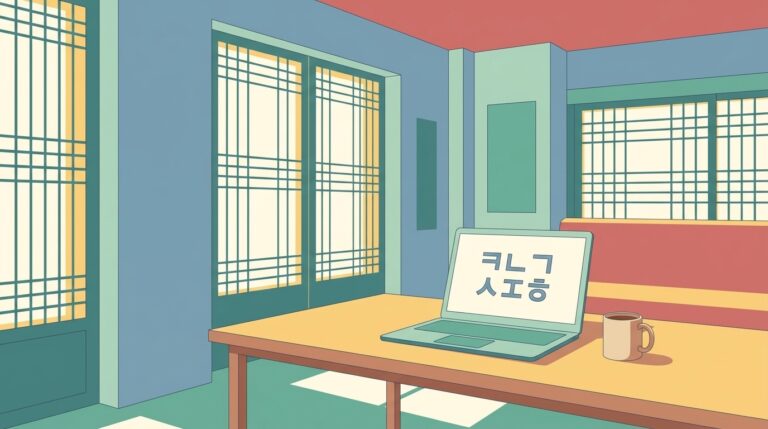
Is Modern Korean Office Culture Really Like K-Dramas? Your Ultimate Guide to Smart Work Korean
안녕하세요! (Annyeonghaseyo!) Your friendly neighborhood chief editor and veteran Korean language tutor here. If you’ve spent any time watching modern corporate K-Dramas like Start-Up or Search: WWW, you might have noticed a massive shift in how Korean offices are portrayed. Gone are the days when every single Korean employee had to sit rigidly at their desk until the boss left at 9:00 PM.
Today, Korea is rapidly embracing Smart Work (스마트 워크) and Flexible Working Arrangements (유연 근무제). From high-tech startups in Pangyo (Korea’s Silicon Valley) to major conglomerates in Gangnam, teams are redefining collaboration. But as a C1-level learner, you know that with a change in work culture comes a completely new set of linguistic nuances.
If you’ve ever felt anxious about how to politely tell your team leader you are working remotely tomorrow without sounding lazy, or if you want to understand the modern slang used in modern slack channels, this guide is for you! Let’s dive deep into the real-world vocabulary of modern Korean collaboration.
Phase 2: Core Expressions Deep Dive
To sound like a seasoned professional in a modern Korean office, you must master these three structural terms. They represent the pillars of contemporary Korean corporate flexibility.
1. 시차출퇴근제 (Staggered Commuting System)
- Pronunciation: [Si-cha-chul-toe-geun-je] / See-chah-chool-twae-goon-jeh
- Meaning: Staggered hours or flexible commuting. It allows employees to shift their start and end times (e.g., working 8:00 AM to 5:00 PM instead of 9:00 AM to 6:00 PM).
- K-Culture Moment: Think of characters in modern dramas adjusting their commute to avoid the dreaded “hell-subway” (지옥철 – Ji-ok-cheol) rush hour in Seoul, grabbing an iced Americano in peace.
- Editor’s Insight: This word is highly professional. When utilizing this system, it is polite to announce it in advance so colleagues don’t look for you at your desk at 9:05 AM.
- Situation Spectrum:
- Casual/Peer: ✅
- Semi-formal (Colleague): ✅
- Formal (Boss/Elder): ✅
- 🤔 Think About It: Traditional Korean workplace culture highly valued ‘눈도장’ (Noon-do-jang – stamping one’s eyes), which means making sure your boss physically sees you at your desk. How does the rise of 시차출퇴근제 challenge this deeply ingrained physical presence value?
2. 거점 오피스 (Satellite Office / Hub Office)
- Pronunciation: [Geo-jeom-o-pi-seu] / Guh-jum-oh-pee-soo
- Meaning: Satellite offices set up by major companies in regional hubs (like Mapo, Gangnam, or Bundang) so employees don’t have to commute all the way to the main headquarters.
- K-Culture Moment: Tech giants like Kakao and Naver lead this trend, offering beautifully designed, cafe-like workspaces across Seoul that look straight out of a futuristic design catalog.
- Editor’s Insight: It is crucial not to confuse this with a standard branch office (지사 – Ji-sa). A “거점 오피스” is specifically built for remote, agile work within the same corporate entity.
- Situation Spectrum:
- Casual/Peer: ✅
- Semi-formal (Colleague): ✅
- Formal (Boss/Elder): ✅
- 🤔 Think About It: Why do you think modern Korean companies prefer to open physical satellite offices rather than having employees work entirely from home? What does this reveal about Korean collaboration dynamics?
3. 워라밸을 챙기다 (To Secure/Protect One’s Work-Life Balance)
- Pronunciation: [Wo-ra-bael-eul chaeng-gi-da] / Wah-rah-bell-eul chaeng-ghee-dah
- Meaning: Literal translation is “to pack/take care of one’s Work-Life Balance” (워라밸 is a portmanteau of Work, Life, and Balance).
- K-Culture Moment: Often heard in modern lifestyle K-Indie songs or spoken by characters who refuse to join toxic after-work drinking rounds (hoesik), prioritizing their evening yoga or hobbies instead.
- Editor’s Insight: The verb 챙기다 (to take care of/pack) is highly empathetic. Saying someone “워라밸을 잘 챙긴다” can be a compliment, showing they are organized and value personal well-being.
- Situation Spectrum:
- Casual/Peer: ✅
- Semi-formal (Colleague): ✅
- Formal (Boss/Elder): ⚠️ (Use cautiously; focusing too much on personal life over work can sometimes be perceived negatively by conservative bosses)
- 🤔 Think About It: In English, we say we ‘maintain’ balance. Why do you think Koreans use the verb ‘챙기다’ (to pack, nurture, or take care of like a child or meal)?
Phase 3: Textbook Korean vs. Real-World Korean
When you work in a dynamic Korean team, textbook phrases can make you sound like a formal robot. Let’s look at how native professionals actually speak in Slack channels and real-time huddles.
Situation 1: Letting your team know you are working from home tomorrow
- 📖 Textbook Korean: “저는 내일 집에서 원격으로 근무하겠습니다.” (I will work remotely from home tomorrow.)
- 🗣️ Real-World Korean: “내일은 재택 돌릴게요! 급한 건 슬랙으로 주시면 바로 확인하겠습니다.” (I’ll run/do work from home tomorrow! If anything is urgent, ping me on Slack and I’ll check it right away.)
- 💡 Why the difference?: Modern corporate workers use the verb 돌리다 (to run/operate) for systems or statuses (like WFH, shifts, or programs). It sounds highly natural, active, and integrated into modern workflows.
Situation 2: Leaving early using the flexible/staggered commute system
- 📖 Textbook Korean: “저는 유연 근무제를 사용하여 5시에 퇴근할 것입니다.” (I will leave work at 5 PM using the flexible work system.)
- 🗣️ Real-World Korean: “저 오늘 시차라 먼저 들어가 보겠습니다! 다들 고생하세요!” (Since I’m on staggered hours today, I’ll head out first! Have a great evening, everyone!)
- 💡 Why the difference?: Abbreviations are king in Korean office chats. “시차출퇴근제” is shortened to just “시차” (Sicha). Additionally, instead of the heavy word “퇴근” (leaving work), using “들어가다” (to go inside/home) is a much softer and warmer way to exit.
Phase 4: K-Culture Deep Dive & Non-Verbal Etiquette
4-1. The Art of “Noon-chi” (눈치) When Logging Off Early
Even in companies with stellar flexible systems, leaving the office when your teammates are swamped requires social intelligence. This is where 눈치 (Nunchi – tactical social reading) comes in.
* The Non-Verbal Manner: When leaving early due to staggered hours, do not boast about your free evening. Gently pack your laptop, keep your voice at a respectful, medium volume, and offer a polite bow to your immediate neighbors. A small nod and saying “내일 뵙겠습니다” (See you tomorrow) softly ensures you aren’t disrupting the team’s flow.
4-2. The Core-Time Myth vs. Reality
In many modern Korean companies, they implement 코어 타임 (Core Time)—usually between 1:00 PM and 4:00 PM—when everyone must be online and available for collaboration, regardless of their flexible schedule.
* K-Drama vs. Reality: While dramas show glamorous employees working on rooftops at 2:00 PM, reality is highly collaborative. In real life, missing a Slack message during “Core Time” without a prior “자리비움” (Away/AFK) status update is considered a major breach of etiquette.
Phase 5: Real-World Roleplay Scenario
Setting: A sunlit lounge at a premium shared office in Yeouido, Seoul. Modern chill-out lo-fi music plays softly in the background. You are talking with Min-woo, your progressive but busy Product Team Lead.
Characters:
* You (민우’s Team Member): An agile specialist navigating the flexible work transition.
* 민우 팀장님 (Team Lead Min-woo): Open-minded but responsible for project delivery.
1. 민우: (커피를 내리며) 오, 지민 씨! 오늘 아침 일찍 나오셨네요?
   Min-woo: (Pouring coffee) Oh, Jimin! You came in really early this morning?

2. 나: 🎭 (밝게 웃으며 커피 컵을 쥐고) 네, 팀장님! 오늘 시차 신청해서 일찍 시작했어요.
   Me: 🎭 (Smiling brightly, holding coffee cup) Yes, Team Lead! I applied for staggered hours today, so I started early.

3. 민우: 아, 맞다! 지민 씨 이번 주부터 유연 근무제 본격적으로 쓰신다고 했죠?
   Min-woo: Ah, right! You said you’d be fully utilizing the flexible hours system starting this week, right?

4. 나: 🎭 (끄덕이며) 네, 오늘 5시에 퇴근해서 저녁에 필라테스 가려고요. 워라밸 좀 챙겨보려고요!
   Me: 🎭 (Nodding) Yes, I plan to leave at 5 PM today to go to Pilates in the evening. Trying to secure some work-life balance!

5. 민우: 좋네요! 안 그래도 요즘 다들 너무 달려서 걱정이었는데. 그런데 오늘 오후 회의는 괜찮으시죠?
   Min-woo: That's great! I was worried because everyone's been running on fumes lately. But you're fine for this afternoon's meeting, right?

6. 나: 🎭 (안심시키며 손짓과 함께) 걱정 마세요. 오후 코어 타임에는 당연히 집중 근무 자리 지킵니다!
   Me: 🎭 (Reassuring with a hand gesture) Don't worry. During the afternoon core time, I will absolutely be at my desk working!

7. 민우: 아, 다행이네요. 그럼 내일은 거점 오피스로 가신다고 하셨던가요?
   Min-woo: Ah, what a relief. Then tomorrow, did you say you are heading to the satellite office?

8. 나: 🎭 (태블릿을 확인하며) 네, 내일은 집 근처 일산 거점으로 출근하려고요. 캘박 해두었습니다!
   Me: 🎭 (Checking tablet) Yes, tomorrow I plan to head to the Ilsan satellite office near my home. I've locked it in my calendar!

9. 민우: 최고예요. 스마트 워크 정착이 지민 씨 덕분에 아주 순조롭네요.
   Min-woo: Excellent. Smart Work is settling in so smoothly thanks to you.

10. 나: 🎭 (공손하게 두 손을 모으며) 아닙니다. 팀장님이 유연하게 지원해 주신 덕분이죠.
    Me: 🎭 (Politely bringing hands together) Not at all. It's all thanks to your flexible support.
🔀 Decision Point
It is now 4:55 PM, and you are getting ready to wrap up. Some team members are still highly focused on a bug fix. What do you do?
- Option A: Slip out silently without saying anything to avoid disturbing them.
- Option B: Loudly yell, “저 퇴근합니다! 즐거운 저녁 되세요!” (I’m leaving! Have a great evening!)
- Option C: Go to your team channel on Slack and write a brief, polite sign-off: “저 오늘 시차 신청일이라 5시 퇴근 건으로 먼저 들어갑니다! 급한 건 멘션 남겨주시면 내일 아침에 바로 대응할게요!”
💡 Feedback on Your Choices
- Best Choice (Option C): Perfect! In modern Korean smart workplaces, written visibility is crucial. This lets colleagues know exactly when you’re leaving and how to handle urgent matters without putting anyone on the spot.
- Bad Choice (Option A): This can cause confusion. If someone looks for you at 5:05 PM, they might worry or think you went missing.
- Risk Choice (Option B): Too loud and potentially tone-deaf if others are dealing with an active technical emergency. Keep physical exits gentle and virtual communication clear.
Phase 6: 10-Second Emotion Shadowing Drill
Let’s train your tongue and emotional inflection! Pay attention to the pauses (/) and try to mimic the emotional markers.
1. [😊 Proud and Confident]
- Korean: “저 / 이번 달부터 / 시차출퇴근제 / 신청했어요!”
- Pronunciation: [Jeo / i-beon dal-bu-teo / si-cha-chul-toe-geun-je / sin-cheong-haet-seo-yo!]
- Emotion: You are sharing great news with a close colleague about your newly approved work hours.
2. [🥺 Apologetic yet Clear]
- Korean: “죄송하지만 / 오늘 제 코어 타임 이후라 / 답변이 조금 늦을 수 있어요.”
- Pronunciation: [Joe-song-ha-ji-man / o-neul je / ko-eo ta-im i-hu-ra / dap-byeon-i jo-geum neu-zeul su i-sseo-yo.]
- Emotion: Politely managing expectations on response times in late afternoons.
3. [😤 Determined and Professional]
- Korean: “회의 일정은 / 구글 캘린더에 / 캘박 해두었습니다!”
- Pronunciation: [Hoe-ui il-jeong-eun / gu-geul kael-lin-deo-e / kael-bak hae-du-at-seub-ni-da!]
- Emotion: Proactively proving to your manager that your collaboration is perfectly organized.
Phase 7: K-Culture Mini Dictionary
| Word (Korean + Romanization) | English Meaning | Cultural & Contextual Context |
|---|---|---|
| 야근 (Yageun) |
Overtime work | Historically a badge of honor, now modern workplaces actively use systems like PC-OFF (automatically shutting down PCs at 6 PM) to prevent unnecessary yageun. |
| 코어 타임 (Ko-eo ta-im) |
Core Collaboration Hours | The mandatory window (usually 1 PM – 4 PM) where all remote and flexible workers must be active for team meetings. |
| 캘박 (Kael-bak) |
Calendar Lock | A popular modern office slang combining 캘린더 (Calendar) + 박다 (to drive in/nail). It means “I have booked/locked this slot in my calendar.” |
| 탕비실 (Tangbisil) |
Pantry / Break Room | Originally meaning “boiling room” where tea was made, it’s now the modern office kitchen where gossip is shared and iced coffees are crafted. |
Phase 8: Traveler’s Survival Kit
Even if you aren’t working full-time in Seoul, as a digital nomad or business traveler, you will need these tools!
Survival Phrases for Working Remotely in Seoul
- “여기 와이파이 비밀번호가 어떻게 되나요?”
- Yeo-gi wa-i-pa-i bi-mil-beon-ho-ga eo-tteo-ke doe-na-yo?
- Pro Tip: What is the Wi-Fi password here? Absolute gold when entering a working cafe in Hongdae.
- “콘센트 있는 자리가 어디에 있을까요?”
- Kon-sen-teu in-neun ja-ri-ga eo-di-e is-seul-kka-yo?
- Pro Tip: Where can I find a seat with an outlet? “Consent” is the Konglish word for an electrical outlet!
- “조금 조용한 미팅 공간이 필요해요.”
- Jo-geum jo-yong-han mi-ting gong-gan-i pil-yo-hae-yo.
- Pro Tip: I need a quiet space for a meeting. Great for asking staff at premium coworking spaces.
📌 Editor’s Travel Note: If you need a gorgeous and high-speed working location, do not just search Google. Use Naver Map App to search for “공유 오피스” (Coworking space) or “노트북 하기 좋은 카페” (Cafes good for laptop use) to find hidden local gems with optical-fiber speed Wi-Fi.
Phase 9: Deep Thoughts — “한 발 더 깊이” (One Step Deeper)
Traditional Korean work ethics were forged during the miracle of the Han River, characterized by 집단주의 (Collectivism) and 군대식 문화 (Military-style top-down command structure). Long hours and deep sacrifice were synonymous with loyalty. However, the rise of the MZ generation and global smart systems has introduced a new paradigm: 개인 맞춤형 효율성 (Individualized Efficiency).
This is not a simple adoption of Western habits. It is a unique hybridization. Korean workspaces still emphasize strong group harmony, but they now execute it via hyper-organized digital tools (like Kakao Work, Line Works, and Slack) and strict respect for boundaries. It’s an exciting time to observe how the language itself adapts, shortening complex bureaucratic words into witty corporate slang.
💬 Your Turn: How does your hometown or country handle the balance between flexibility and team collaboration? Do you have similar office slang like ‘Kael-bak’? Let me know in the comments below!
Phase 10: FAQ & Common Mistakes
Q: Can I say “수고하셨습니다” (Sugo-hasyeot-seub-nida) when leaving early under flexible hours?
A: Yes, but with caution! Historically, this phrase meant “Thank you for your hard labor,” and was used only by superiors to subordinates. Today, peers use it casually, but if you are leaving early while your elder manager is still working, it can sound slightly inappropriate to some traditionalists. Instead, use: “먼저 들어가 보겠습니다! 고생하셨습니다!” (I’ll head out first! You worked hard!)
Q: What is the difference between 재택근무 (WFH) and 원격근무 (Remote Work)?
A: 재택근무 specifically refers to working from home (재택 meaning ‘at house’). 원격근무 is a broader term for remote work from any location (cafes, hotels, beaches, etc.). If you are working from a coworking lounge, say 원격근무 or 거점근무.
Q: Is “워라밸” considered slang?
A: It started as a slang word but has transitioned into standard business and media vocabulary. You can safely use it in job interviews and corporate newsletters!
🚨 Common Mistake Alert!
- The Mistake: Writing “내일 집에서 놀면서 일하겠습니다” (I will work while playing at home tomorrow) as a lighthearted joke in a Slack channel.
- The Correction: Even in highly progressive companies, using “놀다” (to play/loaf) in relation to working from home is a taboo that can trigger traditional bosses. Always frame WFH with productive words like 집중 근무 (focused work) or 원격 지원 (remote support).
Phase 11: Action Mission
Are you ready to practice your C1 Korean skills? Take on these three challenges!
- 🥉 Bronze (The Mirror Challenge): Record yourself saying Phase 6’s Shadowing Drill 2 ([🥺 Apologetic yet Clear]) three times. Make sure your intonation softens naturally at “~하느라.”
- 🥈 Silver (The Social Network Challenge): Draft a mock Slack message using 캘박 or 시차 and paste it into your study journal or share it with an online study partner.
- 🥇 Gold (The Reality Challenge): Next time you visit a cafe or coworking space in Korea (or online), use the survival phrase “여기 와이파이 비밀번호가 어떻게 되나요?” naturally instead of searching for a written sign!
🎮 K-Culture Bonus Mission: Watch Episode 1 of the drama Search: WWW or Start-Up. See if you can spot modern workplace tools, English terminology integration, and shared workspaces in action!
Phase 12: Interactive Quiz
Test your knowledge of modern Korean smart work culture!
1. Scenario-based Question
Your team uses “Core Time” from 1 PM to 4 PM. You want to run a personal errand at 2 PM using your flexible schedule. What is the correct protocol?
* A) Just go; flexible means flexible.
* B) Notify the team on Slack in advance: “개인 용무로 인해 2시부터 3시까지 자리비움 예정입니다. 복귀 후 바로 확인하겠습니다.”
* C) Log out of Slack quietly and check messages on your phone while walking.
🔍 Check Answer
Correct Answer: B
Even under flexible hours, Core Time is sacred. If you must step away, transparently communicate your status on collaborative tools so your teammates can plan accordingly.
2. Fill in the Blanks
“이번 주 금요일 회의는 구글 캘린더에 미리 ( ) 해두었습니다! 시간 비워두세요.”
* Hint: Modern slang for locking/saving a date on the calendar.
🔍 Check Answer
Correct Answer: 캘박 (Kael-bak)
3. True or False
True or False: Calling your boss “꼰대” (Gonde – boomer/traditional boss) directly to their face is acceptable in a modern Smart Work office.
🔍 Check Answer
Correct Answer: False!
While modern Korean companies have flatter structures (수평적 문화), respect and polite speech (존댓말) are still absolutely non-negotiable. Calling someone a ‘꼰대’ to their face remains highly offensive.
We hope this guide empowers your corporate Korean and makes your collaboration seamless and culturally fluent! Keep shining, study hard, and as always, 매일한글 (Daily Hangul) is right here with you! 💙







