

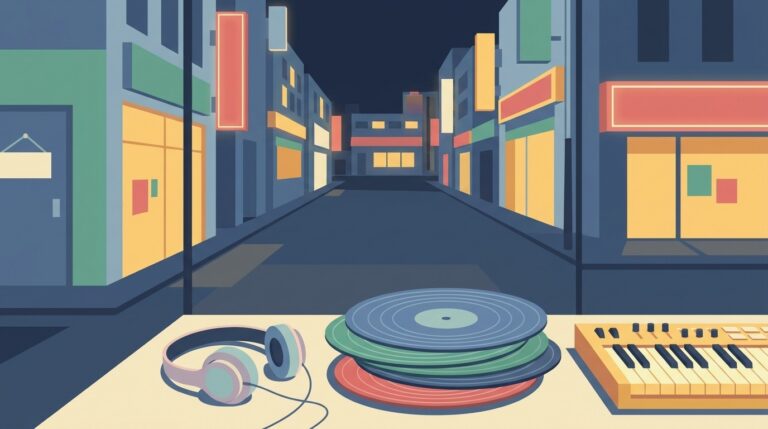
Phase 1: Why “This Song Is Good” Isn’t Enough Anymore
안녕하세요! 매일한글 에디터입니다. (Annyeonghaseyo! Maeil Hangeul editeo-imnida. / Hello! I am your Daily Hangul editor.) Picture this: you are watching the Melon Music Awards with Korean friends as a sleeper-hit indie track pulls off a chart all-kill. Everyone debates the vocal tone and production, and you only manage to say, “노래가 진짜 좋아요 (Noraega jinjja joayo / The song is really good).” Sound familiar? Based on real intermediate learner feedback, moving beyond basic adjectives is the biggest hurdle in K-Pop conversations. Today, you will gain vivid review vocabulary and chart slang to critique music like a true Seoul insider.
Phase 2: Deep Dive into 3 Essential Expressions
1. 세련된 신시사이저 사운드의 레이어링이 돋보인다 (Seryeondoen sinsisaijeo saundeu-ui reieoring-i dotboinda)
- Pronunciation: Se-ryeon-doen sin-si-sa-i-jeo sa-un-deu-ui re-i-eo-ring-i dot-bo-in-da (Think of dot-bo-in-da like “dote-boh-in-dah,” where the t hits softly before b.)
- Meaning: Literally “the layering of refined synthesizer sound stands out.” In music reviews, it means “the polished synth layering shines through.”
- K-Culture Moment: You will hear music critics on podcasts or YouTube album reaction channels drop this exact phrase when praising a city-pop or retro-synth K-Pop title track right after the chorus hits.
- Editor’s Insight: The verb 돋보이다 (dotboida / to stand out favorably) is pure gold for Level 4 learners. Unlike 눈에 띄다 (nune ttuida / to catch the eye), which can be neutral or even negative, 돋보이다 always carries a refined, complimentary nuance—perfect for highlighting an artist’s craftsmanship.
- Situation Spectrum: Casual (⚠️ Use the polite/casual ending 돋보여요 or 돋보여) / Semi-formal (✅ 돋보입니다 or 돋보여요) / Formal (✅ 돋보인다 in written reviews; 돋보입니다 in broadcasts)
- 🤔 Think About It: English reviews often rely on punchy adjectives like “lush” or “crisp,” whereas Korean reviews love pairing concrete nouns with verbs of visibility like 돋보이다 (stands out) or 어우러지다 (harmonizes). How does your native language describe layered production—through sight, touch, or taste?
2. 청춘의 공허함을 담담한 보컬 톤으로 설득력 있게 그려냈다 (Cheongchun-ui gongheoham-eul damdamhan bokeol ton-euro seoldeungnyeok itge geuryeonaetda)
- Pronunciation: Cheong-chun-ui gong-heo-ham-eul dam-dam-han bo-keol ton-eu-ro seol-deung-nyeok it-ge geu-ryeo-naet-da (Note the nasal assimilation in 설득력: it sounds like seol-deung-nyeok, almost like “sul-dung-nyuk.”)
- Meaning: Literally “drew out the emptiness of youth with a calm vocal tone persuasively.” It translates naturally to “understated vocals convincingly capture the ache of youth.”
- K-Culture Moment: This is classic Korean Music Awards (KMA) jury language—often seen in liner notes or Melon Magazine essays when an indie band or singer-songwriter breaks into the mainstream charts.
- Editor’s Insight: Two key Level 4 gems live here: 담담하다 (damdamhada / calm, understated, matter-of-fact) and 그려내다 (geuryeonaeda / to depict or portray). In Korean pop culture, holding back tears and singing quietly (담담하게 부르다 / damdamhage bureuda) is often considered far more heartbreaking than belting high notes.
- Situation Spectrum: Casual (⚠️ Sounds like a critic in casual chat; soften to 담담해서 좋더라) / Semi-formal (✅ 그려냈어요) / Formal (✅ 그려냈다 in print reviews; 그려냈습니다 in interviews)
- 🤔 Think About It: Why do Korean listeners prize 담담함 (understated composure) in sad songs? Think about how Korean emotional expression balances restraint with deep feeling—and compare that to dramatic vocal delivery in Western pop ballads.
3. 중독성 있는 후크로 음원 차트를 올킬하며 역주행에 성공했다 (Jungdokseong inneun hukeu-ro eumwon chateu-reul olkilhamyeo yeokjuhaeng-e seonggonghaetda)
- Pronunciation: Jung-dok-seong in-neun hu-keu-ro eum-won cha-teu-reul ol-kil-ha-myeo yeok-ju-haeng-e seong-gong-haet-da (있는 sounds like in-neun, rolling smoothly like “een-nun.”)
- Meaning: Literally “succeeded in reverse-driving while all-killing the digital music charts with an addictive hook.” Practically: “achieved a chart all-kill and pulled off a sleeper-hit comeback.”
- K-Culture Moment: Entertainment news anchors use this line nonstop when an older B-side goes viral on short-form reels and suddenly rockets past mega-stars on Melon, Genie, and Bugs.
- Editor’s Insight: Notice 역주행 (yeokjuhaeng / driving the wrong way)! Normally it means wrong-way driving in traffic, which is dangerous. In K-Pop, however, it means climbing up the charts long after promotions ended—the ultimate underdog victory!
- Situation Spectrum: Casual (✅ 올킬했대 / 역주행했어) / Semi-formal (✅ 성공했어요) / Formal (✅ 성공했다 in articles; 성공했습니다 on news broadcasts)
- 🤔 Think About It: Korean chart culture turns music listening into a collective real-time event with terms like 올킬 (all-kill) and 콘크리트 차트 (concrete chart). Does your home country track streaming charts with the same competitive, hour-by-hour intensity?
Phase 3: Textbook Korean vs. Real Korean
Situation 1: Praising a Track’s Catchy Chorus and Production
- 📖 Textbook Korean: 이 노래의 후렴구는 기억하기 쉽고 반주가 아주 좋습니다. (I norae-ui huryeomgu-neun gieokhagi swipgo banjuga aju joseumnida. / The chorus of this song is easy to remember and the accompaniment is very good.)
- 🗣️ Real Korean: 중독성 있는 후크랑 세련된 사운드가 찰떡이네요! (Jungdokseong inneun hukeu-rang seryeondoen saundeuga chaltteogineyo! / The addictive hook and polished sound go together like rice cakes!)
- 💡 Why the difference? Nobody under 60 calls modern synth production 반주 (banju / karaoke-style accompaniment) in casual K-Pop talk. Using 후크 (hook), 사운드 (sound), and the fun idiom 찰떡이다 (chaltteogida / to be a match made in heaven, literally sticky rice cake) instantly signals intermediate-to-advanced fluency.
Situation 2: Talking About a Song Dominating the Top 10
- 📖 Textbook Korean: 이 가수의 노래가 오랫동안 순위에서 내려오지 않습니다. (I gasu-ui noraega oraetdong-an sunwi-eseo naeryeooji anseumnida. / This singer’s song does not come down from the rankings for a long time.)
- 🗣️ Real Korean: 콘크리트 차트를 뚫고 롱런 중이에요! (Konkeuriteu chateu-reul ttulko rongneon jung-ieyo! / It broke through the concrete chart and is having a long run!)
- 💡 Why the difference? Korean streaming charts are famously tough to crack because massive fandoms and loyal general-public hits lock the top 10 like poured cement—hence 콘크리트 (concrete). Saying 뚫다 (ttulta / to pierce through) captures the dramatic struggle far better than a dry textbook verb.
Phase 4: K-Culture Deep Dive & Non-Verbal Manners
4-1. Nunchi (눈치) & Gestures When Critiquing Music
In Korea, music tastes are closely tied to personal identity and fandom loyalty. Even if you are giving an analytical critique, 눈치 (nunchi / social awareness) matters! When sharing a critical opinion in person, Korean speakers rarely point bluntly or wave a hand dismissively. Instead, they tilt their head slightly, nod slowly to show they appreciate the artist’s effort first, and soften negative feedback with phrases like 개인적으로는 (gaeinjeogeuro-neun / personally) or 조금 아쉽긴 하지만 (jogeum aswipgin hajiman / although it is a bit 아쉬움/regrettable). Always read the room before critiquing a friend’s bias group!
4-2. Cultural Code: Award Shows vs. Real-Time Charts
To understand Korean pop discourse, you need to know the two pillars of validation: 대중성 (daejungseong / mass public appeal) and 작품성 (jakpumseong / artistic merit). Real-time charts like Melon Top 100 measure public appeal and fandom power—where a 퍼펙트 올킬 (PAK / Perfect All-Kill) across all major domestic charts earns legendary bragging rights. Meanwhile, ceremonies like the 한국대중음악상 (Korean Music Awards) prioritize critics’ panels who value 작품성—rewarding nuanced songwriting, understated vocals, and innovative sound layering regardless of chart rank.
Phase 5: Real-Life Roleplay Scenario
Setting: Vinyl & Synth, a dimly lit LP listening cafe in Yeonnam-dong, Seoul. Warm orange lamps glow over rows of albums while a mellow city-pop track spins on the turntable.
Characters: Min-jun (민준), a witty 28-year-old K-Pop review YouTuber, and You, a music-loving learner visiting Seoul.
- Min-jun: 🎭 Takes off his studio headphones and slides a vinyl sleeve across the wooden table.
이번에 역주행한 이 인디 밴드 신곡 들어봤어요? (Ibeon-e yeokjuhaenghan i indi baendeu singok deureobwasseoyo? / Have you heard this indie band’s song that recently became a sleeper hit?) - You: 🎭 Leans in curiously while sipping an iced Einspänner.
네! 어제 숏폼에서 처음 들었는데 차트 1위까지 올라갔더라고요. (Ne! Eojet syotpom-eseo cheoeum deureonneunde chateu il-wi-kkaji ollagatdeoragoyo. / Yes! I first heard it on short-form videos yesterday and saw it climbed all the way to #1 on the chart.) - Min-jun: 🎭 Nods enthusiastically, tapping his pen to the beat.
맞아요. 솔직히 콘크리트 차트 뚫기 진짜 힘든데 대단하죠. 음악적으로는 어땠어요? (Majayo. Soljikhi konkeuriteu chateu ttulki jinjja himdeunde daedanhajyo. Eumakjeogeuro-neun eottaesseoyo? / Right. Honestly, breaking through the concrete chart is super hard, so it’s amazing. How was it musically?) - You: 🎭 Pauses thoughtfully, looking at the lyric sheet.
저는 중독성 있는 후크랑 세련된 신시사이저 사운드의 레이어링이 정말 돋보였어요. (Jeoneun jungdokseong inneun hukeu-rang seryeondoen sinsisaijeo saundeu-ui reieoring-i jeongmal dotboyeosseoyo. / For me, the polished synthesizer sound layering over the addictive hook really stood out.) - Min-jun: 🎭 Raises his eyebrows in genuine surprise.
오, 표현력이 전문가 수준인데요! 보컬 톤은 어떻게 들었어요? (O, pyohyeonnyeogi jeonmunga sujun-indeyo! Bokeol ton-eun eotteoke deureosseoyo? / Oh, your phrasing is critic-level! How did you hear the vocal tone?) - You: 🎭 Smiles warmly and gestures softly with one hand.
과하지 않고 담담한 보컬 톤으로 청춘의 공허함을 설득력 있게 그려낸 것 같아요. (Gwahaji anko damdamhan bokeol ton-euro cheongchun-ui gongheoham-eul seoldeungnyeok itge geuryeonaen geot gatayo. / Without overdoing it, they seemed to convincingly capture the ache of youth with an understated vocal tone.) - Min-jun: 🎭 Laughs and writes your quote down in his notebook.
딱 제 생각이에요! 이 정도면 연말 시상식에서도 충분히 주목받겠네요. (Ttak je saenggagieyo! I jeongdomyeon yeonmal sisangsik-eseodo chungbunhi jumokbatgenneyo. / That is exactly what I think! At this rate, they’ll definitely get spotlighted at year-end award shows too.) - You: 🎭 Clinks your glass against his.
그쵸! 오래 사랑받는 롱런 곡이 됐으면 좋겠어요. (Geuchyo! Orae sarangbanneun rongneon gogi dwaesseumyeon jokesseoyo. / Right! I hope it becomes a long-running song loved for a long time.)
🔀 Interactive Branching Point
Min-jun now asks: *
🎬 Watch Our Daily Videos! (Daily Hangul Official Instagram)
Review the expressions you learned in this article with our fun daily short videos! Check out native pronunciation and real-life nuances in action.
- Instagram @dailyhangul_en
Frequently Asked Questions (FAQ)
Q: What does "세련된 신시사이저 사운드의 레이어링이 돋보인다 (Seryeondoen sinsisaijeo saundeu-ui reieoring-i dotboinda)" mean in Korean and how do you pronounce it?
A: In Korean, "세련된 신시사이저 사운드의 레이어링이 돋보인다 (Seryeondoen sinsisaijeo saundeu-ui reieoring-i dotboinda)" is pronounced [Se-ryeon-doen sin-si-sa-i-jeo sa-un-deu-ui re-i-eo-ring-i dot-bo-in-da (Think of dot-bo-in-da like "dote-boh-in-dah," where the t hits softly before b.] and means: Literally "the layering of refined synthesizer sound stands out." In music reviews, it means "the polished synth layering shines through."







