

Speak Like a Pro Gamer: Master Korean PC Bang Slang and Esports Culture
Phase 1: Empathy (Welcome to the Ultimate Digital Playground!)
안녕하세요! (An-nyeong-ha-se-yo!) Welcome back to Daily Hangul, your premium cultural guide. I’m your senior editor and local cultural navigator, here to take you on a journey through one of South Korea’s most legendary modern subcultures: the PC Bang (PC방) and the electric world of Korean Esports.
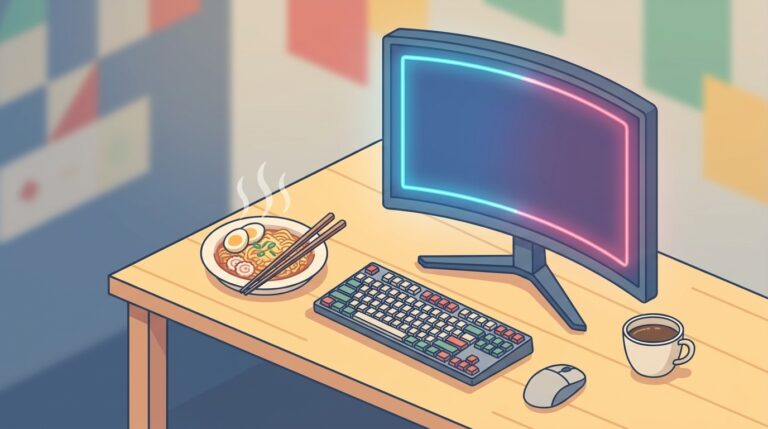
Imagine this: You walk into a sleek, neon-lit PC Bang in Hongdae or a roaring arena like LoL Park in Jongno. The clicking of mechanical keyboards sounds like raindrops on glass, the air is thick with the delicious aroma of gourmet instant ramen, and suddenly, a massive cheer erupts from the screen: “OMG, did you see that physical?! He literally carried!”
If you only know textbook Korean, you might understand the literal words, but you will miss the vibrant, high-energy pulse of what is actually being said. To truly blend in with Korean gamers and esports fans, you need to understand the linguistic shortcuts, the banter, and the unique cultural manners that govern this digital oasis.
Today, we’re leveling up your Korean from standard to “pro-gamer” status. Let’s dive in!
Phase 2: Deep-Dive into 3 Essential Esports Expressions
To sound like a native in the gaming world, you must master these three high-frequency expressions. Let’s break down their grammar, nuances, and social contexts.
1. 캐리하다 (kae-ri-ha-da)
- Pronunciation: [kae-ri-ha-da] / Sounds like the English word “carry” combined with the Korean verb “하다” (to do).
- Meaning: Strictly speaking, it means “to carry” a game. In real-world context, it refers to a single player dominating a match and leading an underperforming team to victory.
- K-Culture Moment: You will hear this constantly in gaming variety shows like Run BTS! or whenever gaming-heavy K-Dramas show characters teaming up in League of Legends.
- Editor’s Insight: While borrowed from the English “carry,” Koreans conjugate this just like any other native -하다 verb. You can use it outside of gaming too! If your friend plans an entire weekend trip perfectly, they “carried” the group (“이번 여행은 네가 캐리했다!”).
- Situation Spectrum:
- Friends & Casual settings: ✅ (Highly recommended!)
- Co-workers & Semi-formal: ⚠️ (Use only if you have a close, casual relationship with them)
- Bosses & Seniors: 🚫 (Too informal and slangy)
- 🤔 Think About It: Why do you think Korean gaming culture easily adopts English words like “carry” and blends them so seamlessly into Korean verb structures? How does your native language handle foreign gaming terms?
2. 버스 타다 (beo-seu ta-da)
- Pronunciation: [beo-seu ta-da] / Sounds like “bus” + “tah-dah” (to ride).
- Meaning: Literal: “To ride the bus.” Real Nuance: To get carried by a highly skilled teammate while contributing almost nothing yourself. You are just a passenger enjoying a free ride to victory!
- K-Culture Moment: Think of a K-Drama scene where a beginner character plays games with a pro and squeals with joy because they won without doing anything.
- Editor’s Insight: This is a fantastic self-deprecating expression. If you want to show humility after a win, tell your team: “저 버스 탔어요” (I just rode the bus). It immediately breaks the ice and shows you know the culture!
- Situation Spectrum:
- Friends & Casual settings: ✅ (Extremely natural)
- Co-workers & Semi-formal: ⚠️ (Great for humble humor among casual colleagues)
- Bosses & Seniors: 🚫 (Not appropriate for formal evaluations!)
- 🤔 Think About It: Contrast the proactive active metaphor of “carrying” with the passive metaphor of “riding a bus.” What does this tell us about how Koreans view teamwork and shared success?
3. 피지컬 (pi-ji-keol)
- Pronunciation: [pee-jee-keol] / Sounds like the English word “physical.”
- Meaning: Literal: Physical body/constitution. Real Nuance: In esports, it refers to a player’s lightning-fast reaction times, mechanical precision, and APM (actions per minute).
- K-Culture Moment: In esports broadcasts, commentators scream “피지컬 미쳤다!” (His physical is insane!) when a player dodges multiple skill shots in milliseconds.
- Editor’s Insight: Don’t confuse this with going to the gym! In a PC Bang, “피지컬” has nothing to do with lifting weights; it’s all about how fast and accurately your fingers move across the keyboard and mouse.
- Situation Spectrum:
- Friends & Casual settings: ✅
- Co-workers & Semi-formal: ⚠️
- Bosses & Seniors: 🚫
- 🤔 Think About It: How did a word that originally meant physical bodily health evolve to describe the digital micro-movements of fingers in a gaming chair?
Phase 3: Textbook Korean vs. Real Korean Showcase
Let’s compare what you learn in a standard classroom with what actually happens when you sit down in front of a curved gaming monitor in Seoul.
Situation 1: Ordering food from the PC Bang computer menu
- 📖 Textbook Korean: “여기 음식을 주문하고 싶습니다. 메뉴판을 주시겠습니까?” (I want to order food here. Could you please give me a menu?)
- 🗣️ Real Korean: (Clicking the screen UI) “여기 라면 하나랑 아이스티 한 잔 주문할게요!” (I’ll order one ramen and one iced tea here!)
- 💡 Why is it different? Modern PC Bangs are culinary havens. You do not talk to the staff directly or ask for a physical menu; you order directly through an on-screen widget while playing, and the staff delivers it directly to your desk.
Situation 2: Cheering for your favorite team at an esports stadium
- 📖 Textbook Korean: “선수들이 경기에서 이기기를 기원합니다!” (I hope the players win the match!)
- 🗣️ Real Korean: “가즈아! 화이팅!” (Let’s go! Fighting!) or “[Player Name] 미쳤다!” (Player Name is insane/amazing!)
- 💡 Why is it different? Stadium cheering is fast, collective, and emotionally raw. Traditional polite sentences are replaced by punchy, high-energy slang like “가즈아” (a passionate variation of ‘let’s go’) to sync with the collective crowd energy.
Phase 4: K-Culture Deep Dive & Non-Verbal Etiquette
4-1. Nunchi (눈치) & Non-Verbal Manners in the PC Bang
Walking into a PC Bang requires a bit of social awareness (Nunchi). While they can get loud during intense team fights, there are golden unspoken rules:
* The Headset Etiquette: If someone has both ears covered by a headset, do not tap their shoulder abruptly. It can ruin their focus in a high-stakes match. Instead, wave your hand slightly in their peripheral vision.
* The Space Barrier: PC Bang seats are cozy. Keep your elbows tucked in and avoid slamming your mouse loudly on the desk when frustrated. Showing “keyboard rage” (샷건 친다 – smashing the keyboard like a shotgun) is considered highly childish.
4-2. The Evolution of the PC Bang as a Social Oasis
In the West, LAN centers are often viewed as dark, niche basements for hardcore gamers. In Korea, the PC Bang is a brightly lit, mainstream social destination. Couples go there for dates (PC방 데이트), students go after academy classes to wind down, and foodies go simply to eat.
With gourmet kitchens serving everything from bulgogi rice bowls to carbonara tteokbokki, the PC Bang acts as a combined arcade, restaurant, and community center. It is a vital pillar of youth culture, closely tied to the social bonding of Korean university life.
Phase 5: Interactive Gaming Roleplay Scenario
Setting the Scene: You and your Korean close friend, Minjun, are sitting side-by-side at a premium PC Bang in Sinchon. The mechanical keys clack furiously, and you are currently in a high-stakes team battle in League of Legends.
Characters:
* You: A passionate gamer wanting to prove your skills and vocabulary.
* Minjun (민준): Your competitive, supportive, and slightly loud Korean friend.
The Script:
- Minjun: 🎭 (Staring intensely at his screen, fingers flying) “야! 지금 미드 쪽에서 한타(team fight) 열린다! 빨리 와!”
(Hey! A team fight is breaking out in mid lane right now! Hurry!) - You: 🎭 (Focusing your eyes) “나 지금 바로 가는 중! 내 뒤에 잘 따라와!”
(I’m on my way right now! Follow close behind me!) - Minjun: 🎭 (Screaming as the enemy attacks him) “헐, 나 피해(HP) 별로 없어! 살려줘!”
(OMG, I have barely any health left! Save me!) - You: 🎭 (Using your character’s ultimate skill flawlessly) “걱정 마, 내가 뒤에서 서포트할게!”
(Don’t worry, I’ll support you from behind!) - Minjun: 🎭 (Leaping up slightly in his gaming chair) “와! 방금 스킬 들어간 거 대박이다!”
(Wow! That skill landing just now was incredible!) - You: 🎭 (With absolute confidence) “내 피지컬 알잖아. 이 판 무조건 이긴다!”
(You know my physical mechanics. We are definitely winning this game!) - Minjun: 🎭 (Sighing with immense relief as the enemy team is wiped out) “휴, 진짜 죽을 뻔했네. 나 완전히 너한테 의지했어.”
(Phew, I almost died. I totally relied on you.) - You: (It’s time for your crucial response! Select your option below.)
🔀 Decision Point: What do you say to Minjun?
- Option A: “당연하지, 내가 완전 캐리했지! 너 버스 잘 탔냐?”
(Of course, I completely carried! Did you enjoy your bus ride?) - Option B: “제가 정말 최선을 다해 버스를 탔습니다.”
(I did my absolute best to ride the bus.) - Option C: “선수들이 경기를 참 잘하네요.”
(The players play the game very well.)
💡 Choices Analysis:
- Best Choice: Option A! This is peak casual gaming banter. It playfully teases Minjun while showing off your flawless grasp of gaming slang (캐리하다 and 버스 타다). Minjun will crack up at your natural phrasing.
- Risk Choice: Option B. Grammatically, it’s correct but confusing in context. You were the one who saved Minjun, so saying you rode the bus (버스 탔다) makes no logical sense here. Also, using polite honorifics (제가, ~습니다) during an intense gaming session with a close friend sounds awkward.
- Bad Choice: Option C. This sounds like a robotic textbook translation that completely misses the casual, high-adrenaline atmosphere of playing side-by-side with a buddy.
Phase 6: 10-Second Emotion Shadowing Drill
To sound natural, you need the right rhythm, speed, and emotional projection. Practice speaking these aloud with the emotional cues!
- [😤 Confident and slightly boastful]
“내가 / 오늘 게임 / 완~전 / 캐리한다!”
(Nae-ga / o-neul ge-im / wan-jeon / kae-ri-han-da!)
Pause briefly after ‘내가’ and drag out ‘완~전’ to emphasize how epic your carry is going to be. -
[🥺 Playful, cute, and humble]
“민준아, / 나 오늘 / 버스 좀 / 태워줘~”
(Min-jun-a, / na o-neul / beo-seu jom / tae-wo-jwo~)
End ‘태워줘’ with a slightly rising, whiny tone to ask your friend to carry you in the game. -
[🤯 Utterly shocked and amazed]
“와… / 쟤 피지컬 / 진짜 / 미쳤다!”
(Wa… / jyae pi-ji-keol / jin-jja / mi-chyeot-da!)
Let out a breathy ‘와’ and deliver ‘미쳤다’ with explosive energy on the ‘미’ sound.
Phase 7: Esports & PC Bang Mini Dictionary
| Word (Korean + Romanization) | English Meaning | Cultural Context & Usage |
|---|---|---|
| 고인물 (Goinmul) | Veteran / Elite expert | Literal: stagnant water that has accumulated over a long time. Used to describe someone who has played a game for so long they are unbelievably good (almost scary!). |
| 롤파크 (LoL Park) | LoL Park | The official state-of-the-art esports arena located in Jongno, Seoul, where the LCK (League of Legends Champions Korea) matches are held. |
| 티어 (Ti-eo) | Game Rank / Tier | Borrowed from the English “tier.” Koreans ask each other “너 티어가 어디야?” (What’s your rank?) as a common icebreaker. |
| 야식 (Ya-sik) | Late-night snack | A massive part of PC Bang culture. Ordering steaming instant ramen with yellow radish (단무지) at 1 AM while gaming is a rite of passage. |
Phase 8: Traveler’s Survival Kit
If you are visiting Seoul and plan to experience a local PC Bang or watch an esports game, keep these three survival cards in your back pocket:
Survival Cards:
- “빈자리 어디 있어요?”
- Pronunciation: [bin-ja-ri eo-di is-seo-yo?]
- Meaning: Where is an empty seat?
- Pro Tip: Use this if the PC Bang looks crowded and you cannot find a logged-off computer easily.
- “이거 외부 음식 반입 돼요?”
- Pronunciation: [i-geo oe-bu eum-sik ban-ip dwae-yo?]
- Meaning: Can I bring outside food in here?
- Pro Tip: Most PC Bangs make their profit from food sales and do not allow outside snacks. It’s always polite to ask first!
- “충전기 빌릴 수 있을까요?”
- Pronunciation: [chung-jeon-gi bil-ril su is-seul-kka-yo?]
- Meaning: Can I borrow a phone charger?
- Pro Tip: Most desks have built-in charging cables, but if they are broken, you can ask the staff at the counter for help.
📌 Editor’s Travel Note:
To navigate your way to famous PC Bangs or LoL Park in Seoul, do not rely on Google Maps (which has limited functionality in South Korea). Instead, download the Naver Map App Download Page for flawless real-time walking and subway routes. If you are staying out late gaming and miss the last subway, use the Kakao T Taxi App to book a safe ride back to your hotel.
Phase 9: Deep-Dive Reflection — “One Step Deeper”
Why is gaming so structurally embedded in South Korea? To understand this, we must look at Korea’s incredibly fast internet infrastructure development in the late 1990s and the aftermath of the IMF financial crisis. When families couldn’t afford expensive vacations, the affordable, high-speed PC Bang became the ultimate social shelter for the youth.
Furthermore, Korean society places immense value on hard work, dedication, and precision. This same intense work ethic is applied directly to gaming. Professional players are treated with the same respect as traditional athletes, showing how Korea transforms casual hobbies into highly organized, competitive art forms.
💬 Your Turn: Does your home country treat video games as a casual hobby, or is there a highly competitive, organized structure like Korea’s esports scene? Share your thoughts in the comments below!
Phase 10: FAQ & Common Mistakes
Q: Do I need a Korean social security number to use a PC Bang?
A: No. While locals log in using registered accounts, foreigners can easily use a “visitor account” (비회원 로그인). Simply go to the kiosk at the entrance, select your language (English is widely supported), pay with cash or credit card, and get a printed slip with a temporary ID/password.
Q: Is it okay to scream and cheer loudly inside a PC Bang?
A: Generally, no. While moderate excitement and talking with teammates via headsets is normal, screaming, yelling expletives, or banging on desks will quickly get you warned by the staff. Save the loud screaming for the live arena seats at LoL Park!
Q: Can I pay with an international credit card at the PC Bang food kiosks?
A: Yes. Most modern card readers at PC Bang kiosks accept international Visa and Mastercard, though having a small amount of cash or a local T-Money card is always a great backup plan.
🚨 3 Common Mistakes to Avoid:
- Calling any experienced person “고인물” (Goinmul) in a formal setting: It’s slang! Calling your boss a “고인물” in a business meeting might imply they are old and outdated rather than highly skilled.
- Confusing “피지컬” (Physical) with body fitness: Asking someone “피지컬이 좋으시네요” based on their gaming keyboard skills is fine, but if you say it to someone at a gym, they will think you are commenting on their muscles.
- Trying to tip the PC Bang staff: South Korea is a strict no-tipping country. Tipping the person who brings you your ramen will only cause confusion and awkwardness.
Phase 11: Action Missions — Level Up Tonight!
- 🥉 Bronze Mission (My Bedroom Challenge): Practice the three shadowing drills from Phase 6 in front of a mirror. Pay attention to the rising and falling emotions!
- 🥈 Silver Mission (Social Challenge): Leave a comment on a Korean gaming stream or esports YouTube video using either “피지컬 미쳤다!” or “가즈아!” and see how other fans react.
- 🥇 Gold Mission (Real-world Challenge): Visit a local PC Bang (or a Korean-style internet cafe in your city), order a bowl of instant ramen using the screen interface, and successfully log in using a guest account!
-
🎮 K-Culture Bonus Mission: Watch an episode of a drama like Memories of the Alhambra or search for legendary esports matches featuring the icon Faker (이상혁) on YouTube to hear real Korean commentators use these terms in real time.
Phase 12: Interactive Quiz Challenge
Test your knowledge before you hit the gaming arena!
1. Situational Judgment
Your teammate played incredibly well and saved you from losing the match. What is the most natural way to thank them using casual gaming slang?
* A) 아주 열심히 일하셨습니다. (You worked very hard.)
* B) 오늘 완전 캐리하셨네요! 덕분에 버스 잘 탔습니다. (You totally carried today! Thanks to you, I rode the bus well.)
* C) 피지컬이 아쉽네요. (Your physical mechanics are a bit disappointing.)
2. Fill in the Blank
“와, 저 선수의 손가락 움직임 좀 봐. ________이 진짜 미쳤다!”
(Wow, look at that player’s finger movements. His ________ is truly insane!)
3. True or False?
In Korean PC Bangs, you must stand in a physical line and order your food at the front counter using formal textbook Korean.
👉 Click here to check the Answers & Explanations!
Answers:
- B is correct! This combines both praise for their carry (캐리) and a humble appreciation for getting carried (버스 타다).
- 피지컬 (Physical) is the correct answer to describe high-speed mechanical gaming skills.
- False! You order everything conveniently from your seat’s computer monitor, and the staff brings it straight to you.
We hope this guide helps you feel confident and excited to step into the gaming culture of South Korea. Until next time, keep gaming, keep learning, and as always—화이팅!







