

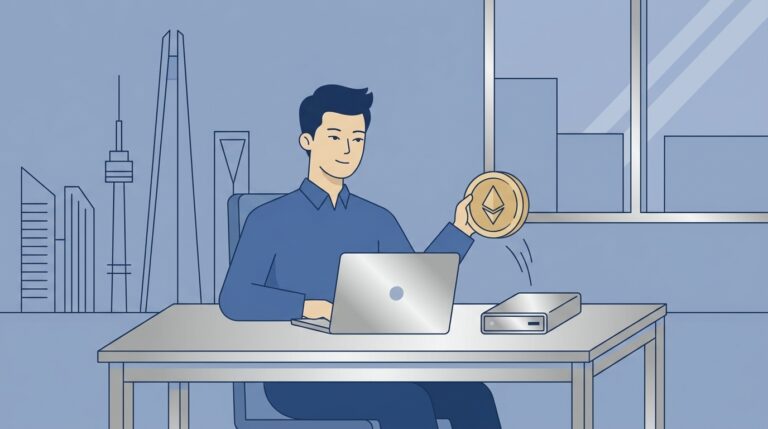
Protect Your Digital Assets: Navigating Korean Crypto Slang, Cold Wallets, and Security
안녕하세요! Welcome back to another premium edition of Daily Hangul, your trusty cultural compass and advanced language guide. I’m your host and senior editor, your resident ‘Seoulite’ who has spent over a decade analyzing Korea’s fast-moving tech trends, cinematic dramas, and linguistic shifts.
Imagine this: You are sitting in a sleek, glass-walled cafe along Teheran-ro (테헤란로)—Seoul’s bustling Silicon Valley—sipping an iced Americano. You overhear a frantic conversation at the next table. A tech-savvy startup developer runs his hands through his hair and groans, “아, 나 어제 진짜 다 털렸어…” (Ah, I got completely cleaned out yesterday…). He isn’t talking about his physical wallet. He is talking about a devastating cryptocurrency exchange hack.
In a country where high-speed internet meets a hyper-competitive financial market, crypto trading is not just a hobby; it is a cultural phenomenon. Today, we are diving deep into the high-stakes lexicon of 가상 화폐 (ga-sang hwa-pye – virtual currency) and 블록체인 (beul-lok-che-in – blockchain), focusing on the ultimate shield: 콜드 월렛 (kol-deu wol-let – cold wallets) and the dread of 거래소 해킹 (geo-rae-so hae-king – exchange hacks). This guide is crafted for C1 learners who want to understand the advanced linguistic nuances and social dynamics of Korean digital asset culture.
Phase 2: Deep-Dive into 3 Essential Expressions
1. 털리다 (teol-li-da)
- Pronunciation: [Teol-li-da] / Sound analogy: sounds a bit like “toll-lee-dah” but with a soft, breathy ‘t’.
- Meaning: Literally “to be dusted off” or “shaken clean.” In modern casual Korean, it is the go-to slang for being hacked, robbed, or having your data/assets completely stolen.
- K-Culture Moment: You will hear this constantly in modern K-Dramas like Taxi Driver or Voice, where white-hat hackers track down malicious scammers who have “cleaned out” a victim’s account.
- Editor’s Insight: While the standard word for hacking is 해킹당하다 (hae-king-dang-ha-da), 털리다 conveys a deep, visceral sense of emptiness—as if someone literally turned your digital pockets inside out and shook them dry.
- Situation Spectrum:
- Friends & Casual: ✅ (Extremely common)
- Colleagues (Semi-formal): ⚠️ (Use when sharing personal stories informally)
- Superiors (Formal): 🚫 (Too colloquial; use “해킹 피해를 입었습니다” instead)
- 🤔 Think About It: The verb stems from 털다 (to dust/shake). Why do you think Korean culture, which historically values collective responsibility, developed such highly descriptive passive verbs for individual misfortune? Reflect on how passive voice in Korean often softens direct blame while amplifying the victim’s emotional state.
2. 콜드 월렛에 넣어두다 (kol-deu wol-let-e neo-eo-du-da)
- Pronunciation: [Kol-deu wol-let-e neo-eo-du-da] / Sound analogy: “cold wallet-eh nuh-uh-doo-da”.
- Meaning: Literally “to put (assets) into a cold wallet” for safekeeping.
- K-Culture Moment: Seen in financial thrillers where high-profile characters store their illicit slush funds—or legitimate life savings—on USB-like hardware security modules hidden in heavy metal safes.
- Editor’s Insight: The grammar pattern
-어 두다(-eo du-da) signifies performing an action and maintaining that state for future safety. It is a proactive protective measure, showing foresight. - Situation Spectrum:
- Friends & Casual: ✅
- Colleagues (Semi-formal): ✅
- Superiors (Formal): ✅ (Perfect for advising someone on asset security)
- 🤔 Think About It: Contrast this with Hot Wallets (핫 월렛). In Korean tech culture, leaving assets on an exchange is often called “거래소에 방치하다” (neglecting them on the exchange). What does this tell us about the active role Korean investors expect themselves to play in asset management?
3. 보안 비밀번호를 분실하다 (bo-an bi-mil-beon-ho-reul bun-sil-ha-da)
- Pronunciation: [Bo-an bi-mil-beon-ho-reul bun-sil-ha-da] / Sound analogy: “bo-an bee-meel-bun-ho-reul boon-sheel-hah-dah”.
- Meaning: “To lose/misplace security passwords or recovery seed phrases.”
- K-Culture Moment: The agonizing moment in a tech-heist movie where the brilliant coder realizes they have lost the unique recovery key to a cold wallet containing billions of won.
- Editor’s Insight: 분실하다 (bun-sil-ha-da) is a Sino-Korean word (Hanja: 紛失) for losing physical or digital items, carrying a much more formal and serious tone than the native Korean 잃어버리다 (il-eo-beo-ri-da).
- Situation Spectrum:
- Friends & Casual: ⚠️ (Sounds slightly stiff; friends say “비번 까먹었어”)
- Colleagues (Semi-formal): ✅
- Superiors (Formal): ✅
- 🤔 Think About It: Sino-Korean words often elevate the severity of a situation. Why does the use of formal vocabulary like ‘분실’ over ‘잃어버림’ change how seriously an insurance company or an exchange treats your claim?
Phase 3: Textbook Korean vs. Real Korean
When dealing with digital finance in Korea, relying solely on classroom textbooks can make you sound detached from the fast-moving tech reality.
Situation 1: Explaining that an exchange got hacked
- 📖 Textbook Korean: “암호화폐 거래소가 해킹 공격을 받아 자산이 유출되었습니다.” (The cryptocurrency exchange received a hacking attack, and assets were leaked.)
- 🗣️ Real Korean: “거래소 서버가 털려서 코인이 공중분해 됐어요.” (The exchange server got totally cleaned out, and my coins literally evaporated into thin air.)
- 💡 Why is it different? 공중분해 (gong-jung-bun-hae) literally means “mid-air disintegration.” Koreans use this vivid, dramatic expression to describe a sudden, complete loss of value or physical existence, mimicking the rapid-fire speed of blockchain transactions.
Situation 2: Emphasizing the need for offline cold storage
- 📖 Textbook Korean: “온라인 위협을 방지하기 위해 오프라인 저장 매체를 사용하십시오.” (Please use offline storage media to prevent online threats.)
- 🗣️ Real Korean: “해킹 안 당하려면 무조건 콜드 월렛에 박아둬야 해요.” (If you don’t want to get hacked, you absolutely must lock it away in a cold wallet.)
- 💡 Why is it different? The verb 박아두다 (bak-a-du-da) literally means “to drive in/hammer in” or “to wedge something deeply.” It conveys a strong, stubborn sense of safely tucking something away where no one else can ever reach or touch it.
Phase 4: K-Culture Deep Dive & Non-Verbal Etiquette
4-1. Nunchi (눈치) & Non-Verbal Sympathy cues
Losing money in Korea—especially via a high-tech hack—is a highly sensitive topic. If a friend reveals they were hacked, do not immediately analyze their security flaws. Instead, practice 눈치 (nunchi):
* The Heavy Sigh (한숨): Exhale deeply with a low “아이고…” (Ai-go). This vocalization demonstrates shared grief and reduces the victim’s isolation.
* The Head Tilt and Shrug: Keep your posture slightly lowered. Avoid pointing fingers or making sharp gestures, which can feel accusatory in Korean physical culture.
4-2. The Cultural Myth of “The Rich Generation”
In Korea, cryptocurrency isn’t just about decentralization; it is seen by many in their 20s and 30s as the only remaining ladder for upward social mobility amid skyrocketing Seoul real estate prices. This desperate hope has birthed a unique linguistic subculture. To understand their desperation when a hack occurs is to understand modern Korean economic anxieties.
Phase 5: The Gangnam Startup Hub Cafe Roleplay
Setting: A trendy, neon-lit cafe in the tech hub of Gangnam. Smart screens show real-time blockchain tickers. The aroma of roasted coffee beans fills the air as your friend Min-jun sits staring blankly at his laptop.
Cast:
- You (C1 Korean Speaker): A supportive friend who understands blockchain dynamics.
- Min-jun (민준): A stressed-out crypto investor whose preferred exchange was recently breached.
Dialogue:
- Min-jun: (🎭 Staring blankly at his screen, voice trembling) 아… 이거 진짜 실화냐? 나 어떡하지…
(Ah… is this actually real? What do I do…) -
You: (🎭 Sitting down opposite him, speaking gently) 민준아, 왜 그래? 무슨 일 있어? 얼굴이 하얗게 질렸어.
(Min-jun, what’s wrong? Is something happening? Your face has gone completely pale.) -
Min-jun: (🎭 Clutching his forehead) 너 어제 뉴스 봤어? 내가 쓰던 국내 거래소 말이야… 결국 털렸대.
(Did you see the news yesterday? The domestic exchange I used… they said it finally got hacked.) -
You: (🎭 Gasps softly, leaning forward) 설마… 거기가 진짜로 해킹당한 거야? 네 자산은 괜찮아?
(No way… did they really get hacked? Are your assets okay?) -
Min-jun: (🎭 Sighs deeply, eyes watering) 아니, 전혀 안 괜찮아. 내 이더리움이랑 비트코인 전부 다 거래소 지갑에 그대로 있었단 말이야.
(No, not okay at all. All my Ethereum and Bitcoin were sitting right there in the exchange wallet.) -
You: (🎭 Shaking your head regretfully) 아휴… 내가 저번에 무조건 콜드 월렛으로 옮겨두라고 했잖아. 온라인 거래소는 늘 해커들의 표적이니까.
(Ah… I told you last time to absolutely move them to a cold wallet. Online exchanges are always targets for hackers.) -
Min-jun: (🎭 Biting his lower lip) 알아… 귀찮아서 미루고 있었는데 이렇게 될 줄은 몰랐지. 이제 와서 후회해 봐야 소용없겠지?
(I know… I was lazy and kept putting it off, but I didn’t know it would turn out like this. There’s no use regretting it now, right?) -
You: (🎭 Placing a comforting hand near his laptop) 지금이라도 고객센터에 즉시 해킹 피해 신고 접수부터 해야 해. 신속하게 대응해야 복구 확률이 높아져.
(Even now, you must immediately file a hacking damage report with customer service. Responding quickly increases the chances of recovery.) -
Min-jun: (🎭 Nodding weakly, typing) 응, 지금 1대1 문의 접수하고 있어. 아… 진짜 보안 비밀번호나 시드 구문도 안전하게 따로 보관해 둘걸…
(Yeah, I’m submitting a 1:1 inquiry right now. Ah… I really should have stored my security password and seed phrases safely somewhere else…) -
You: (🎭 Encouragingly) 맞아. 이번 고비 잘 넘기고 나면, 남은 자산은 무조건 하드웨어 콜드 월렛 사서 백업해 두자. 내가 같이 설정해 줄게.
(Exactly. Once we get past this hurdle, let’s buy a hardware cold wallet and back up your remaining assets. I’ll help you set it up.)
🔀 Decision Point: How do you comfort Min-jun now?
- Option A: “그러게 내가 뭐랬어? 미리 안 옮기니까 벌을 받은 거지.” (See, what did I tell you? You got punished because you didn’t move it earlier.)
- Option B: “너무 낙담하지 마. 우리 당장 고객센터 전화하고, 보안 강화 조치부터 확실하게 처리하자. 내가 도와줄게.” (Don’t be too discouraged. Let’s call customer service right away and thoroughly handle security enhancement measures. I will help you.)
- Option C: “코인은 원래 도박이야. 차라리 다 날린 김에 이제 주식이나 해.” (Crypto is a gamble anyway. Since you lost it all, you might as well just do stocks now.)
Best Choice Analysis (Option B):
Option B is the absolute winner. In Korean social dynamics, offering active solidarity (내가 도와줄게 – I’ll help you) coupled with practical next steps strikes the perfect balance of empathy and action. It respects his emotional state while moving toward solutions.
Risk/Bad Choice Analysis (Options A & C):
- Option A represents severe TMI/팩폭 (paek-pok – bombarding with facts) that destroys the relationship. Blaming the victim violates basic conversational etiquette.
- Option C dismisses his pain and trivializes his investments as gambling, which can feel highly insulting to someone who treated this as a serious financial endeavor.
Phase 6: 10-Second Emotional Shadowing Drill
To sound truly native, master the emotional cadence of devastation and urgent advice. Pay close attention to the pause markers (/).
1. [🥺 Deep Regret and Sympathy]
“아휴… / 그 많은 자산이 / 한순간에 / 공중분해 되다니 / 진짜 믿기지가 않는다.”
- Romanization: [A-hyu… / geu man-eun ja-san-i / han-sun-gan-e / gong-jung-bun-hae doe-da-ni / jin-jja mit-gi-ji-ga an-neun-da.]
- Translation: Sigh… I really can’t believe all those assets disintegrated into thin air in a single split second.
2. [😤 Stern, Direct Advice]
“보안은 / 타협이 없어. / 무조건 / 콜드 월렛에 / 박아두는 게 / 정답이야!”
- Romanization: [Bo-an-eun / ta-hyeop-i eop-seo. / Mu-jo-geon / kol-deu wol-let-e / bak-a-du-neun ge / jeong-dab-i-ya!]
- Translation: There’s no compromise on security. Putting it in a cold wallet is absolutely the only correct answer!
Phase 7: K-Culture Mini-Dictionary
| Word | Romanization | Real-World Context & Usage |
|---|---|---|
| 떡상 | Tteok-sang | The explosive rise of an asset’s price. Derived from the sound of boiling rice cakes jumping up. Used constantly when prices skyrocket. |
| 떡락 | Tteok-rak | The devastating, vertical crash of a coin or stock value. It conveys physical impact, like falling flat on the ground. |
| 존버 | Jon-beo | An aggressive, semi-slang compound meaning “holding on for dear life” through market volatility (HODL). Not suitable for polite company, but universally understood. |
| 개미 | Gae-mi | Literally “ants,” referring to small-scale individual retail investors compared to corporate whales (고래 – go-rae). |
Phase 8: Traveler’s Survival Kit (Digital Security Edition)
Even as a traveler, your cyber security in Korea is paramount. High-speed public Wi-Fi is everywhere, but it carries inherent security risks for crypto wallets.
Survival Phrases for Digital Emergencies:
- “공공 와이파이로 금융 앱 접속하면 위험해요.”
- [Gong-gong wa-i-pa-i-ro geum-yung aep jeop-sok-ha-myeon wi-heom-hae-yo.]
- Pro Tip: “It’s dangerous to access financial apps via public Wi-Fi.” Stick to secure personal hotspot data.
- “제 계정이 해외 IP로 로그인 시도되었다는 알림이 왔어요.”
- [Je gye-jeong-i hae-oe IP-ro ro-geu-in si-do-doe-eot-da-neun al-lim-i wa-sseo-yo.]
- Pro Tip: “I received a notification that my account had a login attempt from an overseas IP address.”
- “해킹이 의심되니 계정을 잠시 보호 조치해 주세요.”
- [Hae-king-i ui-sim-doe-ni gye-jeong-i jam-si bo-ho jo-chi-hae ju-se-yo.]
- Pro Tip: “I suspect hacking, so please temporarily lock/protect my account.”
📌 Editor’s Travel Note:
When managing funds in Korea, ensure you use certified local verification tools. Familiarize yourself with secure authentication portals like the Official Kakao Certification Center or the Naver Secure Login Portal to safely authorize access to any local services without exposing private keys.
Phase 9: Deep Reflection — “Pali-Pali” meets Web3
Korea’s economic miracle was powered by the spirit of 빨리빨리 (Pali-pali – hurry, hurry). This cultural speed-demon gene has perfectly adapted to the hyper-volatile crypto landscape. Korean traders react to market news in seconds, sometimes leading to incredible fortunes—but also making them primary targets for cybercriminals.
This speed creates a fascinating linguistic paradox: while Korean security systems require meticulous layers of protection (like the notorious historical active-x plugins and modern digital certificates), the traders themselves favor immediate, single-click transfers. The battle between speed and security is fought daily on Teheran-ro.
💬 Your Turn: How does your home country balance the need for instant convenience with cold-hard digital security? Do people prefer mobile hot wallets, or is cold storage the norm? Let us know in the comments below!
Phase 10: FAQ & Avoiding Common Pitfalls (FAQ Schema)
Q: Can I use global hardware wallets (like Ledger or Trezor) in Korea?
A: Yes! Global cold wallets work perfectly in Korea. Just make sure you write down your recovery seed phrase offline. Do not store it in your phone’s photo gallery, as Korean cybercriminals frequently target cloud photo backups.
Q: Is it safe to leave my funds on major Korean exchanges like Upbit or Bithumb?
A: Depends. While major Korean exchanges implement top-tier security standards under government regulations, no exchange is 100% immune to targeted internal or external hacks. For long-term holdings, moving to a personal cold wallet is always recommended.
Q: What is the fastest way to report a cyber financial hack in Korea?
A: You should immediately call the Korean National Police Agency Cyber Bureau (112) or report through the Korea Internet & Security Agency (KISA) Security Center (118).
🚨 The “Common Mistakes” Warning Board
- Mistake 1: Saving your private keys or seed phrases in a KakaoTalk personal chatroom (나와의 채팅).
- Correct Action: Write it down on physical paper or a dedicated offline device. Kakao accounts can be easily logged into from compromised PCs.
- Mistake 2: Accessing exchanges using public PC Bang (Internet Cafe) computers.
- Correct Action: PC Bang computers are notorious for keylogger software. Never access financial accounts on public computers.
- Mistake 3: Assuming domestic Korean exchanges will automatically refund hacked assets.
- Correct Action: Read the terms of service carefully; unless the breach was directly proven to be the exchange’s structural fault, individual user negligence is rarely reimbursed.
Phase 11: Action Missions
- 🥉 Bronze (At-Home Challenge): Practice saying the expression “내 계정이 털렸어” (My account got cleaned out) with the proper tone of dramatic shock in front of a mirror.
- 🥈 Silver (Network Challenge): Write a brief post on your social media explaining why cold wallets are essential, using the words 콜드 월렛 and 보안 (security).
- 🥇 Gold (Real-World Challenge): Set up a 2-factor authentication (2FA) or hardware security key on your personal crypto accounts, and verbally explain what you did to a study partner using the structure “~기 위해 ~로 옮겼어요” (I moved it to… in order to…).
Phase 12: Interactive Quiz Challenge
Test your knowledge of high-level Korean crypto culture and language nuances!
1. Situation Analysis
Your Korean startup colleague tells you: “어제 보이스피싱 때문에 내 비상금 다 털렸어…” What is the correct response?
- A) “우와, 대박! 축하해요!”
- B) “아이고… 어떡해요. 마음이 많이 아프시겠어요. 제가 도울 수 있는 게 있을까요?”
- C) “비밀번호를 분실했으니까 본인 잘못이네요.”
👉 Click to reveal Answer & Explanation
- Correct Answer: B
- Explanation: 보이스피싱 (Voice Phishing) means phone fraud, and 털리다 means getting completely cleaned out. Option B offers deep empathy and support. Option A is a celebration (terrible!), and Option C is an incredibly rude accusation.
2. Fill in the Blank
“거래소가 해킹당할까 봐 불안해서 자산을 전부 다
__________으로 옮겼어요.”
- A) 핫 월렛 (Hot Wallet)
- B) 카카오톡 (KakaoTalk)
- C) 콜드 월렛 (Cold Wallet)
👉 Click to reveal Answer & Explanation
- Correct Answer: C
- Explanation: To solve the anxiety of exchange hacks (해킹), moving assets to an offline 콜드 월렛 (Cold Wallet) is the safest action.
3. True or False
True or False: The word 존버 (Jon-beo) is highly formal and should be used during professional corporate blockchain presentations.
👉 Click to reveal Answer & Explanation
- Correct Answer: False
- Explanation: While widely used in the crypto community, 존버 contains a strong vulgar slang word. In a formal corporate presentation, you should use terms like 장기 보유 (jang-gi bo-yu – long-term holding) instead.
With these linguistic tools and cultural insights, you are now ready to confidently discuss high-stakes cybersecurity and crypto assets in Seoul’s fast-moving financial circles. Stay secure, keep your private keys safe, and join us next time on Daily Hangul!







