

Master the Soul of Korean Geography: The Ultimate C1 Guide to Ulleungdo and Dokdo Exploration
Phase 1: Empathy (An Immersive Opening)
안녕하세요! (Annyeonghaseyo!) I’m your Daily Hangul Senior Editor. If you’ve been learning Korean for a while, you’ve likely conquered food ordering, K-drama slang, and business honorifics. But have you ever felt a sudden conversational roadblock when Korean friends passionately discuss their country’s dramatic landscapes, volcanic islands, or the deep emotional ties to their ocean borders?
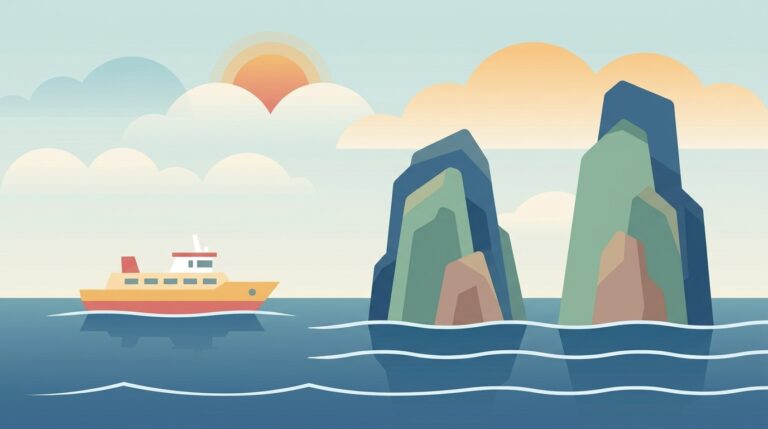
Imagine this: You are watching a Korean travel reality show like 2 Days & 1 Night (1박 2일). The cast members are standing on the deck of a massive ferry, the salty East Sea wind whipping through their hair. As the misty, jagged cliffs of Ulleungdo (울릉도) rise from the deep blue sea, someone in the crew tears up, calling it “우리 영토의 막내” (the youngest child of our territory). The background music swells with a nostalgic, folk-rock anthem that everyone seems to know by heart. You understand the literal words, but you feel like you are missing the profound emotional frequency.
At the C1 level, you shouldn’t just translate Korean; you must feel Korean. Exploring Ulleungdo and the historic islets of Dokdo (독도) is not just a geographical journey—it is a spiritual pilgrimage for Koreans. This guide, refined through real tutoring sessions with advanced learners who wanted to speak with true cultural depth, will equip you with the advanced vocabulary, nuanced idioms, and cultural empathy needed to discuss Korea’s gorgeous volcanic frontiers like an absolute local.
Phase 2: In-Depth Analysis of 3 Key Expressions
To speak about Korea’s geographical gems with sophistication, you need expressions that carry both physical description and cultural weight. Let’s dissect three high-frequency, advanced phrases.
1. 울릉도 동남쪽 뱃길 따라 이백 리 (Ulleungdo dongnamjjok baetgil ttara ibaek ri)
- Pronunciation: [ul-leung-do dong-nam-jjok baet-gil tta-ra i-baek ri]
- Meaning: “Following the sea route two hundred ri (approx. 80km) southeast of Ulleungdo.”
- K-Culture Moment: This is the iconic opening line of the legendary song “Dokdo is Our Land” (독도는 우리 땅). Sing this line at a noraebang (노래방), and every Korean in the room will instantly harmonize with you.
- Editor’s Insight: Ri (리) is an ancient East Asian unit of distance (1 ri is roughly 400 meters). While modern maps use kilometers, Koreans deliberately preserve this classic phrasing because it anchors their historical connection to the island. Utilizing this phrase shows you don’t just know geography; you know the cultural soundtrack of the nation.
- Situation Spectrum:
- Friends & Casual: ✅ (Perfect for lighthearted cultural references)
- Semi-formal (Colleagues): ✅ (Shows deep cultural appreciation)
- Formal (Academics/Seniors): ✅ (Demonstrates sophisticated historical literacy)
- 🤔 Think About It: Why do you think a country’s pop-culture songs about geography can become national anthems of identity? Does your native language have songs dedicated entirely to a specific piece of land?
2. 파도가 허락해야 들어갈 수 있는 섬 (Padoga heorakhaeya deureogal su inneun seom)
- Pronunciation: [pa-do-ga heo-rak-hae-ya deu-reo-gal su in-neun seom]
- Meaning: “An island you can enter only if the waves permit.”
- K-Culture Moment: In K-travel vlogs and documentaries, you will constantly hear hosts say this with a mix of anxiety and awe as their boat approaches Dokdo’s treacherous waters.
- Editor’s Insight: Due to extreme maritime weather and swell heights in the East Sea, ferry boats can actually dock at Dokdo only about 70 to 100 days a year. To Koreans, successfully stepping foot on Dokdo is seen as a blessing from nature. This phrase embodies a beautifully humble, ecological worldview.
- Situation Spectrum:
- Friends & Casual: ✅ (Adds poetic flair to your travel plans)
- Semi-formal (Colleagues): ✅ (Captures the unpredictability of island travel)
- Formal (Academics/Seniors): ✅ (Polite and respectful way to describe nature’s power)
- 🤔 Think About It: Instead of saying “The weather is bad,” saying “the waves must permit” shifts the agency from human desire to nature. How does this subtle linguistic shift change our relationship with the environment?
3. 우리 영토의 막내 (Uri yeongto-ui mangnae)
- Pronunciation: [u-ri yeong-to-ui mang-nae]
- Meaning: “The youngest (sibling) of our territory.”
- K-Culture Moment: This expression is frequently used by geographers, news anchors, and travel writers when affectionately introducing Dokdo.
- Editor’s Insight: Mangnae (막내) typically refers to the youngest child in a family. By personifying Dokdo—the easternmost, isolated volcanic rock formation—as the “baby of the family,” Koreans express a deeply protective, familial love for their land. It turns geopolitics into family dynamics.
- Situation Spectrum:
- Friends & Casual: ✅ (Warm and highly natural)
- Semi-formal (Colleagues): ✅ (Evokes shared national sentiment)
- Formal (Academics/Seniors): ✅ (A universally accepted poetic descriptor)
- 🤔 Think About It: Personifying land as a family member is deeply rooted in Korea’s collectivist culture. Does your home country personify its geography in a similar way, or does it use more distant, technical terms?
Phase 3: Textbook Korean vs. Real Korean
When you reach C1, relying on sterile dictionary sentences makes you sound like a translated robot. Let’s bridge the gap between classroom theory and real-world island conversations.
Situation 1: Describing a cancelled ferry due to rough seas
- 📖 Textbook Korean: 파도가 높아서 오늘 배가 출발하지 않습니다. (The waves are high, so the ship does not depart today.)
- 🗣️ Real Korean: 오늘 파도가 세서 배편이 완전히 묶였어요. (The waves are rough today, so the ferry routes are completely tied up/stranded.)
- 💡 Why the difference? While “출발하지 않습니다” is grammatically flawless, native speakers prefer the vivid passive idiom “배가 묶이다” (the boat is tied up) to express that maritime transport is completely frozen by nature.
Situation 2: Expressing sheer awe at the breathtaking cliffs
- 📖 Textbook Korean: 울릉도의 자연경관이 매우 아름답습니다. (Ulleungdo’s natural scenery is very beautiful.)
- 🗣️ Real Korean: 울릉도 기암괴석을 보니까 진짜 기가 막히네요! (Looking at Ulleungdo’s bizarre rock formations, it truly takes my breath away!)
- 💡 Why the difference? C1 speakers should swap the generic “아름답습니다” for specific geological terms like 기암괴석 (奇巖怪石 – bizarre rocks and strange stones) and use the emotional idiom 기가 막히다 (to have one’s energy blocked/breath taken away) to convey deep, genuine astonishment.
Phase 4: K-Culture Deep Dive & Non-Verbal Manners
4-1. Nunchi (눈치) & Non-Verbal Protocol on the High Seas
Visiting remote islands like Ulleungdo and Dokdo requires a high level of physical and social sensitivity (nunchi).
1. The Bow to the Island: When the ferry door opens at Dokdo, you will see many Koreans take a moment to stand quietly, look at the cliffs, and offer a respectful nod. It is a non-verbal acknowledgment of the island’s historical resilience.
2. The Sea-Sickness Solidarity: On the turbulent 3-hour ferry ride from the mainland, motion sickness is incredibly common. Showing nunchi here means keeping your voice down, keeping disposal bags handy, and offering a comforting wet wipe or herbal patch (귀밑에 붙이는 멀미약) to struggling passengers nearby without making a scene.
4-2. The Cultural Codes: K-Travel & K-Food
- K-Travel (Mystical Sanctuary): In popular imagination, Ulleungdo is Korea’s “Jurassic Park.” Unlike Jeju Island, which is highly developed, Ulleungdo has retained its raw, mysterious, and rugged volcanic energy. To discuss it like a local, reference its mist-shrouded ancient forests (원시림 – wonsirim) and its absolute lack of three things (도둑, 공해, 뱀 – thieves, pollution, snakes), historically known as the “Sammu” (삼무 – Three Absences).
- K-Food (The Sovereign Shrimp): You cannot discuss Dokdo without mentioning Dokdo Shrimp (독도새우 – Dokdo Saeu). These rare, sweet, and incredibly expensive deep-sea shrimp became a global sensation when they were served at a South Korean state banquet for the US President. Eating or discussing Dokdo Shrimp is a tasty culinary statement of cultural pride.
Phase 5: Interactive Roleplay Scenario
- Setting: The passenger deck of the Sea Flower ferry, tossing on the deep blue swells of the East Sea. Dokdo’s dramatic twin islands are finally visible through the sea spray.
- Cast: You (an adventurous C1 traveler) and Captain Park (박 선장님), a weathered local captain with 35 years of sea-faring experience.
박 선장님: (마이크를 잡고 헛기침을 하며) 아, 아, 승객 여러분. 현재 독도 주변 해역의 파도가 상당히 높습니다. 접안(docking)이 가능할지 아직 확실치 않습니다.
Captain Park: (Holding the microphone, clearing his throat) Ah, ah, passengers. Currently, the waves around Dokdo are quite high. It is not yet certain if docking will be possible.

유 (You): (옆에 서 있는 선장님을 바라보며 간절한 목소리로) 선장님, 오늘 독도 땅을 꼭 밟아보고 싶은데... 정말 접안이 어려울까요?
You: (Looking at the Captain standing nearby, with an earnest voice) Captain, I really want to step foot on Dokdo today... Is docking truly going to be difficult?

박 선장님: (바다를 유심히 바라보며 허허 웃는다) 우리 영토의 막내가 쉽게 얼굴을 안 보여주네요. 파도가 허락해야 들어갈 수 있는 섬이라서요. 저기 바위에 부딪히는 하얀 포말이 보이죠?
Captain Park: (Staring intently at the sea, laughing softly) The youngest child of our territory doesn't show its face easily. It's an island we can enter only if the waves permit. Do you see that white seafoam crashing against the rocks over there?

유 (You): (고개를 끄덕이며) 네, 파도가 장난이 아니네요. 멀리서 보기만 해도 가슴이 웅장해지긴 하지만, 그래도 아쉬움이 남는 건 어쩔 수 없네요.
You: (Nodding) Yes, the waves are no joke. Just looking at it from afar makes my heart swell with awe, but I can't help feeling a bit disappointed.

박 선장님: (어깨를 툭툭 치며) 대단한 열정이십니다. 외국인 손님이 독도를 이리 직접 찾아오다니... 선장 생활 30년 동안 참 뿌듯한 순간이네요. 한번 시도는 해보겠습니다!
Captain Park: (Patting your shoulder) Outstanding passion. A foreign guest coming all this way to find Dokdo... In my 30 years as a captain, this is truly a proud moment. I will make an attempt!
🔀 Decision Point: What is your next move?
- Option A: “선장님, 무리해서라도 꼭 배를 대주세요!” (Captain, even if it’s risky, please dock the boat at all costs!)
- Option B: “선장님, 안전이 최우선이니까 너무 무리하지는 마세요. 멀리서 바라보는 것만으로도 영광입니다.” (Captain, safety is the top priority, so please don’t push too hard. Just gazing from afar is an honor.)
- Option C: “날씨가 왜 이래요? 미리 기상 예보를 확인하지 않으셨나요?” (Why is the weather like this? Didn’t you check the weather forecast in advance?)
🏆 Choice Analysis
- Best Choice: Option B. This response highlights your cultural maturity, empathy for the crew’s safety, and deep respect for the island’s natural temperamental spirit. It shows you understand that human desire must bend to nature’s boundaries here.
- Risky/Poor Choices: Option A & C. Option A lacks nunchi and disregards maritime safety regulations, which are extremely strict in Korea. Option C is culturally tone-deaf and rude; weather in the East Sea changes in minutes, and blaming the veteran captain will immediately break the rapport.
Phase 6: 10-Second Emotion Shadowing Drill
Let’s practice speaking with real soul. Pay attention to the emotional markers and the pauses (/).
Drill 1: Expressing anxious hope before docking
- Emotion: [🥺 Hopeful, pleading, and slightly breathless]
- Korean: 제발 / 독도에 / 무사히 / 내릴 수 있기를 / 바랄 뿐이에요.
- Romanization: Je-bal / Dok-do-e / mu-sa-hi / nae-ril su it-gi-reul / ba-ral ppun-i-e-yo.
- English: I only pray / that we can / safely / land / on Dokdo.
Drill 2: Overwhelmed with awe upon seeing the cliffs
- Emotion: [😊 Deeply moved, eyes wide with awe]
- Korean: 드디어 / 우리 영토의 막내를 / 내 눈으로 / 직접 / 보게 되다니 / 감격스럽네요!
- Romanization: Deu-di-eo / u-ri yeong-to-ui mang-nae-reul / nae nun-eu-ro / jik-jeop / bo-ge doe-da-ni / gam-gyeok-seureop-ne-yo!
- English: To think that / I am finally seeing / the youngest of our territory / with my own eyes / in person / is deeply moving!
Phase 7: K-Culture Mini Dictionary
| Word (한글) | Romanization | Translation | Contextual Cultural Meaning |
|---|---|---|---|
| 독도새우 | Dokdo Saeu | Dokdo Shrimp | Rare, sweet deep-sea shrimp caught near Dokdo. Symbolizes high culinary status and territorial pride. |
| 호박엿 | Hobak-yeot | Pumpkin Taffy | Ulleungdo’s most famous traditional sweet. Known for being chewy but surprisingly non-sticky to your teeth. |
| 삼나물 | Samnamul | Triple-leaf Greens | A unique wild herb native to Ulleungdo’s high-altitude valleys. It famously tastes like meat when cooked! |
| 독도경비대 | Dokdo Gyeongbidae | Dokdo Police Garrison | The elite police force stationed on Dokdo, guarding the easternmost frontier. They are national heroes to Koreans. |
Phase 8: Traveler’s Survival Kit
If you plan to turn your language skills into a physical adventure, keep these survival tools ready in your pocket.
Survival Phrases TOP 3
- “멀미약 있어요?” [Meol-mi-yak is-seo-yo?]
- Meaning: Do you have motion sickness medicine? (Crucial for the legendary 3-hour roller-coaster ride to Ulleungdo).
- “오늘 독도 입도 가능한가요?” [O-neul Dok-do ip-do ga-neung-han-ga-yo?]
- Meaning: Is landing on Dokdo possible today? (Ipdo 입도 is the specific advanced term for landing/entering an island).
- “날씨 때문에 배편이 결항되면 어떻게 하죠?” [Nal-ssi ttae-mun-e baet-pyeon-i gyeol-hang-doe-myeon eo-tteo-ke ha-jyo?]
- Meaning: What should I do if the ferry is cancelled due to the weather? (Gyeolhang 결항 is the formal word for a scheduled transportation cancellation).
📌 Editor’s Travel Note
- Essential App: Never rely on Google Maps on these remote islands. Download the Naver Map Application or the KakaoMap Application to track island bus schedules (which operate on a very specific volcanic terrain schedule).
- Cash is King: While Korea is mostly cashless, some local grandma-operated seafood tents in Ulleungdo only take cash or direct bank transfers. Keep some physical Korean Won handy!
Phase 9: One Step Deeper — “The Soul of the Sea”
In Western cartography, islands are often viewed as distinct coordinates, pieces of real estate, or strategic scientific outputs. However, in the Korean linguistic worldview, islands—especially remote outposts like Ulleungdo and Dokdo—are felt as living, breathing members of the collective domestic family.
When Koreans look at Dokdo, they see a solitary guardian standing in the harsh wind, holding down the eastern gate. This connection is fueled by Jeong (정)—the invisible social, emotional, and spiritual glue that binds people to people, and people to their native land. By learning the advanced vocabulary of Korean geography, you are not just learning nouns; you are learning how a culture wraps its arms around its most isolated stones.
💬 Your Turn: How does your culture view its remote territories or natural landmarks? Are they personified, or are they kept purely geographical? Share your thoughts with us in the comments below!
Phase 10: FAQ & Avoiding Misunderstandings
Q: Can foreign nationals actually visit Dokdo?
A: Yes, absolutely! Foreigners can travel to Dokdo using the same tourist ferry lines departing from Ulleungdo. You do not need a special political permit, but you must carry your physical Passport or Alien Registration Card (ARC) for maritime safety checks.
Q: Why do Koreans get upset if I call the East Sea the “Sea of Japan”?
A: To Koreans, the naming of the East Sea (동해) and Dokdo (독도) is intimately tied to the painful history of colonization. Using the terms “East Sea” and “Dokdo” shows that you respect their historical narrative and modern sovereignty.
Q: What is the best season to attempt a trip to Ulleungdo and Dokdo?
A: Late spring (May to June) and early autumn (September to October) offer the calmest sea swells. Winter trips are highly discouraged as heavy snow frequently completely paralyzes the island’s steep roads.
🚨 Common Mistakes Alert (TOP 3)
- Confusing ‘입도’ (Ipdo) with ‘입국’ (Ipguk): Ipguk means entering a foreign country. Since Dokdo is strictly Korean territory, saying “독도에 입국하다” is grammatically incorrect and politically confusing. Use 독도에 입도하다 (landing on the island).
- Underestimating the swell: Do not boast “I don’t get seasick” (멀미 안 해요). The East Sea swell is legendary. Take your meolmiyak (멀미약) 1 hour before boarding, regardless of your confidence.
- Forgetting the return ticket contingency: Always prepare a flexible itinerary. If the weather acts up, you might get trapped on Ulleungdo for an extra day or two. This is called “발이 묶이다” (feet being tied/stranded).
Phase 11: Action Mission & K-Culture Challenge
Now, let’s put your C1 skills into motion with this three-tiered challenge!
- 🥉 Bronze (Mirror Challenge): Stand in front of the mirror and say the shadowing drill sentences out loud with full dramatic flair. Feel the emotional weight of personifying an island!
- 🥈 Silver (Social Challenge): Post a picture of a beautiful Korean natural landscape on your social media and caption it using the C1 grammar point: “파도가 허락해야 갈 수 있는 곳” or “기가 막힌 풍경”.
- 🥇 Gold (Real-world Challenge): Next time you meet a Korean friend, casually bring up Ulleungdo. Say: “울릉도 기암괴석이랑 독도새우에 대해 들었는데, 진짜 한번 가보고 싶어요.” (I heard about Ulleungdo’s bizarre rock formations and Dokdo shrimp, I really want to visit.) Watch their eyes light up!
🎮 K-Culture Treasure Hunt
Go to YouTube and search for “독도는 우리 땅” (Dokdo is Our Land) 2012 or 2023 version. Listen to the lyrics and try to write down three geographical nouns mentioned in the song! (Hint: Look out for weather, coordinates, and local fauna).
Phase 12: Interactive Quiz Challenge
Test your geographical and linguistic mastery! Click the boxes below to reveal the answers.
Q1. Which expression best describes the emotional personification of Dokdo? (Click to reveal)
- Answer: 우리 영토의 막내 (The youngest child of our territory).
- Why: This phrase affectionately treats the remote island like the beloved youngest sibling of the Korean family.
Q2. Fill in the blank: “오늘 날씨가 너무 나빠서 배편이 완전히 (______) 원래 일정을 취소했어요.”
- Answer: 묶여서 (mukkyeoseo – being tied up/stranded).
- Why: “배가 묶이다” is the authentic idiomatic expression for ferries suspended due to high waves or severe weather.
Q3. True or False: You can dock on Dokdo virtually any day of the year as long as you book early.
- Answer: FALSE!
- Why: You can only enter if “파도가 허락해야” (if the waves permit). High swells restrict successful landings to less than 100 days a year.







