

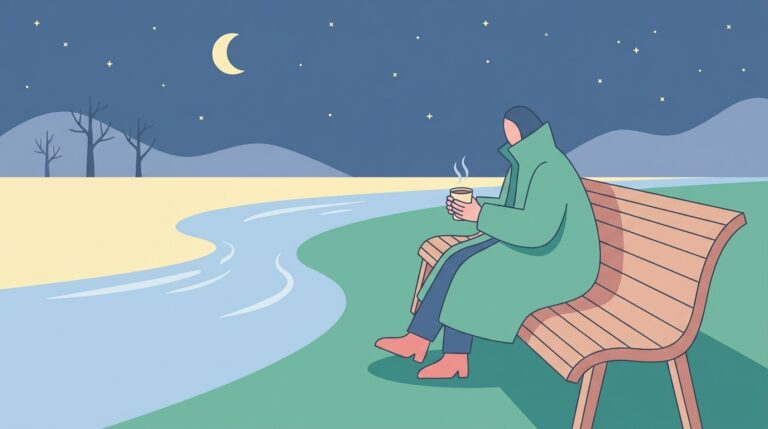
Healing the ‘Han’: How Koreans Talk About Resilience, Recovery, and Bouncing Back
안녕하세요! (An-nyeong-ha-se-yo!) Welcome back to Daily Hangul. I’m your head editor and senior tutor, and today we are stepping into some deeply intimate emotional territory.
Have you ever watched a K-Drama where the main lead faces an insurmountable trauma—perhaps a sudden career bankruptcy, a heartbreaking betrayal, or a painful family loss—and yet, a few episodes later, they are sitting at a roadside tent (pojangmacha), downing a shot of soju, and looking ahead with a strange, quiet strength?
In Western psychology, we often talk about “resilience” as an individual trait. But in Korea, emotional recovery, or 회복 탄력성 (hoebok tarlyeokseong – resilience), is a complex, beautifully shared art form. It is woven with deep cultural concepts like Jeong (정 – collective affection) and Han (한 – deep-seated sorrow).
If you have ever wanted to express deep empathy, describe your own journey of overcoming hardship, or comfort a Korean friend going through a dark night of the soul, textbook phrases like “힘내세요” (Him-nae-se-yo – Cheer up) simply won’t cut it. At a C1 level, you need the linguistic tools to touch the heart. Let’s dive deep into the emotional lexicon of Korean resilience.
Phase 2: In-Depth Analysis of 3 Core Expressions
Here are three highly idiomatic, culturally rich expressions that Koreans use to describe the process of overcoming trauma and building psychological strength.
1. 툭툭 털고 일어나다 (Tuk-tuk teol-go i-reo-na-da)
- Pronunciation: [tuk-tuk teol-go i-reo-na-da] / Sound-alike: “Took-took tull-go ee-ruh-na-da” (Think of the sound of tapping dust off your shoulders: “took took”)
- Meaning: Literally “To brush oneself off and stand up.” It translates to shaking off a setback, letting go of past hurts, and starting anew.
- K-Culture Moment: Think of the classic scene in Itaewon Class where Park Saeroyi loses everything but literally brushes the dust off his work uniform, stands tall, and begins planning his comeback.
- Editor’s Insight: The onomatopoeia “툭툭” (tuk-tuk) mimics the physical action of brushing off dirt. Using this phrase shows that you view life’s traumas not as permanent stains, but as temporary dust that can be dusted away.
- Situation Spectrum:
- Friends & Casual: ✅ (Perfect for cheering up a close friend after a breakup or failed exam)
- Semi-formal (Co-workers): ✅ (Great for team encouragement after a rejected project proposal)
- Formal (Seniors/Boss): ⚠️ (Use the honorific form: “툭툭 털고 일어나시길 바랍니다”)
- 🤔 Think About It: Why does Korean use physical actions (brushing off dirt) to describe cognitive restructuring? How does this compare to the English concept of “shaking it off”?
2. 마음의 근육을 키우다 (Ma-eum-ui geun-yuk-eul ki-u-da)
- Pronunciation: [ma-eum-ui geun-yuk-eul ki-u-da] / Sound-alike: “Mah-eum-ee geun-yook-eul kee-oo-da”
- Meaning: Literally “To grow/build muscle in one’s heart/mind.” It refers to building emotional resilience and mental fortitude through adversity.
- K-Culture Moment: Often heard in healing variety shows like My Golden Kids or psychological talk shows where experts discuss healing childhood trauma to face adult life.
- Editor’s Insight: Just as physical muscles tear and heal to become stronger, Koreans view emotional trauma as a form of resistance training for the soul. It’s an empowering, non-victimizing way to talk about pain.
- Situation Spectrum:
- Friends & Casual: ✅ (Deep, late-night heart-to-hearts)
- Semi-formal (Co-workers): ✅ (Discussing professional growth and stress management)
- Formal (Seniors/Boss): ✅ (Highly appropriate for reflective speeches or professional essays)
- 🤔 Think About It: In many Western cultures, emotional strength is framed as a shield or armor (defensive). In Korean, it is framed as a muscle (organic, growing, active). What does this tell us about the Korean view of self-improvement?
3. 비 온 뒤에 땅이 굳어진다 (Bi on dwi-e ttang-i gut-eo-jin-da)
- Pronunciation: [bi on dwi-e ttang-i gu-deo-jin-da] / Sound-alike: “Bee ohn dwee-eh ttang-ee goo-duh-jin-da”
- Meaning: Literally “The ground hardens after the rain.” It means adversity makes you stronger, or a relationship becomes more solid after overcoming a conflict.
- K-Culture Moment: This proverb is the ultimate K-Drama resolution line. When family members or lovers have a massive blowout argument but finally reconcile with deeper trust, this is the go-to proverb.
- Editor’s Insight: Rain represents tears, conflict, or trauma. The muddy ground represents the messy, unstable state of your mind or relationship during the crisis. But once the storm passes, the earth settles and becomes rock-solid.
- Situation Spectrum:
- Friends & Casual: ✅ (Consoling a couple or a friend who survived a major life storm)
- Semi-formal (Co-workers): ✅ (Summarizing a crisis that the company successfully resolved)
- Formal (Seniors/Boss): ✅ (Highly respected proverb suitable for any formal speech)
- 🤔 Think About It: How does this ecological metaphor contrast with the English saying “What doesn’t kill you makes you stronger”? (Hint: The Korean proverb focuses on the stabilization of the environment/relationship, not just individual survival).
Phase 3: Textbook Korean vs. Real Korean
When dealing with trauma and mental health, textbook phrases can sound sterile, cold, or clinical. Let’s look at how to sound natural and deeply empathetic.
Situation 1: Describing a friend who has successfully overcome a major depression or trauma.
- 📖 Textbook Korean: “그는 정신적 외상을 극복하고 회복 탄력성을 보여주었습니다.” (He overcame his psychological trauma and demonstrated resilience.)
- 🗣️ Real Korean: “그 친구, 진짜 힘든 시간 보냈는데 결국 툭툭 털고 일어나더라고요. 참 마음이 단단한 사람이에요.” (That friend went through a really dark time, but in the end, they brushed it off and stood back up. They have a truly solid soul.)
- 💡 Why is it different? The textbook sentence sounds like a medical chart or a psychology paper. The real-world version uses “단단하다” (to be solid/firm) instead of the clinical “회복 탄력성” to describe resilience with warm admiration.
Situation 2: Comforting someone who feels broken after a major life failure.
- 📖 Textbook Korean: “좌절하지 마십시오. 당신은 이겨낼 수 있는 능력이 있습니다.” (Do not be frustrated. You have the ability to overcome this.)
- 🗣️ Real Korean: “지금은 온 세상이 무너진 것 같겠지만… 비 온 뒤에 땅이 더 굳어지는 법이잖아요. 조금만 견뎌봐요 우리.” (Right now it might feel like the whole world is collapsing… but you know how they say the ground hardens after the rain. Let’s hold on just a little longer, okay?)
- 💡 Why is it different? Telling someone “do not be frustrated” actually invalidates their pain. Real Korean comfort often uses collective pronouns like “우리” (we/us) to signal, “You are not carrying this trauma alone.”
Phase 4: K-Culture Deep-Dive & Non-Verbal Manners
4-1. The Body Language of Co-Resilience
In Korea, comforting someone who is traumatized is rarely about offering logical solutions. It is about 공감 (gong-gam – deep empathy).
* Silence over Speech: When a Korean friend is crying, do not feel pressured to fill the silence with advice. Sitting quietly next to them, pouring them a glass of water, or simply nodding slowly shows immense maturity.
* The Soft Touch: A gentle pat on the shoulder accompanied by a soft “에휴… (sigh)” is often more healing than a motivational speech. It signals: I am bearing a piece of your heavy heart with you.
4-2. The Cultural Sandbox: Spicy Food and Han River Healing
Have you ever wondered why Koreans eat incredibly spicy food (불닭 or 엽기떡볶이) when they are stressed or traumatized?
There is a biological and psychological belief in Korea that physical pain from spicy food releases “stress” (스트레스 풀다). It acts as a somatic release. If you want to help a Korean friend process a trauma, invite them out by saying: “우리 매운 거나 먹으면서 스트레스 확 풀까?” (Shall we eat something super spicy and completely blow off this stress?)
Another classic venue for resilience is the Han River (한강). In K-Dramas, characters go to the Han River to cry, scream, or just stare at the water. It serves as a vast, open public space where the wind is believed to sweep away heavy, stagnant energy.
Phase 5: Interactive Roleplay Scenario
The Setting: A quiet, dim corner of a traditional Korean pub (민속주점) on a rainy Tuesday night. Raindrops patter against the window. Your Korean friend, Min-ji, has recently lost her dream job due to unfair corporate restructuring and has been isolating herself for weeks. You’ve finally coaxed her out.
Cast:
* You (C1 Korean Speaker): Empathetic, warm, culturally fluent.
* Min-ji (민지): Exhausted, heartbroken, but trying to put on a brave face.
Dialogue
- Min-ji: (잔을 만지작거리며 씁쓸하게 웃는다)
“여기에 오랜만에 오니까 좋네. 그동안 나 연락도 안 받고 잠수 타서 미안했어…”
(Fiddling with her glass, smiling bitterly: It’s nice to be here after so long. I’m sorry for going off the grid and not taking your calls…) -
You: (민지의 잔에 따뜻한 물을 채워주며 차분하게)
“아니야, 미안해할 필요 전혀 없어. 마음 추스릴 시간이 필요했을 텐데 연락해 준 것만으로도 고마워.”
(Pouring warm water into Min-ji’s glass, calmly: No, you don’t need to be sorry at all. You must have needed time to gather your feelings; I’m just grateful you reached out.) -
Min-ji: (한숨을 크게 쉬며)
“진짜… 내 청춘을 다 바친 직장이었는데, 하루아침에 이렇게 되니까 솔직히 내 영혼이 다 부서진 것 같아. 다시 시작할 엄두가 안 나.”
(Sighing deeply: Honestly… I dedicated my entire youth to that company, and for it to end overnight like this… I feel like my soul is completely shattered. I can’t find the courage to start over.) -
You: (눈을 맞춰가며 진지하게 위로한다)
“민지야, 지금은 그 마음이 당연해. 어떻게 안 힘들겠어. 하지만 나는 네가 얼마나 마음의 근육이 단단한 사람인지 알잖아.”
(Looking into her eyes, comforting her sincerely: Min-ji, it’s completely natural to feel that way right now. How could it not be hard? But I know how incredibly strong your emotional muscles are.) -
Min-ji: (눈시울이 붉어지며)
“내가 과연 다시 일어설 수 있을까? 내 인생만 꼬인 것 같아서 자꾸 자책하게 돼.”
(Her eyes tearing up: Can I really stand up again? I feel like only my life is messed up, so I keep blaming myself.) -
You: (고개를 흔들며 단호하게 따뜻한 목소리로)
“절대 네 잘못이 아니야. 네 탓하지 마. 비 온 뒤에 땅이 더 굳어진다는 말 있잖아. 이번 시련이 가혹하지만, 결국엔 너를 더 단단하게 만들어 줄 거야.”
(Shaking your head, firmly but in a warm voice: It is absolutely not your fault. Don’t blame yourself. You know the saying, ‘The ground hardens after the rain.’ This trial is harsh, but in the end, it will make you even stronger.) -
Min-ji: (눈물을 닦으며 희미하게 미소 짓는다)
“비 온 뒤에 땅이 굳어진다라… 너한테 한국어로 이런 위로를 들으니까 느낌이 되게 묘하다. 위로가 많이 돼.”
(Wiping her tears, smiling faintly: ‘The ground hardens after the rain’… Hearing you comfort me like this in Korean feels really special. It brings me a lot of comfort.) -
You: (가볍게 미소 지으며 분위기를 바꾼다)
“그러니까 오늘은 슬픈 생각 다 잊고, 이 매운 닭발이랑 파전 먹으면서 스트레스 툭툭 털어내자. 내가 오늘 다 쏠게!”
(Smiling lightly, changing the mood: So today, let’s forget all the sad thoughts. Let’s eat this spicy chicken feet and pajeon and brush the stress away. Today’s treat is on me!) -
Min-ji: (잔을 들며)
“고마워, 진짜… 너 없었으면 나 아직도 방구석에서 울고 있었을 거야. 우리 맛있는 거 먹고 힘내자!”
(Raising her glass: Thank you, seriously… If it weren’t for you, I’d still be crying in the corner of my room. Let’s eat something delicious and find our strength!) -
You: (잔을 부딪히며)
“그래, 짠! 맛있는 거 먹고 툭툭 털고 일어나는 거야!”
(Clinking glasses: Yes, cheers! We’ll eat good food, brush it off, and stand right back up!)
🔀 Decision Point: What is your next move to show deep empathy?
Scenario: Min-ji suddenly looks down at her glass and says: “사실 나 부모님께는 아직 직장 잃었다고 말씀 못 드렸어… 실망하실까 봐 너무 두려워.”
(Actually, I haven’t told my parents yet that I lost my job… I’m so scared they’ll be disappointed.)
- A) The Logic-First approach: “부모님께는 솔직하게 말씀드리는 게 나아. 늦어질수록 오해만 커지니까 내일 당장 전화해봐.”
- B) The Korean Empathy approach: “아이구… 그 마음 진짜 무거웠겠다. 부모님 실망하실까 봐 걱정하는 네 마음이 너무 착해서 더 아프네. 준비될 때까지 천천히 말씀드려도 돼. 내가 옆에 있을게.”
- C) The Dismissive Cheer up: “아유, 부모님이 왜 실망하셔! 요즘 구조조정 흔하잖아. 기운 내서 다음 구직 준비나 하자!”
💡 Choice Analysis:
- Best Choice: B. At a C1 level, you must understand the weight of filial expectations in Korea. Informing parents about career failure is a massive trauma. Choice B acknowledges her filial love (“네 마음이 너무 착해서” – because your heart is so good) and validates her timing. This is peak emotional intelligence.
- Risky/Bad Choice: A or C. A is too transactional and ignores her fear. C trivializes her trauma and the unique Korean anxiety of disappointing one’s family.
Phase 6: 10-Second Emotion Shadowing Drill
Let’s practice speaking with raw emotional delivery. Pay attention to the breath pauses (/) and the emotional cues.
1. [🥺 Whisper-like, deep empathy]
“진짜 / 힘들었겠다… // 혼자 그 마음 고생을 / 어떻게 다 견뎠어?”
* Romanization: Jin-jja / him-deu-reot-get-da… // hon-ja geu ma-eum go-saeng-eul / eo-tteoh-ge da gyeon-dyeot-eo?
* English: It must have been so incredibly hard… How did you bear all that heartache all by yourself?
2. [😤 Determined, energetic, rising intonation]
“괜찮아! / 툭툭 털고 / 일어나면 돼! // 네 뒤엔 / 항상 우리가 있잖아.”
* Romanization: Gwaen-chan-ha! / Tuk-tuk teol-go / i-reo-na-myeon dway! // ne dwi-en / hang-sang u-ri-ga it-ja-na.
* English: It’s okay! Just brush it off and stand back up! Remember, we’ve always got your back.
Phase 7: K-Culture Mini-Dictionary
| Word | Pronunciation | English Nuance | The Deeper Cultural Context |
|---|---|---|---|
| 마음고생 | Ma-eum-go-saeng | Mental/emotional suffering | Directly translates to “suffering of the mind.” It refers to chronic anxiety or silent emotional trauma that you carry alone without showing it on the outside. |
| 정(情) | Jeong | Collective affection / bond | The invisible emotional glue of Korean society. It’s why your friends don’t just say “cheer up,” but physically sit with you, buy you food, and carry your grief together. |
| 현타 (현자타임) | Hyeon-ta | Sudden reality check / disillusionment | Slang used when a sudden shock or trauma wakes you up to the harsh reality of life, leaving you feeling empty but clear-headed. |
| 극복 (克服) | Geuk-bok | Conquest / Overcoming | A very powerful word. It doesn’t mean just surviving a trauma; it means conquering it and transforming it into your own personal wisdom. |
Phase 8: Traveler’s Survival Kit
Even if your journey to Korea isn’t plagued by deep psychological drama, travel itself can be stressful. Lost luggage? Missed flights? Here are three emotional survival phrases.
Survival Phrases
- “액땜했다고 치죠 뭐!” (Aek-ttaem-haet-da-go chi-jyo mwo!)
- Nuance: “Let’s just call it a stroke of bad luck that prevents bigger disasters!”
- Pro Tip: Use this when something minor goes wrong (e.g., dropping your phone, getting splashed by a car). It shows immense positive resilience.
- “정신이 하나도 없네요.” (Jeong-sin-i ha-na-do eop-ney-yo.)
- Nuance: “My mind is completely scattered / I can’t think straight.”
- Pro Tip: Use this at bustling train stations or when navigating a confusing booking issue.
- “다 지나갈 거예요.” (Da ji-na-gal geo-ye-yo.)
- Nuance: “This too shall pass.”
- Pro Tip: A beautiful, quiet phrase of comfort for a stressed taxi driver or a tired guesthouse host.
📌 Editor’s Travel Note:
When travel trauma strikes (e.g., getting lost in a labyrinthine alley in Busan), don’t panic. Make sure you have downloaded the Naver Map App Store Page or the Naver Map Google Play Store before your trip. Google Maps does not function properly for walking directions in Korea due to national security mapping laws! Having the right local tools is the first step to travel resilience.
Phase 9: Going One Step Deeper
In Western psychology, resilience is often taught as self-reliance: You are the master of your fate; you must meditate, journal, and fix your mindset.
In Korea, however, resilience is highly intersubjective. It is tied to the concept of 신세 (Sin-se)—the idea that our lives are naturally indebted to and intertwined with others. When a Korean is traumatized, they don’t necessarily go to isolated therapy immediately; they go to their community. They seek comfort in the maternal warmth of a small restaurant owner (이모님 – auntie) who serves them an extra portion of soup, or they cry in front of friends who don’t judge their vulnerability.
Resilience in Korea is not about standing alone like an iron pillar. It is about being a bamboo stalk in a bamboo grove—bending in the storm, but staying upright because the roots of the entire grove are tangled together underground.
💬 Your Turn: How is psychological recovery viewed in your country? Is it an individual journey or a collective task? Let’s discuss this in the comments below!
Phase 10: FAQ & Misconception Prevention
Q: Is it rude to ask a Korean friend “괜찮아?” (Are you okay?) when they look traumatized?
A: Yes and No. It depends on intimacy. If they are a close friend, “괜찮아?” with a soft tone is perfect. But if they are a senior or a business acquaintance, asking “괜찮으십니까?” can make them feel pressured to put on a mask. In formal relationships, it is far more polite to say: “요즘 고생이 많으십니다” (You are going through a lot of hardship lately) which acknowledges their struggle without forcing them to confess their feelings.
Q: What is the difference between “위로” (Wi-ro) and “위안” (Wi-an)?
A: “위로” (Wi-ro) is the active act of comforting someone (e.g., 위로해 주다 – to comfort). “위안” (Wi-an) is the state of solace or peace you feel after being comforted (e.g., 위안을 얻다 – to find solace).
Q: Can I use “툭툭 털고 일어나다” to describe recovering from a physical illness?
A: Absolutely! If a friend has been sick with the flu, you can say: “얼른 툭툭 털고 일어나야지!” (You need to shake this off and get back on your feet quickly!)
🚨 The “Empathy Landmines” Warning Board
- Mistake: Telling someone “잊어버리세요” (Just forget about it) after a trauma.
- Why it’s bad: It sounds highly dismissive, as if you are telling them their pain is trivial.
- Correct Action: Say “시간이 해결해 줄 거예요” (Time will solve it/heal it) or “마음 추스를 시간이 필요할 거예요” (You will need time to gather your heart).
- Mistake: Saying “힘내!” (Cheer up / Fight!) to someone with severe depression.
- Why it’s bad: In Korea, “힘내” can feel like a heavy burden to someone who literally has zero energy left to “exert strength” (힘).
- Correct Action: Say “애쓰지 않아도 돼” (You don’t have to try so hard / You don’t have to force yourself).
Phase 11: Action Missions
- 🥉 Bronze (The Mirror Challenge): Look in the mirror and practice saying “오늘 힘들었지? 토닥토닥.” (You had a hard day today, didn’t you? pat pat). Actually pat your own shoulders!
- 🥈 Silver (The Social Connection): Find a post by a Korean creator or friend who is venting about a hard week. Leave a comment: “비 온 뒤에 땅이 더 굳어질 거예요. 힘내세요 우리!”
- 🥇 Gold (The Real-World Comfort): The next time a Korean colleague or friend looks exhausted, don’t just say “cheer up.” Buy them a warm sweet canned coffee (레쓰비 or similar) from a convenience store, place it on their desk, and say quietly: “요즘 마음고생 많으시죠? 힘내요.”
-
🎮 K-Culture Treasure Hunt: Watch any K-Drama episode this week. See if you can spot a scene where characters eat something spicy or go to the Han River specifically to cope with emotional distress. Write down the expressions they use!
Phase 12: Interactive Quiz Challenge
1. Situational Judgment
Your close Korean friend failed their bar exam for the second time. Which response shows C1-level psychological empathy?
* A) “노력이 부족했나 봐요. 다음에는 공부를 더 하세요.”
* B) “아쉽게 됐네. 기분 전환하게 코인노래방이나 갈까?”
* C) “어떤 말로도 위로가 안 되겠지만… 너 진짜 고생 많았어. 네 마음이 좀 괜찮아질 때까지 나 언제든 준비되어 있으니까 얘기해.”
🔍 Reveal Answer & Explanation
Correct Answer: C
* Why: Choice A is incredibly rude and accusatory. Choice B is okay for a minor disappointment, but for a major life trauma (failing the bar), it is too superficial. Choice C validates their unspeakable grief, acknowledges their hard work (“고생 많았어”), and leaves the door open for support without pressuring them to recover instantly. This is true C1 emotional fluency.
2. Fill-in-the-Blanks
Complete the proverb: “비 온 뒤에 ( )이/가 더 굳어진다.”
* A) 하늘 (Sky)
* B) 땅 (Ground)
* C) 마음 (Mind)
🔍 Reveal Answer & Explanation
Correct Answer: B) 땅
* Why: The literal proverb is “비 온 뒤에 땅이 굳어진다” (The ground hardens after the rain). While C (마음) is what the proverb metaphorically represents, the physical word used in the idiom is “땅” (ground).
3. True or False?
In Korea, expressing vulnerability and crying in front of your close group (우리) is seen as a sign of irreversible weakness that ruins social relationships.
🔍 Reveal Answer & Explanation
Answer: FALSE.
* Why: While public emotional outbursts are avoided, sharing deep grief (Han) and tears within your close, trusted circle (우리) is actually viewed as an essential step to building deep interpersonal bonds (Jeong). It signals that you trust them enough to show your brokenness, which actually strengthens the collective resilience of the group.






