

Phase 1: Why One Tiny Mistake Becomes a K-Drama Disaster
안녕하세요! 매일한글 에디터입니다. (Hello, this is your Daily Hangul Editor!) Picture this: you are binging an intense Korean office drama. An intern spots a tiny typo in a contract, swallows their nerves, and stays silent to avoid scolding. Fast forward three episodes, and the entire company is drowning in a PR disaster. That agonizing moment is the exact pain point behind today’s advanced proverb: ‘호미로 막을 것을 가래로 막는다’ (Homiro mageul geoseul garaero mangneunda). Even TOPIK Level 5 learners often freeze when trying to express sharp crisis foresight naturally. Built on real feedback from our advanced students, this guide gives you the exact native instincts to speak with wisdom and authority.
Phase 2: Deep Dive into 3 Core Expressions
1. 호미로 막을 것을 가래로 막는다 (Homiro mageul geoseul garaero mangneunda)
- Pronunciation: [ho-mi-ro ma-geul geo-seul ga-rae-ro mang-neun-da] — Think of
막는다as sounding like ‘mung-nun-da’ because theㄱ[k] nasalizes beforeㄴ[n] into a soft ‘ng’ sound, gliding smoothly like the ‘ng’ in ‘singing’. - Meaning: Literally, ‘Blocking with a heavy wooden spade what could have been blocked with a tiny hand hoe.’ Nuance: Ignoring a minor issue during its early stage forces you to pay tenfold in time, money, and stress later.
- K-Culture Moment: In high-stakes dramas like Misaeng or Vincenzo, when a junior hides a minor accounting error until an audit explodes, a veteran mentor drops this exact proverb with a piercing stare.
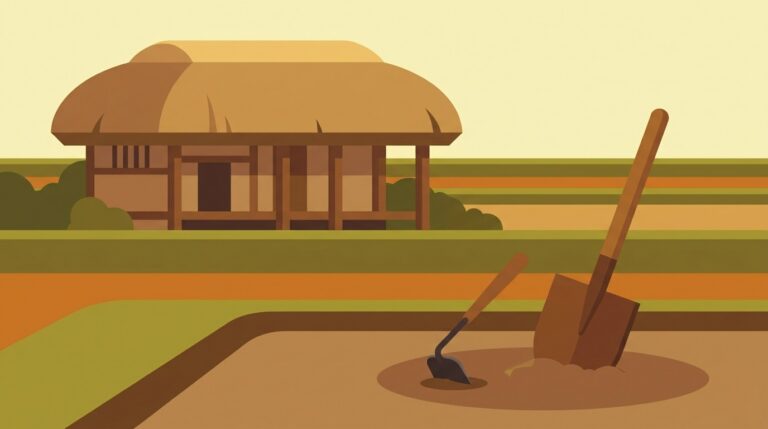
- Editor’s Insight: Unlike English ‘a stitch in time saves nine’ (which emphasizes saving labor), the Korean proverb paints a visceral visual contrast between a one-handed garden tool (
호미) and a massive two-person shovel (가래), highlighting both regret and escalating damage. - Situation Spectrum: Casual ✅ | Semi-formal ✅ | Formal ⚠️ (In executive boardrooms, soften it with polite framing like
~는 격이 될 수 있습니다[~neun gyeogi doel su itseumnida] — ‘it could become a case of…’). - 🤔 Think About It: Why does traditional Korean life wisdom lean so heavily on agricultural tools like
호미and가래to teach crisis management, compared to sewing or mechanical idioms in English?
2. 초기 대응의 골든타임을 놓치다 (Chogi daeeung-ui goldeuntaimeul nochida)
- Pronunciation: [cho-gi dae-eung-ui gol-deun-ta-i-meul no-chi-da] — Notice
놓치다does not sound like ‘noh-t-hi-da’; theㅎ[h] andㅈ[j] fuse into a crisp aspiratedㅊ[ch], like the ‘ch’ in ‘cheese’. - Meaning: Literally, ‘To miss the golden time of initial response.’ Nuance: Failing to act within the critical window before a manageable problem snowballs into an irreversible crisis.
- K-Culture Moment: You will hear Korean news anchors, disaster film characters, and K-Pop agency crisis teams repeat this phrase whenever a public apology or safety check comes too late.
- Editor’s Insight: Although
골든타임(Golden Time) is a borrowed English medical term, Koreans use it across corporate PR, politics, and daily life with razor-sharp urgency. - Situation Spectrum: Casual ⚠️ (Sounds slightly like a news broadcast among close friends) | Semi-formal ✅ | Formal ✅
- 🤔 Think About It: How does Korea’s fast-paced
빨리빨리(ppalli-ppalli / hurry-hurry) culture amplify the social pressure around초기 대응(initial response)?
3. 미연에 방지하다 / 수습하다 (Miyeone bangjihada / Suseupada)
- Pronunciation: [mi-yeo-ne bang-ji-ha-da / su-seu-pa-da] — In
수습하다, the finalㅂ[b] collides withㅎ[h] to form an explosiveㅍ[p], sounding like ‘soo-seu-pah-da’. - Meaning:
미연에 방지하다means ‘to prevent in advance before anything happens,’ while수습하다means ‘to contain, clean up, and stabilize the aftermath.’ - K-Culture Moment: Whenever a celebrity scandal or server outage hits Korean social media, official statements almost always vow to
사태를 수습하다(contain the situation) and재발을 미연에 방지하다(prevent recurrence in advance). - Editor’s Insight: Pairing these two advanced Sino-Korean verbs shows emotional maturity—you acknowledge the mess calmly (
수습) while proving strategic foresight (미연에 방지). - Situation Spectrum: Casual 🚫 (Too formal for casual chatting) | Semi-formal ✅ | Formal ✅
- 🤔 Think About It: Does your native language have a single verb like
수습하다that blends both practical damage control and emotional calming of chaos?
Phase 3: Textbook Korean vs. Real Korean
Scenario 1: Warning a teammate not to ignore a small bug
- 📖 Textbook Korean:
작은 실수라도 빨리 고쳐야 큰 문제가 안 됩니다.(Jageun silsurado ppalli gochyeoya keun munjega an doemnida. — Even a small mistake must be fixed quickly so it doesn’t become a big problem.) - 🗣️ Real Korean:
이거 지금 안 잡으면 호미로 막을 걸 가래로 막게 돼요.(Igeo jigeum an jabeumyeon homiro mageul geol garaero makge dwaeyo. — If we don’t catch this right now, we’ll end up using a spade instead of a hoe.) - 💡 Why Is It Different?: Native speakers naturally contract
것을into걸and use the vivid verb잡다(to catch/curb) instead of고치다, creating persuasive urgency without sounding like a textbook lecture.
Scenario 2: Admitting a delay made everything worse
- 📖 Textbook Korean:
처음에 해결하지 못해서 일이 아주 커졌습니다.(Cheoeume haegyeolhaji mothaeseo iri aju keojyeotseumnida. — Because we failed to solve it at the beginning, the issue grew very large.) - 🗣️ Real Korean:
초기 대응을 놓쳐서 완전 사후약방문 격이 됐죠.(Chogi daeeungeul nochyeoseo wanjeon sahuyakbangmun gyeogi dwaetjyo. — We missed the initial response, so it totally became a case of prescribing medicine after death.) - 💡 Why Is It Different?: Combining casual intensifier
완전(totally) with the classical idiom사후약방문(medicine after death) is the hallmark of an articulate, native-sounding Level 5 speaker.
Phase 4: K-Culture Deep Dive & Non-Verbal Manners
4-1. Nunchi (눈치) & Gestures
Because 호미로 막을 것을 가래로 막는다 carries a cautionary tone, delivering it with poor body language can feel accusatory. Never point a finger (손가락질) or cross your arms (팔짱 끼기), which signals superiority. Instead, use empathetic 눈치 (social awareness): lean slightly forward, keep open palms resting on the table, soften your brow, and frame the proverb around the situation rather than the person. Adding a gentle sigh and saying 우리 같이 빨리 잡죠 (Uri gachi ppalli japjyo — Let’s catch this together quickly) transforms criticism into leadership.
4-2. Cultural Code Analysis: K-Pop PR & Korean Business Culture
In South Korea’s hyper-connected digital ecosystem, rumors and customer complaints travel across communities like Nate Pann, Blind, and X within minutes. That is why Korean corporations and K-Pop entertainment agencies treat 초기 진화 (early extinguishing) as life or death. When a company delays an apology or hides a defect, netizens ruthlessly quote 호미로 막을 것을 가래로 막았다 in comment sections. In Korean culture, speed and sincerity in owning a tiny mistake earn forgiveness far faster than silent perfectionism.
Phase 5: Real-Life Roleplay Scenario
Setting: Midnight at a sleek marketing agency in Seongsu-dong, Seoul. Rain taps against floor-to-ceiling windows while empty iced Americano cups clutter the conference table.
Characters: Min-jae (You, an observant Senior Strategist) and Team Lead Seo-yeon (a brilliant yet exhausted perfectionist trying to wrap up tomorrow’s campaign launch).
- Min-jae:
팀장님, 내일 나가는 배너 가격 표기에 오타가 하나 있는 것 같아요.(Timjangnim, naeil naganeun baeneo gagyeok pyogie otaga hana inneun geot gatayo. — Team Lead, I think there’s a typo in the price listed on tomorrow’s banner.) 🎭 (tapping the tablet screen cautiously) - Seo-yeon:
아, 0 하나 빠진 거요? 이미 디자인팀 다 퇴근했는데 그냥 내일 아침에 고치면 안 될까요?(A, yeong hana ppajin geoyo? Imi dijaintim da toegeunhaenneunde geunyang naeil achime gochimyeon an doelkkayo? — Oh, one zero missing? The design team already went home; can’t we just fix it tomorrow morning?) 🎭 (rubbing her temples tiredly) - Min-jae:
오전 8시에 자동 업로드되는데, 소비자들이 오해하고 캡처해서 퍼뜨리면 일이 커질 수도 있어요.(Ojeon yeodeolsie jadong eomnodeudoeneunde, sobijadeuri ohaehago kaepcheohaeseo peotteurimyeon iri keojil sudo isseoyo. — It auto-uploads at 8 AM, and if consumers misunderstand, screenshot it, and spread it, things could blow up.) 🎭 (leaning forward with earnest concern) - Seo-yeon:
설마 그 잠깐 사이에 무슨 큰일이야 나겠어요?(Seolma geu jamkkan saie museun keuniriya nagesseoyo? — Surely nothing huge could happen in just that short gap, right?) 🎭 (forcing a hesitant smile) - Min-jae:
팀장님, 호미로 막을 것을 가래로 막는다는 말도 있잖아요. 초기 대응이 정말 중요해요.(Timjangnim, homiro mageul geoseul garaero mangneundaneun maldo itjanayo. Chogi daeeungi jeongmal jungyohaeyo. — Team Lead, as they say, you end up blocking with a spade what a hoe could have stopped. Initial response really matters.) 🎭 (speaking softly yet firmly) - Seo-yeon:
하긴, 요즘 커뮤니티 반응이 워낙 빠르긴 하죠. 지금이라도 예약 발송을 막아야 할까요?(Hagin, yojeum keomyuniti baneungi wonak ppareugin hajyo. Jigeumirado yeyak balsongeul magaya halkkayo? — True, online communities react insanely fast these days. Should we pause the scheduled upload right now?) 🎭 (sitting up straight, wide awake) - Min-jae:
네, 제가 지금 서버에서 일시 중지 걸어 둘게요. 미연에 방지하는 게 최선이에요.(Ne, jega jigeum seobeoeseo ilsi jungji georeo dulgeyo. Miyeone bangjihaneun ge choeseonieyo. — Yes, I’ll put a temporary pause on the server right now. Preventing it beforehand is the best move.) 🎭 (opening his laptop swiftly) - Seo-yeon:
고마워요, 민재 씨. 자칫하면 내일 하루 종일 사태 수습하느라 진땀 뺄 뻔했네요.(Gomawoyo, Min-jae ssi. Jachithamyeon naeil haru jongil satae suseupaneura jinttam ppael ppeonhaenneyo. — Thank you, Min-jae. One slip and we could’ve sweated all day tomorrow cleaning up the mess.) 🎭 (exhaling a deep sigh of relief)
🔀 Interactive Branching Point: What Would You Say at Turn 5?
Suppose Seo-yeon insists on waiting until morning. Choose your response:
- Option A:
지금 예약만 멈추면 1분이면 끝나요. 호미로 막을 걸 가래로 막지 않게 제가 바로 처리할게요.(Jigeum yeyangman meomchumyeon ilbunimyeon kkeunnayo. Homiro mageul geol garaero makji ange jega baro cheorihalgeyo. — Pausing the schedule takes one minute. Let me handle it right away so we don’t turn a small fix into a crisis.)- Feedback (Best ✅): Brilliant! You offer an immediate solution alongside the proverb, protecting Seo-yeon’s pride while preventing the disaster.
- Option B:
팀장님이 책임지실 거면 그냥 두세요. 나중에 가래로 막고 후회하지 마시고요.(Timjangnimi chaegimjisil geomyeon geunyang duseyo. Najunge garaero makgo huhoehaji masigoyo. — If you’re taking responsibility, leave it. Just don’t regret having to use a spade later.)- Feedback (Bad 🚫): Way too confrontational! In Korean workplace hierarchy, challenging a superior with
책임지실 거면burns bridges and destroys눈치.
- Feedback (Bad 🚫): Way too confrontational! In Korean workplace hierarchy, challenging a superior with
- Option C:
그래도 내일 수정하면 조금 위험할 것 같긴 한데...(Geuraedo naeil sujeonghamyeon jogeum wiheomhal geot gatgin hande… — Still, fixing it tomorrow seems a bit risky though…)- Feedback (Risk ⚠️): Polite, but too vague! Trailing off with
~한데lets an exhausted boss ignore the warning, risking the exact골든타임loss.
- Feedback (Risk ⚠️): Polite, but too vague! Trailing off with
Phase 6: 10-Second Emotion Shadowing Drill
Read aloud with natural pauses (/) and commit fully to the emotion!
- [😟 Urgent & Concerned]
지금 바로 안 잡으면 / 호미로 막을 것을 / 가래로 막게 됩니다.
(Jigeum baro an jabeumyeon / homiro mageul geoseul / garaero makge doemnida. — If we don’t catch it right now, we’ll end up blocking with a spade what a hoe could have stopped.) -
[😤 Frustrated yet Determined]
초기 대응의 골든타임을 / 절대 놓치면 안 돼요! / 지금 수습합시다.
(Chogi daeeung-ui goldeuntaimeul / jeoldae nochimyeon an dwaeyo! / Jigeum suseupapsida. — We must never miss the golden time of initial response! Let’s contain it now.) -
[😌 Relieved & Reassuring]
다행히 일찍 발견해서 / 큰 사고를 / 미연에 방지할 수 있었어요.
(Dahaenghi iljjik balgyeonhaeseo / keun sagoreul / miyeone bangjihal su isseosseoyo. — Fortunately, since we spotted it early, we were able to prevent a major accident beforehand.)
Phase 7: K-Culture Mini Dictionary
- 호미 (Homi) | Hand hoe | A small, curved Korean gardening blade used for weeding; symbolizes minimal effort needed when a problem is still tiny.
- 가래 (Garae) | Heavy wooden spade | A large, traditional Korean shovel operated by two or three people pulling ropes; symbolizes exhausting, costly crisis recovery.
- 사후약방문 (Sahuyakbangmun) | Medicine after death | A classic four-character idiom (
사자성어) mocking late measures taken only after the damage is already irreversible. - 초기 진화 (Chogi jinhwa) | Early extinguishing | Borrowed from firefighting; widely used in Korean business and media to praise shutting down rumors or glitches before they spread.
Phase 8: Survival Kit for Travelers
When traveling in Korea, minor hiccups (a lost card, wrong train, or billing error) can escalate fast if you hesitate. Use these right away!
- 1.
지금 바로 확인 좀 부탁드려요.(Jigeum baro hwagin jom butakdeuryeoyo.) — ‘Please check this right away.’- Pro Tip: Adding
좀(a bit) softens the urgency so staff feel eager to help rather than pressured.
- Pro Tip: Adding
- 2.
일이 커지기 전에 빨리 해결하고 싶어요.(Iri keojigi jeone ppalli haegyeolhago sipeoyo.) — ‘I want to resolve this quickly before it gets bigger.’- Pro Tip: Great for hotel booking mix-ups or lost luggage desks at Incheon Airport.
- 3.
혹시 다른 대안이 있을까요?(Hoksi dareun daeani isseulkka-yo?) — ‘By any chance, is there another alternative?’- Pro Tip: Shows calm, Level 5 problem-solving poise during sudden cancellations.
Editor’s Travel Note: Don’t let small navigation or payment confusion ruin your trip! Before landing, download the Naver Map mobile app for pinpoint subway transfers, and keep the 1330 Korea Travel Hotline official guide bookmarked for free 24/7 multilingual crisis assistance. Also, always tap your T-money card cleanly on both boarding and exiting buses so you aren’t charged an extra penalty fare!
Phase 9: One Step Deeper — Why Do We Hide Small Errors?
In Korean society, harmony (화합) and saving face (체면) sometimes create an ironic trap. Juniors often hesitate to report minor mistakes out of fear of disrupting group peace or facing harsh reprimands (문책). Yet Korean history and philosophy remind us through 호미로 막을 것을 가래로 막는다 that true loyalty is courageous honesty at the very first sign of trouble. In the end, real 배려 (thoughtfulness) isn’t hiding bad news to protect comfort—it is speaking up early to protect the whole team.
💬 Your Turn: Have you ever stayed quiet about a tiny mistake—in language learning, work, or travel—only for it to snowball later? Tell us your story in the comments using one Korean phrase from today!
Phase 10: FAQ & Common Mistakes
Q: Can I use ‘호미로 막을 것을 가래로 막는다’ directly to my Korean boss?
A: Yes, but tread carefully with framing! Never aim it directly at your boss’s decision as blame. Instead, use it humbly about your own caution or the shared situation, such as 제가 미처 못 챙겨서 가래로 막게 될까 봐 미리 말씀드립니다 (Jega micheo mot chaenggyeoseo garaero makge doelkkwa bwa miri malsseumdeurimnida — I’m reporting early out of worry that missing this might force us to fix a huge mess later).
Q: What is the difference between ‘호미로 막을 것을 가래로 막는다’ and ‘소 잃고 외양간 고친다’?
A: Great Level 5 distinction! 소 잃고 외양간 고친다 (Fixing the barn after losing the cow) means taking action too late after total failure. In contrast, 호미로 막을 것을 가래로 막는다 stresses escalating cost—the problem isn’t necessarily unfixable, but procrastinating made the fix ten times harder.
Q: Is ‘골든타임’ considered standard Korean in formal writing?
A: Yes! While it originated as a loanword (Golden Time), major Korean newspapers, government briefings, and TOPIK reading passages regularly use 골든타임 alongside native expressions like 적기 (jeokgi — the right timing).
🚨 Common Mistakes TOP 3
- Mixing up the tools (
가래로 막을 것을 호미로 막는다): Reversing the proverb makes no logical sense! Correct Action: Always remember호미(small hoe) comes FIRST, and가래(giant spade) comes SECOND. - Using
방지하다for problems that already happened:미연에 방지하다strictly means preventing before an event occurs. Correct Action: Once a mistake has already happened, use수습하다(contain/resolve) or재발을 방지하다(prevent recurrence). - Pronouncing
막는다as [mak-neun-da]: Ignoring nasal assimilation makes your advanced proverb sound unnatural. Correct Action: Smoothly nasalize theㄱintoㅇ, pronouncing it [mang-neun-da].
Phase 11: Action Mission & Engagement
- 🥉 Bronze Mission (Solo Practice): Record yourself shadowing Phase 6 three times until
막는다and수습하다roll effortlessly off your tongue. - 🥈 Silver Mission (Share Online): Post one Korean workplace or study tip on your social media with the hashtag
#DailyHanguland use미연에 방지하다in a real sentence. - 🥇 Gold Mission (Real-World Use): Next time you speak with a Korean friend or language partner, spot a small problem early and naturally drop
호미로 막을 걸 가래로 막으면 안 되죠!(Homiro mageul geol garaero mageumyeon an doejyo!).
🎮 K-Culture Mission: Watch an episode of a Korean workplace drama (like Misaeng or Agency) or check Korean entertainment news this week. Can you spot a scene where a character misses the 초기 대응? Write down what they could have done to 미연에 방지하다 the crisis!
Phase 12: Interactive Quiz Challenge
Quiz 1 (Situation Judgment):
Your Korean friend says, 치과 가기 귀찮아서 작은 충치 그냥 뒀다가 결국 신경치료 받았어. (Chikgwa gagi gwichanaseo jageun chungchi geunyang dwotdaga gyeolguk singyeongchiryo badasseo. — I was too lazy to go to the dentist for a tiny cavity, and ended up needing a root canal.) Which response fits BEST?
* A) 완전 사후약방문이네. (Too late after death.)
* B) 그러게, 호미로 막을 걸 가래로 막았네! (See, you ended up using a spade for what a hoe could’ve stopped!)
* C) 미연에 방지해서 다행이다. (Good thing you prevented it beforehand.)
Click to reveal Quiz 1 Answer & Explanation
Answer: B! Because a minor cavity (호미) grew into an expensive, painful root canal (가래) due to procrastination, B captures the exact nuance. Option A implies total irremediable loss, and Option C contradicts what happened!
Quiz 2 (Fill in the Blank):
큰 피해가 발생하기 전에 위험 요소를 ( __________ ) 것이 가장 현명합니다. (Keun pihaega balsaenghagi jeone wiheom yosoreul ( __________ ) geosi gajang hyeonmyeonghamnida. — It is wisest to __________ risk factors before major damage occurs.)
Click to reveal Quiz 2 Answer & Explanation
Answer: 미연에 방지하는 (miyeone bangjihaneun)! Since the sentence specifies before major damage occurs (발생하기 전에), ‘preventing in advance’ fits both grammatically and contextually.
Quiz 3 (True/False Culture Quiz):
In Korean business culture, crossing your arms and pointing while quoting 호미로 막을 것을 가래로 막는다 to a junior employee is seen as charismatic, helpful mentoring. (True / False)
Click to reveal Quiz 3 Answer & Explanation
Answer: False! Crossing arms and pointing (손가락질) are perceived as aggressive and lacking 눈치. Pair cautionary proverbs with open posture and collaborative phrasing to earn genuine respect.
🎬 Watch Our Daily Videos! (Daily Hangul Official Instagram)
Review the expressions you learned in this article with our fun daily short videos! Check out native pronunciation and real-life nuances in action.
- Instagram @dailyhangul_en






