

Don’t Freeze at the Bank! The Ultimate Guide to Setting a Password in Korea
Phase 1: Empathy (The K-Culture Cold Open)
Hello! I’m your Daily Hangul Editor, your local culture navigator and veteran Korean tutor.
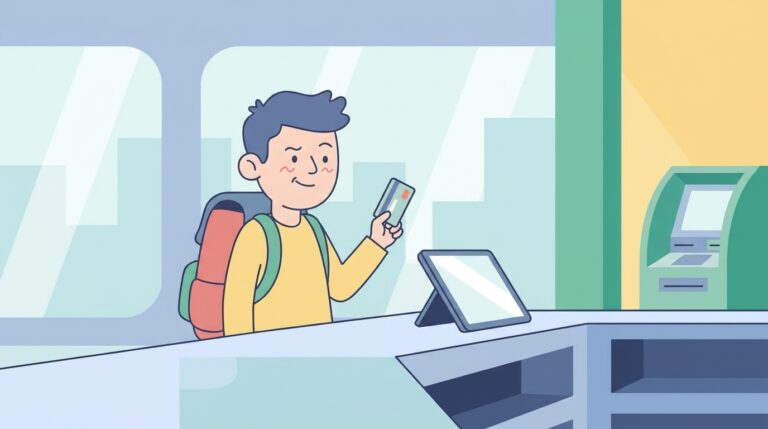
You know that classic K-Drama scene where the handsome CEO confidently slides his sleek black card across the table without saying a word? It looks so smooth. But for the rest of us living in the real world, getting that card means visiting a Korean bank. You sit down, sign about twenty digital forms, and suddenly, the teller points to a tiny, glowing keypad and says something really fast. Your mind goes blank. “Did they just say password? Wait, do I press 4 numbers or 6? Did I accidentally sign away my life?”
Banking in Korea is famously fast and efficient, but the vocabulary can be intimidating. If you don’t know the exact phrases for setting up a password (비밀번호, bimilbeonho), you might end up holding up the line—and in a country that runs on 빨리빨리 (hurry, hurry) culture, that’s a lot of pressure!
Don’t worry. This guide is based on real struggles from my A2 learners. By the end of this post, you’ll be setting up your Korean bank account or using a local ATM with the confidence of a K-Drama lead!
Phase 2: Core Expressions – Deep Dive
Here are the top three phrases you need when setting a PIN or password in Korea.
1. 비밀번호 네 자리 눌러주세요.
- Pronunciation: [bimilbeonho ne jari nulleojuseyo]
- Sound-alike guide: Bee-meal-bun-ho / neh / jah-ree / nool-luh-joo-seh-yo. (Think of ‘nool’ like the word ‘null’, but slightly longer).
- Meaning: Literal = “Password four digits please press.” / Real nuance = “Please enter your 4-digit PIN.”
- K-Culture Moment: You’re at the bank counter. The teller pushes a small black keypad toward you. They don’t want you to say it out loud; they want you to physically press the buttons.
- Editor’s Insight: Most bank cards in Korea use a 4-digit PIN, unlike some countries that use 6 digits. The word 눌러주세요 (press) is highly physical and used for buttons, elevators, and keypads.
- Situation Spectrum:
- Casual (Friends): 🚫 (Friends don’t ask for your bank PIN!)
- Semi-formal (Clerk/Teller): ✅ (Perfectly standard)
- Formal (Boss/Elders): ⚠️ (Only if you work in IT or banking!)
- 🤔 Think About It: Why do Koreans prefer saying “press the button” (눌러주세요) instead of “input your password” (입력해 주세요) in spoken language? Does your native language differentiate between typing on a keyboard and pressing physical buttons?
2. 다시 한번 확인해 주세요.
- Pronunciation: [dasi hanbeon hwaginhae juseyo]
- Sound-alike guide: Dah-she / hahn-bun / hwag-in-hae / joo-seh-yo.
- Meaning: Literal = “Again one time please check.” / Real nuance = “Please enter it one more time to confirm.”
- K-Culture Moment: You just typed your new PIN. The machine beeps. The teller asks you to do it again to ensure there’s no typo.
- Editor’s Insight: This is the polite, indirect way of saying “Type it again.” Instead of demanding “Type it again,” they say “Please confirm it once more.” It feels much softer and more customer-friendly!
- Situation Spectrum:
- Casual: ⚠️ (Sounds too robotic for friends)
- Semi-formal: ✅
- Formal: ✅
- 🤔 Think About It: The word 확인 (hwagin – confirm/check) is used everywhere in Korea—from banking to food delivery. Why is ‘double-checking’ such a crucial part of Korean customer service?
3. 생년월일이나 연속된 숫자는 안 돼요.
- Pronunciation: [saengnyeonworirina yeonsokdoen sutjaneun an dwaeyo]
- Sound-alike guide: Sang-nyun-wol-il-ee-nah / yun-sok-dwen / soot-jah-neun / ahn / dweh-yo.
- Meaning: Literal = “Birthdate or consecutive numbers are not allowed.” / Real nuance = “You can’t use your birthday or numbers like 1234.”
- K-Culture Moment: You try to set your PIN as your birth year. The system rejects it. The teller sighs sympathetically and gives you this warning.
- Editor’s Insight: This sentence is a bit long, but you only need to catch two keywords: 생년월일 (birthdate) and 안 돼요 (not allowed). Korean banking security is incredibly strict.
- Situation Spectrum:
- Casual: 🚫
- Semi-formal: ✅
- Formal: ✅
- 🤔 Think About It: Why does the teller explain the rules after you make a mistake rather than before? It’s often because they assume you already know the strict digital rules of Korean society!
Phase 3: Textbook vs. Real Korean
Let’s see how the textbooks differ from what you actually hear at a bustling Seoul bank.
[Situation 1: Asking you to enter your PIN]
* 📖 Textbook Korean: 비밀번호를 입력하시겠습니까? (Would you like to input your password?)
* 🗣️ Real Korean: 비밀번호 네 자리 눌러주세요. (Please press your 4-digit PIN.)
* 💡 Why the difference?: “입력하다” (Input) is a formal, written word used on computer screens. In spoken, fast-paced environments, Koreans prefer “누르다” (to press) because it’s an intuitive physical action.
[Situation 2: When your PIN gets rejected]
* 📖 Textbook Korean: 비밀번호가 틀렸습니다. (Your password is wrong.)
* 🗣️ Real Korean: 고객님, 비밀번호 오류가 났어요. 다시 해주시겠어요? (Customer, there’s a password error. Could you do it again?)
* 💡 Why the difference?: Saying “You are wrong” (틀렸다) sounds too direct and slightly rude in customer service. Using the noun “오류” (error) shifts the blame from you to the system.
Bottom Note: For A2 learners, don’t worry about memorizing the complex textbook phrases. Just listen for the keywords: 비밀번호 (password), 네 자리 (4 digits), and 눌러주세요 (please press)!
Phase 4: Cultural Context — K-Culture Deep Dive
4-1. Non-Verbal Communication: The ‘Keypad Shield’
When setting your PIN, you’ll notice Koreans always use their free hand to completely cover their other hand while typing. It’s not just polite; it’s a deeply ingrained habit. If you don’t cover the keypad, the teller might physically look away or even remind you to hide it. This is a form of 눈치 (Nunchi)—an unspoken rule to protect both your privacy and to prevent the teller from feeling uncomfortable.
4-2. K-Travel Connection: The Almighty ATM
If you’re traveling in Korea, you will definitely use an ATM at a convenience store (CU, GS25, 7-Eleven) or a subway station. Korean ATMs are fast, and they speak! When you insert a foreign card, the machine will ask for your PIN (비밀번호). However, remember that Korea operates on a 4-digit PIN system for cards. If your home country’s PIN is 6 digits, you usually just enter the first 4 digits, or the 4 digits plus two zeros (depending on your bank). Also, be prepared for the machine to loudly announce: “처리가 완료되었습니다!” (Processing is complete!) so everyone in the store knows you’re done!
Phase 5: Real-Life Roleplay Scenario
Setting: It’s Friday at 3 PM. You are inside a bright, slightly noisy branch of a major Korean bank in Gangnam. You finally received your Alien Registration Card (ARC) and are setting up your very first Korean debit card (체크카드).
Characters:
– YOU: A foreigner who has been studying Korean for a few months. A bit nervous but excited to get a Korean bank account.
– Minji (민지): The friendly but efficient bank teller. She has a line of 20 people waiting behind you, so she wants to get this done quickly but politely.
Dialogue:
Minji: 고객님, 신분증 주시겠어요? 🪪
(gogaengnim, sinbunjeung jusigesseoyo?)
[Customer, could you give me your ID?]
(🎭 Stage Direction: Minji reaches her hand out with a polite smile.)
YOU: 네, 여기 있습니다.
(ne, yeogi itseumnida.)
[Yes, here it is.]
Minji: 감사합니다. 이제 체크카드 비밀번호를 설정할게요. 앞쪽 키패드에 비밀번호 네 자리 눌러주세요. 🔢
(gamsahamnida. ije chekeukadeu bimilbeonhoreul seoljeonghalgeyo. apjjok kipaedee bimilbeonho ne jari nulleojuseyo.)
[Thank you. Now we will set your debit card password. Please press a 4-digit PIN on the keypad in front of you.]
YOU: 네, 알겠습니다. (Beep-beep-beep-beep)
(ne, algetseumnida.)
[Yes, understood.]
Minji: 앗, 고객님. 혹시 생일로 하셨나요? 생년월일은 안 돼요. 🙅♀️
(at, gogaengnim. hoksi saengillo hasyeonnayo? saengnyeonworireun an dwaeyo.)
[Ah, customer. By any chance, did you use your birthday? Birthdates are not allowed.]
🔀 Your Turn! How should you respond?
– A) “아, 몰랐어요. 그럼 1234로 할게요!” (Oh, I didn’t know. Then I’ll do 1234!)
– B) “네? 왜요? 내 마음이잖아요!” (What? Why? It’s my choice!)
– C) “아, 죄송합니다. 다른 번호로 다시 할게요.”✅ Best Choice: C — “Ah, I’m sorry. I will do it again with a different number.”
⚠️ Choice A Analysis: 1234 is “consecutive numbers” (연속된 숫자) and the system will reject it immediately! You’ll have to start over again.
⚠️ Choice B Analysis: Way too aggressive and unnatural for a bank setting.
(Let’s continue assuming you chose C)
YOU: 아, 죄송합니다. 다른 번호로 다시 할게요.
(a, joesonghamnida. dareun beonhoro dasi halgeyo.)
[Ah, I’m sorry. I will do it again with a different number.]
Minji: 괜찮습니다. 천천히 다시 눌러주세요.
(gwaenchanseumnida. cheoncheonhi dasi nulleojuseyo.)
[It’s okay. Please take your time and press it again.]
YOU: (Beep-beep-beep-beep) 다 했어요.
(da haesseoyo.)
[I’m all done.]
Minji: 네, 확인을 위해서 다시 한번 입력해 주세요. ✅
(ne, hwagineul wihaeseo dasi hanbeon imnyeokhae juseyo.)
[Yes, please enter it once more for confirmation.]
YOU: (Beep-beep-beep-beep) 네, 됐나요?
(ne, dwaennayo?)
[Yes, is it done?]
Minji: 네! 수고하셨습니다. 카드는 바로 사용 가능하세요. 💳
(ne! sugohasyeotseumnida. kadeuneun baro sayong ganeunghaseyo.)
[Yes! Thank you for your effort. You can use the card immediately.]
Phase 6: 10-Second Shadowing Drill
Practice this sentence until it flows naturally. Pay attention to the pauses (/) and the feeling!
😊 앞쪽 / 키패드에 / 비밀번호 네 자리 / 눌러주세요~
(apjjok / kipaedee / bimilbeonho ne jari / nulleojuseyo~)
[Please press your 4-digit PIN on the keypad in front of you~]
Editor’s Tip: Raise your pitch slightly at the end of “~주세요” to sound exactly like a friendly Korean bank teller!
Phase 7: K-Culture Mini Dictionary
Here are 4 essential words you need for Korean banking and digital life:
1. 통장 (Bankbook)
* Romanization: tongjang
* English: Bankbook / Passbook
* Context: Even in the digital age, Koreans still frequently use physical bankbooks. Employers often ask for a “통장 사본” (copy of your bankbook) to pay your salary!
2. 체크카드 (Check Card)
* Romanization: chekeukadeu
* English: Debit Card
* Context: In Korea, debit cards are called “check cards.” Credit cards are called 신용카드 (sinyongkadeu). Check cards are tied directly to your bank balance.
3. 눈치 (Nunchi)
* Romanization: nunchi
* English: Social situational awareness / tact
* Context: Covering your hand while entering a password is a prime example of having nunchi. It shows you are aware of your surroundings and social expectations.
4. 빨리빨리 (Ppalli-ppalli)
* Romanization: ppallippalli
* English: Hurry up / Fast-paced
* Context: The driving force behind Korean banking. Transfers happen instantly, and ATMs process cash at lightning speed to satisfy this cultural trait.
Phase 8: Traveler’s Survival Kit
If you are traveling and need to use a Korean ATM to get cash for street food in Myeongdong, you must know these screen buttons:
🆘 Survival Expressions for the ATM
– 🇰🇷 예금인출 (yegeuminchul)
– 🗣️ Meaning: Cash Withdrawal
– 📍 Where you see it: Main screen of any ATM.
– 🇰🇷 언어 / Language (eoneo)
– 🗣️ Meaning: Change language (Look for the globe icon!)
– 📍 Where you see it: Usually at the bottom right corner.
– 🇰🇷 명세표 (myeongsepyo)
– 🗣️ Meaning: Receipt
– 📍 Where you see it: The machine will ask “명세표를 출력하시겠습니까?” (Do you want to print a receipt?) Yes (예) / No (아니오).💡 Pro Tip: Korean ATMs sometimes charge higher fees after banking hours (usually after 4 PM) and on weekends. Withdraw cash during the day if possible!
📌 Editor’s Travel Note
– Useful Apps: Toss or KakaoBank (if you live in Korea), but as a tourist, having some physical cash (현금) is still necessary for traditional markets and T-money card reloads.
– Cash vs Card: Korea is a “cashless society.” Even a 1,500 won water bottle can be paid by card without any dirty looks. But always keep 10,000 won for emergencies!
Phase 9: Think Deeper — “One Step Further”
🧠 Language & Power: Security vs. Convenience in Digital Korea
In Korea, your identity is deeply tied to your phone number and your Resident Registration Number (or ARC for foreigners). Setting a simple password like “1234” isn’t just frowned upon; it’s physically blocked by the system. The Korean language reflects this strictness. Notices rarely use soft suggestions; they use clear directives like “안 됩니다” (It is not allowed) or “불가능합니다” (It is impossible). This rigid digital infrastructure is the exact reason why services like food delivery, instant money transfers, and online shopping are incredibly fast and safe. You trade a bit of flexibility for absolute efficiency.
💬 Your Turn: How does the banking system in your home country compare? Is it easy to open an account, or is it a long, strict process like in Korea? Share your thoughts in the comments!
Phase 10: FAQ & Avoiding Common Mistakes
Q: Can I use a 6-digit password at a Korean ATM?
Maybe. Korean bank cards primarily use 4 digits. If you are using a foreign card with a 6-digit PIN, try entering your 6 digits. If the machine only accepts 4, enter the first 4 digits of your PIN, or try adding “00” at the end. (Check with your home bank before traveling!)
Q: If I forget my password, can I just reset it online?
For foreigners, it’s often notoriously difficult to reset passwords online due to identity verification hurdles (the dreaded “공인인증서” digital certificates). Often, you just have to take your ARC and passport and visit the bank branch in person.
❌ Common Mistake #1: Saying “비밀번호가 뭐예요?” (What is the password?) to the bank teller.
✅ Do this instead: They don’t know your password! If you want to ask how many digits the password should be, ask: “비밀번호 몇 자리예요?” (How many digits is the password?)❌ Common Mistake #2: Taking too long at the ATM.
✅ Do this instead: If you hear people behind you sighing (the universal sound of fading nunchi), let them go first if you are struggling with translation. It’s perfectly fine to step aside and say “먼저 하세요” (Please go first).
Phase 11: Summary & Action Items
- One-Liner Summary: When at a Korean bank, listen for 비밀번호 네 자리 눌러주세요 (Please press your 4-digit PIN), cover the keypad with your hand, and avoid birthdays!
-
Your Action Missions:
- 🥉 Bronze (Solo): Stand in front of a mirror and practice saying, “비밀번호 네 자리 눌러주세요” while pretending to point at a keypad.
- 🥈 Silver (Online): Change your phone’s lock screen password today and whisper “비밀번호 설정” (password setup) as you do it.
- 🥇 Gold (Real World): Visit a Korean convenience store ATM, change the language to Korean, and try to navigate to the withdrawal (예금인출) screen using your new vocabulary!
- K-Culture Mission: Next time you watch a K-Drama, look closely at scenes where characters enter their homes. Notice how they quickly type their door passcode (도어락 비밀번호) and immediately cover it with their hand!
Phase 12: Interactive Quiz
Let’s test what you’ve learned today!
1. Situational Judgment: You are setting up your PIN at the bank. The teller says “생년월일은 안 돼요.” What does this mean?
– A) You must use your birthdate.
– B) You cannot use your birthdate.
– C) The machine is broken.
(Answer: B. 생년월일 means birthdate, and 안 돼요 means not allowed.)
2. Fill in the Blank:
“비밀번호 네 자리 _______ 주세요.” (Please press your 4-digit password.)
(Answer: 눌러 – nulleo)
3. True or False – K-Culture Edition:
When typing your PIN in Korea, you don’t need to cover the keypad because the banking system is highly secure.
(Answer: False. It is basic etiquette (눈치) to cover the keypad with your other hand.)
4. Roleplay Check: If the teller says “다시 한번 입력해 주세요”, what should you do?
– A) Leave the bank.
– B) Give them your ID card again.
– C) Type the exact same PIN one more time to confirm.
(Answer: C)
Did you get them all right? Drop your score in the comments below!
Frequently Asked Questions (FAQ)
Q: What does "비밀번호 네 자리 눌러주세요." mean in Korean and how do you pronounce it?
A: In Korean, "비밀번호 네 자리 눌러주세요." is pronounced [bimilbeonho ne jari nulleojuseyo] and means: Literal = "Password four digits please press." / Real nuance = "Please enter your 4-digit PIN."
Q: What does "다시 한번 확인해 주세요." mean in Korean and how do you pronounce it?
A: In Korean, "다시 한번 확인해 주세요." is pronounced [dasi hanbeon hwaginhae juseyo] and means: Literal = "Again one time please check." / Real nuance = "Please enter it one more time to confirm."
Q: What does "생년월일이나 연속된 숫자는 안 돼요." mean in Korean and how do you pronounce it?
A: In Korean, "생년월일이나 연속된 숫자는 안 돼요." is pronounced [saengnyeonworirina yeonsokdoen sutjaneun an dwaeyo] and means: Literal = "Birthdate or consecutive numbers are not allowed." / Real nuance = "You can't use your birthday or numbers like 1234."







