

Phase 1: Empathy & K-Culture Cold Open
Hello! I’m your Daily Hangul Editor, your local culture navigator and veteran Korean tutor. 👋
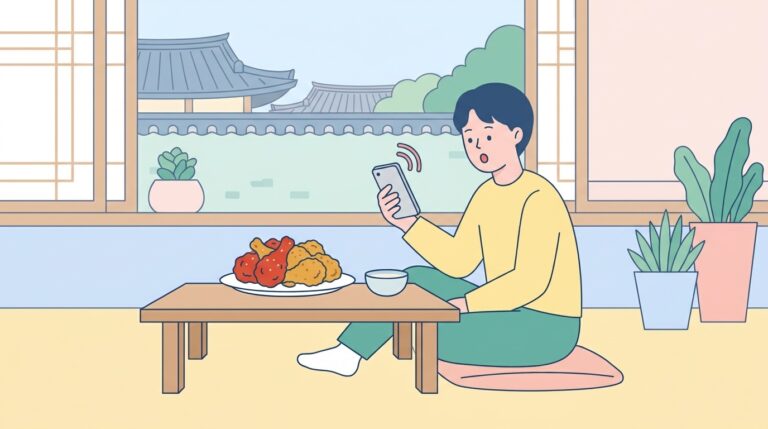
Picture this: You’re comfortably chilling in your Seoul apartment or Airbnb, watching the latest K-Drama. The protagonist gets a dramatic phone call, picks it up, and simply says, “Yeoboseyo?” Fast forward to your real life—your phone rings. It’s an unknown ‘010’ number. Panic sets in. Is it the delivery driver bringing your half-and-half fried chicken? The immigration office? A telemarketer? You pick up, freeze, and the person on the other end speaks rapid-fire Korean. You’re tempted to hang up… but what if it is your chicken?! 🍗
If you don’t know how to navigate this exact moment, you’re not just missing out on deliveries; you’re missing a key part of living in Korea. Knowing how to politely answer and ask “Who is calling?” instantly upgrades you from a confused visitor to a true K-Insider.
Transparency Note: This post isn’t just theory. It’s crafted from the real, sweaty-palmed experiences of my intermediate students who used to dread the ringing of their Korean phones!
Phase 2: Core Expressions Deep Dive
1. 여보세요
- Pronunciation: [Yeoboseyo] — Think of it as “Yo-bo-say-yo”. The ‘yo’ at the end is short and polite.
- Meaning: Literal: Look here. / Real nuance: Hello? (Strictly on the phone).
- K-Culture Moment: In K-Dramas, when a character is desperately trying to reach someone who lost signal, they’ll yell into the phone: “Yeoboseyo?! YEOBOSEYO?!”
- Editor’s Insight: This is the universal phone greeting. However, never use this to say hello to someone in person! It’s exclusively for phones, intercoms, or sometimes (rudely) trying to grab a stranger’s attention on the street if they dropped something and are walking away.
- Situation Spectrum:
- Casual (Friends): ✅
- Semi-formal (Coworkers): ✅
- Formal (Boss/Elders): ✅
- 🤔 Think About It: Why do Koreans use a completely different “hello” (안녕하세요 vs 여보세요) just for the phone? Does your native language have a phone-exclusive greeting?
2. 실례지만, 누구 찾으세요?
- Pronunciation: [Sillyejiman, nugu chajeuseyo?] — ‘으 (eu)’ sounds like the disgusted sound you make when stepping in gum.
- Meaning: Literal: Excuse me, but who are you looking for? / Real nuance: May I ask who is calling?
- K-Culture Moment: You answer an office phone, or someone calls your personal phone asking for a “Kim Min-su” when your name is definitely not Min-su.
- Editor’s Insight: Asking directly “Who are you?” (누구세요?) can sound aggressive or defensive, like you’re guarding a fortress. By asking “Who are you looking for?”, you shift the focus away from their identity to their intention, which is much softer and more polite.
- Situation Spectrum:
- Casual (Friends): 🚫 (Too formal for friends)
- Semi-formal (Coworkers/Strangers): ✅
- Formal (Boss/Elders): ✅
- 🤔 Think About It: Notice the softening phrase “실례지만” (Excuse me, but…). Why is indirectness considered more polite in Korean culture?
3. 전화 잘못 거셨습니다
- Pronunciation: [Jeonhwa jalmot geosyeotseumnida]
- Meaning: Literal: You dialed the phone incorrectly. / Real nuance: You have the wrong number.
- K-Culture Moment: You get a call from an angry Korean ahjussi (middle-aged man) looking for his friend. You politely drop this line and save yourself a 5-minute confusing conversation.
- Editor’s Insight: At the B1 level, you should graduate from simply saying “아니요 (No)” and hanging up. This phrase is the ultimate polite shutdown. It uses the formal ‘-습니다’ ending to show respect to the stranger while firmly setting a boundary.
- Situation Spectrum:
- Casual (Friends): 🚫
- Semi-formal (Coworkers/Strangers): ✅
- Formal (Boss/Elders): ✅
- 🤔 Think About It: Even when rejecting someone or correcting their mistake, Korean requires honorifics. How does this reflect the concept of ‘Gibun’ (기분 – keeping one’s mood/face intact)?
Phase 3: Textbook vs. Real Korean
[Situation 1: Asking who is calling on a personal phone]
* 📖 Textbook Korean: 전화 거신 분은 누구십니까? (Who is the person that called?)
* 🗣️ Real Korean: 실례지만 어디시죠? (Excuse me, but where is this?)
* 💡 Why the difference?: Koreans often ask where the person is calling from (their organization/company) rather than who they are. It’s less confrontational and highly efficient for business or delivery calls.
[Situation 2: A friend calls and you answer]
* 📖 Textbook Korean: 여보세요, 안녕?
* 🗣️ Real Korean: 어, 왜? (Uh, why? / What’s up?) or 여보세요~ (Playful tone).
* 💡 Why the difference?: Among close friends, efficiency and affection trump formality. “어, 왜?” translates to “Yeah, what’s up?” and shows you’re close enough to skip the formalities.
[Situation 3: Ending a polite phone call]
* 📖 Textbook Korean: 안녕히 계십시오. (Goodbye.)
* 🗣️ Real Korean: 네~ 들어가세요~ (Yes~ please go in~)
* 💡 Why the difference?: “들어가세요” (Please go in/return to your work) is the ultimate Korean phone sign-off, reflecting a culture that values the other person’s time and effort.
Bottom Note: For B1 (Intermediate) learners, using “실례지만 어디시죠?” instead of textbook phrases will instantly make you sound like you’ve lived in Seoul for years!
Phase 4: Cultural Context — K-Culture Deep Dive
4-1. Non-verbal Cues on the Phone
Have you ever seen a Korean talking on the phone and bowing to thin air? This is the ultimate display of internalized respect! Even though the caller can’t see them, the physical act of bowing helps convey a respectful tone of voice. When you use formal phrases like “누구 찾으세요?”, try nodding slightly. You’ll be surprised how much it naturally adjusts your intonation to sound more polite.
4-2. The Delivery Driver Panic (K-Food Connection)
In Korea, food delivery (배달 – Baedal) is a lifestyle. Often, delivery drivers will call you when they arrive at your building, especially if they need a passcode.
If you hear: “배달인데요~” (It’s the delivery~)
The worst thing you can do is freeze! The phone call isn’t an interrogation; it’s a fast-paced transaction. Korean food culture is built on the “빨리빨리” (Ppal-i ppal-i / Hurry hurry) mindset. A quick “네, 문 앞에 두고 가주세요” (Yes, please leave it at the door) will save the day and get you your food piping hot.
Phase 5: Real-Life Roleplay Scenario
Scenario A: The Friday Night Chicken Crisis
- Setting: Friday night, 8 PM. You’re in your cozy apartment, Rain tapping on the window. You just ordered KyoChon chicken via an app. Your stomach is growling. Suddenly, your phone rings. It’s an unknown number.
- Characters:
- YOU: A hungry foreigner living in Korea, currently at B1 level.
- Delivery Driver (기사님): Busy, fast-talking, just wants to drop off the food.
Dialogue:
(📱 Stage Direction: Phone rings… Ring ring!)
YOU: 여보세요?
(Yeoboseyo?)
[Hello?]
Driver: 아, 여보세요! 배달 기사인데요.
(A, yeoboseyo! Baedal gisaindeyo.)
[Ah, hello! It’s the delivery driver.]
YOU: 아, 네! 안녕하세요.
(A, ne! Annyeonghaseyo.)
[Ah, yes! Hello.]
Driver: 지금 1층 공동현관 앞인데요, 비밀번호가 어떻게 되죠?
(Jigeum 1-cheung gongdong hyeongwan apindeyo, b밀beonhoga eotteoke doejo?)
[I’m in front of the 1st-floor main entrance, what’s the passcode?]
YOU: 아, 거기는… 종 누르시면 제가 열어드릴게요.
(A, geogineun… jong nureusimyeon jaega yeoreodeurilgeyo.)
[Ah, for that… if you press the bell, I will open it for you.]
Driver: 아, 호출이요? 네, 알겠습니다.
(A, hochuriyo? Ne, algetseumnida.)
[Ah, call you? Yes, understood.]
(📱 Stage Direction: You buzz him in. A minute later, the phone rings again.)
YOU: 여보세요?
(Yeoboseyo?)
[Hello?]
Driver: 문 앞인데요. 이거 놓고 그냥 가면 되나요?
(Mun apindeyo. Igeo noko geunyang gamyeon doenayo?)
[I’m at the door. Should I just leave this and go?]
🔀 Your Turn! How do you answer to secure your chicken?
– A) “아니요, 누구 찾으세요?” (No, who are you looking for?)
– B) “네, 감사합니다. 문 앞에 두고 가주세요! 들어가세요~” (Yes, thank you. Please leave it at the door! Have a good day~)
– C) “진짜요? 대박!” (Really? Awesome!)✅ Best Choice: B — Reason: It perfectly acknowledges his question, gives clear instructions, and ends with the ultimate native sign-off (“들어가세요~” literally means “please go in,” used as “take care/goodbye” to service workers).
⚠️ Choice A Analysis: You already know it’s the driver! Asking “who are you looking for” now will just confuse him.
Scenario B: The Wrong Number Interrogation
- Setting: A random Tuesday. You’re waiting for a call from a recruiter. The phone rings.
- Turn 1:
YOU: 여보세요? (Hello?) - Turn 2:
Caller: 어, 민수야! 형인데, 돈 좀 빌려줄 수 있어? (Hey Minsu! It’s your older brother, can you lend me some money?) - Turn 3:
YOU: 실례지만, 전화 잘못 거셨습니다. 저는 외국인입니다. (Excuse me, but you have the wrong number. I’m a foreigner.)
(Click. Hung up like a boss!)
Phase 6: 10-Second Shadowing Drill
Let’s practice the exact rhythm and intonation. Follow the slashes (/) for pauses.
- 🥺 Polite & Soft: 실례지만 / 누구 / 찾으세요? (sillyejiman / nugu / chajeuseyo?)
- 😤 Firm & Clear: 아, / 전화 / 잘못 거셨습니다. (a, / jeonhwa / jalmot geosyeotseumnida.)
- 😊 Friendly Sign-off: 네~ / 감사합니다 / 들어가세요
(ne~ / gamsahamnida / deureogaseyo) Note: Elongate the ‘네’ and ‘요’ slightly for a friendlier tone!
Phase 7: K-Culture Mini Dictionary
1. 눈치 (Nunchi)
* Romanization: nunchi
* English: Social intuition / Reading the room
* Context: On the phone, ‘nunchi’ tells you whether the caller is a scammer (voice phishing) or a real delivery driver just by their tone and urgency.
2. 보이스피싱 (Voice Phishing)
* Romanization: boiseupising
* English: Phone scams
* Context: A massive issue in Korea. If an unknown caller asks for your bank details or claims to be a prosecutor, politely use “잘못 거셨습니다” and hang up immediately!
3. 택배 (Taekbae)
* Romanization: taekbae
* English: Parcel delivery
* Context: The backbone of Korean shopping. Your “택배 기사님” (delivery driver) might call if they can’t find your address.
4. 네~ (Ne~)
* Romanization: ne~
* English: Yes / I see / Uh-huh / Goodbye
* Context: The most versatile word on the Korean phone. A conversation can literally end with two people saying “네~” back and forth 5 times before hanging up.
Phase 8: Traveler Survival Kit
Even if you’re just traveling, your hotel or a taxi driver might need to call you!
🆘 Survival Phrases for the Phone
– 🇰🇷 “한국말 잘 못해요. 문자로 부탁드립니다.”
– (Hangungmal jal motaeyo. Munjaro butakdeurimnida.)
– 🗣️ English: I can’t speak Korean well. Please send a text.
– 📍 Where to use: When you’re overwhelmed by a fast-talking caller.
– 🇰🇷 “지금 택시 안이에요.”
– (Jigeum taeksi anieyo.)
– 🗣️ English: I’m in a taxi right now.
– 📍 Where to use: When your friend/host calls to check your location.
– 🇰🇷 “여보세요, 거기 [장소] 맞나요?”
– (Yeoboseyo, geogi [jangso] mannayo?)
– 🗣️ English: Hello, is this [Location]?
– 📍 Where to use: Calling a restaurant or hotel to confirm you dialed correctly.📌 Editor’s Travel Note
– Useful App: If you’re afraid of spam calls, many Koreans use an app called ‘Whoscall’ or ‘T-Phone’ which automatically identifies spam numbers before you even pick up!
– Texting over calling: If a Korean number calls and you panic, just let it ring out and immediately text them: “누구세요?” (Who is this?). It’s totally acceptable!
Phase 9: Critical Thinking Corner — “한 발 더 깊이”
🧠 Think Deeper: Language & Power (언어와 권력)
Korean honorifics aren’t just about grammar; they are invisible social maps. When you pick up the phone, you are entirely blind to the other person’s age, status, and rank. Because the Korean language requires you to establish a hierarchy to speak properly, telephone conversations force people to use the safest, most elevated formal language (존댓말) until identities are established. Asking “실례지만 누구 찾으세요?” (Excuse me, but who are you looking for?) is a defensive mechanism to show utmost respect to an unknown entity who might just be your boss’s boss, or just a telemarketer.💬 Your Turn: In your culture, do you change your tone or use different vocabulary when talking to a complete stranger on the phone compared to a friend? Share your experience in the comments!
Phase 10: FAQ & Avoiding Misunderstandings
Q: Can I just say “누구야?” (Who are you?) to an unknown caller?
– NO. This is informal (Banmal) and sounds incredibly rude, as if you want to pick a fight. Always use “누구세요?” or “어디시죠?” to strangers.
Q: If an idol does a live stream and calls a fan, can the fan use Banmal?
– Maybe, but tread carefully. Usually, fans use polite language (요) to show respect, even if the idol is younger. If the idol says “반말해도 돼~” (You can speak informally), then go for it!
❌ Common Mistake #1: Saying “안녕!” (Hello/Casual) when picking up the phone.
✅ Do this instead: Always say “여보세요” when answering the phone, even if caller ID shows it’s your mom!❌ Common Mistake #2: Translating “Who is calling?” directly to “전화하는 사람 누구예요?”
✅ Do this instead: Use “누구 찾으세요?” (Who are you looking for?) or “어디시죠?” (Where are you calling from?).
Phase 11: Summary & Action Items
One-Liner Summary: On the phone in Korea, always start with “여보세요”, ask “누구 찾으세요?” to strangers, and end gracefully with “들어가세요”!
Action Mission 3 Steps:
– 🥉 Bronze (Solo): Stand in front of a mirror, pretend to hold a phone, and say “여보세요? 실례지만 누구 찾으세요?” out loud 3 times.
– 🥈 Silver (Online): Drop a comment below translating this: “Hello, you have the wrong number!”
– 🥇 Gold (Real Life): Next time an unknown 010 number calls you in Korea, don’t ignore it. Pick it up and confidently say “여보세요!”
🎬 K-Culture Mission:
Watch one episode of your favorite K-Drama today. I guarantee you will hear “여보세요” and “네, 들어가세요~” within the first 30 minutes. When you hear it, point at the screen and shout it with them!
Did you ever have a funny misunderstanding on the phone in Korea? Tell me your story in the comments! 👇
Phase 12: Quiz — Interactive Challenge
1. Situational Judgment:
You are at your office in Seoul. The desk phone rings. You pick it up. What is the MOST natural first thing to say?
– A) 안녕! (Annyeong!)
– B) 여보세요? (Yeoboseyo?)
– C) 누구 찾으세요? (Nugu chajeuseyo?)
2. Fill in the Blank:
If you want to politely tell someone they dialed the wrong number, you say:
전화 [ _____ ] 거셨습니다.
(Hint: It means ‘incorrectly’)
3. True or False — K-Culture Edition:
– It is perfectly normal to say “여보세요” to a waiter in a restaurant to get their attention. (T/F)
(Check your answers by highlighting the invisible text below!)
Answers: 1. B (Always Yeoboseyo on the phone!) / 2. 잘못 (Jalmot) / 3. False (Use ‘여기요’ or ‘저기요’ in a restaurant. Yeoboseyo is for phones!)
Frequently Asked Questions (FAQ)
Q: What does "여보세요" mean in Korean and how do you pronounce it?
A: In Korean, "여보세요" is pronounced [Yeoboseyo] and means: Literal: Look here. / Real nuance: Hello? (Strictly on the phone).
Q: What does "실례지만, 누구 찾으세요?" mean in Korean and how do you pronounce it?
A: In Korean, "실례지만, 누구 찾으세요?" is pronounced [Sillyejiman, nugu chajeuseyo?] and means: Literal: Excuse me, but who are you looking for? / Real nuance: May I ask who is calling?
Q: What does "전화 잘못 거셨습니다" mean in Korean and how do you pronounce it?
A: In Korean, "전화 잘못 거셨습니다" is pronounced [Jeonhwa jalmot geosyeotseumnida] and means: Literal: You dialed the phone incorrectly. / Real nuance: You have the wrong number.







