

Hello! I’m your Lead Editor at Daily Hangul.
Imagine watching a hit K-Drama like Sky Castle or Penthouse. You see those pristine, ultra-luxurious apartment complexes where not a single car is in sight. Children are playing safely on manicured lawns, and the residents look like they are living in a perfect utopian bubble.
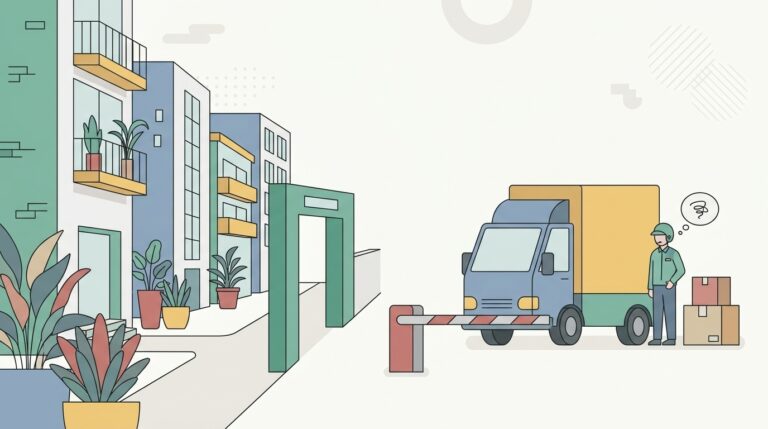
But behind that picture-perfect K-Drama aesthetic lies one of the most heated, intensely debated social conflicts in modern South Korea: The Apartment Delivery Truck Ban (아파트 단지 내 택배 차량 진입 금지 갈등).
If you are an advanced (C2) learner of Korean, you are no longer just ordering chimaek (chicken and beer) or asking for directions. You want to understand the subtext of Korean news, the fiery debates in the comment sections of Naver, and the complex socio-economic realities of the country that brought you “Pali-pali” (hurry, hurry) rocket delivery.
Today, we aren’t just learning vocabulary; we are decoding the language of modern Korean class dynamics, labor rights, and residential culture. Let’s dive deep into the real Korea.
Phase 2: Deep Dive into Core Expressions
To discuss this complex issue like a highly educated Seoulite, you need these three power expressions.
1. 갑질 논란 (Abuse of Power Controversy)
- Pronunciation: gap-jil non-nan [The ‘gap’ sounds like a sharp, abrupt snap, and ‘non-nan’ rolls off the tongue like a heavy sigh]
- Meaning: (Literal) ‘A-party’ action controversy / (Real nuance) A scandal involving the abuse of power by someone in a superior position over someone in a subordinate position.
- K-Culture Moment: You see this word everywhere in Korean news. In our context, delivery drivers accuse the apartment residents’ associations of gapjil because they demand door-to-door service while forcing drivers to park outside and drag heavy carts hundreds of meters.
- Editor’s Insight: This isn’t just “being mean.” Gapjil is a systemic, structural arrogance. Using this word shows you understand Korean social hierarchies.
- Situation Spectrum:
- Casual with friends discussing news: ✅
- Academic/Formal debates: ✅
- Accusing your boss of it to their face: 🚫 (Unless you are ready to resign!)
- 🤔 Think About It: Why does Korean have a specific word for the abuse of power based on social rank? How does the strict hierarchical nature of Korean society contribute to the frequent occurrence of gapjil?
2. 지상 차 없는 아파트 (Car-free Surface Apartment)
- Pronunciation: ji-sang cha eom-neun a-pa-teu
- Meaning: (Literal) Above-ground car-less apartment / (Real nuance) Premium apartment complexes where all parking is forced underground to create a park-like environment on the surface.
- K-Culture Moment: If you’ve walked around newly built areas in Gangnam or new satellite cities like Dongtan, you’ve seen these. They are marketed as “premium” and “safe for kids.” But standard delivery trucks are often too tall to enter the underground parking lots, triggering the entire conflict.
- Editor’s Insight: Saying “지상 차 없는 아파트” instantly sets the scene. It implies wealth, modern Korean urban planning, and the inevitable clash with blue-collar logistics.
- Situation Spectrum:
- Real estate discussions: ✅
- News analysis: ✅
- Daily small talk: ⚠️ (A bit too specific unless talking about housing)
- 🤔 Think About It: “Premium living” in Korea often means isolating oneself from the gritty realities of how the city functions. Does your home country have similar architectural trends that hide essential services?
3. 타협점을 찾다 (To find a compromise)
- Pronunciation: ta-hyeop-jjeom-eul chat-tta
- Meaning: (Literal) To find a point of compromise / (Real nuance) Reaching a middle ground in a bitter dispute.
- K-Culture Moment: News anchors use this phrase to wrap up a segment. For example, some apartments compromised by using low-top delivery trucks or electric golf carts for internal delivery.
- Editor’s Insight: At the C2 level, you need to sound like an active problem-solver. This phrase elevates your Korean from “just complaining” to “offering solutions.”
- Situation Spectrum:
- Professional settings/Meetings: ✅
- Advanced language exams (TOPIK II): ✅
- Buying street food: 🚫 (Way too formal!)
- 🤔 Think About It: Korea is a high-context, community-driven culture. Why is finding a tahyeopjeom often prioritized over taking disputes to a legal court?
Phase 3: Textbook vs. Real Korean
Let’s look at how this conflict is discussed in formal media versus how Koreans actually talk about it online or in cafes.
[Describing the Delivery Ban]
* 📖 Textbook/News: 아파트 측에서 택배 차량의 지상 진입을 전면 통제했습니다. (The apartment side completely restricted the surface entry of delivery vehicles.)
* 🗣️ Real/Online Korean: 아파트 입구컷 당했어요. (Got ‘entrance-cut’ at the apartment.)
* 💡 Why the difference?: “입구컷” (Ip-gu-cut: Entrance + cut) is a gamer slang that bled into real life, meaning being denied entry immediately. It perfectly captures the frustration of the drivers in a dark, witty way.
[Describing the Residents’ Demands]
* 📖 Textbook/News: 입주민들은 보행자의 안전을 우선시하고 있습니다. (The residents are prioritizing pedestrian safety.)
* 🗣️ Real/Online Korean: 이기적인 님비(NIMBY) 아닐까요? 자기들 편하자고 기사님들만 갈아 넣네요. (Isn’t it just selfish NIMBY? They are grinding down the drivers just for their own convenience.)
* 💡 Why the difference?: “갈아 넣다” (to grind someone into something) is a poignant slang used to describe severe overwork or exploiting labor. It reflects the younger generation’s empathy towards gig workers.
Bottom Note: At the C2 level, you should be able to seamlessly switch between the elegant vocabulary of the news (통제하다, 우선시하다) and the sharp, critical slang of the internet (입구컷, 갈아 넣다).
Phase 4: Cultural Context — K-Culture Deep Dive
4-1. The Non-Verbal Tension: The Middleman
When discussing this issue, you must understand the role of the 경비원 (Security Guards). In Korea, apartment security guards are often elderly men who hold very little power but are caught directly between the wealthy residents and the angry delivery drivers. If you witness this conflict, the body language is telling: the residents might speak with assertive, polite-but-firm language, while the guards bow apologetically to both sides. Understanding this power dynamic is crucial for reading the room.
4-2. K-Culture Link: The Contradiction of ‘Pali-pali’ and ‘Premium’
Korea is the undisputed king of logistics. We have 새벽배송 (Dawn Delivery)—order groceries at 11 PM, and they are at your door by 7 AM. This ultra-fast culture was heavily romanticized during the pandemic. However, the apartment ban conflict exposes a raw contradiction: Koreans want the world’s fastest, most convenient delivery, but the affluent do not want to see the ugly, noisy trucks that make it possible.
In K-Dramas, the poor but hardworking protagonist is often a delivery driver (think Strongest Deliveryman). The media highlights their sweat and tears, making the public highly sensitive to gapjil against them. When discussing this with Koreans, showing empathy for the 기사님 (Drivers) will instantly earn you deep respect.
Phase 5: Interactive Roleplay Scenario
Let’s put you in the middle of a socio-political debate.
Setting: A trendy cafe in Gangnam, overlooking a massive, brand-new luxury apartment complex. It’s Saturday afternoon. You are having coffee with your Korean friend, Ji-hoon, who just moved into the complex.
Characters:
– YOU: An expat who has lived in Korea for 5 years. You read Korean news and have strong opinions on social justice.
– Ji-hoon (34): Your Korean friend. Pragmatic, works in IT, enjoys the safety of his new car-free apartment but feels slightly guilty about the delivery drivers.
Dialogue:
Ji-hoon: 우리 아파트 진짜 좋지? 애들 뛰어놀기엔 지상에 차 없는 게 최고야.
(U-ri a-pa-teu jin-jja jo-chi? Ae-deul ttwi-eo-nol-gi-en ji-sang-e cha eom-neun ge choe-go-ya.)
[Translation: Our apartment is really nice, right? Not having cars on the surface is the best for kids running around.]
(🎭 Stage Direction: Ji-hoon sips his iced Americano, looking proudly at the pristine courtyard.)
YOU: 단지가 예쁘긴 한데, 어제 뉴스 보니까 여기 택배 대란 났던데?
(Dan-ji-ga ye-ppeu-gin han-de, eo-je nyu-seu bo-ni-kka yeo-gi taek-bae dae-ran nat-tteon-de?)
[Translation: The complex is pretty, but I saw on the news yesterday that there was a delivery chaos here?]
Ji-hoon: 아… 그거. 지하 주차장 층고가 낮아서 택배 탑차가 못 들어오거든. 그래서 입구에 다 쌓아두고 가셨어.
(Ah… geu-geo. Ji-ha ju-cha-jang cheung-go-ga na-ja-seo taek-bae tap-cha-ga mot deu-reo-o-geo-deun. Geu-rae-seo ip-gu-e da ssa-a-du-go ga-syeos-seo.)
[Translation: Ah… that. The underground parking ceiling is too low, so the delivery box trucks can’t enter. So they just piled everything at the entrance and left.]
YOU: 솔직히 그건 좀 기사님들한테 가혹한 거 아니야? 손수레로 다 옮기라는 거잖아.
(Sol-jik-hi geu-geon jom gi-sa-nim-deul-han-te ga-hok-han geo a-ni-ya? Son-su-re-ro da om-gi-ra-neun geo-ja-na.)
[Translation: Honestly, isn’t that a bit harsh on the drivers? You’re basically telling them to move everything with handcarts.]
Ji-hoon: 입주민 대표회의에서는 저탑 차량으로 바꾸라고 요구하고 있는데, 기사님들은 사비로 차를 개조해야 하니까 반발하시는 거지. 너는 어떻게 생각해?
(Ip-ju-min dae-pyo-hoe-ui-e-seo-neun jeo-tap cha-ryang-eu-ro ba-kku-ra-go yo-gu-ha-go in-neun-de, gi-sa-nim-deul-eun sa-bi-ro cha-reul gae-jo-hae-ya ha-ni-kka ban-bal-ha-si-neun geo-ji. Neo-neun eo-tteo-ke saeng-gak-hae?)
[Translation: The residents’ council is demanding they switch to low-top vehicles, but the drivers are pushing back because they have to modify the cars at their own expense. What do you think?]
🔀 Your Turn! How do you respond?
– A) “음… 양쪽 다 입장이 이해가 가네. 타협점을 잘 찾아야겠다.” (Neutral, safe, C2-level vocabulary)
– B) “완전 갑질 아니야? 배달은 편하게 받고 싶고, 트럭은 보기 싫다는 거잖아.” (Sharp, empathetic to drivers, highly natural Korean)
– C) “기사님들이 알아서 차를 바꿔야지. 규칙은 규칙이잖아.” (Very cold, aligns with extreme resident views, might cause an argument)✅ Best Choice: B — Reason: At a C2 level, you want to show you can engage in social critique. Using the word “갑질” here perfectly demonstrates your deep understanding of Korean societal tensions. It shows empathy and critical thinking.
⚠️ Choice C Analysis: While grammatically flawless, this is a highly controversial stance in Korea and might make you sound completely unsympathetic to labor rights.
Phase 6: 10-Second Shadowing Drill
Practice expressing a nuanced, sophisticated opinion. Pay attention to the pauses!
😤 거주자의 / 안전도 중요하지만, / 노동자의 인권도 / 존중받아야 한다고 / 생각해요.
(geo-ju-ja-ui / an-jeon-do jung-yo-ha-ji-man, / no-dong-ja-ui in-gwon-do / jon-jung-ba-da-ya han-da-go / saeng-ga-kae-yo.)
[I think that while the safety of the residents is important, the human rights of the workers must also be respected.]
Phase 7: K-Culture Mini Dictionary
To master this topic, add these K-Culture keywords to your arsenal:
1. 갑질 (Gapjil)
* Romanization: gapjil
* English: Abuse of power / Bossing around
* Context: The core keyword for almost every modern social conflict in Korea involving power imbalances.
2. 기사님 (Gisanim)
* Romanization: gisanim
* English: Driver (Respectful)
* Context: Always attach ‘님’ (nim) when referring to delivery drivers, taxi drivers, or bus drivers. Calling them ‘아저씨’ (Ahjussi) can sound condescending in a professional context.
3. 새벽배송 (Saebyeok Baesong)
* Romanization: saebyeok baesong
* English: Dawn Delivery
* Context: Korea’s hyper-fast logistics system where items ordered before midnight arrive by 7 AM. The pride of Korean convenience, but heavily reliant on intense labor.
4. 입주민 대표회의 (Ipjumin Daepyohoeui)
* Romanization: ipjumin daepyohoeui
* English: Residents’ Council/Association
* Context: The governing body of an apartment complex. They hold immense local power and are often the ones passing the “car-free” rules.
Phase 8: Traveler/Resident Survival Kit
Even if you aren’t debating social issues, if you live in or visit Korea, you will receive packages. Here are the survival phrases every expat needs.
🆘 Survival Expression #1: Delivery Instructions
– 🇰🇷 “문 앞에 두고 가주세요.” (Mun ap-e du-go ga-ju-se-yo.)
– 🗣️ Sound guide: [Moon ah-peh doo-go gah-joo-seh-yo]
– 📍 Where to use: Delivery apps, text messages to drivers.
– 💡 Pro Tip: Korea is remarkably safe from porch pirates. Leaving packages at the door is the national standard.🆘 Survival Expression #2: Entering the Building
– 🇰🇷 “공동현관 비밀번호는 종 누르시면 열어드릴게요.” (Gong-dong-hyeon-gwan bi-mil-beon-ho-neun jong nu-reu-si-myeon yeo-reo-deu-ril-ge-yo.)
– 🗣️ Sound guide: [Gong-dong-hyun-gwan bee-mil-bun-ho-neun jong noo-reu-she-myun yuh-ruh-deu-ril-geh-yo]
– 📍 Where to use: When the driver asks for the first-floor entrance code.📌 Editor’s Resident Note
– 무인 택배함 (Unmanned Delivery Boxes): Most modern apartments and officetels have these on the ground floor or basement. If there is a conflict, drivers will often leave packages here instead of at your door.
– Politeness: If you ever meet your driver, a simple “고생 많으십니다!” (You are working hard! / Thank you for your hard work!) goes a very long way.
Phase 9: Critical Thinking — “Going One Step Deeper”
🧠 Think Deeper: Language & Power (언어와 권력)
The apartment delivery conflict perfectly illustrates how modern Korean class divides are becoming geographical and architectural. But let’s look at the language. The residents use bureaucratic, polite language (“단지 내 안전을 통제합니다” – We control safety within the complex), which masks the physical toll placed on the drivers. Conversely, the public uses visceral, physical slang (“갈아 넣다” – to grind up) to describe the drivers’ plight. As a C2 learner, you must realize that in Korean, formal language isn’t just about politeness; it is often used as a shield to sanitize the exercise of power. When you choose to use the empathetic slang over the bureaucratic terminology, you are actively picking a side in Korea’s social narrative.
💬 Your Turn: In your home country, how do wealthy neighborhoods deal with gig-economy workers and delivery trucks? Do they hide them, or is the system different? Let’s discuss in the comments!
Phase 10: FAQ & Avoiding Mistakes
Q: Can I use the word “갑질” to describe my friend being bossy?
No! Gapjil implies a structural or socio-economic power imbalance (like a boss to an employee, or a wealthy resident to a driver). If a friend is just being bossy, say “유세 떨지 마” (Stop acting all high and mighty).
Q: Should I offer a tip to the delivery driver if they bring something heavy?
No. Korea does not have a tipping culture. Offering cash might actually make them uncomfortable or confused. If you want to show appreciation, offering a cold bottle of water or an energy drink (like Bacchus) in the summer is highly appreciated and a classic Korean gesture of Jeong (정).
❌ Common Mistake #1: Calling the driver “아저씨 (Ahjussi)”.
✅ Do This Instead: Always use “기사님 (Gisanim)”. While Ahjussi means middle-aged man, in service contexts, it can sound dismissive or lacking in respect. Adding the “님” (nim) acknowledges their professional role.
Phase 11: Summary & Action Items
- One-Liner Summary: The “Apartment Delivery Ban” is a window into modern Korea’s clash between ultra-fast convenience and premium, exclusive living spaces, best described with terms like Gapjil and Tahyeopjeom.
-
Action Mission:
- 🥉 Bronze (Solo): Say “기사님, 고생 많으십니다” out loud three times to practice the natural intonation.
- 🥈 Silver (Online): Go to Naver News, search “아파트 택배 갈등” and read three top comments to see the slang we learned in action.
- 🥇 Gold (Real-world): Next time you receive a heavy package in Korea, leave a small post-it note on your door saying “기사님, 감사합니다!” with a small snack.
- K-Culture Mission: Watch an episode of a high-society K-Drama (like Mine or Sky Castle) and pay attention to how the “hired help” or service workers are visually separated from the main characters’ living spaces.
Phase 12: Quiz — Interactive Challenge
1. Situational Judgment: You are watching the news about an apartment complex blocking delivery trucks. Which phrase best describes the residents’ actions if you want to criticize them?
A) 아름다운 아파트네요. (It’s a beautiful apartment.)
B) 전형적인 갑질이네요. (It’s typical gapjil.)
C) 기사님들이 문제네요. (The drivers are the problem.)
(Hint: Look back at Phase 2!)
2. True or False – K-Culture Edition: “It is customary to tip Korean delivery drivers 10% of the item’s value if they have to walk far.”
(T/F?)
3. Fill in the blank:
“이 문제는 서로 한 발씩 양보해서 _______을(를) 찾아야 합니다.”
(We need to take a step back and find a _______ for this problem.)
🚨 Click here for Answers!
1. B – Calling it gapjil is the standard socio-critical response.
2. False – Tipping is not a thing in Korea! Offer a cold drink instead.
3. 타협점 (tahyeopjeom – compromise)
Frequently Asked Questions (FAQ)
Q: What does "갑질 논란 (Abuse of Power Controversy)" mean in Korean and how do you pronounce it?
A: In Korean, "갑질 논란 (Abuse of Power Controversy)" is pronounced [gap-jil non-nan [The 'gap' sounds like a sharp, abrupt snap, and 'non-nan' rolls off the tongue like a heavy sigh] and means: (Literal) 'A-party' action controversy / (Real nuance) A scandal involving the abuse of power by someone in a superior position over someone in a subordinate position.
Q: What does "지상 차 없는 아파트 (Car-free Surface Apartment)" mean in Korean and how do you pronounce it?
A: In Korean, "지상 차 없는 아파트 (Car-free Surface Apartment)" is pronounced [ji-sang cha eom-neun a-pa-teu] and means: (Literal) Above-ground car-less apartment / (Real nuance) Premium apartment complexes where all parking is forced underground to create a park-like environment on the surface.
Q: What does "타협점을 찾다 (To find a compromise)" mean in Korean and how do you pronounce it?
A: In Korean, "타협점을 찾다 (To find a compromise)" is pronounced [ta-hyeop-jjeom-eul chat-tta] and means: (Literal) To find a point of compromise / (Real nuance) Reaching a middle ground in a bitter dispute.







