

Phase 1: Empathy (Immersive Open)
Hello! I’m the Senior Editor at Daily Hangul.
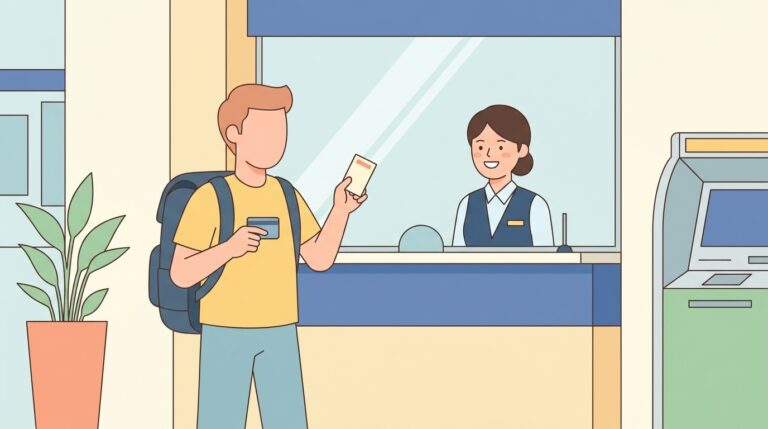
Have you ever watched a K-Drama where a wealthy CEO dramatically tosses a paper bankbook across a long table to buy someone’s silence? The subtitles simply read, “Take this.” It looks incredibly cool and intense. But fast forward to your own life in Korea: you walk through the sliding doors of a brightly lit bank in Gangnam, hear the robotic voice announce “Ding-dong, customer number 124,” and suddenly, your mind goes blank.
Opening a bank account (계좌 개설) is arguably the first true rite of passage for any foreigner living in Korea. It’s the moment you transition from a ‘visitor’ to a ‘resident.’ If you don’t know the specific financial vocabulary, you might end up with the wrong account type, or worse, be asked to come back another day because you missed a tiny detail. But don’t worry! Today, we are going to learn the exact, natural B2-level expressions that will make the bank teller see you as someone who truly ‘gets’ how Korea works. Let’s dive in!
Phase 2: Core Expressions Deep Dive
1. 계좌 개설하려고 하는데요.
- Pronunciation: gye-jwa gae-seol-ha-ryeo-go ha-neun-de-yo (gye-jwa sounds like making a ‘gyeh’ sound then ‘jwa’)
- Meaning: I am planning/hoping to open a bank account.
- K-Culture Moment: You’ve finally received your ARC (Alien Registration Card) and walked into the bank. You don’t just say “I want an account.” You use the soft, indirect
-(으)려고 하는데요to show polite intention. It immediately sets a smooth, respectful tone.- Editor’s Insight: The textbook teaches “계좌를 만들고 싶습니다” (I want to make an account), which sounds a bit robotic. By using “~하려고 하는데요” (I’m intending to…), you sound incredibly natural and polite. It leaves room for the teller to respond and assist you.
- Situation Spectrum:
- Casual (Friends): 🚫 (You wouldn’t say this to a friend)
- Semi-formal (Coworkers/Clerks): ✅
- Formal (Supervisors/Bank Managers): ✅
- 🤔 Think About It: Why do Koreans prefer saying “I am planning to…” instead of a direct “I want…” in service situations? How does indirectness correlate with politeness in Korean society?
2. 본인 인증을 위해 신분증 좀 주시겠어요?
- Pronunciation: bo-nin in-jeung-eul wi-hae sin-bun-jeung jom ju-si-ge-sseo-yo?
- Meaning: Could you please give me your ID for identity verification?
- K-Culture Moment: “본인 인증” (Identity Verification) is the absolute backbone of modern Korean society. From ordering food delivery to signing up for a fan club online, you cannot escape bonin injeung.
- Editor’s Insight: You will hear this everywhere. The word
신분증(ID card) usually refers to your ARC (외국인등록증) or Passport (여권). Notice the word좀(a little) – it doesn’t mean a small amount of ID; it’s a cultural linguistic cushion to soften the request.- Situation Spectrum:
- Casual: 🚫
- Semi-formal: ✅
- Formal: ✅
- 🤔 Think About It: In many Western countries, people are hesitant to hand over physical IDs. In Korea, handing it over is standard procedure. Does your home country have such a strict, universal identity verification system?
3. 한도 제한 계좌로 개설됩니다.
- Pronunciation: han-do je-han gye-jwa-ro gae-seol-doem-ni-da
- Meaning: It will be opened as a limit-restricted account.
- K-Culture Moment: The dreaded moment for expats! Due to voice phishing scams, new accounts (especially for foreigners) usually start with strict daily transfer limits (e.g., 300,000 KRW).
- Editor’s Insight: Rather than getting frustrated, understanding this phrase prepares you to ask the next logical question: “How can I lift the limit?” (한도는 어떻게 푸나요?).
- Situation Spectrum:
- Casual: 🚫
- Semi-formal: ✅
- Formal: ✅
- 🤔 Think About It: Korea changes its banking laws quickly to combat digital crimes like voice phishing. Have you ever noticed warning signs about voice phishing near Korean ATMs?
Phase 3: Textbook vs. Real Korean
[Opening an Account]
* 📖 Textbook Korean: 통장을 만들고 싶습니다. (I want to make a bankbook.)
* 🗣️ Real Korean: 입출금 계좌 하나 트려고요. (I’m looking to open up a deposit/withdrawal account.)
* 💡 Why is it different?: 트다 originally means “to open up (a path or relationship).” Using it for a bank account makes you sound like a true local who understands the flow of everyday language.
[Signing Documents]
* 📖 Textbook Korean: 여기에 서명하십시오. (Please sign here.)
* 🗣️ Real Korean: 여기 이름 정자체로 적어주시고, 싸인해 주세요. (Please print your name clearly here, and sign.)
* 💡 Why is it different?: Banks need clear records, so tellers specify 정자체 (printed, block letters) rather than just a signature, reflecting Korea’s fastidious administrative culture.
[Asking for the Purpose of the Account]
* 📖 Textbook Korean: 왜 계좌를 만듭니까? (Why are you making an account? – Sounds like an interrogation!)
* 🗣️ Real Korean: 계좌 사용 목적이 어떻게 되시나요? (What will be the purpose of using this account?)
* 💡 Why is it different?: Service workers in Korea use highly elevated, indirect honorifics (어떻게 되시나요?) to maintain a polished, customer-centric atmosphere.
Bottom Note: At a B2 level, avoiding the overly blunt
싶습니다and adopting the softer-(으)려고요or어떻게 되나요?is the key to sounding fluent and culturally attuned.
Phase 4: Cultural Context — K-Culture Deep Dive
4-1. Non-Verbal Elements: The Two-Handed Rule
When the bank teller asks for your ID, do not slide it across the counter with one hand like a poker chip! In Korea, handing over or receiving important items—especially money, IDs, and bankbooks—requires two hands. If one hand is occupied, place your left hand lightly on your right forearm or elbow while extending the item with your right hand. This non-verbal 눈치 (Nunchi) shows immediate respect and builds a great rapport with the teller.
4-2. K-Culture Connection: The Nostalgia of the ‘Tongjang’
If you watch classic K-Dramas like Reply 1988 or even modern ones, you’ll see characters meticulously updating their paper bankbooks (통장정리) at the ATM. They open the little booklet, look at the freshly printed ink showing their balance, and sigh in relief or despair.
Today, Korea is a global leader in digital banking (KakaoBank, Toss, etc.), and paper bankbooks are becoming obsolete. Yet, many Koreans still request a physical 통장 when opening an account because it feels more ‘real’ and secure. When you open your account, the teller might ask, “통장도 발행해 드릴까요?” (Shall I issue a physical bankbook for you too?). Say yes! It makes for a wonderful souvenir of your expat journey.
Phase 5: Real-Life Roleplay Scenario
Setting: Tuesday afternoon, 2:00 PM. A busy commercial bank in Yeouido, the Wall Street of Seoul. You’ve been waiting for 30 minutes. Finally, your number is called.
Characters:
– YOU (The Reader): An expat who just got their first job in Korea.
– Min-ji (28): A highly efficient, friendly Korean bank teller.
Dialogue:
Min-ji: 142번 고객님, 3번 창구로 오세요.
(142-beon gogaengnim, 3-beon changguro oseyo.)
[Customer 142, please come to counter 3.]
(🎭 Stage Direction: Min-ji smiles warmly as you sit down.)
YOU: 안녕하세요, 급여 통장 하나 개설하려고 하는데요.
(Annyeonghaseyo, geubyeo tongjang hana gaeseolharyeogo haneundeyo.)
[Hello, I’m planning to open a salary account.]
Min-ji: 네, 환영합니다 고객님. 신분증 먼저 주시겠어요?
(Ne, hwanyeonghamnida gogaengnim. Sinbunjeung meonjeo jusigesseoyo?)
[Yes, welcome, customer. Could you give me your ID first?]
YOU: 아, 네. 여기 외국인 등록증이요.
(A, ne. Yeogi waegugin deungnokjeung-iyo.)
[Ah, yes. Here is my Alien Registration Card.]
Min-ji: 감사합니다. 혹시 회사에서 받은 재직증명서나 근로계약서도 가져오셨나요?
(Gamsahamnida. Hoksi hoesa-eseo badeun jaejikjeungmyeongseona geullogyeyakseodo gajyeoosyeonnayo?)
[Thank you. By any chance, did you bring a certificate of employment or labor contract from your company?]
YOU: 네, 파일에 다 챙겨왔어요.
(Ne, pa-il-e da chaenggyeowasseoyo.)
[Yes, I brought them all in the file.]
Min-ji: 완벽하시네요! 서류 확인했습니다. 그런데 외국인 고객님은 처음에 ‘한도 제한 계좌’로 개설됩니다. 하루 이체 한도가 30만 원인데 괜찮으신가요?
(Wanbyeokhasineyo! Seoryu hwaginhatseumnida. Geureonde waegugin gogaengnimeun cheo-eume ‘hando jehan gyejwa’ro gaeseoldoemnida. Haru iche handoga 30-man won-inde gwaenchaneusingayo?)
[You are perfect! I checked the documents. However, for foreign customers, it will initially be opened as a ‘limit-restricted account’. The daily transfer limit is 300,000 KRW. Is that okay?]
🔀 Your Turn! How should you respond?
– A) “안 괜찮아요. 한도 당장 풀어주세요.” (I’m not okay with it. Lift the limit right now.)
– B) “아… 네, 일단 그렇게 해주세요. 나중에 한도는 어떻게 푸나요?” (Ah… yes, please do that for now. How can I lift the limit later?)
– C) “대박! 30만 원 너무 적은데요?” (Daebak! 300,000 won is too little?)✅ Best Choice: B — Why? In Korea, rules are rules. Getting angry (A) won’t work, and using slang like ‘Daebak’ (C) in a formal setting is inappropriate. Accepting the policy while politely asking for the solution (B) shows high B2-level social grace.
YOU: 아… 네, 일단 그렇게 해주세요. 나중에 한도는 어떻게 푸나요?
(A… ne, ildan geureoke haejuseyo. Najung-e handoneun eotteoke punayo?)
[Ah… yes, please do that for now. How can I lift the limit later?]
Min-ji: 3개월 동안 급여가 들어온 내역이 있으면 앱에서 쉽게 해제하실 수 있습니다. 자, 여기 노란색 칠해진 곳에 서명해 주세요.
(3-gaewol dongan geubyeoga deureoon naeyeogi isseumyeon aeb-eseo swipge haejehasil su itseumnida. Ja, yeogi noransaek chilhaejin gos-e seomyeonghae juseyo.)
[If there is a record of your salary being deposited for 3 months, you can easily lift it via the app. Now, please sign where it’s highlighted in yellow.]
YOU: 다 했습니다. 감사합니다!
(Da haetseumnida. Gamsahamnida!)
[All done. Thank you!]
Phase 6: 10-Second Shadowing Drill
Take 10 seconds to practice this essential phrase like a local. Follow the slashes for pauses and match the emotional tags!
😊 안녕하세요, / 급여 통장 하나 / 만들려고 하는데요.
(annyeonghaseyo, / geubyeo tongjang hana / mandeullyeogo haneundeyo.)
(Smile lightly, pause briefly after the greeting, and speak the intention softly at the end!)
🤔 저기요, / 이거 한도는 / 어떻게 푸나요?
(jeogiyo, / igeo handoneun / eotteoke punayo?)
(Look slightly curious, tilt your head a bit, and emphasize the word ‘eotteoke’ (how).)
Phase 7: K-Culture Mini Dictionary
1. 통장
* Romanization: tongjang
* English: Bankbook
* Context: The physical booklet showing your account transactions. Even though digital banking rules now, Koreans still use the word “통장” to refer to their bank account in conversation.
2. 외국인 등록증 (ARC)
* Romanization: waegugin deungnokjeung
* English: Alien Registration Card
* Context: The holy grail for expats in Korea. Without this, getting a phone number, bank account, or even ordering food online is incredibly difficult. Always carry it.
3. 눈치
* Romanization: nunchi
* English: Social awareness / Reading the room
* Context: Knowing when to hand over your documents, reading the teller’s instructions quickly, and knowing not to hold up the line during lunch hour when the bank is packed.
4. 공동인증서 (formerly 공인인증서)
* Romanization: gongdong injeungseo
* English: Joint Digital Certificate
* Context: Korea’s digital security certificate system. It can be complex to install initially, but it’s required for major online banking and government transactions.
Phase 8: Traveler Survival Kit
Even if you aren’t living in Korea, banking terms are crucial when you travel and need to exchange currency or use an ATM.
🆘 Survival Expressions TOP 3
– 🇰🇷 “환전 수수료가 어떻게 되나요?” (hwanjeon susuryoga eotteoke doenayo?)
– 🗣️ English: How much is the exchange fee?
– 📍 Where to use: Airport exchange counters, banks in Myeongdong.
- 🇰🇷 “가장 가까운 ATM 기기가 어디 있어요?” (gajang gakkaun ATM gigiga eodi isseoyo?)
- 🗣️ English: Where is the nearest ATM?
- 📍 Where to use: Convenience stores, subway stations.
🇰🇷 “해외 카드도 되나요?” (haeoe kadeudo doenayo?)
- 🗣️ English: Do you accept foreign cards?
- 📍 Where to use: Restaurants, shops, ticketing booths.
📌 Editor’s Travel Note
– The Number Ticket Rule: The moment you walk into a Korean bank or post office, look for the machine that dispenses number tickets (번호표). Do not stand in line behind someone! Pull a ticket, sit down, and watch the digital screens.
– Cash vs Card: Korea is a heavily cashless society. Even a 1,000 KRW pack of gum is paid with a card. However, keep some cash for traditional markets (광장시장) or street food!
Phase 9: Critical Thinking Corner — “One Step Deeper”
🧠 Think Deeper: Language & Power in Korean Customer Service
Have you noticed how extremely polite Korean bank tellers are? In Korean customer service, workers use a level of honorifics called ‘극존칭’ (extreme honorifics). Sometimes, they even accidentally elevate the object instead of the person out of a habit to sound polite—for example, saying “고객님, 통장 나오셨습니다” (Customer, the bankbook has ‘honorably’ come out). This reflects a society where the customer is deeply respected, but it also highlights the emotional labor expected of service workers. As a learner, understanding this helps you realize why you shouldn’t use the same extreme honorifics back to them; a polite B2-level해요체(polite form ending in -yo) is the perfect balance of respect and equality.💬 Your Turn: Does customer service in your country use a completely different level of formal language compared to everyday speech? Share in the comments!
Phase 10: FAQ & Avoiding Misunderstandings
Q: Can I open a bank account with just a passport?
Maybe. Some banks allow travelers to open a basic account with a passport, but the restrictions are incredibly tight, and you cannot connect it to online payment apps like KakaoPay. An ARC is highly recommended.
Q: Do I need a personal stamp (도장, dojang) to open an account?
No! While it was mandatory decades ago, nowadays, a simple signature (서명) is perfectly fine.
Q: I heard the teller say “비밀번호 네 자리 눌러주세요.” What do I do?
They are asking you to “Type in a 4-digit PIN.” Unlike some countries that use 6 digits, Korean bank cards primarily use 4-digit PINs.
❌ Common Mistake #1: Leaving the bank without setting up online banking on your phone.
✅ Do This Instead: Before leaving the counter, ask: “모바일 뱅킹도 지금 같이 설정해 주실 수 있나요?” (Can you help me set up mobile banking together right now?) Tellers are incredibly fast and will help you bypass the tricky Korean menus on the app.
Phase 11: Summary & Action Items
- One-Liner Summary: Soften your requests with
~하려고 하는데요, bring your ARC, and accept the “limit-restricted account” with grace! -
Action Mission:
- 🥉 Bronze (Solo): Stand in front of a mirror and practice handing over an invisible ID card with two hands while saying, “신분증 여기 있습니다.”
- 🥈 Silver (Online): Post on a Korean learning forum: “한국에서 통장을 만들고 싶어요. 준비물이 뭐예요?”
- 🥇 Gold (Real-world): Go to a Korean bank, pull a ticket, and use “계좌 개설하려고 하는데요!” successfully.
- K-Culture Mission:
Watch a modern K-Drama today and spot a scene involving a bank, a credit card, or paying at a cafe. Do they hand the card over with two hands? Pay close attention to their body language!
Phase 12: Quiz — Interactive Challenge
1. Situational Judgment:
The teller hands you your new card and asks you to set a password. What is the most natural way to respond when you’re done typing it?
– A) 내가 다 했어. (I did it all.)
– B) 다 눌렀어요. (I pressed them all.)
– C) 비밀번호 끝. (Password end.)
(Answer: B – Polite, natural, and directly addresses the action of pressing the keypad.)
2. Fill in the Blank:
You want to ask the teller what the account’s purpose is.
“계좌 사용 ________이/가 어떻게 되시나요?”
(Answer: 목적 – mok-jeok, meaning purpose)
3. True or False — K-Culture Edition:
“In Korea, you should wait in a single file line behind the person currently being served at the bank counter.”
(Answer: False. Never do this! You must pull a waiting ticket (번호표) from the machine near the entrance and wait in the seating area until your number is called.)
4. Roleplay Application:
In Phase 5, if you chose option C (“대박! 30만 원 너무 적은데요?”) to the bank teller, what would be the likely outcome?
(Answer: The teller would likely be confused or slightly offended. ‘대박’ (Daebak) is internet/casual slang. Using it in a formal financial setting breaks the ‘Nunchi’ and professional atmosphere.)
Frequently Asked Questions (FAQ)
Q: What does "계좌 개설하려고 하는데요." mean in Korean and how do you pronounce it?
A: In Korean, "계좌 개설하려고 하는데요." is pronounced [gye-jwa gae-seol-ha-ryeo-go ha-neun-de-yo (gye-jwa sounds like making a 'gyeh' sound then 'jwa'] and means: I am planning/hoping to open a bank account.
Q: What does "본인 인증을 위해 신분증 좀 주시겠어요?" mean in Korean and how do you pronounce it?
A: In Korean, "본인 인증을 위해 신분증 좀 주시겠어요?" is pronounced [bo-nin in-jeung-eul wi-hae sin-bun-jeung jom ju-si-ge-sseo-yo?] and means: Could you please give me your ID for identity verification?
Q: What does "한도 제한 계좌로 개설됩니다." mean in Korean and how do you pronounce it?
A: In Korean, "한도 제한 계좌로 개설됩니다." is pronounced [han-do je-han gye-jwa-ro gae-seol-doem-ni-da] and means: It will be opened as a limit-restricted account.







