

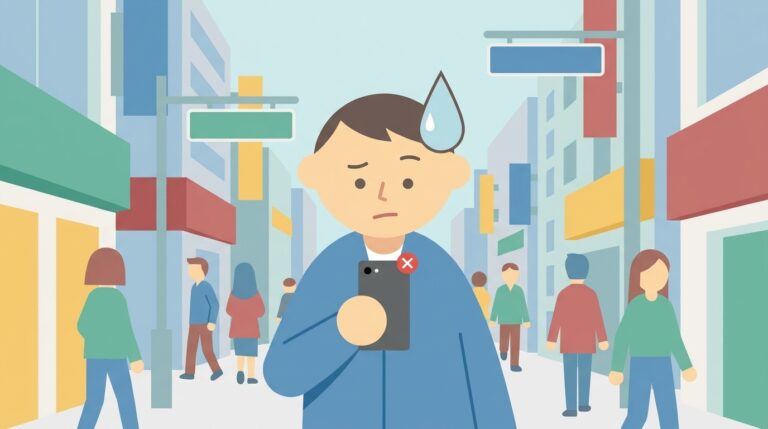
Phase 1: Empathy & K-Culture Cold Open
Hello! I’m your Daily Hangul Editor.
Picture this: You are sitting in front of your laptop. It’s 7:59 PM. You are trying to get VIP tickets for your favorite K-Pop idol’s concert in Seoul. The clock strikes 8:00 PM. You click ‘Refresh’. The screen freezes. The loading wheel of doom spins. Suddenly, a pop-up appears: “All seats are sold out.”
In that exact moment, what do you say? A textbook “I am surprised” or a simple “Oh no” definitely doesn’t capture the despair. Your soul just left your body. You are experiencing what Koreans perfectly describe as 멘붕 (Men-bung).
If you only study from textbooks, you might miss out on these vivid, real-life expressions that Koreans use every single day. Today, we are diving into the ultimate A1 survival slang: 멘붕. I promise, knowing this one word will make your Korean friends go, “Whoa, how do you know that?”
(Note: This guide is crafted from real moments my beginner students experienced while traveling in Korea!)
Phase 2: Deep Dive into Core Expressions
Here are the top 3 expressions you need when your brain stops working.
1. 멘붕 (Mental Breakdown)
- Pronunciation: men-bung [Sounds like ‘men’ + the ‘boong’ in a car’s ‘vroom vroom’ sound]
- Meaning: (Literal) Mental collapse / (Real nuance) Total panic, my mind just went blank.
- K-Culture Moment: Think of a K-Drama where the main character misses the last bus home, drops their phone in a puddle, and just squats on the sidewalk grabbing their head. That is pure men-bung.
- Editor’s Insight: This isn’t a serious medical term. It’s a casual, slightly dramatic way to say “I’m panicking” or “I don’t know what to do.”
- Situation Spectrum:
- Friends (Casual): ✅
- Co-workers (Semi-formal): ⚠️ (Only if you are close!)
- Boss/Elders (Formal): 🚫
- 🤔 Think About It: Why do Koreans love using intense words like “collapse” (붕괴) for everyday inconveniences? Does your language have a dramatic slang for minor panics?
2. 헐 (Heol)
- Pronunciation: heol [Imagine sighing out a soft ‘h’ and ending with an ‘ul’ sound, like exhaling your disbelief]
- Meaning: (Literal) N/A / (Real nuance) Oh my god, No way, Whoa.
- K-Culture Moment: You tell your Korean friend you accidentally deleted your 10-page essay. They will immediately cover their mouth and say, “Heol…”
- Editor’s Insight: It’s the ultimate filler word for shock. You can say it short for a quick surprise (Heol!), or drag it out for deep sympathy (Heol…).
- Situation Spectrum:
- Friends (Casual): ✅
- Co-workers (Semi-formal): ⚠️
- Boss/Elders (Formal): 🚫
- 🤔 Think About It: “Heol” doesn’t really have a meaning; it’s almost an onomatopoeia for being speechless. What sounds do you make in your native language when you are out of words?
3. 어떡해? (What do I do?)
- Pronunciation: eo-tteok-hae [uh-dduk-heh]
- Meaning: (Literal) How to do? / (Real nuance) What should I do? Oh no!
- K-Culture Moment: The classic K-Drama scene where the heroine realizes she overslept for her job interview. She runs around the room screaming, “Eotteokhae! Eotteokhae!”
- Editor’s Insight: When you are in men-bung, this is the first phrase that comes out of your mouth. It asks for a solution, but honestly, it’s mostly used just to express panic.
- Situation Spectrum:
- Friends (Casual): ✅
- Co-workers (Semi-formal): ✅ (Add ‘요’ at the end: 어떡해요?)
- Boss/Elders (Formal): ✅ (어떡해요?)
- 🤔 Think About It: Koreans say “What should I do?” even when talking to themselves. Does your culture verbalize panic as a question or a statement?
Phase 3: Textbook vs. Real Korean
Let’s see how textbook Korean differs from what you’ll actually hear on the streets of Hongdae.
[Situation 1: You lost your wallet in the subway]
* 📖 Textbook: 저는 지금 매우 당황스럽습니다. (I am very embarrassed/flustered right now.)
* 🗣️ Real Korean: 아… 진짜 완전 멘붕. (Ah… seriously total men-bung.)
* 💡 Why the difference?: Textbooks teach formal, written-style emotions. In reality, young Koreans love using hybrid slang (English ‘Mental’ + Chinese character ‘Bung-goe’) for quick, relatable expression.
[Situation 2: Your friend tells you shocking news]
* 📖 Textbook: 정말 놀랍습니다! (That is truly surprising!)
* 🗣️ Real Korean: 헐! 대박. (Heol! Daebak.)
* 💡 Why the difference?: Slang like “Heol” conveys emotion much faster and shows deeper empathy than a polite, robotic response.
Bottom Note: For A1 beginners, sticking to “어떡해요?” (Eotteokhaeyo?) is the safest and most natural way to express panic to strangers. Save “멘붕” for your Korean friends!
Phase 4: Cultural Context — K-Culture Deep Dive
4-1. Non-Verbal Cues of “Men-bung”
When Koreans experience men-bung, the words are accompanied by specific body language.
– 뒷목 잡기 (Grabbing the back of the neck): Often seen in K-Dramas when an angry or shocked parent hears unbelievable news. It literally means the blood pressure is rising!
– 멍 때리기 (Spacing out): Staring into the void because your brain has shut down. If your Korean friend is doing this, they are in deep men-bung.
4-2. K-Travel Connection: Lost in Seoul
Men-bung is a rite of passage for travelers in Korea. Imagine standing in the middle of Myeongdong. Your Google Maps isn’t working perfectly (Pro tip: use Naver Map in Korea!), you can’t find your hotel, and the street signs are dizzying.
Instead of freezing, this is the perfect time to use the survival phrases you’ll learn in Phase 8! Also, remember that in Korea, people are extremely willing to help a lost traveler. If you look visibly in men-bung and politely say “Excuse me” (저기요 – jeogiyo), a kind local will often go out of their way to guide you.
Phase 5: Real-life Roleplay Scenario
Setting: A bustling Friday night at Gangnam Station. Exit 11 is packed with people. Your phone is at 1% battery, your Wi-Fi egg just died, and you cannot find your Korean friend who promised to take you to a famous BBQ spot. You are full-on panicking.
Characters:
– YOU: A beginner Korean learner, visiting Seoul for the first time.
– Minsu (32): Your Korean friend. Energetic and always slightly late.
Dialogue:
YOU: (Looking around frantically) 어떡해… (eotteokhae…)
[What do I do…]
YOU: 핸드폰 배터리가… (haendeupon baeteoriga…)
[My phone battery is…]
(🎭 Stage Direction: Your phone screen goes black. You freeze.)
Minsu: (Running towards you, waving) 야! 미안, 미안! 많이 기다렸어?
(Ya! Mian, mian! Mani gidaryeosseo?)
[Hey! Sorry, sorry! Did you wait long?]
YOU: (Sighing in relief) 아, 민수 씨!
(Ah, Minsu ssi!)
[Ah, Minsu!]
Minsu: 왜 그래? 무슨 일 있어? 표정이 안 좋아.
(Wae geurae? Museun il isseo? Pyojeongi an joa.)
[What’s wrong? Did something happen? Your face doesn’t look good.]
🔀 Your Turn! How do you reply?
– A) “저는 지금 당황스럽습니다.” (I am currently flustered.)
– B) “핸드폰 꺼졌어요. 완전 멘붕!” (My phone died. Total men-bung!)
– C) “나 화났어.” (I’m angry.)✅ Best Choice: B — It perfectly describes your exact feeling of panic using natural slang. It instantly turns a stressful moment into a bonding, funny interaction with your friend.
⚠️ Choice A Analysis: You sound like an AI robot experiencing an error.
Minsu: (Laughs loud) 멘붕? 너 그 말 어디서 배웠어?
(Menbung? Neo geu mal eodiseo baewosseo?)
[Men-bung? Where did you learn that word?]
YOU: 매일한글에서요! (Maeil Hangeureseoyo!)
[From Daily Hangul!]
Minsu: 대박! 가자, 내가 고기 사줄게!
(Daebak! Gaja, naega gogi sajulge!)
[Awesome! Let’s go, I’ll buy you meat!]
Bonus Scenario: The Convenience Store “Men-bung”
You go to a GS25 convenience store to buy a 2+1 snack. You bring two to the counter.
– Clerk: 손님, 이거 투플러스원(2+1)이에요. 하나 더 가져오세요. (Sonnim, igeo tu-peulleoseu-wonieyo. Hana deo gajyeo-oseyo.) [Customer, this is 2+1. Please bring one more.]
– YOU: (Didn’t understand perfectly, feeling panic) 네? 헐… 어떡해요? (Ne? Heol… eotteokhaeyo?)
– Clerk: (Smiling, points to the aisle) 저기서 한 개 더! (Jeogiseo han gae deo!) [One more from over there!]
Phase 6: 10-Second Shadowing Drill
Practice expressing your panic like a true Korean! Read out loud, paying attention to the slashes for pauses and the emotion tags.
- 🥺 (Whiningly) 아… / 진짜 / 완전 멘붕이야!
(Ah… / jinjja / wanjeon menbung-iya!)
Ah… seriously, it’s a total mental breakdown! -
😤 (Sighing deeply) 헐… / 나 / 어떡해?
(Heol… / na / eotteokhae?)
Oh my god… what do I do?
Phase 7: K-Culture Mini Dictionary
1. 멘붕
* Romanization: men-bung
* English: Mental breakdown / Panic
* Context: Used when things go completely wrong and your brain stops working. A staple in K-Drama dialogue.
2. 헐
* Romanization: heol
* English: Oh my god / Whoa
* Context: The most common exclamation for surprise, shock, or mild disappointment.
3. 대박
* Romanization: dae-bak
* English: Awesome / Jackpot / Crazy
* Context: Used for both surprisingly good news and shockingly bad news. A universal reaction word.
4. 눈치
* Romanization: nun-chi
* English: Social awareness / Reading the room
* Context: When your friend is in men-bung, you need nunchi to comfort them instead of making jokes!
Phase 8: Traveler’s Survival Kit
When you are in men-bung during your Korea trip, these phrases are your lifesavers!
🆘 Survival Phrase #1: Asking for Help
– 🇰🇷 “저기요, 도와주세요.” (jeogiyo, dowajuseyo.)
– 🗣️ English Guide: Juh-gee-yo, doh-wah-joo-seh-yo.
– 📍 Where to use: Anywhere! Streets, subways, stores.
– 💡 Pro Tip: Say this with a slight bow, and Koreans will stop to help you.🆘 Survival Phrase #2: You are lost
– 🇰🇷 “여기가 어디예요?” (yeogiga eodiyeyo?)
– 🗣️ English Guide: Yuh-gee-gah uh-dee-yeh-yo?
– 📍 Where to use: When showing your map to a local.🆘 Survival Phrase #3: The Ultimate Emergency
– 🇰🇷 “화장실 어디예요?” (hwajangsil eodiyeyo?)
– 🗣️ English Guide: Hwa-jang-shil uh-dee-yeh-yo?
– 📍 Where to use: When you experience a physical men-bung!📌 Editor’s Travel Note
– Useful Apps: Google Maps is notoriously bad for walking directions in Korea. You MUST download Naver Map or KakaoMap to prevent navigation men-bung.
– Translation: Download Papago (by Naver). It is much more accurate for Korean than Google Translate, especially for reading menus via camera!
Phase 9: Critical Thinking Corner — “A Step Deeper”
Language in the Global Era: The Birth of “Men-bung”
Have you ever noticed that “Men-bung” (멘붕) is a fascinating hybrid? It takes the English word “Mental” (멘탈) and combines it with the Sino-Korean word “Bung-goe” (붕괴, meaning collapse or breakdown). This shows how the Korean language is rapidly evolving in the global era. Young Koreans are incredibly creative, constantly mixing English loanwords with traditional Hanja (Chinese characters) to create highly expressive slang. It’s a perfect example of linguistic flexibility over strict purity!
💬 Your Turn: Does your native language mix English words to create new slang? Share it with us in the comments!
Phase 10: FAQ & Avoiding Misunderstandings
Q: Can I say “멘붕” (men-bung) to my boss at work if I make a mistake?
A: NO! 🚫 Slang is strictly for friends, close colleagues, or yourself. If you say “멘붕이에요” to your boss, it sounds unprofessional. Instead, say “죄송합니다. 제가 확인해보겠습니다” (I am sorry. I will check on it).
Q: If I get lost, is it rude to stop a stranger to ask for directions?
A: Not at all! Koreans are generally very helpful. Just remember to start with “저기요” (Excuse me) rather than just poking them or yelling “Hello!”
❌ Common Mistake #1: Saying “어떡해” (Eotteokhae – informal) to a stranger.
✅ Do this instead: Always add “요” (yo) at the end! “어떡해요?” (Eotteokhaeyo?) is polite and safe to use with shop owners, taxi drivers, or people helping you on the street.
Phase 11: Summary & Action Items
- One-Liner Summary: When panic strikes and your brain freezes, “멘붕” (men-bung) is the only word you need to sound like a local!
-
Action Mission 3 Steps:
- 🥉 Bronze (Solo): Stand in front of your mirror, hold your head in your hands, and dramatically sigh, “아… 완전 멘붕이야!” 3 times.
- 🥈 Silver (Online): Find a K-Drama clip on YouTube where a character is stressed, and comment “완전 멘붕 ㅠㅠ” (Total men-bung T_T).
- 🥇 Gold (Real-world): The next time you make a small mistake with your Korean friend/tutor, use “저 완전 멘붕 왔어요!” (I had a total mental breakdown!).
- K-Culture Mission: Watch an episode of a Korean variety show (like Running Man). I guarantee you will see the subtitle [멘붕] pop up on the screen at least once when a cast member fails a game. Spot it and celebrate!
Engagement: What is the most “men-bung” situation you’ve experienced while traveling or studying a language? Let me know below!
Phase 12: Quiz — Interactive Challenge
Test your nunchi and knowledge!
1. Situational Judgment: You are at a restaurant in Seoul. You accidentally spill a glass of water on the table. The waiter comes over. What should you say?
– A) 완전 멘붕이야!
– B) 어떡해요? 죄송해요.
– C) 대박.
(Answer: B! You want to be polite. ‘A’ is too informal for a waiter, and ‘C’ sounds like you are amazed by your own clumsiness!)
2. True or False – K-Culture Edition:
In Korea, leaving a tip for a helpful waiter when you are in men-bung is considered very polite.
(Answer: False. Korea does not have a tipping culture. A polite “감사합니다” and a bow of the head is the best tip you can give!)
3. Fill in the Blank:
Your favorite idol just announced a surprise fan meeting, but you have an unskippable exam that day.
You: “___! 나 ___ 어떡해?”
*(Answer: 헐 (Heol)! 나 진짜 (jinjja) 어떡해?)*
Frequently Asked Questions (FAQ)
Q: What does "멘붕 (Mental Breakdown)" mean in Korean and how do you pronounce it?
A: In Korean, "멘붕 (Mental Breakdown)" is pronounced [men-bung [Sounds like 'men' + the 'boong' in a car's 'vroom vroom' sound] and means: (Literal) Mental collapse / (Real nuance) Total panic, my mind just went blank.
Q: What does "헐 (Heol)" mean in Korean and how do you pronounce it?
A: In Korean, "헐 (Heol)" is pronounced [heol [Imagine sighing out a soft 'h' and ending with an 'ul' sound, like exhaling your disbelief] and means: (Literal) N/A / (Real nuance) Oh my god, No way, Whoa.
Q: What does "어떡해? (What do I do?)" mean in Korean and how do you pronounce it?
A: In Korean, "어떡해? (What do I do?)" is pronounced [eo-tteok-hae [uh-dduk-heh] and means: (Literal) How to do? / (Real nuance) What should I do? Oh no!






